
How to Get Legal Advice After a Traffic Accident
Our Blog
How to Get Legal Advice After a Traffic Accident

Traffic accidents happen without warning and can leave you facing medical bills, insurance disputes, and complex legal questions. Many people struggle to navigate the aftermath alone.
We at Harnage Law PLLC understand that knowing when and how to seek traffic accident legal advice can make the difference between fair compensation and financial hardship. The right guidance protects your interests from day one.
When Should You Contact a Traffic Accident Attorney
Medical Bills Exceed Your Insurance Coverage
Florida’s Personal Injury Protection covers only 80% of medical bills up to $10,000, according to state no-fault insurance law. This amount falls far short when serious injuries require extensive treatment. Traumatic brain injuries, spinal cord damage, and multiple fractures can generate medical costs that exceed $100,000 in the first year alone.
The Centers for Disease Control and Prevention reports that over 30,000 people die in vehicle accidents annually in the US, with countless more who suffer permanent disabilities that require ongoing care. Your attorney can pursue compensation beyond PIP limits when they file claims against the at-fault driver’s liability insurance.
Insurance Companies Deny Valid Claims or Offer Inadequate Settlements
Insurance companies routinely offer settlements that cover only a fraction of actual damages. They bank on accident victims who accept quick payouts without understanding their full compensation rights. Florida law allows punitive damages up to $500,000 or three times compensatory damages under specific conditions, yet insurers rarely mention these possibilities.
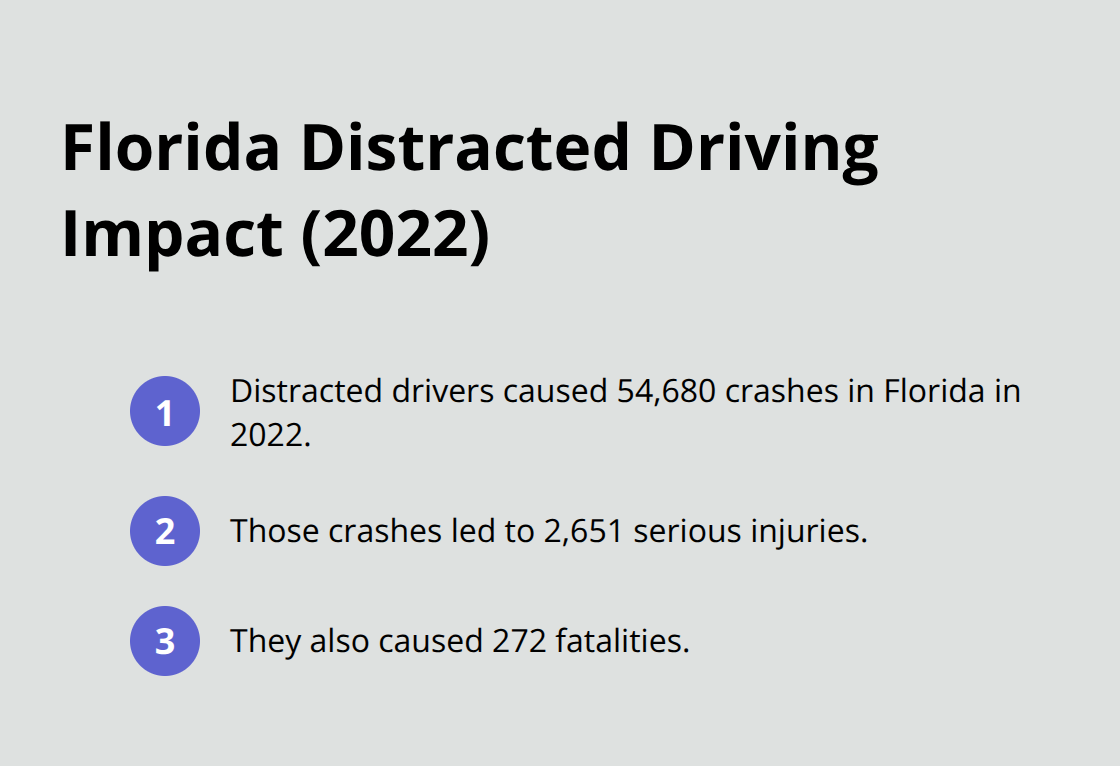
When companies dispute fault or refuse to acknowledge the severity of your injuries, legal representation becomes necessary. Distracted drivers caused 54,680 crashes in Florida in 2022 (resulting in 2,651 serious injuries and 272 fatalities), yet insurance companies often downplay driver negligence to minimize payouts.
Complex Liability Issues Require Legal Analysis
Multiple-vehicle accidents, defective vehicle parts, or dangerous road conditions create complex liability scenarios that insurance adjusters cannot properly evaluate. Attorneys who find all liable parties, including vehicle manufacturers or property owners, can significantly increase your compensation amount.
The statute of limitations for car accident lawsuits in Florida is two years from the accident date, which makes prompt legal consultation vital to preserve your rights. Once you understand these warning signs, you need to know what steps to take before contacting an attorney.
What Should You Do Immediately After an Accident
Document Everything at the Scene
Take photographs of all vehicle damage from multiple angles, including close-ups of impact points and wide shots that show the overall scene. The National Highway Traffic Safety Administration emphasizes that accurate documentation prevents disputes later. Capture images of license plates, street signs, traffic signals, and any skid marks on the pavement. Record a video walkthrough of the scene while you describe what happened in your own words.
Get contact information from all drivers involved, including full names, phone numbers, insurance company names, and policy numbers. Florida law requires drivers to exchange this information after any accident that results in injury or property damage that exceeds $500. Write down the make, model, year, and color of all vehicles. Collect contact details from witnesses who saw the accident occur, as their statements can prove vital if fault becomes disputed.
Get Medical Care Even for Minor Symptoms
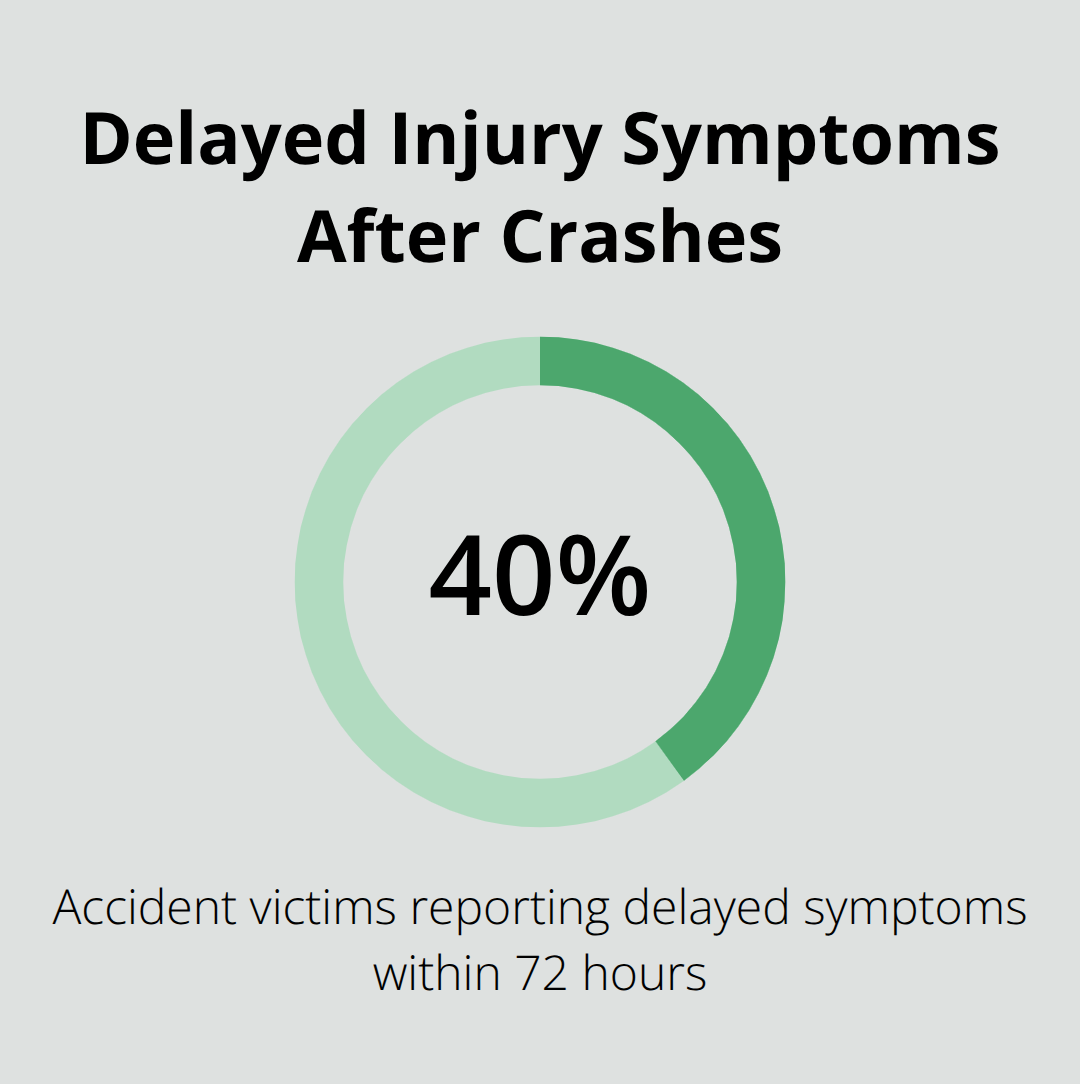
Some injuries like whiplash, concussions, and internal trauma may not show immediate symptoms but can worsen without treatment. The Insurance Information Institute reports that delayed injury symptoms appear in approximately 40% of accident victims within 72 hours. Visit an emergency room or urgent care facility within 24 hours of your accident, even if you feel fine initially.
Tell medical professionals that you were in a car accident and describe any discomfort, no matter how minor it seems. Request copies of all medical records, test results, and treatment plans. Florida’s no-fault insurance system requires you to use your Personal Injury Protection coverage first, but proper medical documentation supports any future claims against the at-fault driver’s insurance when serious injuries exceed PIP limits.
Report to Your Insurance Company Within 14 Days
Florida law mandates that you notify your insurance company within 14 days of any accident, regardless of who caused it. Provide only factual information about what happened without you admit fault or speculate about causes. Insurance adjusters may try to get you to accept blame during this initial call (so stick to observable facts like the time, location, and sequence of events).
Request a claim number and the name of your assigned adjuster for future reference. Ask about your PIP coverage limits and what medical expenses will be covered immediately. Avoid any settlement agreements or release forms until you fully understand the extent of your injuries and damages. These immediate steps protect your legal position before you schedule your first consultation with an attorney.
What Happens During Your First Attorney Meeting
Case Documentation Review
Your attorney will examine all documentation you provide during the initial consultation. Police reports, medical records, insurance correspondence, and accident scene photographs form the foundation of case assessment. The attorney needs these materials to evaluate liability and calculate potential damages with precision.
Prepare a written timeline that details when symptoms appeared and how the accident affected your daily life and work capacity. This chronological account helps attorneys understand the full scope of your injuries and their impact on your future.
Compensation Categories Discussion
The conversation will address multiple compensation types that extend beyond basic medical bills and lost wages. Pain and suffering damages (which Florida permits for serious injuries) can exceed $50,000 in cases that involve permanent disability or disfigurement. Future medical costs, rehabilitation expenses, and lost earning capacity become relevant when injuries prevent your return to previous employment.
Your attorney will explain how Florida’s comparative negligence law affects compensation if you bear partial responsibility for the accident. This law reduces your recovery by your percentage of fault, making liability determination critical to your case value.
Legal Process Timeline Explanation
The attorney will outline the legal process timeline, which typically spans six months for straightforward cases to two years for complex litigation. Most personal injury cases settle out of court through negotiation with insurance companies.

However, the attorney will explain when litigation becomes necessary and what that process involves.
Florida’s two-year statute of limitations creates urgency for case filing, but thorough preparation often produces better settlement outcomes. The attorney will discuss their strategy for maximizing your compensation while minimizing the time and stress of legal proceedings.
Final Thoughts
Time works against accident victims in Florida. The two-year statute of limitations means you can lose your right to compensation entirely if you wait too long. Insurance companies know this deadline and often delay negotiations, hoping you’ll accept inadequate settlements or miss filing deadlines altogether.
Professional traffic accident legal advice protects you from these tactics while it maximizes your recovery. Attorneys understand Florida’s complex no-fault insurance system and know how to navigate PIP limitations when serious injuries exceed coverage (which happens frequently with traumatic brain injuries or spinal cord damage). They identify all liable parties and pursue compensation sources that insurance adjusters never mention.
We at Harnage Law PLLC provide experienced legal representation for Melbourne Florida accident victims. Our personal injury practice fights for the rights of the injured while we offer personalized attention and strategic counsel. Don’t let insurance companies minimize your claim or rush you into unfavorable settlements. Contact Harnage Law PLLC today to protect your rights and pursue the full compensation you deserve after your traffic accident.