
How to Choose Between Contested vs Uncontested Divorce
Our Blog
How to Choose Between Contested vs Uncontested Divorce

Divorce decisions in Florida often come down to one fundamental choice: contested versus uncontested. The path you select shapes everything from your timeline to your final costs and emotional toll.
At Harnage Law PLLC, we’ve guided countless clients through both routes. Understanding the real differences between these two approaches helps you make the decision that fits your situation.
The Real Difference Between These Two Paths
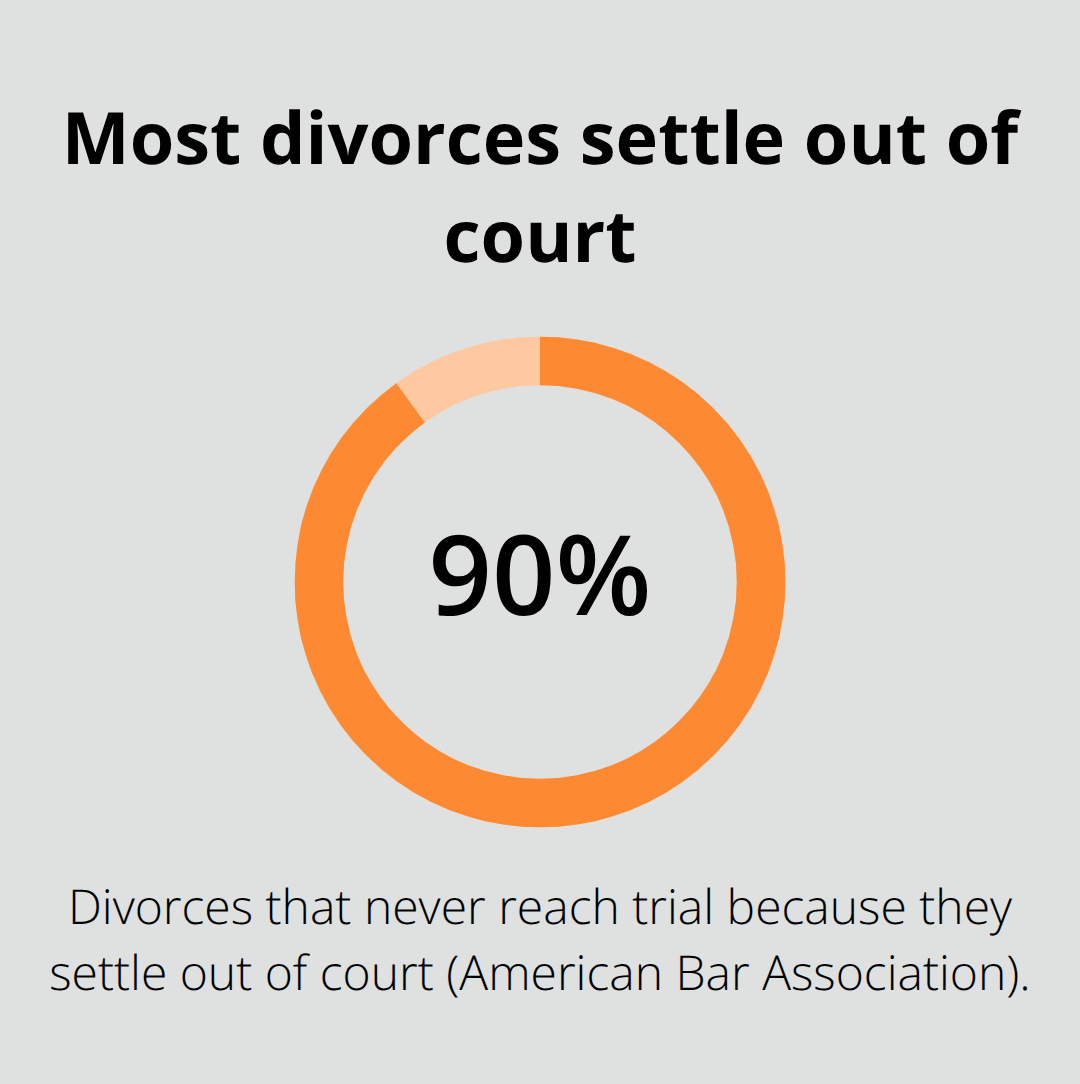
An uncontested divorce means you and your spouse reach agreement on all major issues before filing with the court. This includes child custody arrangements, child support amounts, spousal support if applicable, and how you’ll divide assets and debts. According to the American Bar Association, roughly 90% of divorces never reach trial because they settle out of court, often through negotiation or mediation. A contested divorce, by contrast, occurs when you cannot agree on at least one significant issue, forcing a judge to make decisions for you.
The distinction matters enormously because it determines whether you control your outcome or hand that control to the court system.
What Pushes Divorces Into Contested Territory
Divorces become contested for predictable reasons. Communication breakdown ranks first-when spouses cannot discuss finances or custody calmly, agreement becomes nearly impossible. Disagreements over asset division create friction fast, especially when one spouse owns a business or retirement accounts with unclear values. Child custody disputes escalate tension quickly; parents rarely feel neutral about their children’s living arrangements. Power imbalances also drive contested divorces-when one spouse controls finances or withholds information, the other spouse loses the ability to negotiate fairly. High-conflict relationships with history of abuse or control virtually guarantee a contested path because safety and protection become paramount.
How Your Agreement Level Changes Everything
The cost difference between these paths is substantial and measurable. Uncontested divorces in Florida typically cost between $1,500 and $3,000 when handled efficiently, while contested divorces regularly exceed $15,000 and often climb much higher depending on complexity and court involvement. Timeline differences prove equally dramatic. An uncontested divorce with a simplified dissolution of marriage can finalize in as little as 30 days after filing in Florida, since state law requires only a 30-day waiting period. Contested divorces stretch across months or years-discovery processes, depositions, temporary hearings, and mediation all consume time before reaching resolution. The emotional toll shifts dramatically too. Uncontested divorces preserve privacy since your terms remain confidential; contested proceedings create public court records. When children are involved, uncontested divorces reduce their exposure to parental conflict, while contested litigation forces kids to witness ongoing disputes.
What Happens Next in Your Divorce Journey
The path you choose now determines which process unfolds in the coming months. Understanding how each route actually works-from the initial filing through mediation or trial-helps you prepare for what lies ahead and make informed decisions about your family’s future.
Financial and Custody Implications of Each Path
Asset Division and Spousal Support in Uncontested Cases
In an uncontested divorce, you control how assets get divided and how much spousal support changes hands. Florida follows equitable distribution, meaning assets and debts split fairly rather than exactly equally according to Florida Statutes 61.075. This matters because you can negotiate arrangements that reflect your actual situation-perhaps one spouse keeps the family home while the other receives retirement accounts of equivalent value, or you structure spousal support to phase out over time rather than continue indefinitely.
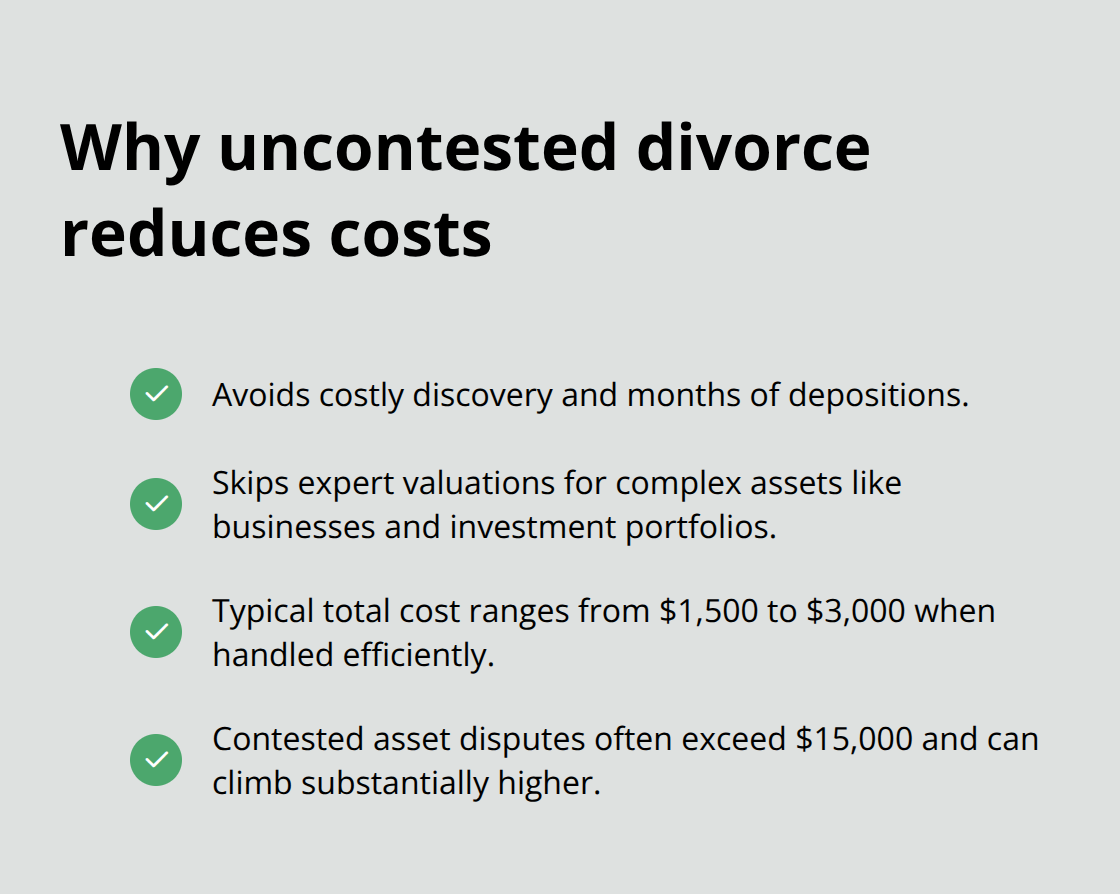
When you reach agreement beforehand, you avoid the discovery process where lawyers demand financial records, depositions stretch across months, and expert valuations for complex assets like businesses or investment portfolios drive costs upward. Uncontested cases typically cost $1,500 to $3,000 total, whereas contested divorces with asset disputes regularly exceed $15,000 and climb substantially higher.
What Judges Decide in Contested Divorces
In contested divorces, a judge decides asset division after hearing evidence, which means you lose flexibility and control over creative solutions. The judge applies statutory factors but cannot craft the personalized financial arrangement you might have negotiated yourself. Spousal support calculations in contested cases follow Florida Statutes 61.08 guidelines based on marriage length, standard of living, and recipient need, but the judge’s discretion leaves outcomes unpredictable. If you own a business or hold significant retirement accounts, contested litigation forces expensive appraisals and expert testimony that drain resources before any final judgment arrives.
Child Custody and Support Arrangements
In uncontested divorces, you and your spouse design a parenting plan that actually works for your family’s schedule, values, and children’s needs-perhaps one parent handles school mornings while the other manages after-school activities, or you structure holidays to match your children’s preferences and extended family relationships. Florida child support follows state guidelines based on combined parental income and custody arrangement, but uncontested cases allow you to agree on support amounts that exceed minimums if one parent needs additional help with special education expenses or medical costs.
Contested custody battles force a judge to determine timesharing and parental responsibilities based on the best interests of the child standard, which means months of litigation, potential psychological evaluations, and children sometimes testifying or being interviewed by court-appointed guardians ad litem. These processes traumatize children far more than negotiated arrangements. The American Bar Association notes that mediation significantly reduces time to resolution compared with contested litigation, and when children witness ongoing parental conflict in court proceedings, their emotional and academic performance suffer measurably.
Long-Term Financial and Family Stability
Uncontested agreements create stability because both parents understand and accept the terms, reducing post-divorce modification requests and ongoing legal fees. Contested divorces often spawn years of enforcement disputes, contempt motions, and modification petitions when one party believes the other violates the judgment or circumstances change. These follow-up battles cost thousands more and keep families entangled in litigation.
If you anticipate a move affecting custody, addressing relocation rights clearly in an uncontested parenting plan prevents future disputes entirely, whereas contested cases frequently return to court when one parent wants to relocate with children. The process and timeline for each divorce type reveal how these financial and custody decisions actually unfold in practice.
The Process and Timeline for Each Divorce Type
How Uncontested Divorce Works in Florida
An uncontested divorce in Florida follows a straightforward path that moves quickly because both spouses have already settled their differences. You start by collecting financial documents: tax returns from the past three years, recent pay stubs, bank statements, retirement account statements, and a list of all assets and debts with current values. This preparation phase typically takes two to four weeks. Once you have these documents organized, you file a petition for dissolution of marriage along with a financial affidavit that discloses your complete financial picture. Florida law requires a 30-day waiting period from the filing date before the divorce can become final, which means the absolute minimum timeline is 30 days if you have everything prepared beforehand. In reality, most uncontested divorces finalize within 45 to 60 days because of administrative processing time and the need for both spouses to sign final judgment documents.
You avoid court entirely in an uncontested case unless you choose simplified dissolution of marriage, which applies only when you have no minor children and both spouses consent to all terms. If children are involved, you must submit a parenting plan detailing custody arrangements, timesharing schedules, and child support calculations based on Florida’s statutory guidelines. The parenting plan becomes part of your final judgment, and courts require it to address the best interests of the child standard under Florida Statutes 61.13. No mediation is mandatory in uncontested cases because you’ve already resolved disputes, though some couples use a mediator during negotiation to finalize terms before filing. An amicable divorce minimizes conflict and protects your family’s future. The total cost remains between $1,500 and $3,000 when you handle an uncontested divorce efficiently.
What Happens in a Contested Divorce
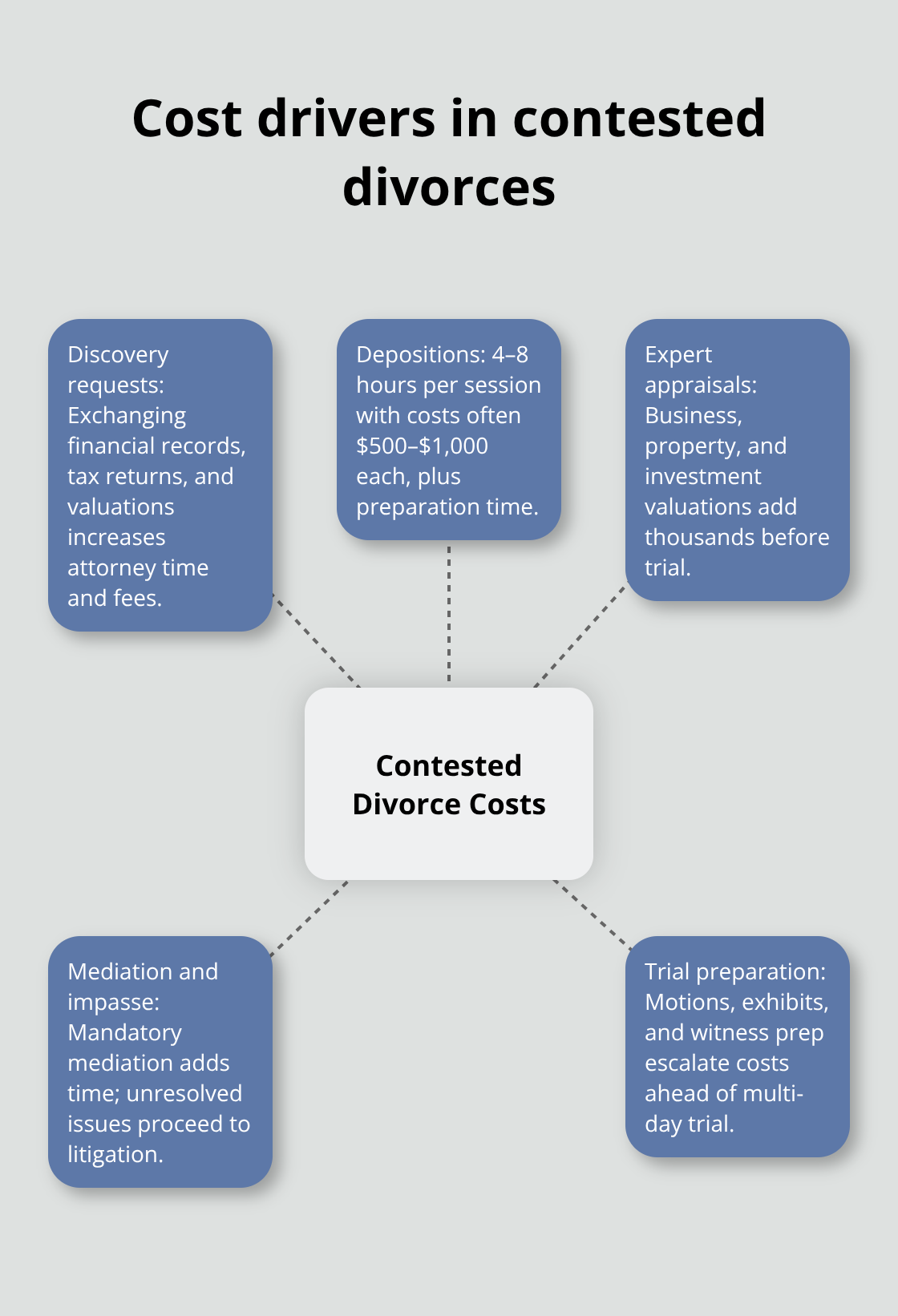
A contested divorce in Florida demands a completely different process that consumes significantly more time and resources. After you file the petition and financial affidavit, your spouse has 20 days to respond by filing an answer that identifies which issues remain in dispute. Once the response is filed, most Florida counties require mediation before you can address temporary matters in court or proceed toward trial. This mandatory mediation step forces both sides to attempt settlement with a neutral third party before spending money on discovery and depositions.
If mediation fails to resolve all issues, the real expense begins through discovery where each side demands financial records, tax returns, business valuations, and other documents from the other party. Depositions follow, where attorneys question the other spouse under oath, often taking four to eight hours per deposition at costs exceeding $500 to $1,000 per session. If you own a business, rental properties, or substantial investment portfolios, expert appraisals and valuations add thousands more to your bill.
Timeline and Court Involvement in Contested Cases
Temporary hearings may occur to address immediate child support, spousal support, or custody arrangements while the case proceeds, requiring additional court appearances and legal preparation. A contested divorce with moderate complexity typically takes 12 to 18 months from filing to final judgment, though cases involving business ownership, multiple properties, or high-conflict custody disputes stretch to two, three, or even four years. Trial itself consumes two to five days depending on complexity, with judges hearing evidence before making final decisions on asset division, spousal support, child custody, and child support.
Court involvement is substantial because a judge controls the outcome rather than you and your spouse negotiating terms together. Total costs for contested divorces regularly exceed $15,000 and frequently climb to $25,000, $40,000, or higher when litigation extends beyond one year or involves expert testimony. The financial and emotional burden of contested litigation creates lasting consequences that extend far beyond the courtroom.
Final Thoughts
Your choice between contested versus uncontested divorce shapes your family’s immediate future and long-term stability. If you and your spouse can communicate about finances, custody, and asset division without escalating conflict, an uncontested path saves you thousands of dollars and months of court involvement. The 30-day waiting period in Florida means you could finalize your divorce within 45 to 60 days total, preserving privacy and allowing both parents to move forward without public court records documenting every disagreement.
A contested divorce becomes necessary when fundamental disagreements exist or safety concerns arise. If one spouse controls finances, withholds information, or has a history of abuse, you need court protection and a judge’s authority to enforce fair outcomes. Contested litigation costs substantially more and stretches across months or years, but it provides legal safeguards when negotiation isn’t possible.
The decision ultimately depends on your specific circumstances: whether you can communicate effectively with your spouse, the complexity of your assets and debts, whether children are involved, and whether power imbalances exist in your relationship. We at Harnage Law PLLC recommend consulting with an attorney before deciding which route fits your situation (our team in Melbourne, Florida provides personalized attention to family law matters including divorce and child custody). Contact Harnage Law PLLC to discuss your divorce and receive guidance tailored to your family’s needs.