
How to File for Divorce in Florida
Our Blog
How to File for Divorce in Florida

Filing for divorce in Florida involves several specific steps, from meeting residency requirements to submitting the right paperwork to the court. The process can feel overwhelming, but understanding each stage makes it manageable.
At Harnage Law PLLC, we’ve guided many people through how to file for divorce in Florida. This guide walks you through the requirements, filing procedures, and what happens with property, custody, and support.
What You Must Have Before Filing for Divorce in Melbourne, Florida
Meet Florida’s Residency Requirement First
You must satisfy Florida’s residency requirement before you can file for divorce in the state. Florida Statutes 61.021 mandates that you establish domicile in Florida for at least six months before filing your petition. This is not optional, and courts will not overlook it. If you cannot prove six months of residency, the court will dismiss your case, wasting time and money. Plan to establish your Florida residence well before you intend to file, especially if you have recently moved to the state. Once you meet the residency requirement, you can proceed with the actual filing process.
Florida’s No-Fault Divorce Standard
Florida is a no-fault divorce state, which means you do not need to prove your spouse did anything wrong. You simply state that the marriage is irretrievably broken, and that grounds alone is sufficient. This approach eliminates the need to gather evidence of misconduct or prove fault, making the process faster and less contentious than it would be in fault-based states. The court will not require you to demonstrate infidelity, abuse, or abandonment unless these issues directly affect custody or property division. If your spouse contests the irretrievably broken claim and you have no children, the court may order counseling and delay proceedings up to three months. After that period, the court typically accepts that the marriage is irretrievably broken and moves forward with the dissolution.
Collect Financial Documents Early
You will need specific financial documents regardless of whether your divorce is contested or uncontested. Florida requires mandatory financial disclosure within 45 days of service, so collecting these items early prevents delays. Gather three years of tax returns, recent pay stubs from the last month, bank and credit card statements, mortgage documents, vehicle titles, and retirement account statements. If you own a business, prepare business tax returns and documentation of business assets. Create a detailed inventory of all marital assets and debts, including real estate, vehicles, investment accounts, and digital assets like cryptocurrency. The more organized you are with documentation upfront, the smoother your mediation and settlement negotiations will proceed. Many people underestimate how much time document collection takes, so start this process immediately rather than waiting until you file.
With your residency established, grounds understood, and documents organized, you are ready to move forward with the actual filing process in Melbourne, Florida.
How to File Your Divorce Petition in Melbourne, Florida
Where to File in Brevard County
In Brevard County, which includes Melbourne, you file your petition with the Circuit Civil Division at the Brevard County Courthouse. The filing fee in Brevard County was $408 as of 2025, though you should verify the current fee by contacting the Clerk of Courts directly at (321) 637-5368 since fees can change. If you cannot afford the filing fee, Florida allows you to apply for a fee waiver using the Application for Determination of Civil Indigent Status. This option exists specifically for people who face financial hardship, so do not hesitate to pursue it if your circumstances warrant it.
Essential Documents You Must File
You must file three core documents with the court. The Petition for Dissolution of Marriage initiates your case, while a Financial Affidavit is required regardless of whether your divorce is contested or uncontested. If you have children, you must also file a UCCJEA Affidavit to establish child jurisdiction. Courts will reject incomplete filings, so do not skip the UCCJEA form if children are involved. The Clerk’s office can provide you with blank forms and instructions, or you can access them through the Florida State Courts website.
Serving Your Spouse and the Response Timeline
After you file, your spouse must be legally served with the divorce papers. You have two main options: use the Sheriff’s Office or hire a private process server. The Sheriff’s Office typically costs less but moves slower, while a private process server is faster and more reliable. Your spouse then has 20 days to respond by filing an Answer with the court. This 20-day window is strict, and failure to respond can result in a default judgment against your spouse.
Uncontested Versus Contested Paths
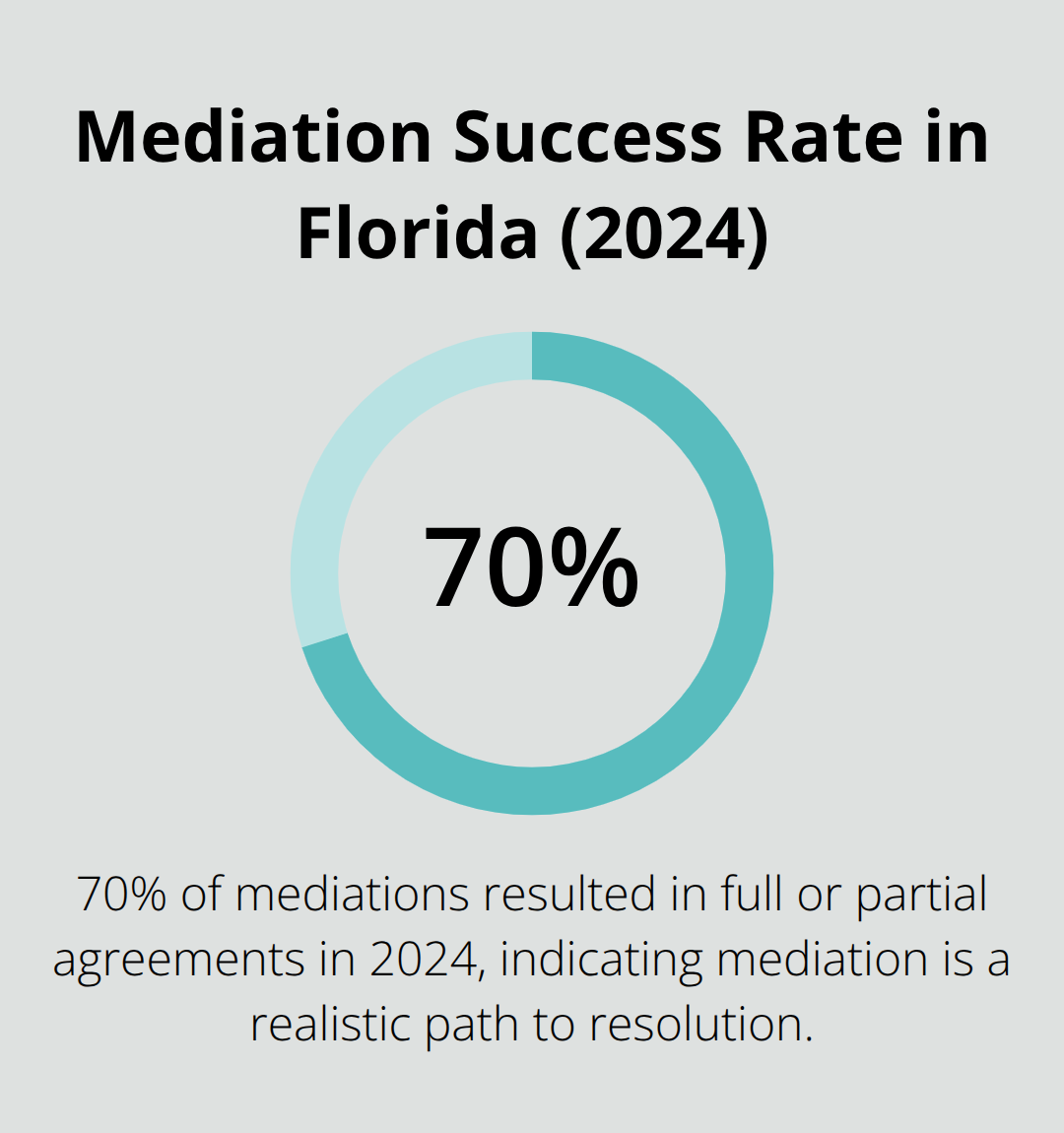
The path forward depends on whether your divorce will be uncontested or contested. If you and your spouse reach agreement on all issues through mediation or negotiation, you will proceed as uncontested, which typically takes four to eight weeks after you file all required forms. In 2024, the Florida Dispute Resolution Center reported that 70 percent of mediations resulted in full or partial agreements, making mediation a realistic option worth pursuing. If disputes remain over property, debts, or children, your case becomes contested and will require more time and court involvement.
Mandatory Requirements and Court Procedures
Administrative Order 16-35-B requires you to read specific administrative orders and file an Attestation Certificate with the Clerk, so ask the Clerk’s office for a copy of this order when you file. Mediation is typically mandatory in most cases except where domestic violence is involved, and courts often require it before trial. If children are involved, you and your spouse must complete parenting classes, and some courts may require the child to attend as well. These requirements exist across Florida’s family court system, and Brevard County enforces them strictly to keep cases moving efficiently. Once you understand these filing procedures and requirements, you can move forward with confidence into the mediation and settlement phase, where property division, custody arrangements, and support calculations take center stage.
Property Division, Custody, and Support in Florida Divorce
How Florida Courts Divide Marital Property
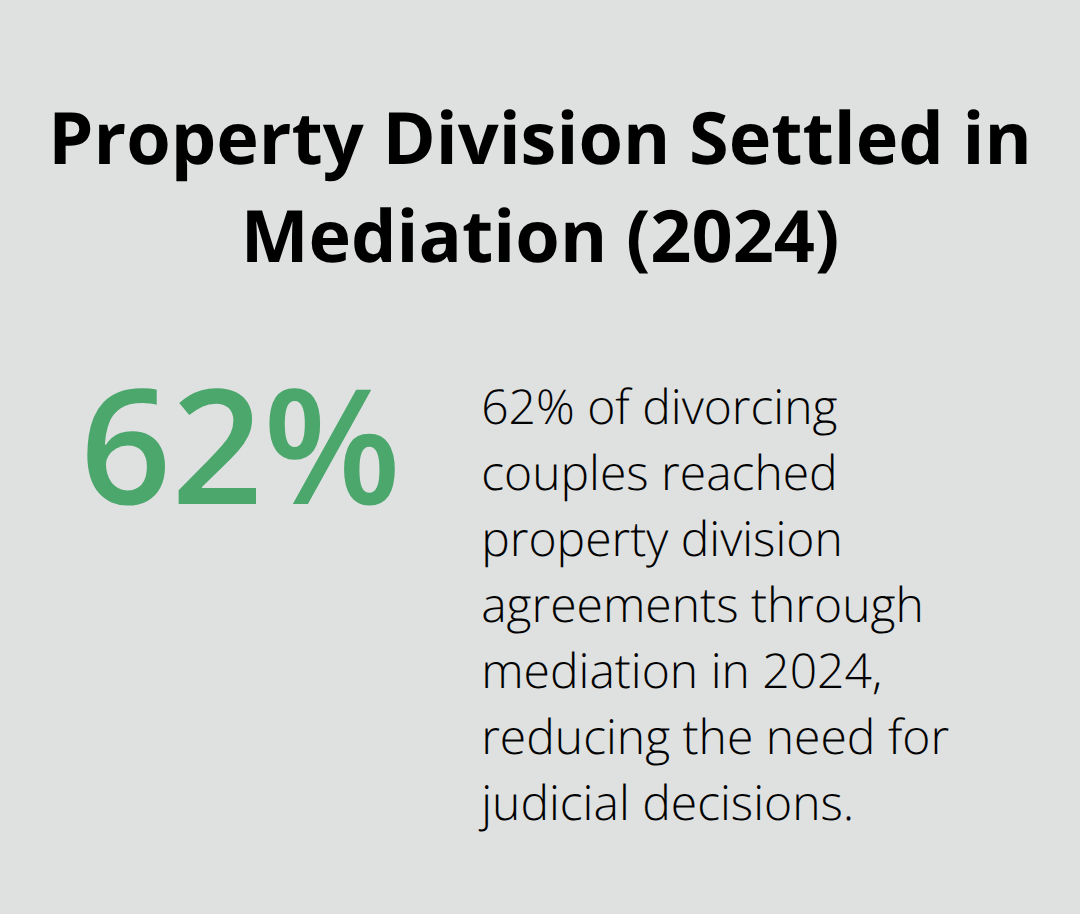
Florida uses equitable distribution for property division, meaning the court divides marital assets fairly rather than splitting everything 50/50. This approach considers the length of your marriage, each spouse’s economic situation, contributions to the marriage, and future earning potential. In 2024, 62 percent of divorcing couples reached property division agreements through mediation according to The Florida Bar, which shows that most people settle these disputes without forcing a judge to decide.
Start by creating a detailed inventory of all marital assets and debts, including real estate, vehicles, retirement accounts, investment accounts, and digital assets like cryptocurrency. Courts distinguish between marital property acquired during the marriage and separate property owned before marriage or received as a gift or inheritance. If you fail to document assets during the divorce process, you lose the chance to claim them later, so completeness matters enormously.
Non-marital assets typically remain with the spouse who owns them, but proving separate property requires clear documentation and often contradicts what your spouse claims. The longer your marriage lasted, the more likely a court will view assets as marital property subject to division. Bring all documentation to mediation so you and your spouse can negotiate from the same factual foundation rather than arguing about what assets actually exist.
Time-Sharing and Child Custody Arrangements
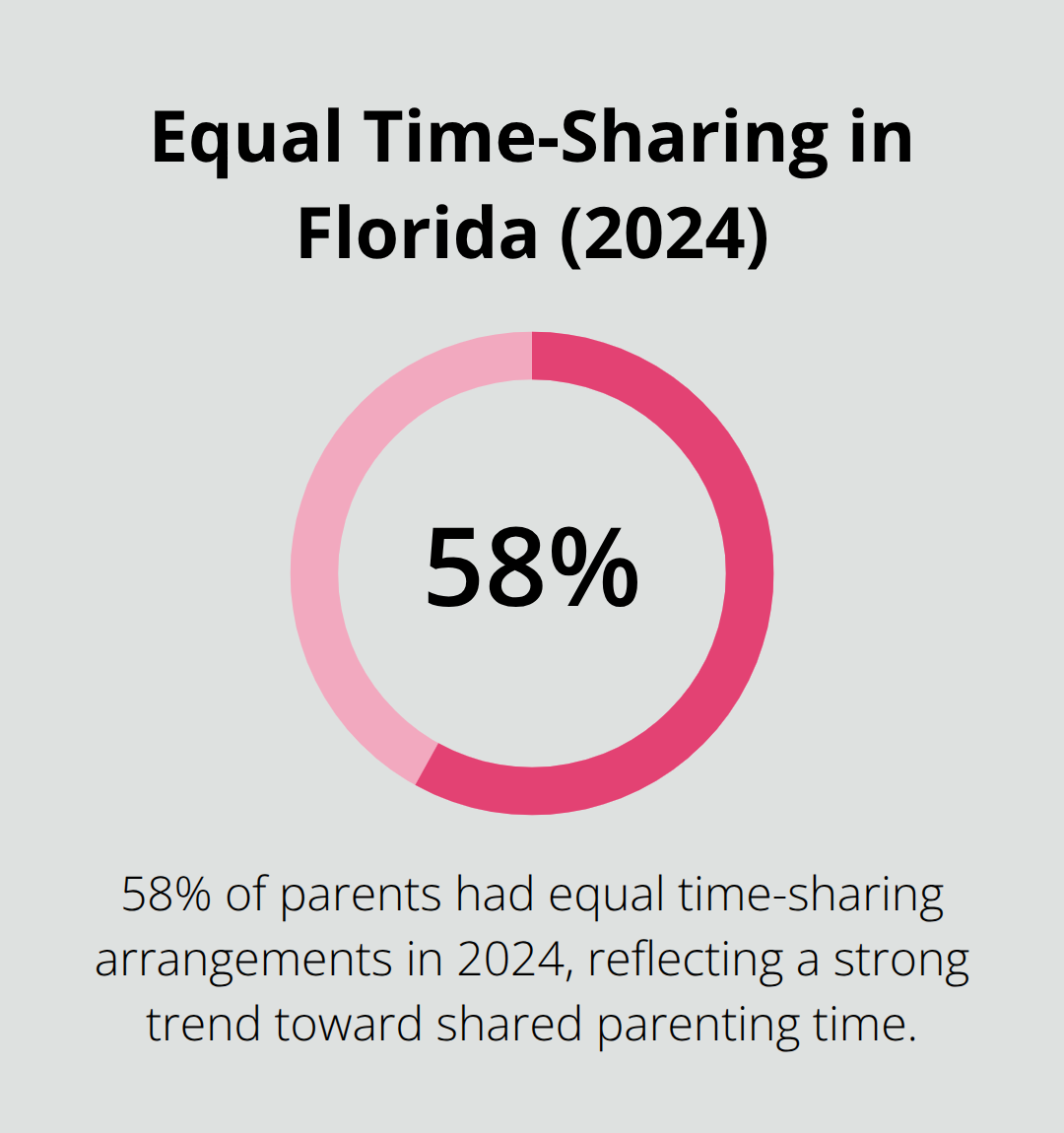
Time-sharing is now Florida’s preferred term for child custody arrangements, and in 2024, 58 percent of parents had equal time-sharing arrangements per the Florida Department of Children and Families. Equal time-sharing means each parent spends roughly 50 percent of time with the child, though parenting plans vary widely based on work schedules, school locations, and each parent’s involvement.
Courts prioritize the best interests of the child and consider factors like each parent’s relationship with the child, the child’s needs, and stability of each home environment. If you and your spouse cannot agree on time-sharing, the court will hold a trial where both sides present evidence, making the process expensive and adversarial.
Alimony Calculations and Awards
Alimony comes in several forms: bridge-the-gap, rehabilitative, durational, and permanent. A 2023 Florida Family Law Section study found durational alimony was awarded in 45 percent of cases where alimony was granted, while longer marriages exceeding 17 years more often resulted in permanent alimony awards. The type of alimony awarded depends heavily on how long you were married and each spouse’s financial capacity.
Child Support Guidelines and Amounts
Child support uses the Florida Child Support Guidelines, which calculate obligations based on both parents’ incomes, the number of children, and the time-sharing schedule. The 2025 Brevard County average for one child was approximately $880 per month, though this figure varies significantly based on parental income levels. When calculating child support, provide complete documentation of income, health insurance costs, and childcare expenses to ensure accurate calculations and avoid disputes later.
Final Thoughts
Filing for divorce in Florida requires you to follow specific procedural steps in the correct order, starting with your six-month residency requirement and ending with the judge’s signature on your Final Judgment of Dissolution of Marriage. The process typically takes four to eight weeks for uncontested cases, though contested divorces involving property disputes or custody disagreements extend much longer. You must serve your spouse properly, complete mandatory financial disclosures within 45 days, and participate in mediation to resolve property division, time-sharing, and support obligations.
The complexity of Florida family law makes legal representation valuable at multiple stages of your case. While you can file without an attorney, doing so means navigating court rules, financial calculations, and settlement negotiations alone-a path that often leads to costly mistakes regarding asset protection, custody arrangements, or support obligations. An experienced family law attorney helps you understand your rights regarding equitable distribution, time-sharing arrangements that protect your relationship with your children, and alimony or child support obligations.
Many people regret handling their divorce without counsel because they miss opportunities to protect assets or secure favorable outcomes during critical negotiations. If you are uncertain about any aspect of how to file for divorce in Florida or need guidance on your specific situation, contact Harnage Law PLLC for clarity and confidence as you move forward. Your divorce marks a significant life transition, and proper legal support ensures you protect your interests and your children’s wellbeing throughout the process.