
How to Obtain Your Divorce Decree
Our Blog
How to Obtain Your Divorce Decree

Getting divorced in Melbourne, Florida involves specific legal steps and requirements that vary from other states. Understanding how to obtain your divorce decree means knowing Florida’s residency rules, grounds for divorce, and the timeline you’ll face.
At Harnage Law PLLC, we guide clients through each stage of the process, from filing your initial petition to handling child custody and support matters. This guide walks you through what to expect.
What You Need to Know Before Filing for Divorce in Florida
Florida imposes specific residency and jurisdictional rules that you must satisfy before filing for divorce. You or your spouse must have lived in Florida for at least six months before filing, and you must file in the county where either you or your spouse currently resides. For those filing in Brevard County, the Circuit Court Family Civil Division handles all dissolution cases. If you live in Melbourne, you file with this division, which processes both standard and simplified dissolutions.
Choosing Between Simplified and Standard Dissolution
Simplified dissolution moves faster and costs less, but only works if you have no minor children, minimal property, and both spouses agree on all terms. Most divorces in Florida follow the standard dissolution path, which involves more steps and typically takes longer. The standard process gives you more flexibility when disagreements arise over assets, custody, or support.
Grounds for Divorce in Florida
Florida recognizes only two legal grounds for divorce: irretrievable breakdown of the marriage or mental incompetency lasting three or more years. Irretrievable breakdown is what almost everyone uses, and you don’t need to prove wrongdoing or fault. If your spouse denies the marriage is irretrievably broken, the court can order counseling and delay proceedings for up to three months to encourage reconciliation. This rarely happens in practice, but it’s worth knowing. The mental incompetency ground exists but is rarely pursued because it’s difficult to establish and requires psychiatric evidence.
Timeline from Filing to Final Decree
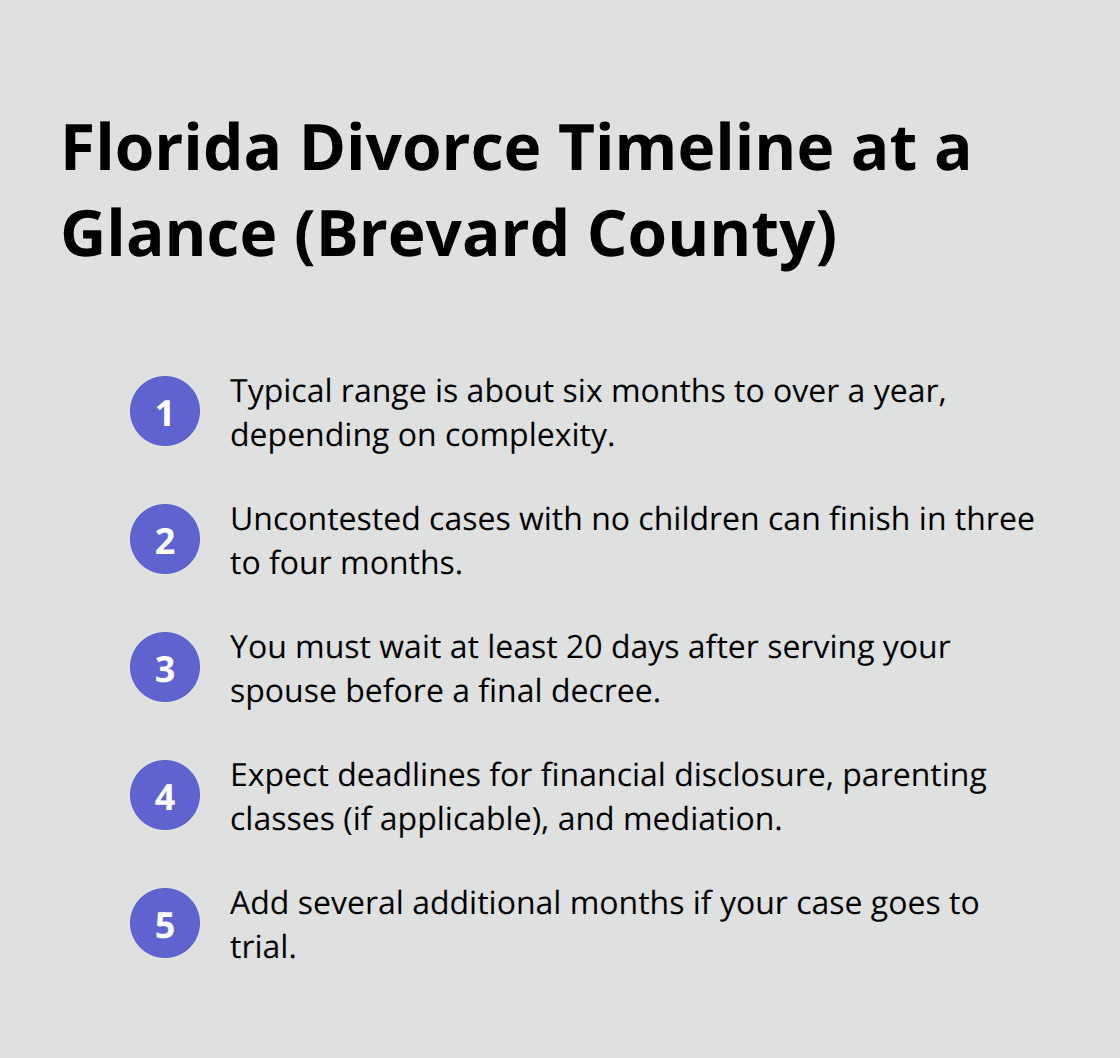
From filing to final decree, expect six months to over a year in Brevard County, depending on complexity. Simple uncontested cases with no children can sometimes finish in three to four months. Cases involving child custody, significant assets, or disputes take much longer. The timeline includes mandatory waiting periods, financial disclosure deadlines, parenting classes if children are involved, and mediation requirements unless domestic violence is present. You cannot receive a final decree before 20 days after serving your spouse with the petition. If your case requires trial because you and your spouse cannot reach settlement, add several additional months to this timeline.
What Happens Next in Your Divorce
Once you understand these foundational requirements and timelines, the actual filing process begins. The next stage involves submitting your petition and serving your spouse with legal documents-steps that set your entire case in motion.
Starting Your Divorce in Melbourne
Filing Your Petition with the Court
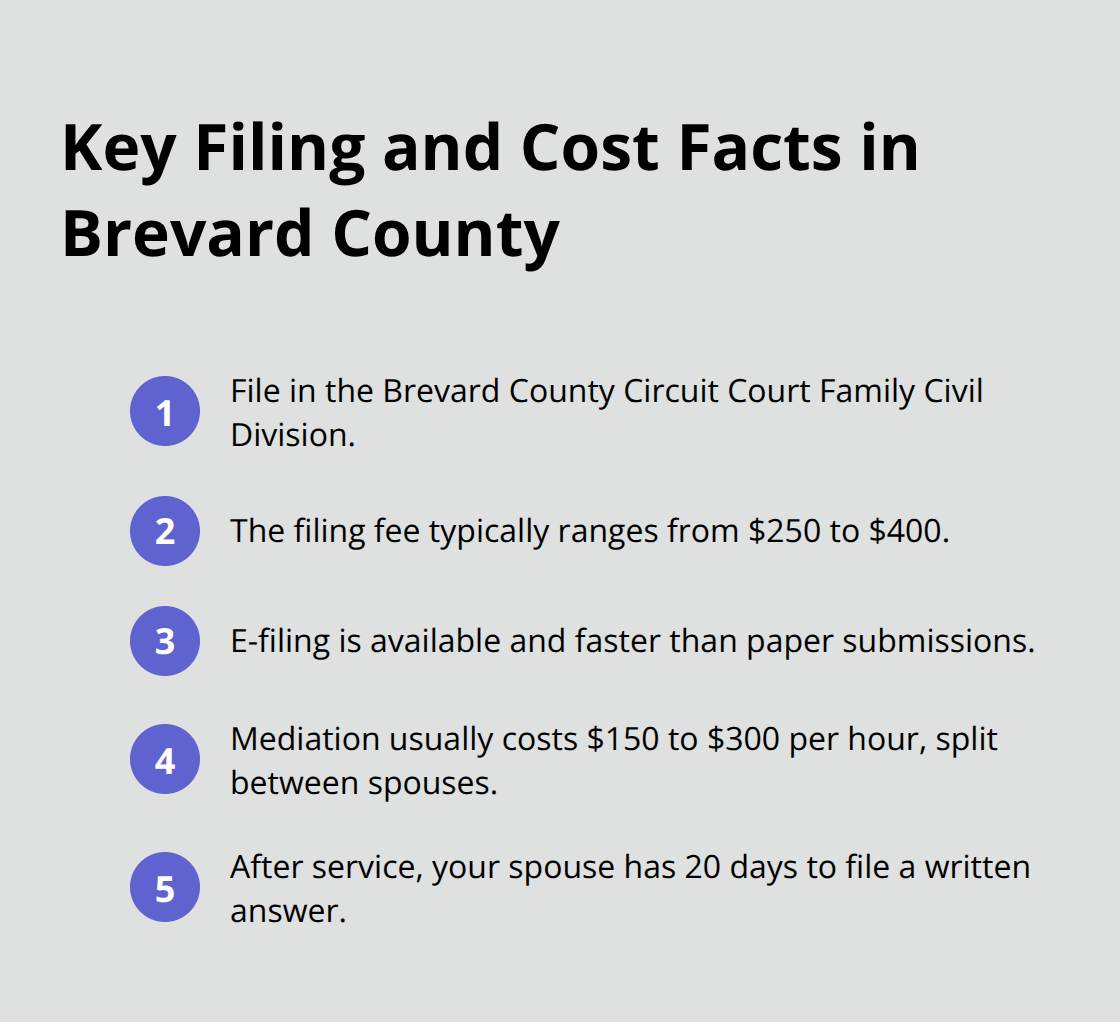
Filing your petition with the Brevard County Circuit Court Family Civil Division officially launches your divorce. You submit a Petition for Dissolution of Marriage along with required documents like financial affidavits and parenting plans if children are involved. The filing fee in Brevard County typically runs between $250 and $400, though this varies based on case complexity. The Brevard County Clerk’s office offers e-filing, which speeds up the filing process significantly compared to paper submissions.
Serving Your Spouse and Meeting Deadlines
Once filed, you must legally serve your spouse with the petition within a specific timeframe-Florida law requires service before you can move forward. Service means delivering the petition to your spouse either in person, by certified mail, or through a process server. Your spouse then has 20 days to file a written answer. This 20-day period is critical because it establishes the earliest date your divorce can be finalized. Many people rush this step, but proper service protects you from having to restart the entire process if service is done incorrectly.
Exchanging Financial Information
After service, financial disclosure becomes mandatory. Both spouses must exchange detailed financial information including bank statements, tax returns, retirement account statements, and property valuations within prescribed deadlines set by the court. This transparency prevents either spouse from hiding assets and gives the court accurate information for dividing property and calculating support obligations. Florida courts take incomplete or late financial disclosures seriously-judges can impose sanctions, attorney fees, or even rule against the non-compliant spouse.
Moving Toward Settlement or Trial
Once financial information is exchanged, most cases move toward mediation unless domestic violence is involved. Mediation is not optional in Brevard County; it’s a required step where a neutral third party helps you and your spouse negotiate settlement terms. Mediation costs typically range from $150 to $300 per hour and are split between spouses. Many cases settle during mediation because both parties gain realistic perspectives on what a judge would award them. If you reach a settlement agreement, you present it at a final hearing where the judge reviews and approves the terms. If mediation fails, your case proceeds to trial where a judge decides custody, support, asset division, and other contested issues.
The path forward depends heavily on whether you and your spouse can reach agreement during mediation or whether contested issues require judicial intervention. Understanding what happens next-particularly how Florida courts handle child custody and support-helps you prepare for the decisions ahead.
Child Custody and Support During Your Divorce
How Florida Courts Determine Custody Arrangements
Florida courts start with a legal presumption that both parents should share equal time with their children, but this presumption can be overcome if the court finds it’s not in the child’s best interests. The court examines numerous factors when making custody decisions, including each parent’s ability to provide stable housing, maintain the child’s relationship with the other parent, and handle medical and educational decisions. The child’s own preferences matter if they’re old enough to express them reasonably. Domestic violence history, substance abuse issues, and the stability of each parent’s home all weigh heavily in these determinations. Courts in Brevard County take this responsibility seriously and won’t simply approve equal time-sharing without clear evidence it serves the child.
If one parent has a documented history of domestic violence or substance abuse, the court will likely restrict that parent’s time-sharing, especially overnight access, unless they can demonstrate they’ve addressed the underlying issues. Your parenting plan must specify exactly how time-sharing works, who makes decisions about healthcare and schooling, how you’ll communicate about the child, and where custody exchanges occur. This plan becomes a binding court order, and violations can result in makeup time, attorney fees, court-ordered parenting courses, or contempt findings against the non-compliant parent.
Calculating Child Support Obligations
Child support calculations in Florida follow a specific formula based on both parents’ gross income, the number of overnights each parent has, and the cost of health insurance and childcare. Florida Statute Chapter 61 requires that every child support order specify the exact termination age, typically 18, though support continues if the child remains in high school and progressing toward graduation. Health insurance is mandatory unless premiums exceed 5 percent of the obligor’s gross income, and courts presume premiums are reasonable when they stay below this threshold.
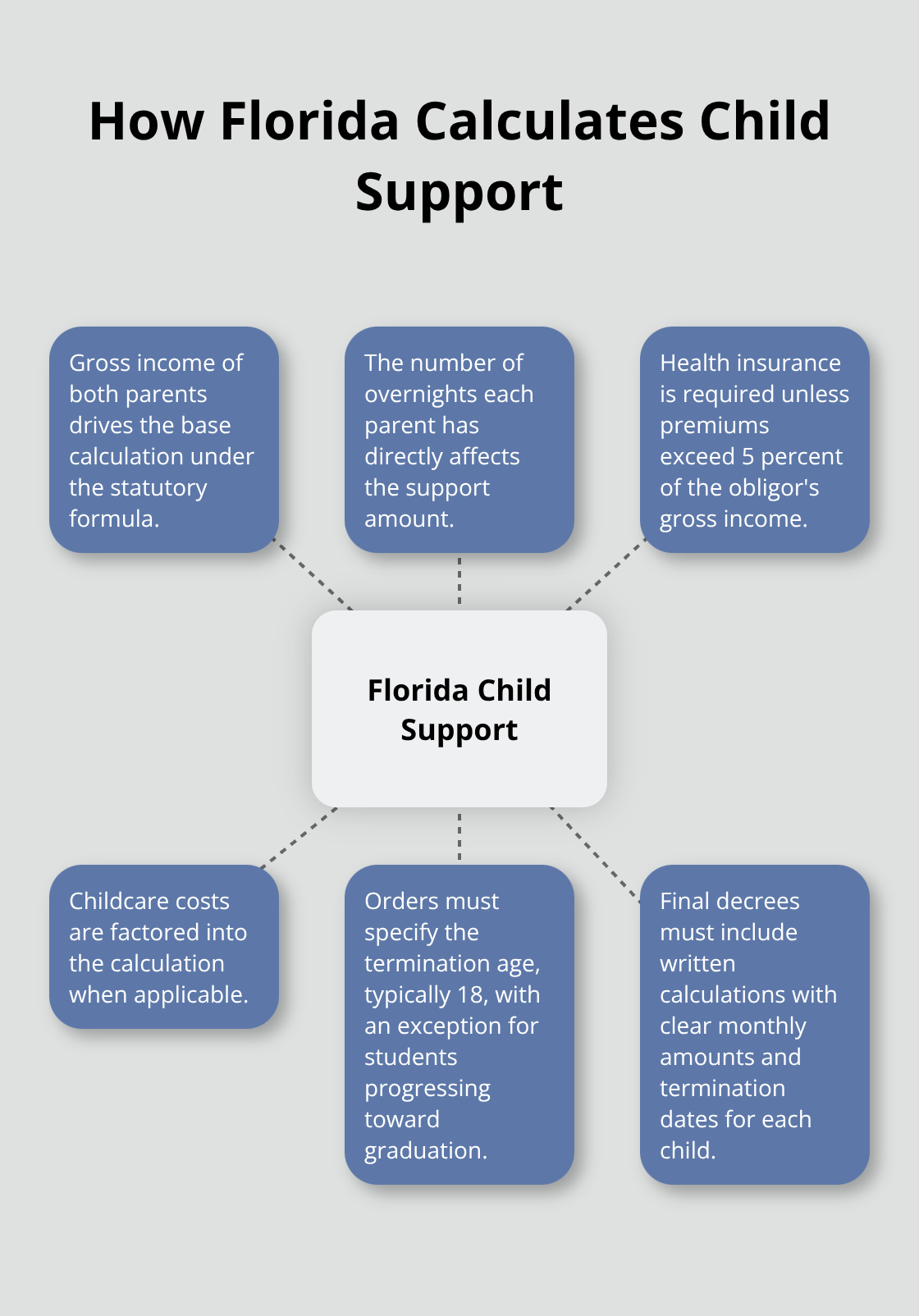
The formula accounts for both parents’ financial situations, so higher-earning parents typically pay more support. Courts also consider whether either parent pays for childcare or carries health insurance for the child. These calculations must appear in writing in your final decree, with clear monthly amounts and termination dates specified for each child.
Modifying Orders When Circumstances Change
If circumstances change substantially, either parent can request modification of child support or custody arrangements. A job loss, significant income increase, relocation more than 50 miles away, or changes in the child’s needs all qualify as substantial changes. The court retains continuing jurisdiction to modify these orders, so nothing is truly final if material circumstances shift. Courts take modification requests seriously because they recognize that life circumstances evolve after divorce.
When you file for modification, you must demonstrate the change in circumstances and show how it affects the existing order. The court will review both parents’ current financial situations and the child’s current needs before making any changes. This process protects both parents and ensures that support obligations remain fair as life unfolds.
Final Thoughts
Obtaining your divorce decree in Melbourne, Florida requires you to navigate multiple legal steps, from filing your initial petition through resolving custody and support matters. The process demands attention to deadlines, proper financial disclosure, and often mediation before you reach that final court order. Staying organized and meeting every deadline the court sets prevents unnecessary delays that can stretch your case by months.
After the judge signs your decree, you must obtain certified copies from the Brevard County Clerk’s office immediately, as you’ll need them to update beneficiary designations on retirement accounts and insurance policies, refinance property in your name alone, or prove your marital status to government agencies. Store your decree securely and consider keeping digital backups for future reference. If your ex-spouse fails to comply with support or custody terms, your decree becomes the enforcement document that gives you legal recourse through the court.
We at Harnage Law PLLC provide personalized legal representation throughout your divorce, handling everything from petition filing to negotiating settlement terms and representing you in mediation or trial. Contact us today to discuss how we can guide you through your divorce and help you obtain your decree with confidence.