
How to Know the Difference Between Separation and Divorce
Our Blog
How to Know the Difference Between Separation and Divorce

Many people use separation and divorce interchangeably, but they’re fundamentally different legal arrangements with distinct consequences for your finances, property, and family relationships.
Understanding the difference between separation and divorce matters because choosing the wrong path can cost you thousands of dollars and create unnecessary complications with custody or taxes. We at Harnage Law PLLC help families in Melbourne, Florida navigate these decisions every day, and we’ve seen how critical this choice becomes.
What Separation and Divorce Actually Mean in Melbourne, Florida
Florida’s Approach to Separation and Divorce
Separation and divorce operate under completely different legal frameworks in Florida, and this distinction matters far more than most people realize. In Florida, there is no formal legal separation process recognized by the courts. This means you cannot file for a court-ordered separation that ends your marriage the way you can in other states. Instead, separation in Florida is simply a living arrangement where spouses reside apart while remaining legally married.
Creating Binding Separation Terms
You can create a separation agreement between yourselves to outline how you’ll handle property, debts, and child-related decisions, but this agreement won’t receive court approval or enforcement unless you structure it as a postnuptial agreement. A postnuptial agreement, signed after marriage, can address property division, debt allocation, and spousal support, and Florida courts will enforce it if both parties signed it with full disclosure of assets and liabilities. The key point: separation leaves your marriage intact, which means you remain each other’s next of kin for medical decisions, you may still file taxes jointly, and you continue accessing spousal health insurance benefits.
How Divorce Ends the Marriage
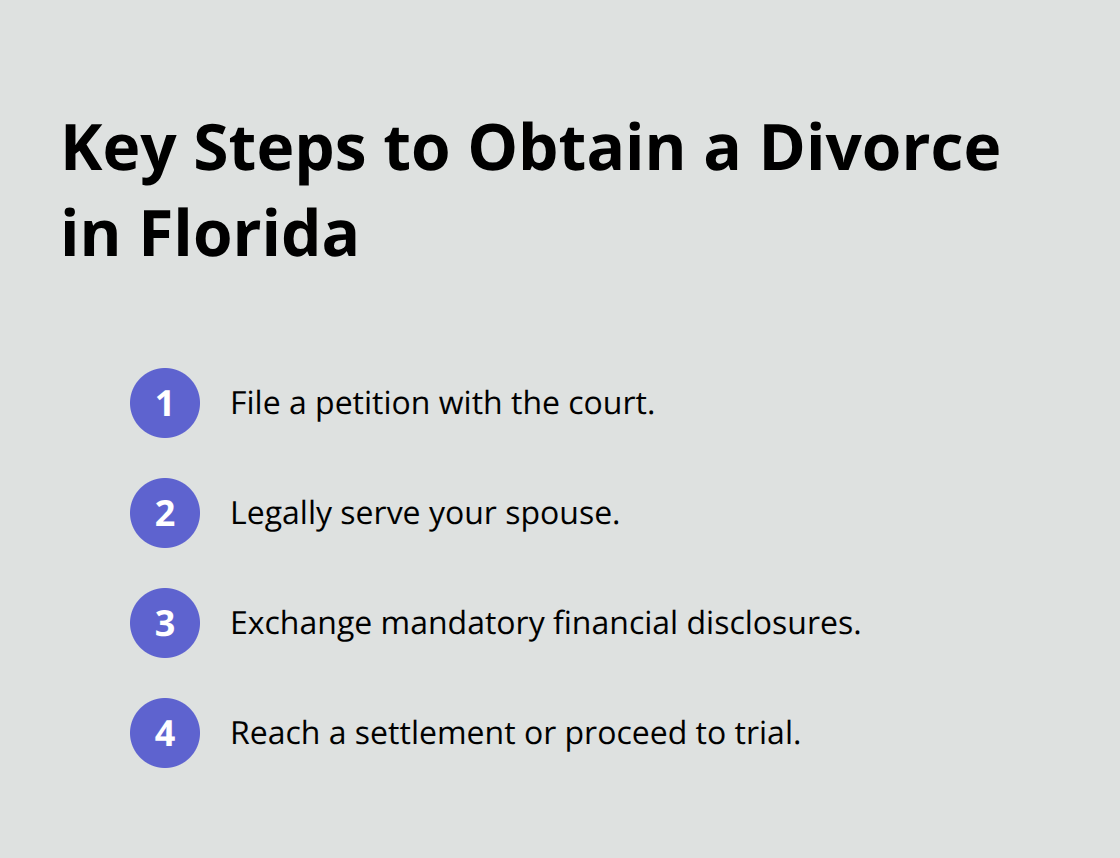
Divorce, by contrast, is a court-ordered dissolution of marriage that terminates the legal relationship entirely. To obtain a divorce in Florida, you must file a petition, legally serve your spouse, exchange financial information, and either reach an agreement or proceed to trial. Florida recognizes only two grounds for divorce: that the marriage is irretrievably broken or that one party has been legally incompetent for more than three years.
The CDC reported that roughly 2.5 divorces occur per 1,000 people annually in the United States as of 2021, with a divorce happening every 42 seconds nationally. Once a divorce is finalized, your marriage ends, property and debts are divided, custody arrangements become court orders, and spousal benefits terminate unless specifically preserved in your agreement.
Finality, Cost, and Strategic Timing
The practical difference comes down to finality and cost. Separation preserves your legal marriage status while living apart, which works well if you’re uncertain about reconciliation, hold religious beliefs opposing divorce, or want to maintain insurance coverage and tax benefits. Divorce eliminates all marital status ambiguity and provides enforceable court orders for custody, support, and property division. If you leave your home without any custody or support agreement in place, courts may view your absence unfavorably when deciding custody later. This is why written terms matter, even during separation. Many people use separation as a negotiation window to reach agreement on terms before converting to divorce, potentially saving time and money in court later. If reconciliation happens, you can simply end the separation without proceeding to divorce. The average marriage that ends in divorce lasts about eight years, according to divorce statistics, giving you a realistic timeline to consider. Florida law allows courts to issue temporary orders during separation for child support, custody, and asset possession while you remain married, but these lack the permanence of divorce orders.
Moving Forward With Your Decision
The choice between separation and divorce hinges on your specific circumstances-your financial situation, your children’s needs, and your long-term goals. Understanding these legal pathways helps you make an informed decision rather than defaulting to whichever option feels easier in the moment. The next section examines how each option affects your finances and property, which often becomes the deciding factor for many families.
Financial and Property Implications
How Separation and Divorce Handle Your Assets and Debts
Separation and divorce create drastically different financial outcomes, and this is where most families experience real consequences. During separation, your property and debts remain largely unchanged unless you formalize terms through a postnuptial agreement. Your marital assets stay joint, and creditors can still pursue both of you for shared debts. If your spouse accumulates credit card debt during separation, you remain liable unless your postnuptial agreement explicitly assigns that debt to them. Divorce, however, forces a complete financial restructuring. Florida courts divide marital property equitably (not necessarily equally), which means the judge decides who gets what based on factors like each spouse’s contribution to the marriage, the length of the marriage, and each party’s financial need. This division becomes a permanent court order, and once finalized, you have no further claim on assets awarded to your spouse.
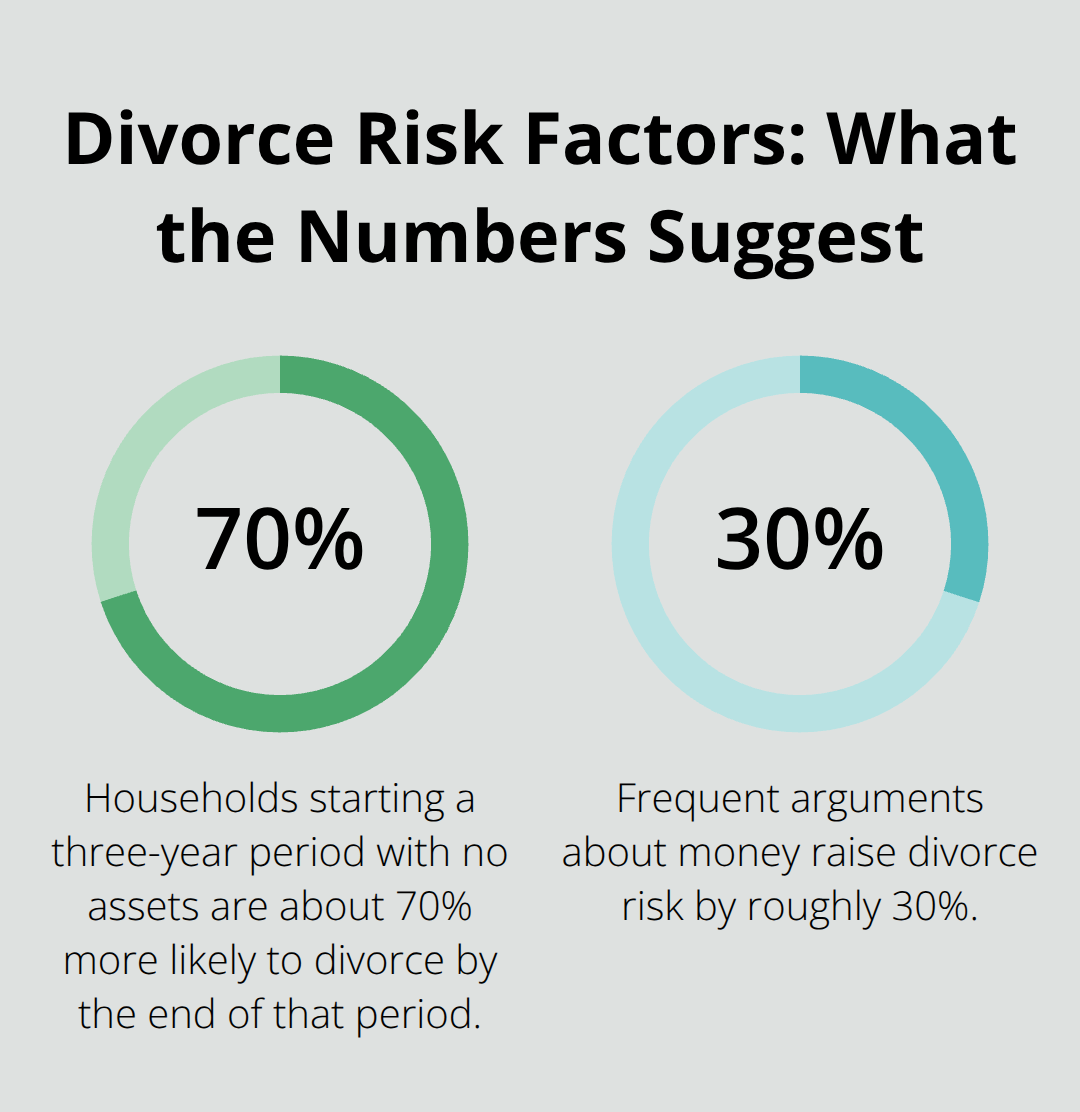
Households with no assets at the start of a three-year period are roughly 70 percent more likely to divorce by the end of that period, according to divorce statistics. This tells you how financial stress compounds relationship problems. If you stay separated, you avoid the division process entirely, but you also leave your financial future ambiguous and potentially vulnerable. A postnuptial agreement during separation can clarify who owns what and who owes what, giving you protection similar to divorce without ending the marriage.
Spousal Support and Alimony: What Changes Between the Two
Spousal support and alimony work differently in separation versus divorce. During separation, Florida courts rarely award alimony, though child support remains available if you have children. Once you file for divorce, alimony becomes possible and depends on factors like the length of the marriage, the standard of living you established together, and each spouse’s earning capacity. Marriages lasting less than ten years typically qualify for short-term alimony, while longer marriages may result in permanent alimony.
Tax Filing Status and Financial Consequences
Tax filing status creates another critical distinction between the two options. While separated and still married, you can file taxes jointly, which often produces a lower tax bill than filing separately. Divorce ends this option immediately upon finalization, forcing you into single filing status and potentially triggering higher tax brackets and loss of certain deductions. Frequent arguing about finances increases divorce risk by roughly 30 percent, which means getting these money issues sorted before choosing your path matters significantly.
Protecting Assets: Separation Versus Divorce
If you have substantial assets or expect to receive an inheritance, separation allows you to protect those assets from division without the finality of divorce. However, if your marriage is clearly over, dragging out separation delays the financial clarity that divorce provides. The choice hinges on whether you need time to decide about the marriage or whether you need immediate protection of your financial interests. These financial considerations often intersect with custody arrangements, which carry their own set of legal and practical implications for your family structure.
Custody and Child Support in Separation Versus Divorce in Melbourne, Florida
How Custody Orders Differ Between Separation and Divorce
Custody decisions in separation versus divorce operate under fundamentally different legal frameworks in Florida, and this distinction directly affects how enforceable your parenting arrangements become. During separation, you and your spouse can draft a parenting plan that outlines custody schedules, decision-making authority, and visitation arrangements, but this plan carries no court approval or enforcement power unless you formalize it through a postnuptial agreement or obtain a separate court order for custody. If you simply separate without any written arrangement, courts have no official custody order to reference if disputes arise. This creates real vulnerability: if your spouse decides to relocate with your children or refuses to follow your informal schedule, you lack the legal standing to compel compliance through court enforcement.
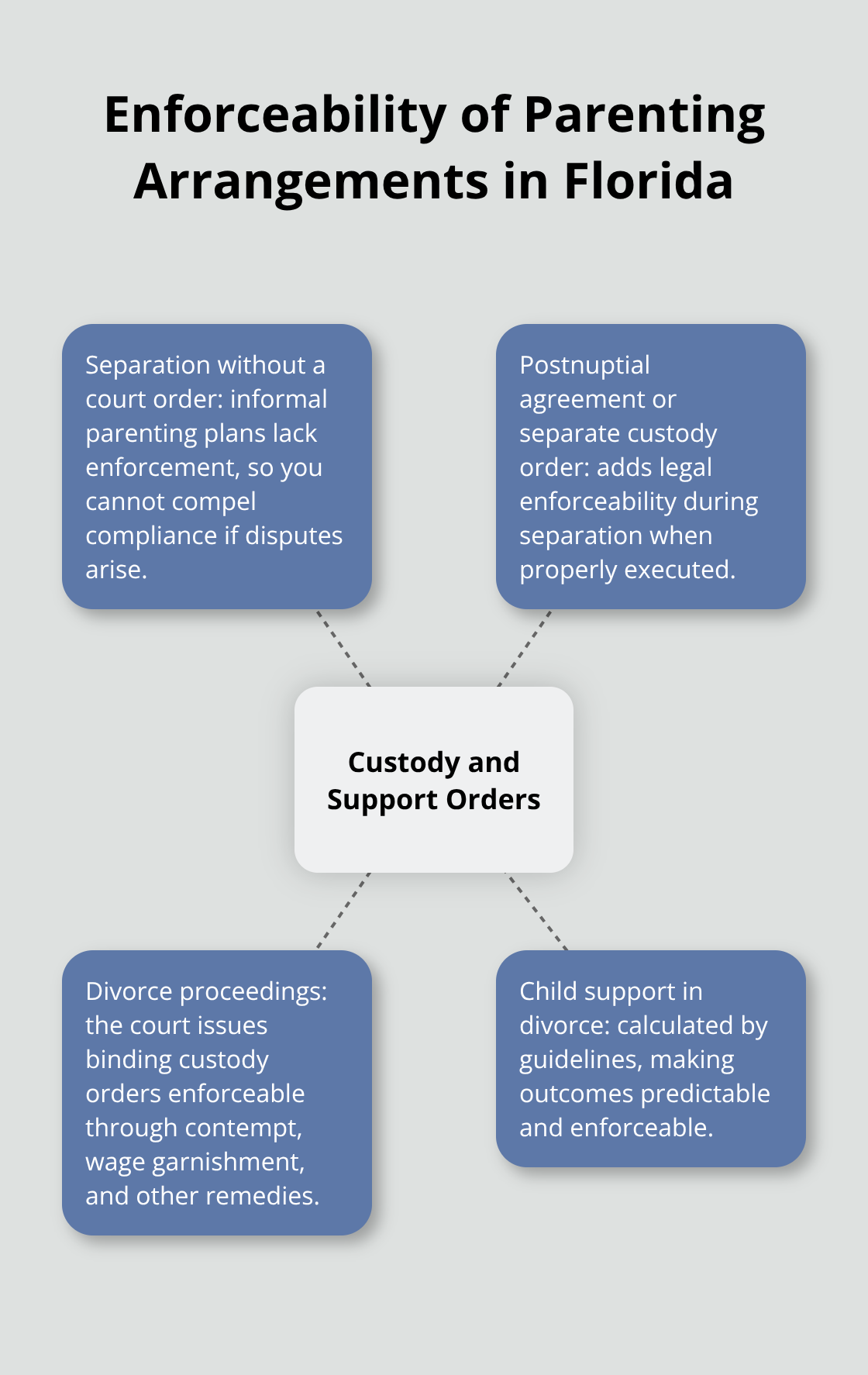
When you file for divorce, however, the court issues a binding custody order that becomes enforceable through contempt proceedings, wage garnishment, or other legal remedies if violated. The difference matters because informal arrangements dissolve the moment one parent stops honoring them, whereas court orders persist until modified by a judge. Florida courts assess custody based on the best interest of the child, considering factors like each parent’s relationship with the child, the child’s adjustment to home and school, and which parent can better meet the child’s physical and emotional needs.
Child Support Calculations and Enforcement
Child support obligations function similarly but with sharper consequences. During separation, Florida courts can order child support even without a divorce, but these orders remain less common and typically require you to file a separate petition for support. Once divorce proceedings begin, child support becomes standard, calculated using Florida’s guidelines that factor in both parents’ gross income, the number of overnight visits each parent has, and various adjustments for health insurance and daycare costs. Courts use a formula-based approach rather than discretion, which means the calculations are predictable and consistent.
If you earn $75,000 annually and your co-parent earns $50,000 with a 50-50 custody split, the calculation produces a specific support obligation rather than a negotiated figure. Separation allows you to avoid this formalized process temporarily, but if you eventually divorce, the calculation happens anyway. The enforceability difference proves critical: divorce orders carry legal weight that separation arrangements lack.
Protecting Your Parental Rights Without Divorce
If you have children and you separate without a court order for custody or support, document everything in writing through a postnuptial agreement. Courts recognize postnuptial agreements in Florida, and they provide legal enforceability that informal arrangements never achieve. If you cannot reach agreement with your co-parent on custody or support terms, file for divorce rather than remaining in separation limbo, because divorce forces the court to establish clear, enforceable orders that protect your parental rights and your children’s financial security.
Final Thoughts
The difference between separation and divorce fundamentally shapes your financial future, custody arrangements, and legal standing in Florida. Separation keeps your marriage intact while you live apart, preserving certain benefits like joint tax filing and spousal health insurance, but leaving your assets and custody arrangements vulnerable without court enforcement. Divorce terminates the marriage entirely, forcing a complete financial restructuring and establishing binding custody orders that courts can enforce if violated.
Consider separation if you’re uncertain about reconciliation, hold religious beliefs that matter to your decision, or need time to negotiate terms before committing to divorce. The separation period can serve as a negotiation window where you and your spouse work out property division, support, and custody arrangements that later become your divorce agreement, potentially saving months in court. However, if your marriage is clearly over and you have children, separation delays the legal clarity and enforceability that your family needs.
Financial stress compounds these decisions, and most families benefit from professional guidance before choosing their path. We at Harnage Law PLLC help families in Melbourne, Florida understand the difference between separation and divorce and make decisions aligned with their long-term goals. Contact us to discuss your situation and determine which option protects your interests and your family’s future.