
How to Handle False Allegations in Divorce and Custody Battles
Our Blog
How to Handle False Allegations in Divorce and Custody Battles

False allegations in divorce and custody battles can derail your case and damage your reputation. At Harnage Law PLLC, we’ve seen how quickly unfounded claims can shift the direction of family law proceedings.
The good news is that you’re not defenseless. This guide walks you through practical strategies to protect yourself, build a strong defense, and navigate the court system when facing false accusations.
What False Allegations Actually Look Like in Florida Divorces
Common Types of False Claims in Custody and Divorce Cases
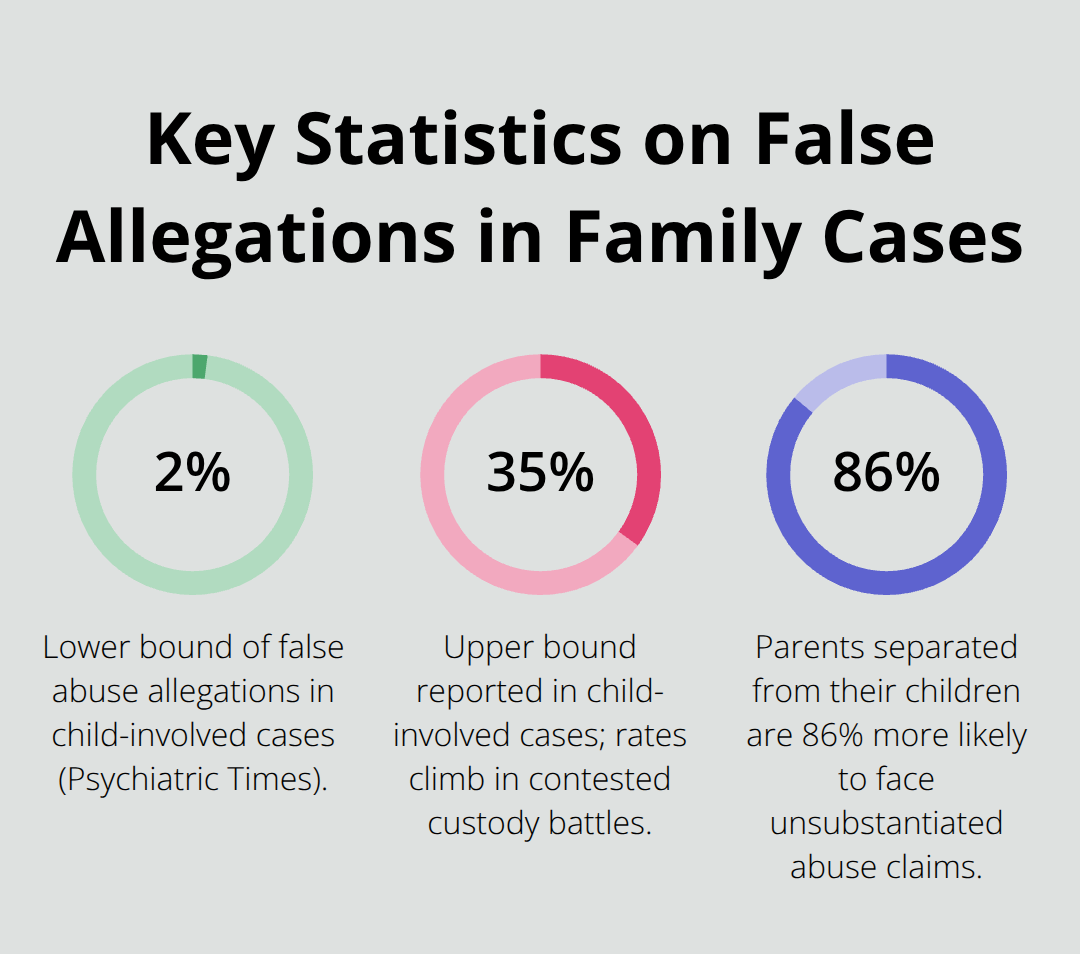
False allegations in Florida custody and divorce cases follow predictable patterns, and recognizing them matters because they trigger immediate legal consequences. The most common false claims involve domestic violence, child abuse or neglect, substance abuse, and financial misconduct. According to the Psychiatric Times, false abuse allegations appear in 2% to 35% of child-involved cases, though the rate climbs significantly higher in contested custody battles.
Domestic violence allegations are weaponized to secure protective orders that can remove you from your home within days. Child abuse or neglect claims are filed to shift custody arrangements in the accuser’s favor. Substance abuse accusations aim to restrict parenting time, while financial misconduct allegations-especially in high-net-worth divorces-are designed to damage credibility and influence asset division.
Timing and Documentation Red Flags
What separates these from legitimate concerns is their timing and lack of supporting documentation. False allegations typically appear without prior police reports, medical evidence, or attempts at mediation. They arrive strategically, often filed right around divorce initiation or custody modification hearings. Research shows parents separated from their children are 86% more likely to face unsubstantiated abuse claims, which reveals how custody disputes fuel these false narratives.
Immediate Court Consequences and Legal Penalties
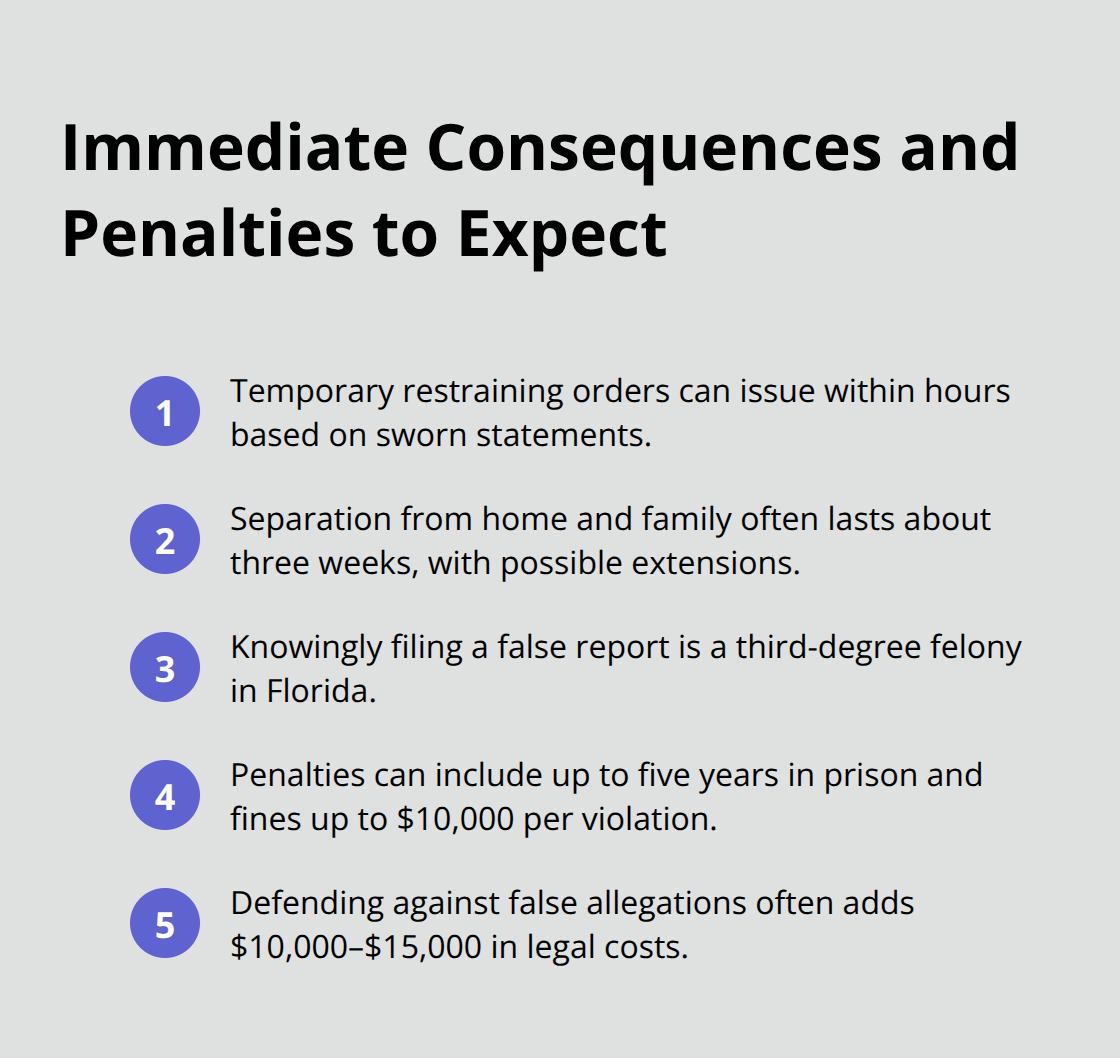
The impact on court outcomes is substantial and immediate. Florida law prioritizes child safety, so temporary restraining orders issue rapidly based on sworn statements alone, often within hours of filing. These orders can separate you from your home and family for approximately three weeks, though extensions during litigation are common. Courts evaluate credibility using witness testimony, police reports, medical records, and the parties’ legal histories. Inconsistencies in the accuser’s narrative, lack of corroborating evidence, and signs of coaching undermine allegations significantly.
If you file false claims, Florida Statutes 39.205 treats it seriously-knowingly filing a false report is a felony of the third degree, punishable by up to five years in prison and fines reaching $10,000 per violation. Yet current penalties for proven false allegations in family court remain limited; judges often dismiss cases rather than pursue perjury charges. Defending against false allegations adds $10,000 to $15,000 in extra legal costs on top of standard divorce expenses, straining finances and emotional reserves.
False statements presented as fact that harm your reputation can extend beyond the courtroom into employment, housing, and social relationships.
When you face these accusations, the financial and emotional toll demands immediate action. Building a strong defense requires strategic documentation from the moment allegations surface, which is why understanding how courts evaluate credibility becomes your next critical step.
Building Your Defense Against False Allegations
Collect Evidence Immediately After Allegations Surface
Start collecting evidence the moment allegations surface, because delay weakens your position and courts notice gaps in documentation. Text messages, emails, social media posts, phone records, and calendar entries form your forensic trail. These materials should demonstrate civil communication patterns, your whereabouts during alleged incidents, and inconsistencies in the accuser’s narrative. Preserve everything-screenshots, timestamps, and metadata matter because courts scrutinize the authenticity of digital evidence. If a temporary restraining order is already in place, comply with it strictly while your attorney prepares to challenge it at the hearing. Compliance protects you from criminal violations under Florida Statutes § 741.31, which carries serious penalties. Work with your attorney to gather independent records like work schedules, payroll stubs, financial statements, and alibi evidence that directly contradict the allegations. High-net-worth divorces require additional rigor; engage a forensic accountant to document asset disclosure if financial misconduct is alleged, because clean disclosure exposes false claims about hidden assets or undervalued property.
Build Your Witness Strategy
Witness statements carry substantial weight in Florida family courts because they corroborate your character and directly challenge false narratives. Identify individuals who can attest to your behavior during the alleged incident timeframe, your parenting practices, your relationship with the children, or patterns of civil conduct. These witnesses should include friends, family members, coworkers, teachers, counselors, or neighbors with direct knowledge. Courts evaluate credibility by examining consistency in testimony, prior legal history, and whether statements align with documentary evidence. Inconsistencies in the accuser’s account, lack of supporting medical or police documentation, and evidence of coaching or coercion significantly undermine allegations.
Expose Patterns and Motive
If the accuser’s statements change across multiple filings or interviews, your attorney can expose these shifts during cross-examination. Florida courts also consider motive-demonstrate whether the accuser benefits financially from custody shifts, asset division, or alimony modifications. Document threatening messages, hostile communications, or prior patterns of dishonesty from the accuser because these reveal tactical intent rather than genuine safety concerns. When false allegations are proven, the accuser’s credibility in future proceedings suffers, and they face potential sanctions or civil liability (though criminal perjury charges remain uncommon in family court unless the false statements were sworn in a separate criminal proceeding).
Understanding How Courts Evaluate Your Credibility
The strength of your defense depends on how Florida courts assess credibility during hearings and trials. Courts examine consistency in your testimony, your prior legal history, and whether your statements align with documentary evidence you’ve gathered. Judges look for patterns-if you present a coherent forensic record that contradicts the allegations, your credibility strengthens significantly.
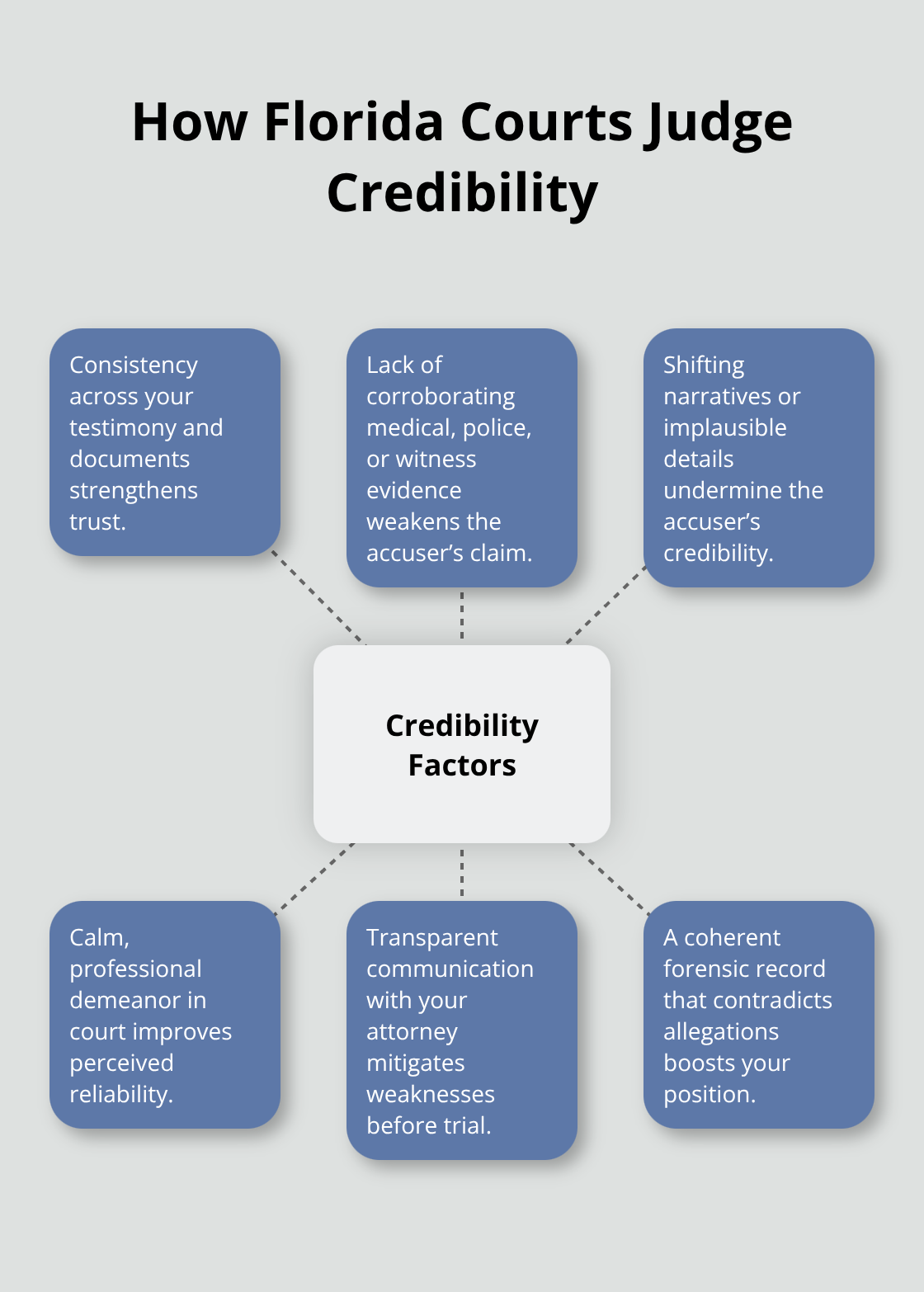
The accuser’s inability to produce corroborating evidence (medical records, police reports, or witness statements) works in your favor. Courts also scrutinize whether the accuser’s narrative shifts or contains implausible details. Your calm demeanor during proceedings matters; emotional reactions or defensive aggression can undermine your credibility even when allegations are false. Transparency with your attorney about all aspects of your case-including any past mistakes or complications-strengthens your overall position because your lawyer can address weaknesses proactively rather than having opposing counsel expose them in court.
Protecting Your Reputation While You Defend Yourself
How Your Actions Shape Court Credibility
Your actions during the false allegation process directly determine how judges assess your credibility in court. Florida courts evaluate credibility through consistency, documentary evidence, and behavioral patterns, which means every communication you send and every decision you make becomes part of the court record. The most damaging mistake people make is contacting the accuser directly to defend themselves or demand explanations. This contact gets misinterpreted, twisted into additional allegations, or used as evidence of harassment or intimidation. Instead, all communication must flow through your attorney, creating a clear paper trail that demonstrates professionalism under pressure.
Maintain Composure and Comply with Court Orders
Your calm demeanor matters significantly because emotional outbursts, social media rants, or aggressive confrontations undermine your credibility even when allegations are completely false. Courts notice restraint. They notice when someone accused of abuse responds with documentation and legal process rather than anger. Compliance with temporary restraining orders is non-negotiable, even when you believe they’re unjust. Violating Florida Statutes § 741.31 transforms you from the accused into the accused violator, and judges view violations as admissions of guilt regardless of the original allegations’ merit.
Build Your Documentary Evidence Trail
Documentation from this moment forward becomes your defense foundation. Preserve every text message, email, and phone record showing civil communication patterns. If you have alibis for alleged incident dates, gather work schedules, payroll records, surveillance footage, or witness statements establishing your location. In high-net-worth divorces where financial misconduct is alleged, a forensic accountant demonstrating clean asset disclosure exposes false claims about hidden property or undervalued accounts.
Expose Inconsistencies and Motive
Courts scrutinize inconsistencies in the accuser’s narrative across multiple filings and interviews because shifting stories reveal tactical intent rather than genuine safety concerns. Document threatening messages or hostile communications from the accuser because these demonstrate motive for false allegations. Identify witnesses who can testify to your character, parenting practices, or your whereabouts during the alleged incident timeframe. These individuals should include coworkers, family members, neighbors, or teachers with direct knowledge.
Work Transparently with Your Attorney
Transparency with your attorney about all aspects of your case, including past mistakes, allows your lawyer to address weaknesses proactively before opposing counsel exploits them. When false allegations are proven, the accuser’s credibility suffers in future proceedings and they face potential sanctions, though criminal perjury charges remain rare in family court absent sworn statements in separate criminal proceedings.
Final Thoughts
Fighting false allegations in divorce and custody battles requires immediate documentation, strategic legal action, and unwavering composure. The evidence you gather in the first days after allegations surface determines your defense strength, and text messages, emails, work records, and witness statements create the forensic trail that contradicts false claims in court. Courts in Florida evaluate credibility through consistency and documentary support, which means your calm, documented response carries more weight than emotional reactions or confrontations.
Legal representation matters because false allegations demand specialized knowledge of Florida family law and courtroom strategy. Your attorney identifies inconsistencies in the accuser’s narrative, exposes motive through threatening communications or prior dishonesty patterns, and presents evidence that demonstrates the allegations lack corroborating support (forensic accountants in high-net-worth divorces counter financial misconduct claims by documenting clean asset disclosure). Experienced counsel also protects you from making statements that undermine your credibility or create additional legal exposure.
When allegations are proven false, the accuser’s credibility suffers in future proceedings and they face potential sanctions. At Harnage Law PLLC in Melbourne, Florida, we provide aggressive legal representation in sensitive family law cases, building defenses grounded in documentation and courtroom strategy. Your rights deserve protection from the moment allegations surface.