
What’s the Difference Between Divorce and Annulment?
Our Blog
What’s the Difference Between Divorce and Annulment?

Many people use the terms divorce and annulment interchangeably, but they’re fundamentally different legal processes in Florida. Understanding the divorce annulment difference is essential if you’re facing the end of a marriage.
At Harnage Law PLLC, we help clients navigate these distinct paths and choose the right option for their situation. The choice between them affects your legal status, property division, and family arrangements in significant ways.
How Divorce Legally Ends Your Marriage in Melbourne Florida
A Florida divorce terminates a marriage that courts recognize as valid. Unlike annulment, which claims the marriage never existed, divorce acknowledges the marriage was real and legally ends it. Florida follows no-fault divorce law, meaning neither spouse needs to prove wrongdoing. You simply cite irreconcilable differences, and the court proceeds. This matters because it shapes how your property, debts, and custody arrangements are handled. Florida Statutes Chapter 61 governs the entire process, and understanding its requirements helps you navigate what comes next.
Property and Debt Division
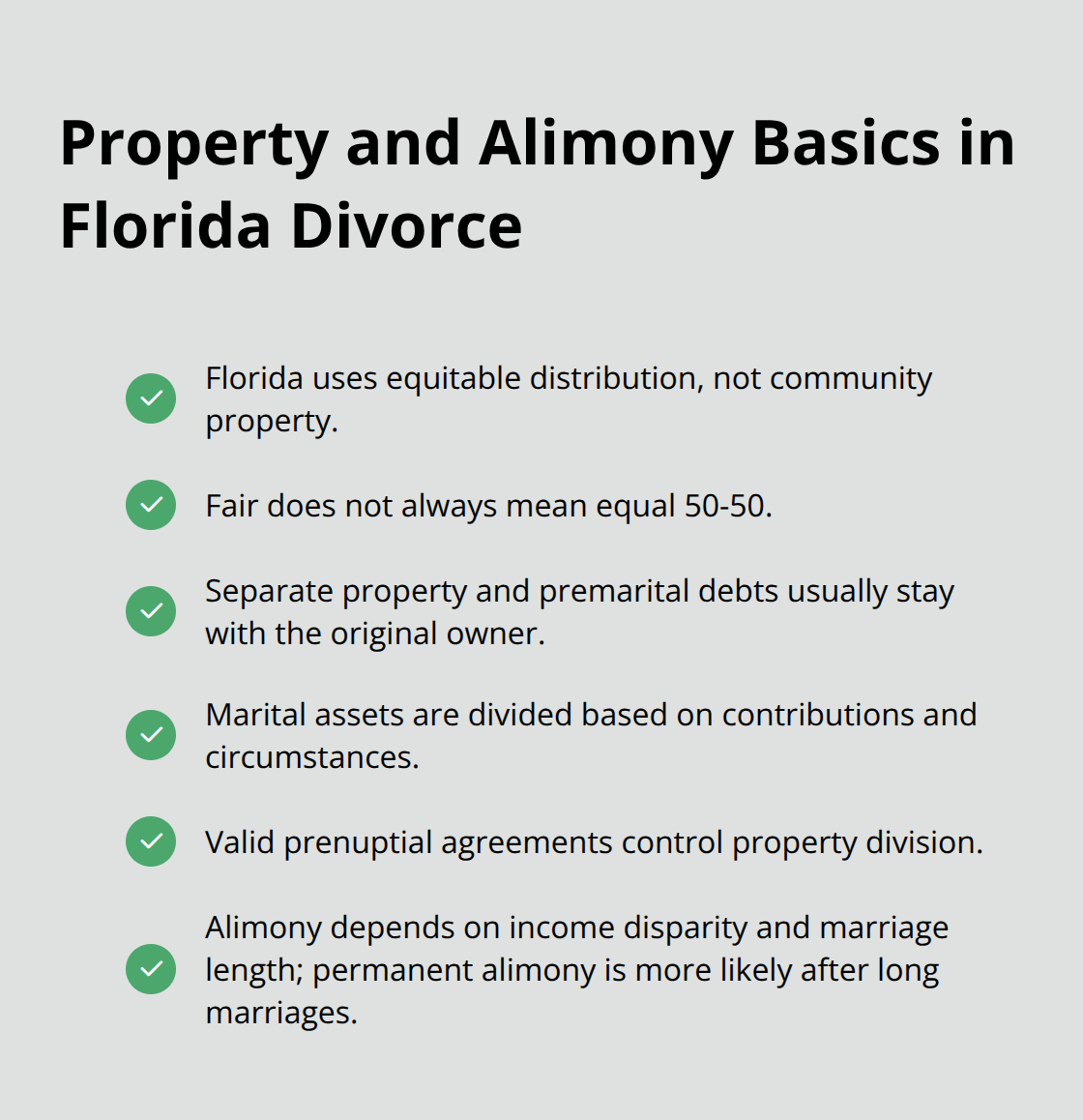
Florida is an equitable distribution state, not a community property state. This means courts divide marital assets and debts fairly but not necessarily equally. The court considers factors like the length of marriage, each spouse’s contribution to the marriage, and each spouse’s economic circumstances. If you owned property or accumulated significant debt before marriage, those assets and liabilities typically remain yours. Marital property acquired during the marriage gets divided based on what a judge deems fair, which often results in a 50-50 split when both spouses contributed equally. Prenuptial agreements override default distribution rules if they’re valid, so if you signed one, that document controls property division instead of state law. Courts also address spousal support, called alimony in Florida, which one spouse may owe the other depending on income disparity and marriage length. Short marriages rarely result in permanent alimony, but marriages lasting over 17 years make permanent alimony more likely according to Florida case law.
Custody, Visitation, and Child Support
When children are involved, Florida courts prioritize the best interest of the child standard. Both parents typically maintain parental rights and responsibilities unless the court finds otherwise. Most divorces result in shared parental responsibility, meaning both parents participate in major decisions about education, healthcare, and religion. Time-sharing arrangements-what many states call custody-vary widely based on each family’s circumstances. One parent might have primary time-sharing with the other having scheduled visitation, or parents might share equal time. Florida child support guidelines use a formula based on both parents’ income and the amount of time each parent spends with the child. The formula accounts for childcare costs, healthcare, and insurance. If one parent earns significantly more, they typically pay support to the other. Child support continues until the child turns 18 or graduates high school, whichever comes later, unless the child has special needs.
Settlement Versus Litigation
Many divorces settle these custody and support matters outside court through negotiation, which saves time and money compared to litigation. When both spouses reach agreement on property division, alimony, and child arrangements, the process moves faster and costs less. Contested divorces that proceed to trial take longer and require more attorney involvement. The choice between settlement and litigation affects your timeline, expenses, and stress level throughout the process. Now that you understand how divorce works in Florida, annulment presents a fundamentally different legal path that treats the marriage itself as invalid from the start.
What Grounds Make an Annulment Valid in Melbourne Florida
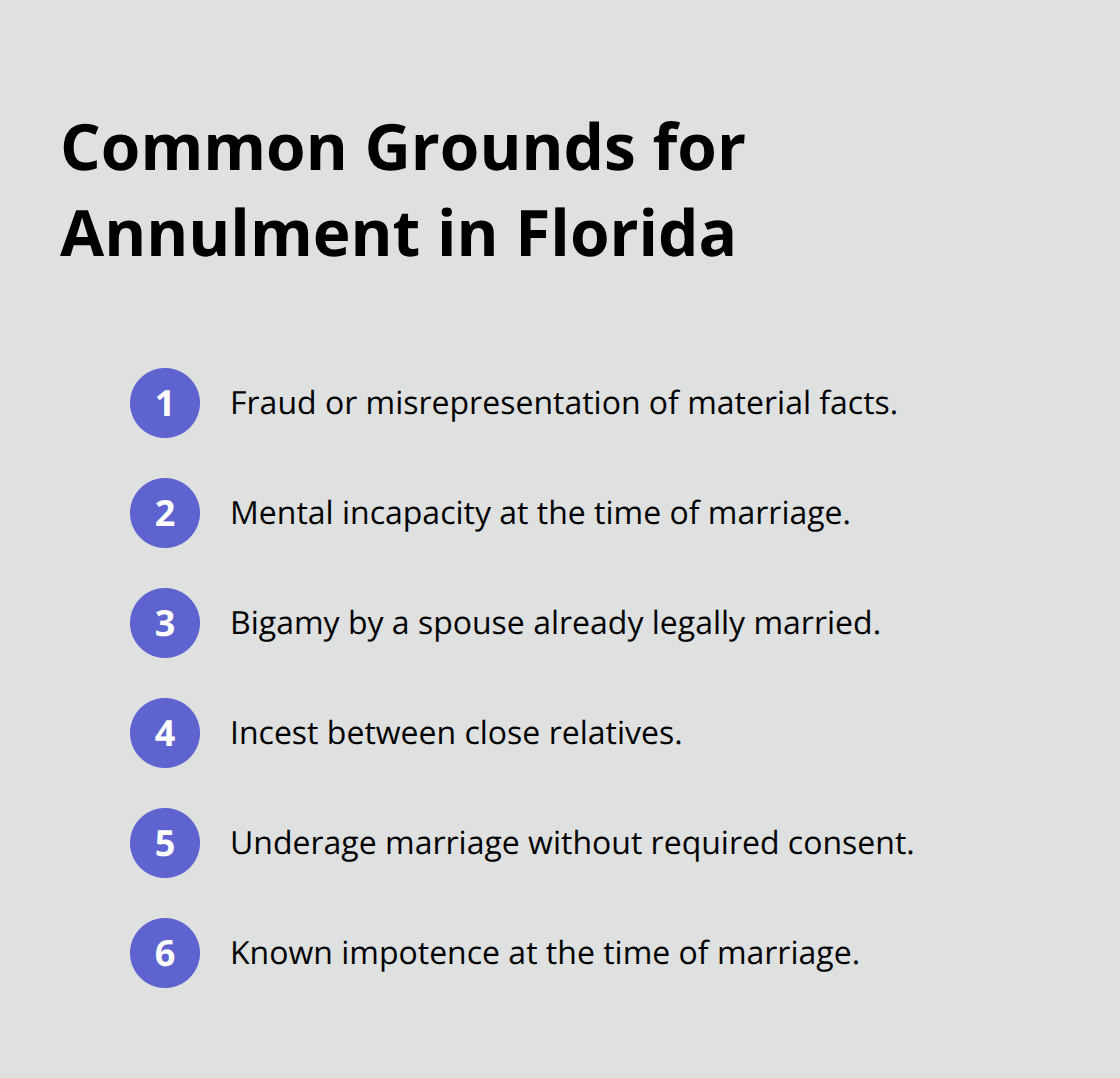
An annulment declares the marriage never legally existed, which is fundamentally different from divorce. Florida law allows annulments only when specific grounds existed before or during the marriage that made it invalid from the start. The most common grounds in Florida include fraud or misrepresentation, where one spouse deliberately concealed a material fact that would have prevented the marriage. For example, if a spouse concealed infertility, a prior undisclosed marriage, or a serious criminal history, courts may grant an annulment. Mental incapacity at the time of marriage also qualifies-if one spouse lacked the mental ability to understand the marriage contract, an annulment is possible. Bigamy, where one spouse was already legally married, automatically voids the marriage. Incest between close relatives invalidates the marriage under Florida law. Underage marriage, where one spouse was below the legal age without proper consent, provides grounds. Impotence known to the other party at marriage can also justify an annulment.
How Timing Differs From Divorce
The key difference from divorce is timing: annulment examines whether the marriage was ever legally sound, while divorce simply ends a valid marriage. This distinction matters enormously because annulment treats the marriage as if it never happened, affecting property division, spousal support, and even how your marital status is recorded. Florida imposes strict deadlines for annulment that do not apply to divorce. Most annulment claims must be filed within four years of discovering the grounds, though some grounds have shorter windows. If you discover your spouse committed fraud, you have four years from the date of discovery to file, not from the marriage date itself. This deadline pressure makes annulment more time-sensitive than divorce, which has no such limitation.
Why Acting Quickly Matters
Courts rarely grant annulments after significant time has passed or if the couple has lived together extensively after discovering the grounds. If you are considering annulment, acting quickly is essential-waiting years weakens your case. The longer you delay, the harder it becomes to prove that grounds existed and that you did not accept the marriage despite knowing about the defect. Judges view extended cohabitation after discovery as acceptance of the marriage, which eliminates your right to annul it.
Property Division and Support After Annulment
Property division after an annulment differs sharply from divorce outcomes. Since the marriage is deemed never valid, courts attempt to restore each party to their pre-marriage financial position rather than dividing marital assets equitably. This can work in your favor if you entered the marriage with substantial assets, but it disadvantages those who contributed significantly during the marriage. Spousal support is rarely awarded after annulment, unlike divorce where alimony is common for longer marriages. The financial consequences of annulment can be severe if you sacrificed career opportunities or invested personal resources into the marriage.
Children and Custody Rights Remain Protected
Children born during an annulled marriage remain legitimate and custody and child support proceed under standard guidelines, so annulment does not affect parental rights or obligations to children. Both parents maintain the same legal responsibilities toward their children as they would in a divorce. Understanding these distinctions helps you determine whether annulment or divorce better serves your situation, and the next section examines the key differences side by side.
How Divorce and Annulment Affect Your Legal Status and Finances in Melbourne Florida
Your Legal Status After Divorce Versus Annulment
The moment a court finalizes either divorce or annulment, your legal standing changes dramatically-but in opposite directions. In a divorce, Florida courts recognize your marriage as valid and legally end it, leaving you with a status of divorced. Your marital history remains intact in court records, and you retain certain legal protections tied to that history, such as eligibility for spousal support based on the marriage’s length. An annulment declares the marriage void from inception, which means courts treat you as if you never married at all. Your legal status reverts to single, and your marital record is effectively erased in terms of the marriage’s legal validity.
This distinction matters far beyond paperwork. If you earned significantly less than your spouse during a 15-year marriage and seek alimony, divorce offers a realistic path-Florida courts award permanent alimony in marriages lasting over 17 years when income disparity exists. Annulment eliminates this option entirely because spousal support assumes a valid marriage existed.
How Property Division Works Differently
Property division reveals the harshest practical difference between these two processes. In divorce, Florida law mandates equitable distribution of all marital assets and debts accumulated during the marriage, regardless of which spouse’s name appears on the title. Courts weigh factors like each spouse’s contribution, earning capacity, and years of marriage when deciding what fair division looks like. A stay-at-home parent who sacrificed career advancement receives recognition for that contribution, often resulting in substantial property awards.
Annulment abandons this framework entirely. Courts attempt to restore each party to their pre-marriage financial position, which means property acquired during the marriage may not be divided at all if one spouse brought it into the relationship. If you spent ten years supporting your spouse through professional school, contributing to household finances while they built a career, annulment offers you no compensation for that sacrifice-the law treats your contributions as irrelevant because the marriage supposedly never existed.
Spousal Support and Financial Consequences
The financial outcome between these two paths is stark. A divorcing spouse in a long marriage with income disparity might receive monthly alimony payments for life. An annulled spouse receives nothing. Florida recognizes that a valid marriage creates financial interdependencies that warrant support obligations when one spouse sacrificed earning potential for the other’s benefit.
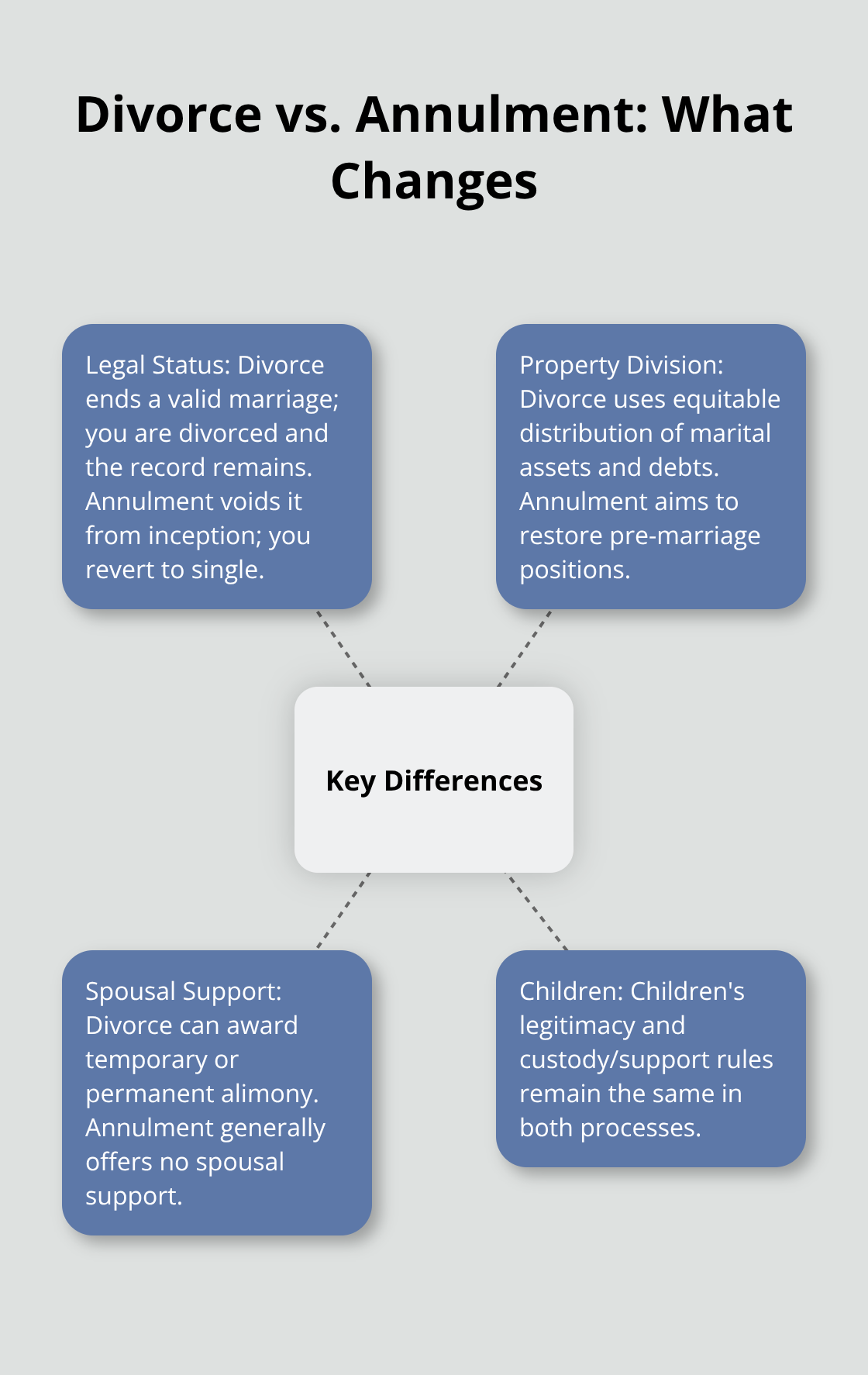
Annulment law rejects this reasoning entirely, treating the marriage as nonexistent and therefore creating no financial obligations between former spouses.
Children’s Rights Remain Unchanged
Children complicate neither process. Courts maintain that children born during an annulled marriage remain legitimate, and custody, visitation, and child support obligations continue exactly as they would in divorce, following Florida’s best-interest-of-the-child standard and the state’s child support formula based on both parents’ incomes and time-sharing percentages. Neither parent loses parental rights simply because the marriage is annulled rather than divorced.
Final Thoughts
Divorce and annulment represent two fundamentally different legal paths in Florida, each with distinct consequences for your finances, legal status, and family arrangements. The divorce annulment difference comes down to this: divorce acknowledges your marriage was valid and legally ends it, while annulment declares the marriage never existed in the first place. This distinction shapes everything from property division to spousal support to how courts record your marital history.
Choosing between them depends on your specific circumstances. If you entered the marriage under false pretenses, discovered your spouse was already married, or can prove fraud or mental incapacity at the time of marriage, annulment may be possible-but only if you act quickly, since Florida imposes strict four-year deadlines. Annulment eliminates spousal support and attempts to restore you to your pre-marriage financial position, which can be devastating if you sacrificed career opportunities during the relationship, while divorce offers equitable property division and potential alimony based on the marriage’s length and income disparity.
If you have children, both processes protect their rights equally, and custody, visitation, and child support proceed under the same standards regardless of whether your marriage ends through divorce or annulment. We at Harnage Law PLLC understand that this decision carries enormous weight, and our attorneys handle sensitive family law cases to help you understand your options and choose the path that protects your interests. Contact us today to discuss whether annulment or divorce makes sense for your situation.