
Do You Need an Attorney for a Divorce?
Our Blog
Do You Need an Attorney for a Divorce?

Divorce is one of the biggest decisions you’ll make, and figuring out whether you need an attorney is equally important. The answer depends on your specific situation-some people navigate the process alone, while others face serious complications that demand professional guidance.
At Harnage Law PLLC, we’ve seen firsthand how the right legal support can protect your rights and finances. This guide walks you through when you can handle divorce without an attorney and when hiring one in Melbourne, Florida makes all the difference.
When You Can Go It Alone
Divorces That Work Without an Attorney
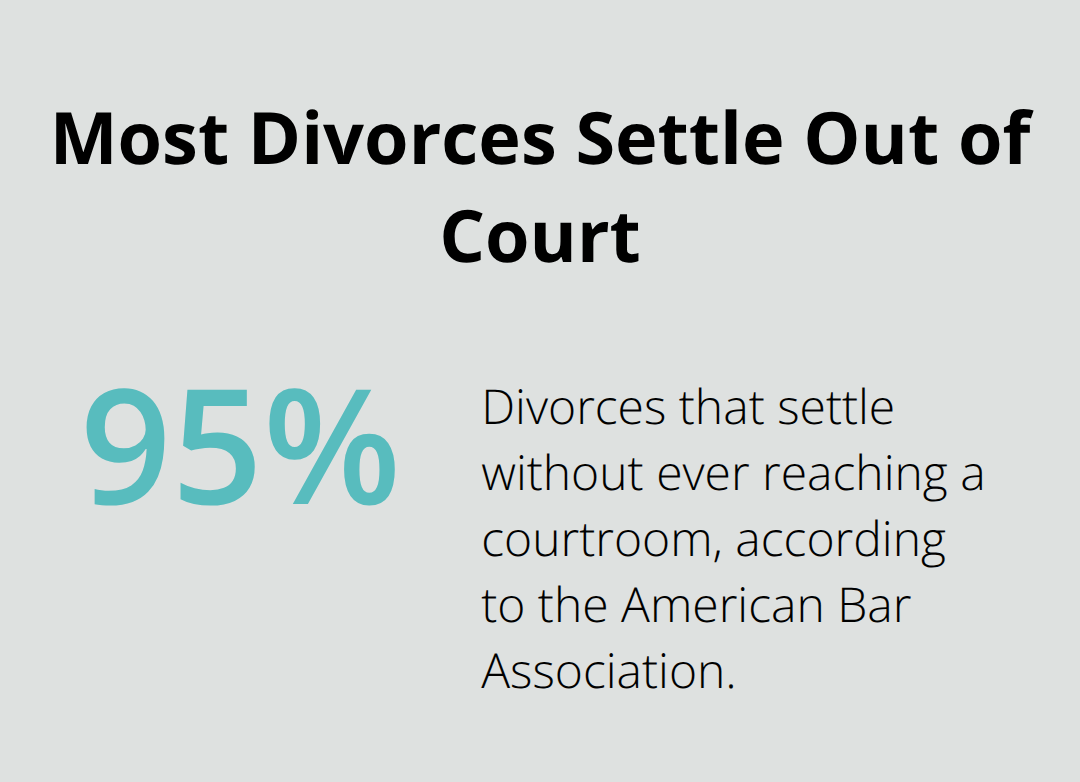
Roughly 95 percent of divorces settle without ever reaching a courtroom, according to data from the American Bar Association. That statistic matters because it shows most people do find paths to agreement. If you and your spouse have no children, minimal shared assets, and genuinely agree on how to split what little you have, handling the paperwork yourself is genuinely feasible.
The Florida Courts website provides self-help resources and forms specifically designed for people representing themselves, and the Simplified Dissolution process exists precisely for this scenario-couples without minor children, no alimony disputes, and a settlement already in hand can file with fewer steps and lower costs.
Filing Requirements You Must Meet
You’ll still need to file correctly, serve your spouse properly, and submit the right documents to the Brevard County Clerk, but the process itself is straightforward when everyone cooperates. Online legal document services can generate your initial paperwork, though you should verify that whatever forms you use comply with Florida’s current requirements. The real challenge isn’t the paperwork-it’s recognizing when you’ve crossed into territory where you actually need help.
Hidden Complications That Derail Self-Representation
Many people underestimate how much they own together or fail to account for retirement accounts, which courts divide differently than regular savings. Others agree to child support or custody arrangements that later prove unworkable or financially devastating. Missing a court deadline costs you, not the other side, and the consequences compound quickly. If your finances involve multiple properties, business interests, significant retirement accounts, or any children at all, self-representation becomes genuinely risky.
The True Cost of Mistakes
The financial impact is sharp: the average divorce costs about 15,000 dollars, but mistakes made without legal guidance often cost far more to fix afterward. Correcting errors in asset division, custody orders, or support calculations requires additional court filings, modifications, and sometimes litigation-expenses that quickly exceed what you would have paid for proper representation from the start. These complications are precisely why understanding your actual situation matters before you decide to proceed alone.
When You Need an Attorney for Your Divorce
Complex Assets and Business Ownership
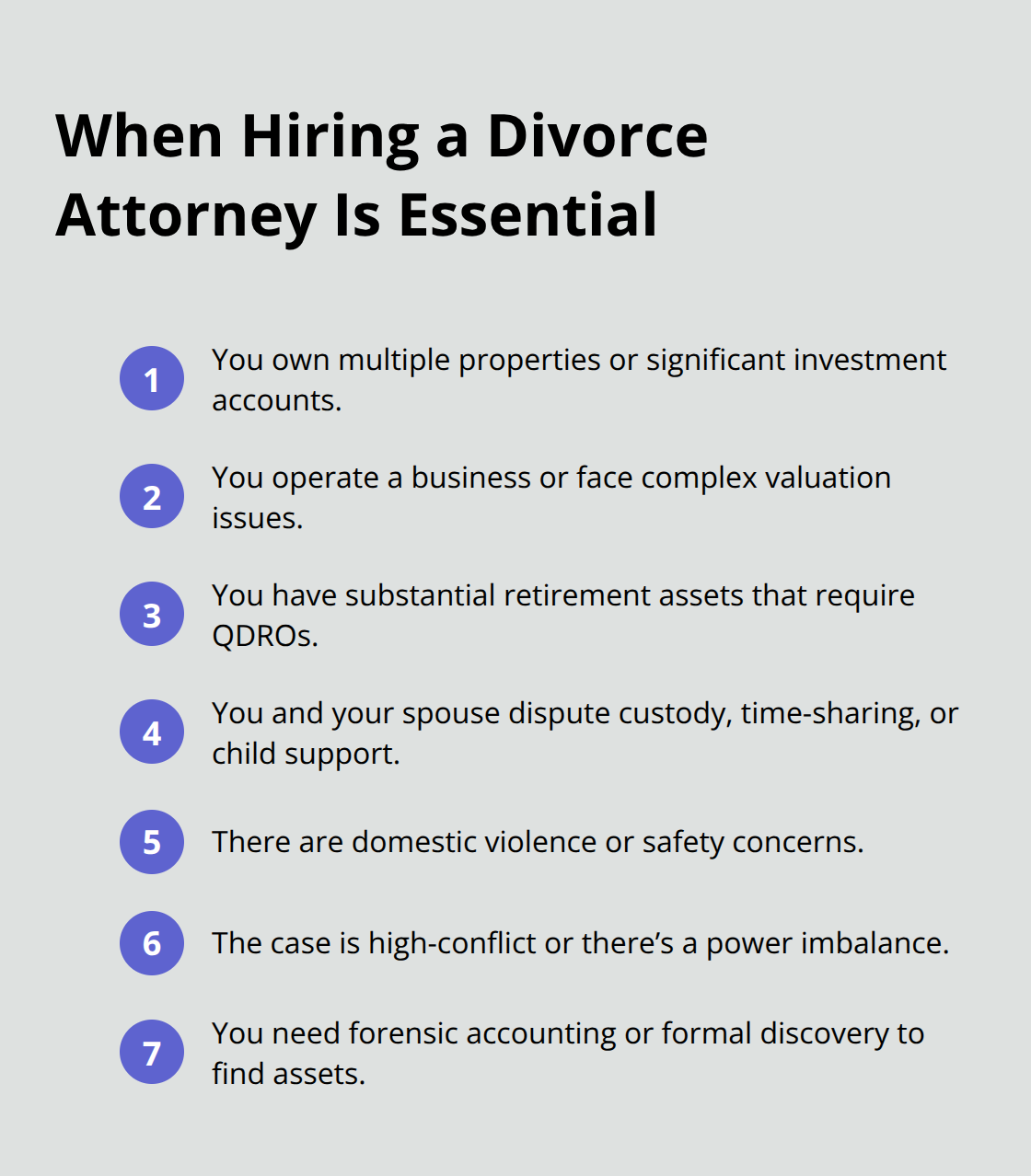
Complex assets and business ownership create immediate legal complications that self-representation cannot handle safely. If you own real estate beyond your primary home, hold significant retirement accounts like 401(k)s or pensions, operate a business, or have investments, courts divide these assets under Florida’s equitable distribution rules, which start with a 50/50 presumption but allow judges to deviate based on factors like the length of your marriage and each party’s contributions. Valuing a business requires forensic accounting, and pension division involves Qualified Domestic Relations Orders that must meet strict federal requirements or they become worthless. Missing these details costs you thousands in lost assets you rightfully own.
The Financial Reality of Mistakes
The average divorce costs about $15,000, but financial mistakes without proper guidance often exceed $30,000 to correct through later modifications and litigation. Correcting errors in asset division requires additional court filings and sometimes litigation-expenses that quickly exceed what you would have paid for proper representation from the start. These complications are precisely why understanding your actual situation matters before you decide to proceed alone.
Child Custody and Support Disagreements
Child custody and support disagreements demand attorney representation because Florida law requires specific findings about your child’s best interests, and judges consider factors including each parent’s stability, the child’s relationship with both parents, and whether shared parental responsibility serves the child. If you and your spouse disagree on time-sharing arrangements, support amounts, or decision-making authority, the court decides, and mistakes in your initial agreement become extremely difficult to modify. Child support follows Florida’s guidelines schedule based on both parents’ incomes, but judges can deviate upward or downward for substantial overnight contact, special needs, or extraordinary expenses.
High-Conflict Situations and Domestic Violence
High-conflict situations or domestic violence concerns require protective orders, safety provisions in parenting plans, and sometimes supervised exchange locations, all of which demand professional legal strategy to protect your family while preserving your parental rights. These cases involve sensitive family law matters where one misstep can affect your custody rights or safety for years to come.
The stakes are too high to navigate without someone who understands Florida’s family law system and can advocate effectively on your behalf.
Common Mistakes People Make Without Legal Representation
Underestimating Shared Assets and Hidden Property
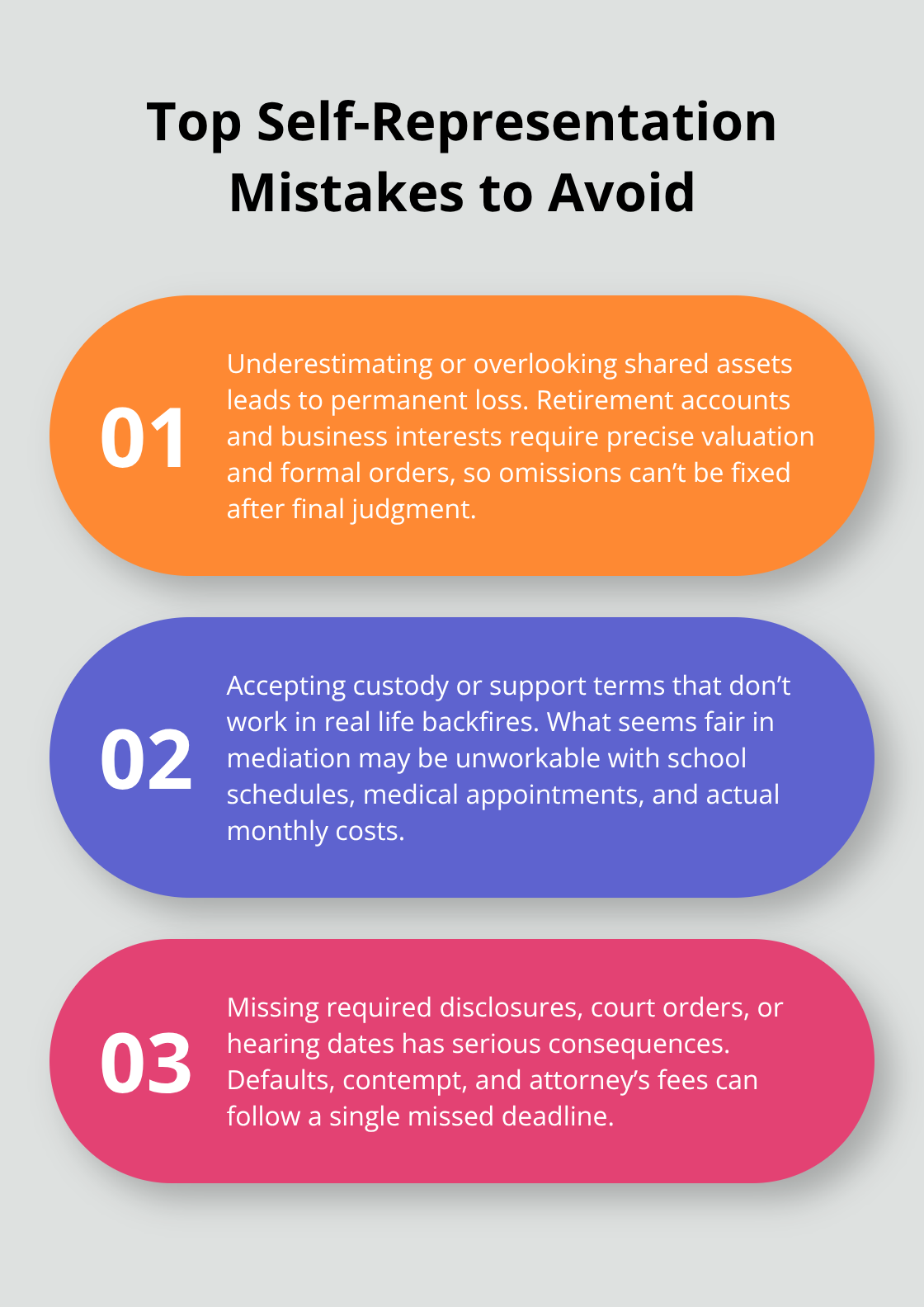
People who represent themselves in divorce often fail to account for what they actually own together. Retirement accounts like 401(k)s and pensions don’t show up on a bank statement, yet Florida courts divide them under equitable distribution rules that require precise valuation and often a Qualified Domestic Relations Order to execute properly. If you miss a pension or fail to account for a business interest, you lose that asset permanently-there’s no do-over once the final judgment enters. One person might think they’re splitting a house and a car, only to discover their spouse has three investment accounts worth six figures that never got mentioned. The Florida Courts website provides self-help forms, but those forms don’t uncover hidden assets; they only formalize what you already know about.
Accepting Unfavorable Custody and Support Terms
The second major mistake involves accepting custody or support terms without understanding what they actually mean in daily life and dollars. A 50/50 time-sharing arrangement sounds fair until you realize it requires coordinating school pickups, medical appointments, and overnight exchanges in ways that become logistically impossible or emotionally damaging. Child support follows Florida’s guidelines schedule based on both parents’ combined net income and overnight contact percentages, but judges can deviate upward for special needs, private school costs, or extraordinary medical expenses. Many people agree to amounts that sound reasonable in a mediation session but prove unsustainable once they face actual monthly expenses. Others accept custody terms that leave them with minimal time with their children because they didn’t understand how Florida courts apply the best-interest standard or how to document evidence supporting a different arrangement. These agreements are extremely difficult to modify later unless you can show a substantial change in circumstances.
Missing Critical Deadlines and Filing Requirements
The third mistake involves missing deadlines and filing requirements that seem minor but carry serious consequences. Florida requires financial disclosures within 45 days of the respondent’s answer, and if you miss that deadline, the court can strike your pleadings or enter a default judgment against you. Court orders about interim child support, asset distribution, or where children live must be followed exactly-missing a single deadline or filing requirement can result in contempt charges, attorney’s fees against you, or loss of custody time. Understanding the distinction between legal advice and legal information is crucial, since the Brevard County Clerk’s office can only provide procedural information about what the rules require, not guidance on what you should do. Missing a hearing date costs you far more than hiring an attorney would have.
Final Thoughts
The answer to whether you need an attorney for a divorce in Melbourne, Florida depends entirely on your situation’s complexity. Simple uncontested divorces with no children and minimal assets can sometimes proceed without legal representation, but the moment children, significant property, or disagreement enters the picture, the risks of self-representation multiply rapidly. We at Harnage Law PLLC have seen countless people attempt to save money by handling divorce alone, only to face costly corrections later that far exceed what proper legal guidance would have cost upfront.
Your specific circumstances determine whether hiring an attorney makes sense. If you own multiple properties, operate a business, have substantial retirement accounts, or face any disagreement about custody or support, professional representation protects your financial future and parental rights. The average divorce costs about fifteen thousand dollars, but mistakes made without legal guidance often cost thirty thousand or more to fix through modifications and additional litigation.
Working with an attorney means someone understands Florida’s equitable distribution rules, child support guidelines, and best-interest standards for custody arrangements. An attorney handles the procedural requirements that trip up self-represented people, ensures all assets get properly valued and divided, and negotiates terms that actually work in your daily life and finances. Contact Harnage Law PLLC in Melbourne, Florida if your divorce involves children, significant assets, or conflict.