
What’s the Difference Between Divorce and Annulment?
Our Blog
What’s the Difference Between Divorce and Annulment?

Many people in Melbourne, Florida think divorce and annulment are the same thing. They’re not.
One ends a valid marriage, while the other says the marriage was never legally valid in the first place. We at Harnage Law PLLC help families understand which path makes sense for their situation.
Divorce Ends Your Marriage, Annulment Erases It
How Florida Treats Divorce and Annulment Differently
In Florida, a divorce acknowledges that your marriage was legally valid and terminates it. You file a petition in circuit court, and the state recognizes the marriage as real but now dissolved. The process is straightforward because Florida allows no-fault divorce, meaning you don’t need to prove your spouse did anything wrong. You simply cite irreconcilable differences, and the court proceeds. This matters because once your divorce is final, you and your former spouse have clear legal standing as separate individuals.
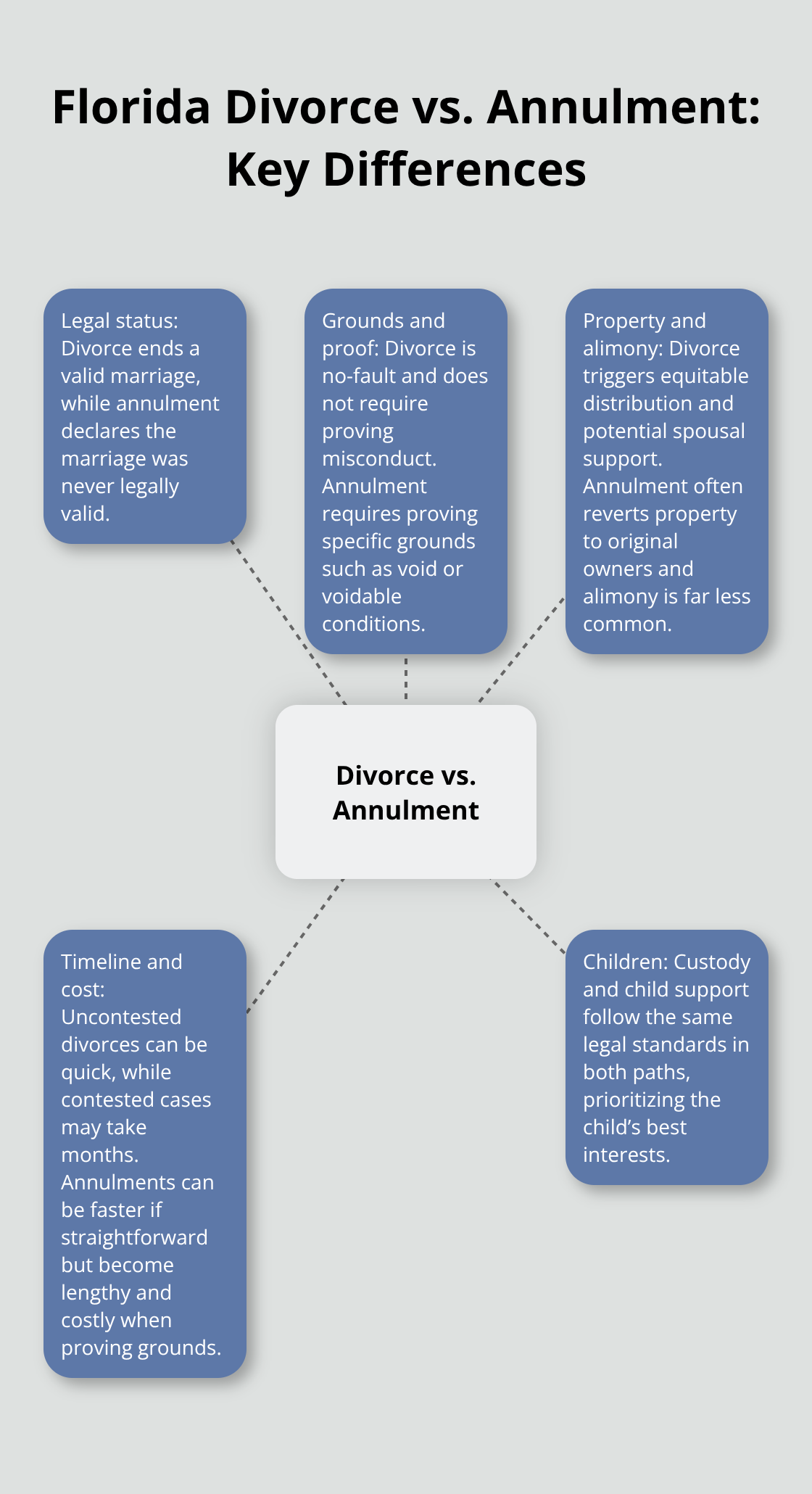
An annulment, by contrast, declares the marriage was never legally valid from the beginning. Florida recognizes two categories: void marriages that are inherently invalid (like bigamous unions or incestuous relationships) and voidable marriages that started valid but can be annulled due to specific circumstances. To obtain an annulment in Florida, you must prove grounds in court.
What Grounds Allow You to Pursue an Annulment
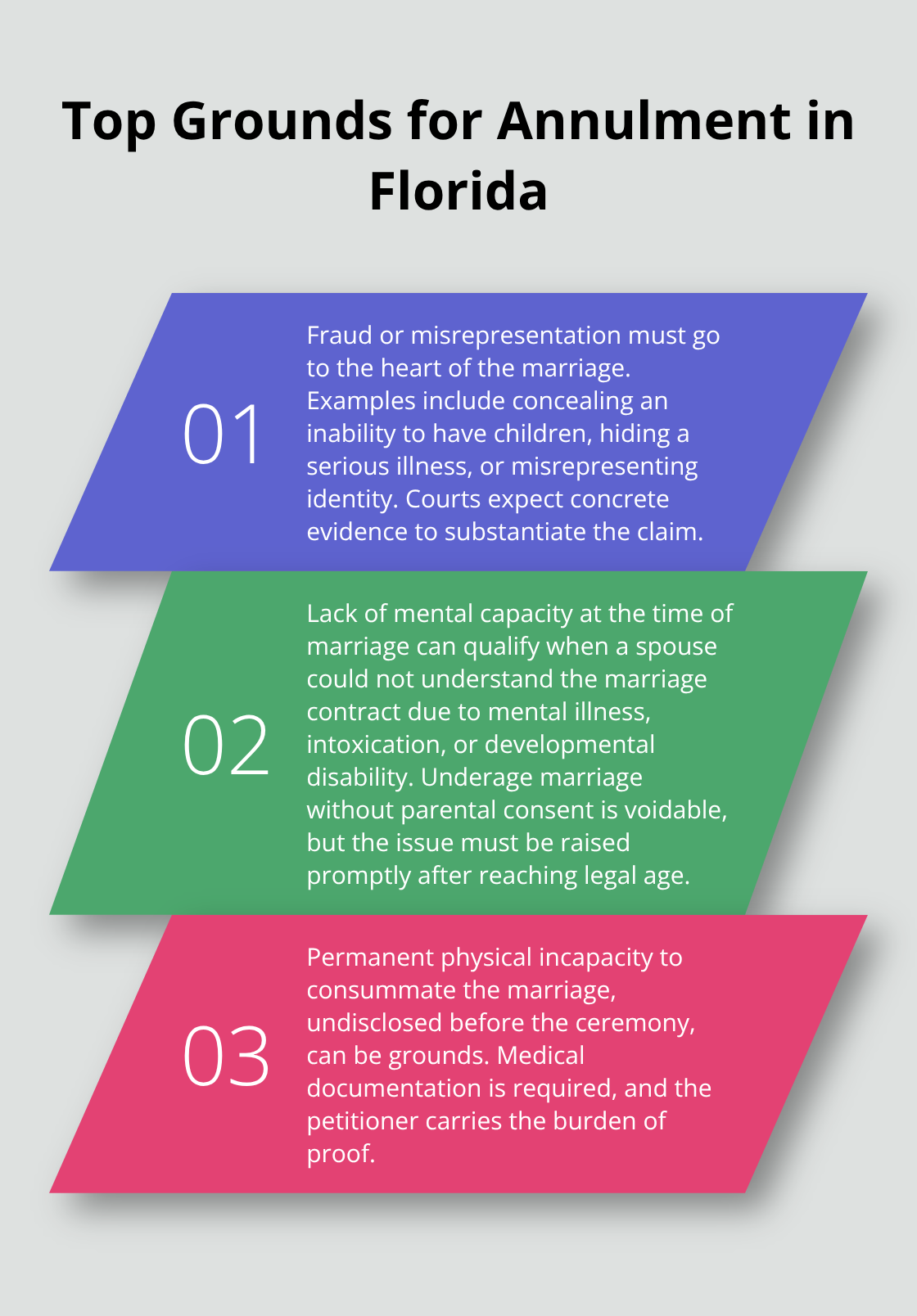
Common grounds include fraud or misrepresentation about something fundamental to the marriage, lack of mental capacity to consent, being underage without parental consent at the time of marriage, or permanent physical incapacity not disclosed beforehand. The burden of proof falls on you, which is why annulments typically require more evidence and documentation than divorces.
How Timeline and Costs Differ Between the Two Paths
Divorces in Florida generally take longer than annulments when both are contested, though uncontested cases move faster. An uncontested divorce with no children can finalize in weeks if paperwork is in order, but contested divorces involving property disputes or custody disagreements often take six months to over a year. Annulments, when grounds are straightforward and both parties agree, can move quicker because the court isn’t dividing marital property or setting alimony in the same way. However, if you must prove fraud or other grounds through testimony and evidence, an annulment can become lengthy and costly.
Financial Outcomes: The Critical Distinction
After a divorce, you may owe or receive alimony, and marital assets are divided according to state law. Property division follows Florida’s equitable distribution rules-assets acquired during the marriage are divided fairly (though not necessarily equally), and spousal support may be ordered depending on factors like income and length of marriage. After an annulment, the marriage is treated as if it never existed, so ongoing spousal support is far less common, and property generally reverts to whoever brought it into the relationship.
What Happens to Children in Either Scenario
Florida courts still address child custody and support in annulment cases just as they do in divorces, so the presence of children doesn’t shorten the timeline significantly. Whether you pursue divorce or annulment, your children’s welfare remains the court’s priority, and custody arrangements follow the same legal standards. The choice between these two paths affects your financial obligations and property rights far more than it affects parental responsibilities. Understanding these distinctions helps you make an informed decision about which option aligns with your circumstances and goals.
What Grounds Make an Annulment Possible in Florida
Void and Voidable Marriages: Understanding the Distinction
Florida courts recognize specific grounds that make a marriage voidable or void, and understanding these distinctions matters because they determine whether you can pursue annulment. Void marriages are inherently invalid from the start-bigamy and incest fall into this category and require no action from you to be invalid, though you still must file a petition to obtain a court declaration. Voidable marriages begin as valid but become subject to annulment when certain conditions existed at the time of marriage.
Fraud and Misrepresentation as Grounds
Fraud or misrepresentation stands as one of the most frequently cited grounds, but it must go to the heart of the marriage. Claiming your spouse lied about finances or minor matters will not succeed; the deception must concern something fundamental like concealing an inability to have children, hiding a serious illness, or misrepresenting identity. Courts demand concrete evidence-medical records, witness testimony, or documented communications-to support fraud claims, which is why this path requires more preparation than filing for divorce.
Mental Capacity and Age-Related Grounds
Lack of mental capacity at the time of marriage also qualifies, meaning your spouse could not understand the nature of the marriage contract due to mental illness, intoxication, or developmental disability. You will need medical or psychiatric documentation to prove this, making it one of the harder grounds to establish without professional records. If either spouse was under eighteen and married without parental consent, the marriage becomes voidable under Florida law, though you must raise this ground promptly after reaching legal age or the right to annul expires.
Physical Incapacity and the Burden of Proof
Permanent physical incapacity that was not disclosed before marriage-such as inability to consummate-rounds out the major grounds, requiring medical evidence and proof that the condition was unknown to the other spouse before the ceremony. The burden of proof falls entirely on you, meaning you must present sufficient evidence to convince the court that grounds existed. This differs fundamentally from no-fault divorce, where you simply state irreconcilable differences and proceed.
Evidence Requirements and Practical Implications
Annulment cases often require depositions, expert testimony from medical professionals, and substantial documentation, which increases both timeline and attorney fees compared to straightforward divorce proceedings. Many people in Melbourne, Florida who initially think annulment suits their situation discover that gathering evidence and meeting the court’s evidentiary standards makes divorce the more practical choice. When children are involved or when property division becomes complex, the financial and emotional costs of proving annulment grounds can shift your strategy significantly-which is why understanding how property and custody actually work in each scenario matters before you commit to either path.
How Divorce and Annulment Affect Your Assets and Family
Property Division: The Core Financial Difference
The financial consequences of divorce versus annulment in Florida differ sharply, and this distinction alone often determines which path makes practical sense for your situation. In a divorce, Florida courts apply equitable distribution rules to divide marital property acquired during the marriage. Assets like the family home, retirement accounts, vehicles, and bank accounts accumulated during your marriage get divided fairly between you and your former spouse, though fairness does not mean equal. The court considers the length of the marriage, each spouse’s contribution to acquiring assets, and the economic circumstances of each party.
An annulment treats the marriage as if it never legally existed, which fundamentally changes how property gets handled. Assets you brought into the marriage remain yours, and property your spouse brought remains theirs. Jointly acquired assets during the marriage present complications because the court must still address them despite treating the marriage as void.
Spousal Support and Alimony Outcomes
After a divorce is final, you may owe or receive alimony depending on income differences, the length of your marriage, and your ability to meet your own needs. An annulment results in far less common alimony since the law views the marriage as never having happened, though Florida courts retain discretion to award support if one spouse perpetrated fraud or misconduct that justifies it.
The practical takeaway is straightforward: if you accumulated significant assets during your marriage or if you have unequal earning capacity compared to your spouse, a divorce typically results in more predictable financial outcomes because the law specifically addresses property division and spousal support. An annulment may seem cleaner on paper but often creates confusion about asset division, especially for jointly held property or retirement benefits earned during the marriage.
Child Support Obligations Remain Consistent
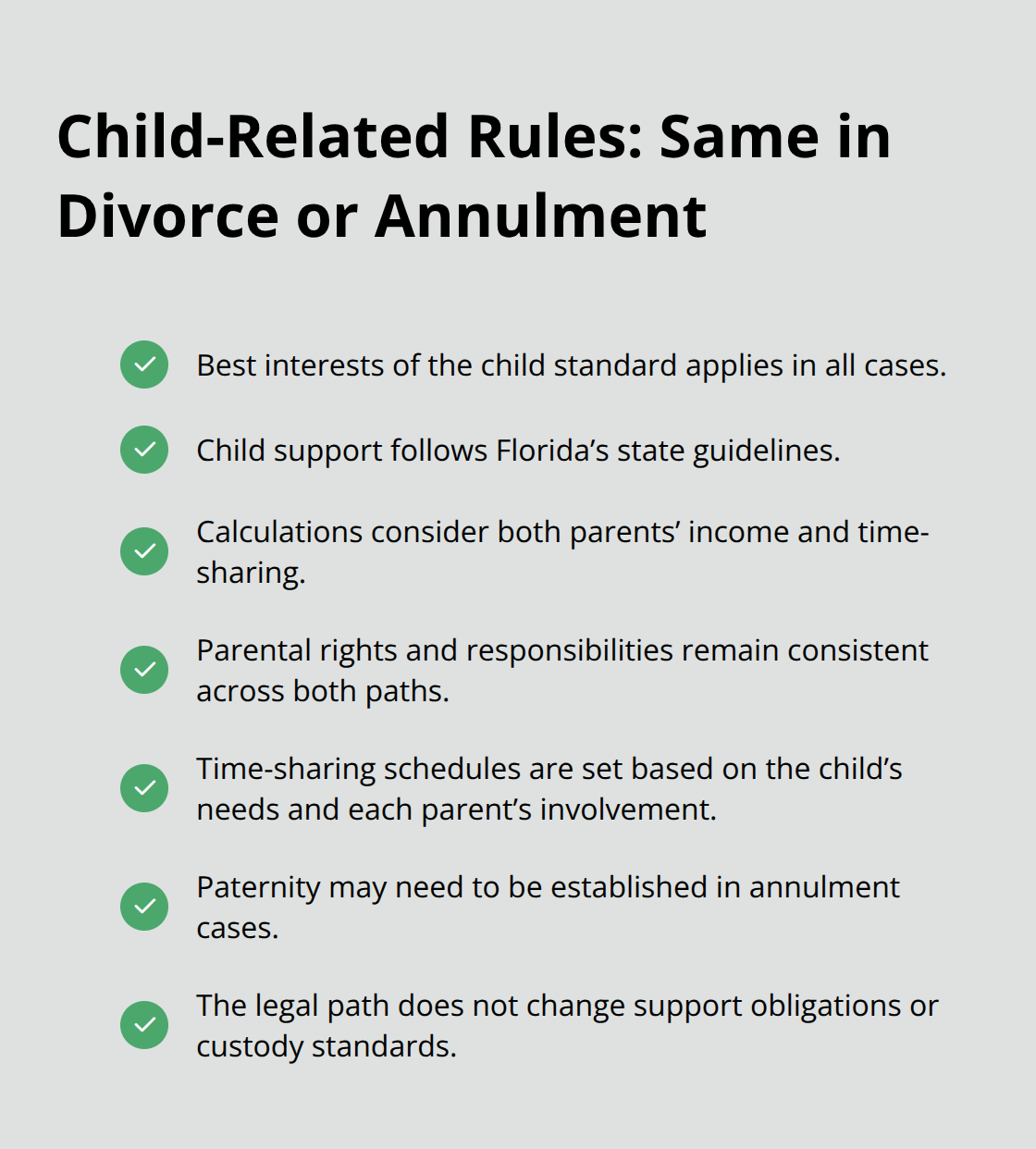
When children are involved, the choice between divorce and annulment becomes even more critical because custody and support obligations remain nearly identical in both scenarios. Florida courts prioritize the best interests of the child in custody decisions regardless of whether parents divorce or annul their marriage, meaning your parental rights and responsibilities do not change based on which legal path you select.
Child support obligations follow state guidelines that calculate payments based on both parents’ income, the amount of time each parent spends with the child, and the child’s needs. The U.S. Census Bureau found that among parents with child support orders, the average annual child support payment ranges significantly based on income levels, but the calculation method remains consistent whether you obtain a divorce or annulment.
Custody Arrangements and Parental Responsibilities
The critical difference emerges in property division affecting your ability to pay support and in the emotional complexity of the process. If you have minor children and pursue annulment, you still must establish paternity if needed and still must work through custody arrangements, time-sharing schedules, and support amounts.
Many families in Florida find that pursuing divorce rather than annulment when children are present reduces complications because divorce law directly addresses all family law matters in one coherent framework. Annulment forces courts to apply custody standards from family law while simultaneously treating the marriage as void, creating potential inconsistencies in how assets and obligations get resolved. If children are part of your situation, discussing both paths with experienced attorneys helps clarify whether the additional complexity of proving annulment grounds justifies the process compared to a straightforward divorce.
Final Thoughts
Choosing between divorce and annulment comes down to your specific circumstances, the strength of your grounds, and what outcome matters most to you financially and emotionally. If you have accumulated marital assets, earned retirement benefits together, or have children, divorce typically offers clearer legal pathways for resolving property division and custody. The no-fault divorce process in Florida is straightforward and widely available, making it the practical choice for most families.
Annulment makes sense only when you have solid grounds like fraud or bigamy and when the financial and emotional costs of proving those grounds align with your goals. The divorce and annulment difference extends beyond legal terminology into real financial consequences-divorce explicitly addresses alimony, property division, and child support within a framework designed for these issues. Annulment treats the marriage as void, which can create complications when jointly held assets or retirement accounts must be divided.
We at Harnage Law PLLC understand that family law decisions carry weight far beyond the courtroom. Contact us for a consultation to discuss your situation with someone who understands Florida family law, and we will review your circumstances, explain your options clearly, and help you make an informed decision about which path serves your family best. Visit us at harnagelaw.com to schedule your consultation and take control of your family law matter.