
Parenting Plan Melbourne FL: Building a Practical Schedule for Your Family
Our Blog
Parenting Plan Melbourne FL: Building a Practical Schedule for Your Family

A parenting plan Melbourne FL is more than just a schedule-it’s the foundation for your child’s stability after separation or divorce. When both parents work from the same roadmap, children benefit from predictability and reduced conflict.
We at Harnage Law PLLC help families in Melbourne create plans that actually work in real life, not just on paper. This guide walks you through building a schedule that serves your family’s unique needs while meeting Florida’s legal standards.
The Three Pillars That Make Parenting Plans Stick
Structured Communication Prevents Conflict
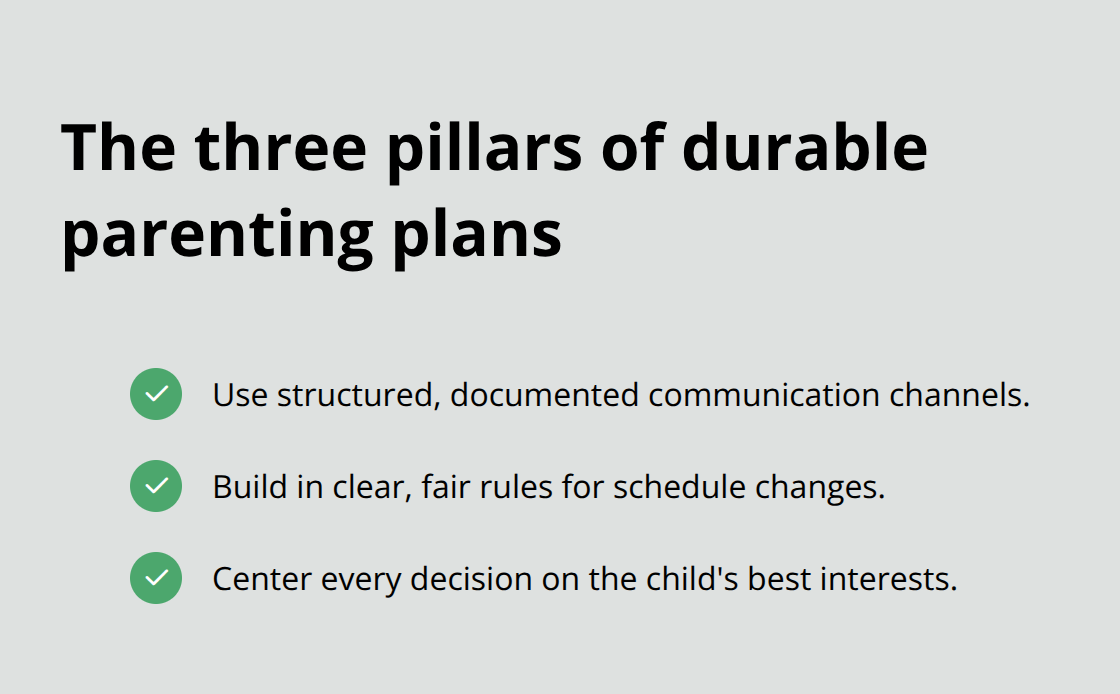
A parenting plan only works when both parents commit to structured communication, not occasional conversations during pickups or arguments over text. You must set specific communication channels before conflict arises. Many families use dedicated co-parenting apps like OurFamilyWizard or Talking Parents, which create timestamped records of all exchanges and reduce misunderstandings. These platforms cost between $99 and $180 annually but provide documentation that protects both parents if disputes reach court. Without designated communication methods, parents often rely on phone calls or texts that escalate tensions.
You should establish whether you’ll communicate daily, weekly, or only about urgent matters. Decide if you’ll discuss major decisions together or notify each other afterward. Courts in Brevard County favor parents who demonstrate consistent, respectful communication because it directly impacts the child’s emotional stability.
Flexibility Prevents Resentment
Flexibility matters just as much as structure. Life changes constantly-a child gets sick, a work schedule shifts, a school event gets rescheduled-and rigid plans create resentment and conflict. The most effective parenting plans include specific language about how parents will handle last-minute adjustments. If one parent needs to swap a weekend, the other parent has 48 hours to respond with an alternative date. This prevents endless negotiation while maintaining predictability for the child.
The Child’s Best Interests Drive Every Decision
You must focus every decision on whether it serves your child’s actual well-being, not your preferences or convenience. Courts in Melbourne prioritize arrangements that minimize disruption to school, activities, and relationships with both parents. When you center decisions on your child’s stability and growth, you naturally make plans that judges approve and that children actually thrive under. A parenting plan that emphasizes your child’s routine, healthcare needs, and emotional security becomes enforceable because it reflects Florida law’s core principle: the child’s best interests come first. This foundation-clear communication, built-in flexibility, and child-centered decisions-positions your plan to withstand the practical challenges that arise during implementation, which we address in the next section.
How to Structure Pickup Times and School Schedules That Actually Work
Set Exact Pickup and Drop-Off Times
Practical schedules require specific pickup and drop-off times that both parents can meet consistently. Vague arrangements like afternoon pickups or sometime after school create conflict and leave your child waiting. Instead, set exact times down to the minute-for example, 3:15 PM on Mondays and Thursdays rather than after school. This precision eliminates the negotiation that happens every single week and gives your child certainty about who collects them. When you file your parenting plan with Brevard County courts, judges expect these concrete details because they demonstrate you’ve thought through the practical reality of your child’s day.
Align Your Schedule With School Calendars
School calendars matter tremendously when you structure your parenting plan. If your child starts at 8:30 AM, one parent should handle morning duties on their scheduled days, and the other parent should never expect a pickup before school ends.
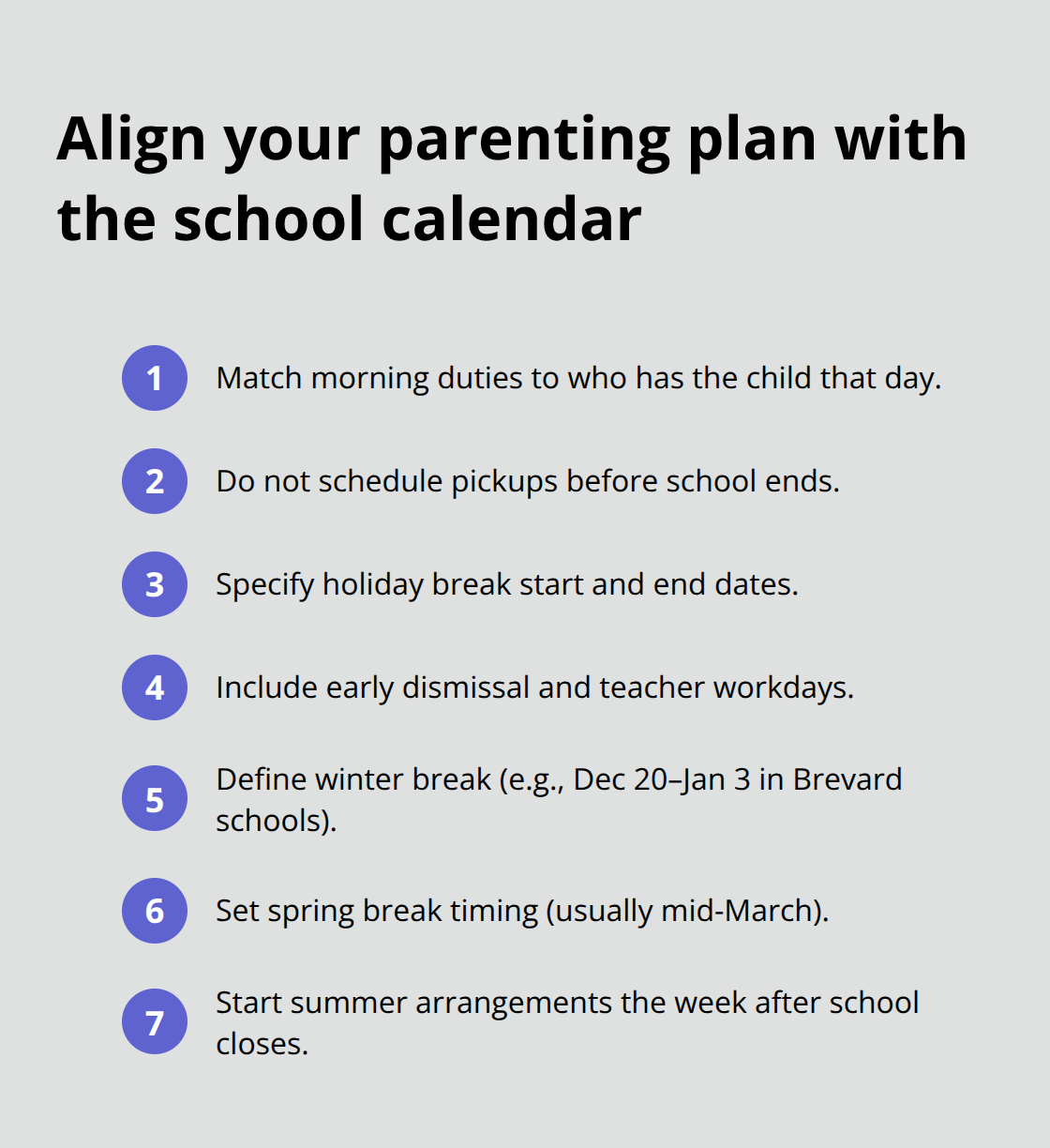
Holiday breaks, early dismissal days, and summer break require separate language in your plan so both parents know exactly when transitions happen. Include specific times for winter break (typically December 20 through January 3 in Brevard schools), spring break (usually mid-March), and summer arrangements starting the week after school closes. This level of detail prevents confusion and ensures your child transitions smoothly between homes.
Clarify Who Pays for Activities and Transportation
Activities and transportation costs create significant conflict when your plan doesn’t address them explicitly. If your daughter plays soccer on Saturday mornings, does the parent with custody that weekend handle transportation, or do you split based on who enrolled her in the activity? Most courts in Melbourne favor arrangements where the parent with scheduled time also manages transportation and activities during that period. Your plan should address extracurricular costs explicitly-which parent covers soccer fees, dance lessons, or sports equipment. Document these decisions so resentment doesn’t build over unexpected expenses.
Define Holiday and Vacation Exchanges With Precision
Holidays and vacations deserve specific dates and times rather than broad language like spring break or summer months. If your child spends Christmas Eve and Christmas Day with one parent and December 26 through December 31 with the other, write those dates into your plan. Vacation time requires similar clarity-if each parent receives two weeks of summer vacation with advance notice, state that one parent must notify the other by May 1 for summer plans. This prevents last-minute scrambling and gives your child stable plans to anticipate. Once you establish these scheduling details, you must understand how Florida courts evaluate whether your plan meets legal standards and what happens when circumstances shift unexpectedly.
Getting Your Parenting Plan Approved by Florida Courts
File Your Plan With Brevard County Courts
You must submit specific documents to the Clerk of Court at the Moore Justice Center in Viera or the Melbourne Courthouse to get your parenting plan approved. The required documents include a petition for time-sharing, the parenting plan itself, and a family law cover sheet, all available through the Florida Courts Help Center at help.flcourts.gov. The filing fee in Brevard County runs approximately $409 as of 2023, though you can request a fee waiver if your income qualifies. Many parents file electronically through the E-Filing Portal, which speeds up processing and eliminates in-person courthouse visits. After you file, you must request a hearing through the judge or magistrate assigned to your division-contact information appears on your case assignment notice. Courts in Melbourne typically schedule hearings within 30 to 60 days, though docket volume affects this timeline. If you and the other parent reach agreement before the hearing, you can submit a stipulation to avoid trial entirely, which most judges prefer since it shows both parents prioritize cooperation over conflict.
What Judges Examine in Your Plan
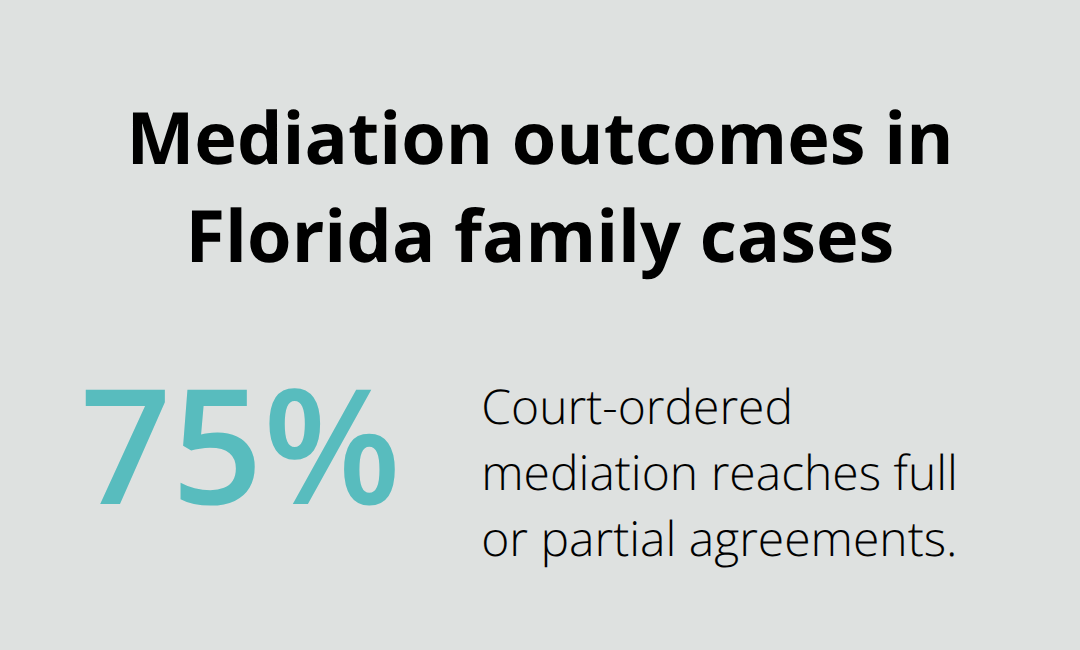
Judges reviewing parenting plans focus intensely on whether arrangements serve your child’s best interests and whether both parents can actually implement them. Courts examine whether your plan maintains your child’s relationship with both parents, preserves school stability, and accounts for healthcare needs explicitly. A plan stating pickup happens at 3:15 PM every Monday impresses judges far more than vague language about afternoon exchanges. Judges also scrutinize communication provisions-if your plan includes structured communication methods and dispute resolution steps before returning to court, that signals maturity and reduces future litigation costs. If mediation hasn’t occurred, the court may order it before trial (with about a 75 percent success rate for reaching full or partial agreements according to family law research).
Should your case proceed to trial, judges may order a custody evaluation costing $1,500 to $6,000, which takes several weeks and examines both parents’ capacity to parent.
Handle Modifications When Life Changes
You must prove a substantial, material, and unanticipated change in circumstances to modify an existing plan-a job loss, relocation, or your child’s changed needs qualify, but minor scheduling preferences do not. Courts strongly favor stability, so judges rarely modify plans unless the change genuinely affects your child’s welfare. When you file for modification through Brevard County, you follow the same procedures as initial filings and expect courts to prioritize arrangements that minimize disruption to your child’s established routine and relationships.
Final Thoughts
An effective parenting plan Melbourne FL rests on three concrete elements: specific scheduling details that eliminate daily negotiation, clear communication methods that prevent conflict, and unwavering focus on your child’s stability and growth. When your plan includes exact pickup times, documented holiday arrangements, and explicit provisions for activities and transportation costs, both parents know what to expect and your child benefits from predictability. Courts in Brevard County approve plans that demonstrate this level of practical thinking because they reflect genuine understanding of how families actually function day-to-day.
Melbourne families have substantial resources available to build and implement their plans. The Florida Courts Help Center at help.flcourts.gov provides all required forms and step-by-step guidance at no cost, while the Brevard County Self-Help Center reviews your completed documents before filing, notarizes signatures, and answers procedural questions at 321-633-7780. If you and the other parent reach agreement, mediation through Brevard County courts offers a faster, less expensive path than trial and succeeds in reaching full or partial agreements roughly 75 percent of the time.
Your next step depends on your current situation-if you and the other parent already agree on major points, gather your child’s school calendar and healthcare provider information, then contact the Self-Help Center to confirm which forms you need. If disagreement exists on custody or scheduling, contact Harnage Law PLLC for a consultation to understand your options and develop a strategy tailored to your family’s circumstances. Whether you proceed alone with self-help resources or work with legal representation, a parenting plan that prioritizes your child’s well-being and maintains both parent-child relationships provides the structure families need to thrive after separation.