
Child Custody Modification Florida: When and How to Seek Change
Our Blog
Child Custody Modification Florida: When and How to Seek Change
Child custody orders aren’t permanent. Life changes, and sometimes those changes mean your current arrangement no longer works for your family.
At Harnage Law PLLC, we help parents in Melbourne Florida navigate child custody modification cases. Whether you’re facing a job relocation, concerns about your child’s safety, or shifts in your parenting situation, understanding when and how to seek modification is the first step toward protecting your family’s interests.
What Florida Courts Actually Require to Modify Custody
Florida courts do not modify custody orders on a whim. The standard is strict, and judges reject most modification requests. Under Wade v. Hirschman, a 2005 Florida Supreme Court decision, you must prove two things: first, a substantial and material change in circumstances since the original order, and second, that the modification serves the child’s best interests. The change must be significant enough that it was not reasonably anticipated when the judge issued the original order. If the change was foreseeable at the time, courts typically deny modification requests. This is why parents who claim their ex simply refuses to follow the schedule rarely succeed-judges will not modify orders to punish bad behavior or reward parents who ignore existing arrangements. Instead, courts focus on whether the child’s actual living situation, safety, or needs have shifted in ways that demand a new custody structure.
Substantial Changes That Courts Actually Recognize
Courts recognize specific types of changes. A parent’s relocation to a different state or city qualifies if it materially affects the child’s access to the other parent or disrupts the existing timesharing schedule. A job change that dramatically reduces a parent’s availability also counts. Criminal convictions, findings of parental unfitness, and documented substance abuse issues meet the substantial change standard because they directly impact the child’s safety and supervision. Health changes matter too-if your child develops a serious medical condition requiring specialized care that one parent cannot provide, or if a parent develops a condition that prevents them from performing their parenting duties, courts will consider modification. School changes and educational needs can trigger review, particularly if the current arrangement prevents a child from accessing appropriate programs or support. The key is that the change must be material and unanticipated, not minor adjustments to daily life or temporary difficulties.
The Child’s Best Interests Drive Every Decision
Florida law requires judges to apply the best interests standard from Florida Statutes Section 61.13 when evaluating modification requests. This standard is broad. Judges assess the child’s physical health and safety, emotional needs, the quality of each parent’s relationship with the child, each parent’s ability to co-parent effectively, and whether one parent has a history of domestic violence or substance abuse. Courts also consider the child’s preferences if the child is old enough and mature enough to express a reasoned opinion. The judge will not reach the best interests analysis until you first prove the substantial change requirement. This two-step process means you must gather strong documentary evidence. School records showing your child’s declining grades or behavioral issues, medical records documenting health problems, employment letters confirming job changes, and police reports or court documents proving criminal activity all strengthen your case. Without concrete evidence, judges dismiss modification petitions regardless of how compelling your situation feels.
Building Your Evidence for Court
Strong documentation makes the difference between a successful modification and a rejected petition. Collect school records, report cards, and communications from teachers that show changes in your child’s academic performance or behavior. Medical records establish health issues or conditions that affect parenting capacity. Employment verification letters confirm job changes and shifts in availability. Police reports, court documents, and criminal records provide proof of conduct that impacts the child’s safety. Photographs, emails, and text messages can document living conditions or parental behavior. The more concrete your evidence, the stronger your position when you present your case to the judge. Courts do not accept vague claims or emotional arguments alone-they require documentation that proves the substantial change you describe actually occurred and affects your child’s welfare.
How to File and Present Your Modification Case
Filing Your Petition with the Court
Starting the modification process requires filing a formal petition with the Florida court that issued your original custody order. You cannot modify custody through informal agreements or conversations with your ex-parent. The Florida Courts Self-Help Center provides the required forms, and you have two filing options: submit documents electronically through the Florida E-Filing Portal or file in person at your county clerk’s office. The filing fee typically ranges from $250 to $400 depending on your county, though fee waivers are available if you meet income requirements. When you file, include your petition for modification, a statement of facts describing the substantial change in circumstances, and any supporting documentation. The clerk will assign your case to a judge and notify both parents of the filing.
Why Informal Modifications Fail
From this point forward, every step must follow court procedure. Informal modifications carry no legal weight, which means any agreement you reach outside court without a judge’s order cannot be enforced and leaves you vulnerable if circumstances change again. A handshake deal or email exchange with your ex-parent may feel like progress, but Florida courts will not recognize it. Only a formal court order protects your rights and your child’s interests.
Organizing Evidence for the Hearing
Presenting your case at the hearing demands organized, credible evidence that directly connects each change to your child’s welfare. Courts in Brevard County and across Florida require you to prove your claims with documents, not testimony alone. Bring original or certified copies of school records showing academic decline or behavioral problems, medical reports documenting health conditions or treatment needs, employment verification letters with dates and salary information, and any court documents or police reports relevant to safety concerns. If a parent’s substance abuse or criminal conduct is central to your modification request, obtain certified records from the appropriate agencies.
What Judges Expect to Hear
During the hearing, the judge will question you about the changes you describe and why modification serves your child’s best interests under Florida Statutes Section 61.13. Answer directly and specifically. Avoid emotional language or accusations.
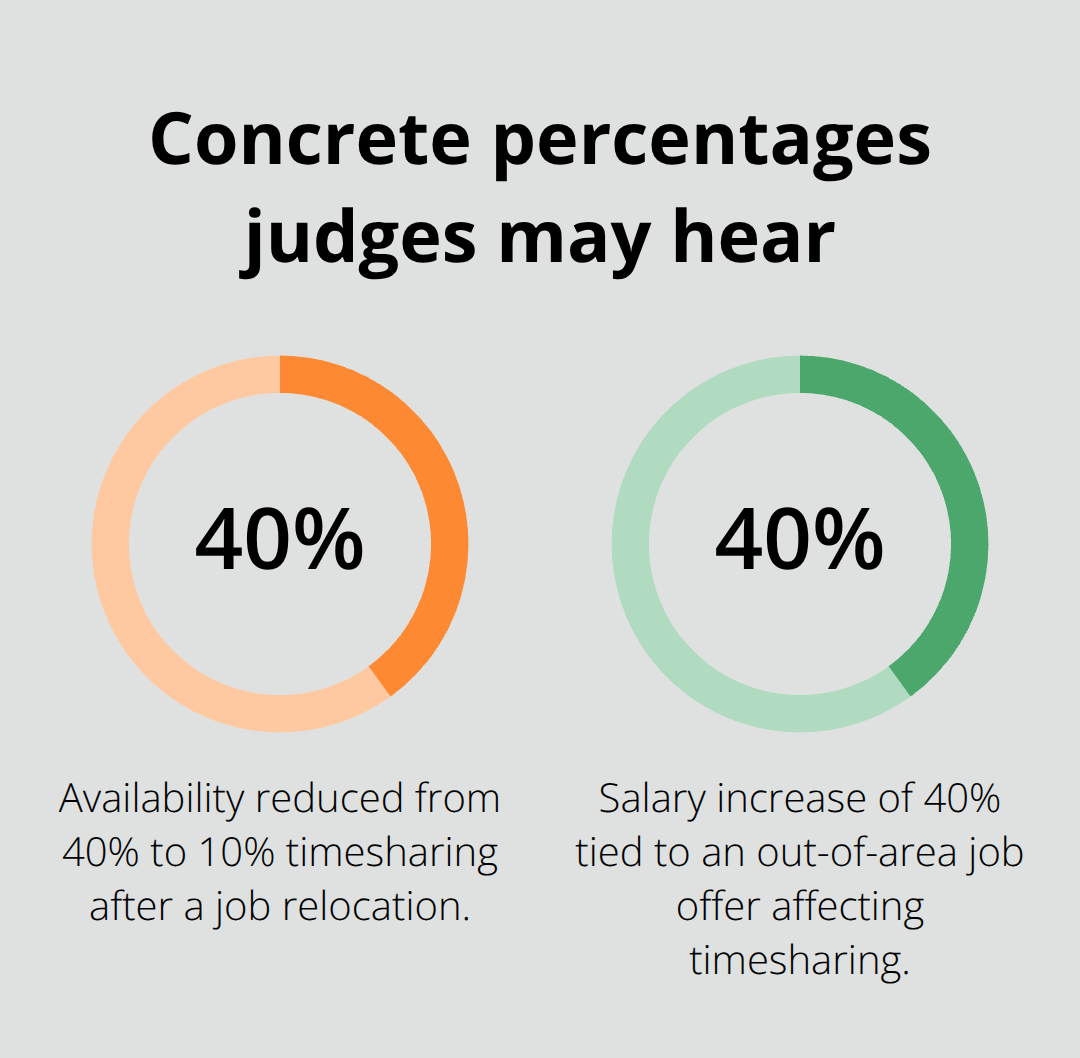
Instead, focus on concrete facts: your child’s grades dropped from A’s to D’s since the current arrangement began, your job relocation reduced your availability from 40 percent to 10 percent timesharing, or your child requires specialized medical care that one parent cannot provide. The judge will assess whether your evidence proves a substantial, material change that was not reasonably anticipated and whether the modification truly protects your child.
Why Documentation Determines Outcomes
Many parents lose modification cases not because their situation lacks merit but because they fail to present organized, credible documentation that meets Florida’s strict legal standard. The judge cannot grant modification based on your word alone. Every claim you make must stand on evidence. Once you present your case and the judge rules, you will move forward with either a modified custody order or a denial that may require you to wait before filing again. Understanding what comes next helps you prepare for the reality of your family’s new arrangement.
Why Parents Seek Custody Modifications in Melbourne, Florida
Relocation and Employment Changes
Relocation stands as one of the most common triggers for custody modification requests in Melbourne, Florida. When a parent accepts a job opportunity in another state or city, the existing timesharing schedule becomes impractical or impossible to maintain. A parent offered a position in Atlanta or Tampa with a 40 percent salary increase faces a genuine dilemma: accept the opportunity and violate the custody order, or decline and damage their financial stability. Florida courts recognize this reality.
Employment changes that substantially reduce a parent’s availability also qualify for modification. If you worked part-time with flexible hours and now work full-time with overnight shifts, your ability to maintain the current timesharing percentage drops significantly. Courts examine employment verification letters and schedules to confirm the change. Conversely, if a parent voluntarily quits a job to reduce their income or deliberately takes a lower-paying position, courts reject modification requests based on that choice. The distinction matters enormously: involuntary changes in employment circumstances support modification, while voluntary decisions designed to manipulate the system do not.
Changes in Parental Capability and Behavior
Changes in a parent’s capability or behavior create the second major category of modification requests. A parent convicted of a crime, particularly one involving substance abuse or violence, creates legitimate safety concerns that courts take seriously. Court documents and criminal records provide the concrete evidence judges require. Similarly, documented substance abuse issues supported by treatment records, police reports, or DUI convictions demonstrate that a parent cannot safely supervise the child.
Mental health crises also trigger modification requests when a parent experiences severe depression, untreated bipolar disorder, or other conditions affecting their parenting capacity. Medical records and psychiatric evaluations establish these claims. A parent’s inability to perform parenting duties due to health problems-whether physical or mental-meets the substantial change standard because it directly impacts the child’s safety and supervision.
Your Child’s Needs and Preferences
A child’s own needs and preferences form the third pillar of modification requests. When a child develops a serious medical condition requiring specialized treatment available in only one location, modification becomes necessary. A teenager’s educational aspirations may align better with one parent’s community resources or school district. Florida law permits judges to consider a child’s preferences if the child is mature enough to express a reasoned opinion, though younger children’s stated preferences carry less weight.
Courts will not grant modification simply because a child prefers one parent; the preference must connect to legitimate needs and circumstances. Documentation of the child’s condition, educational requirements, or documented statements about preferences during court-ordered evaluations strengthens these arguments considerably. The child’s health, safety, and access to appropriate resources drive the court’s analysis, not parental convenience or a child’s momentary wishes.
Final Thoughts
Child custody modification in Florida demands proof that a substantial and material change occurred since your original order was issued, and that modification serves your child’s best interests under Florida law. Without both elements, judges deny your petition. The evidence you gather-school records, medical documentation, employment verification, and court documents-transforms vague claims into compelling proof that your child’s situation has genuinely changed and requires a new custody arrangement.
The modification process itself is straightforward but unforgiving. You file a formal petition with the court, organize your evidence, and present your case at a hearing. Informal agreements carry no legal weight and leave you vulnerable to future disputes. Many parents lose modification cases not because their circumstances lack merit but because they fail to present organized, credible documentation that meets Florida’s legal standard.
If you face child custody modification in Florida, we at Harnage Law PLLC help you navigate these sensitive decisions. Our team provides legal representation for custody modifications across Melbourne, Florida and throughout the state, helping you gather the right evidence and present your case effectively. Contact Harnage Law PLLC to discuss your situation and learn how we can support your family’s path forward.