
Divorce Timeline Melbourne Florida: From Start to Sign-Off
Our Blog
Divorce Timeline Melbourne Florida: From Start to Sign-Off
Divorce in Melbourne, Florida involves multiple phases, each with specific requirements and timelines. Understanding what happens at each stage helps you prepare mentally and financially for the process ahead.
At Harnage Law PLLC, we guide clients through every step of their divorce timeline in Melbourne, Florida. Knowing the milestones from filing to final decree removes uncertainty and helps you make informed decisions.
How to Start Your Melbourne Divorce
Meeting Florida’s Residency Requirements
Starting a divorce in Melbourne requires meeting Florida’s residency rules before you file. You must have lived in Florida for at least six months continuously before filing your petition, according to Florida Statute § 61.021. The Brevard County Clerk of Court accepts proof of residency through a valid Florida driver’s license, voter registration, or witness testimony. This residency requirement applies regardless of where your marriage took place or how long you’ve been separated. If you haven’t reached six months yet, waiting until you do prevents your case from being dismissed and saves you time and money later.
Gathering Your Documents and Fees
The filing fee in Brevard County is currently $408, though fee waivers are available if you qualify through the Application for Determination of Civil Indigent Status. Assemble three key documents before filing: the Petition for Dissolution of Marriage, a Financial Affidavit listing all income and expenses, and if you have minor children, a UCCJEA Affidavit establishing jurisdiction. The Florida State Courts website provides all required forms at no cost.
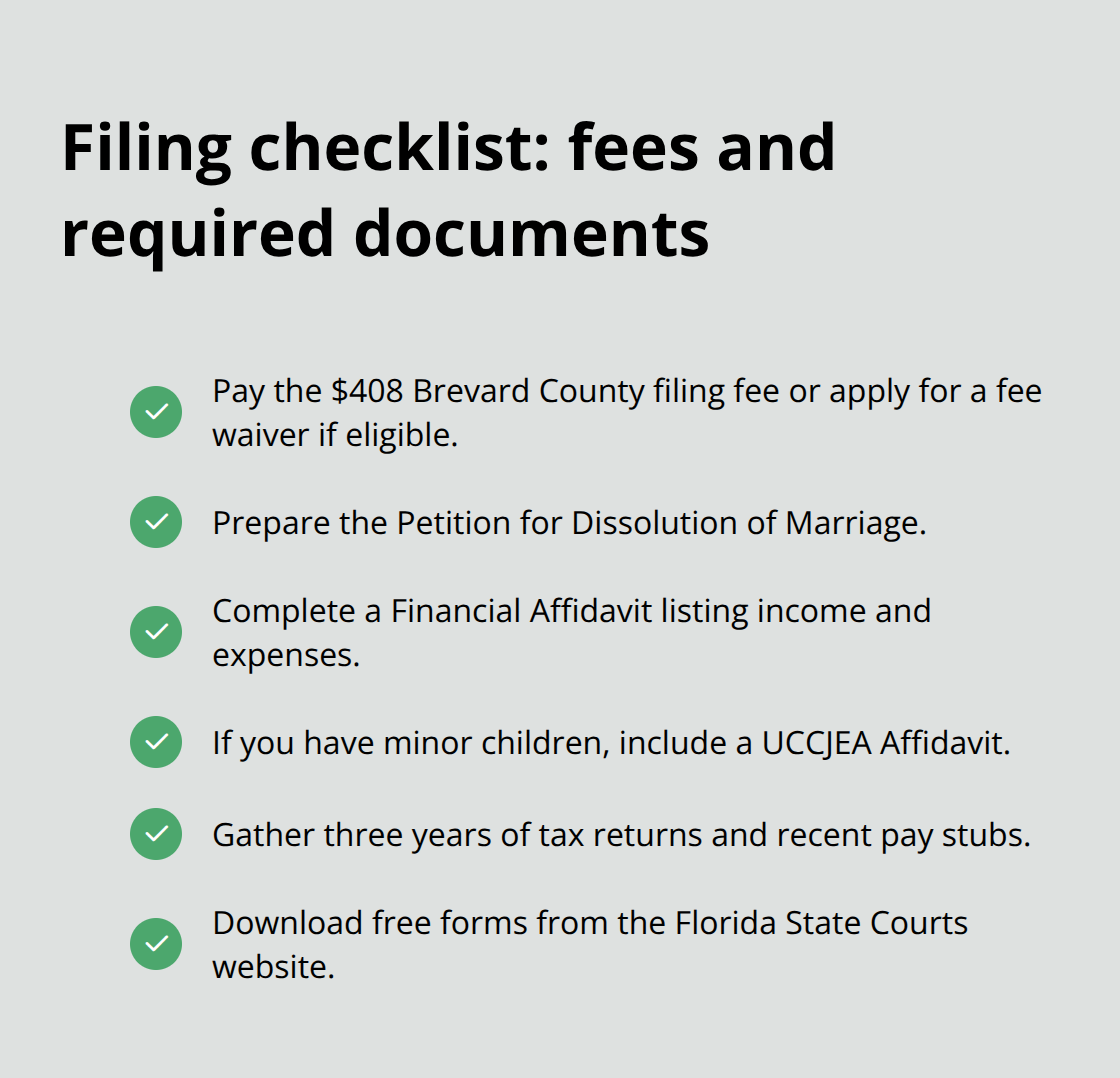
You’ll also need documentation showing your income for the past three years (including tax returns and recent pay stubs), because the court requires this information within 45 days after your spouse is served anyway-having it ready accelerates your case significantly.
Filing Your Petition with the Clerk
File your documents with the Brevard County Clerk of Court during business hours. The clerk’s office offers e-filing options for added convenience. After filing, your spouse must receive legal service with the divorce papers, either through the Sheriff’s Office or a private process server. Your spouse then has exactly 20 days to file an Answer with the court. This 20-day waiting period is mandatory under Florida Statute § 61.19 and cannot be waived except in rare circumstances involving genuine injustice (such as military deployment).
Serving Your Spouse and Obtaining Proof
Serve your spouse promptly-delays in service stretch out the entire timeline. The sheriff’s office charges approximately $40 to $60 for service, while private process servers typically cost $75 to $150 but often complete service faster, especially if your spouse is difficult to locate. If your spouse fails to respond within 20 days, you can pursue a default judgment, though you’ll still need to provide complete documentation to the court. After service is complete, obtain a signed proof of service from whoever served the papers and file it with the clerk immediately. This proof is essential for moving forward; without it, the court won’t proceed to the next phase.
Once you’ve filed your petition and served your spouse, the discovery and negotiation phase begins. Your next obligation involves exchanging financial information with your spouse-a critical step that shapes every decision about property division, support, and child-related arrangements.
The Discovery and Negotiation Phase
Exchange Financial Information Within 45 Days
Within 45 days of your spouse being served, Florida law requires both of you to exchange comprehensive financial disclosures. This mandatory exchange includes tax returns for the past three years, recent pay stubs, bank statements, credit card statements, mortgage documents, vehicle titles, and retirement account statements according to Florida Family Law Rules of Procedure Rule 12.285. Many people underestimate this phase, but it’s where disputes about property division, alimony, and child support are actually won or lost. Start gathering these documents immediately after filing, even though you technically have 45 days. The party with complete documentation first controls the narrative.
Build a Complete Asset and Debt Inventory
Create a detailed inventory of every marital asset and debt, including real estate, vehicles, retirement accounts, and digital assets like cryptocurrency. If your spouse owns a business or has complex investments, consider requesting a forensic accounting evaluation early. The cost runs $2,000 to $5,000, but discovering hidden assets or inflated debts pays for itself repeatedly. Document your involvement in your child’s life now, before negotiations begin. Courts in Brevard County awarded equal time-sharing arrangements to 58 percent of divorced parents in 2024, but judges consider your documented involvement heavily when parents disagree. Keep records of school pickups, medical appointments, extracurricular activities, and daily caregiving responsibilities.
Prepare for Mediation Before Trial
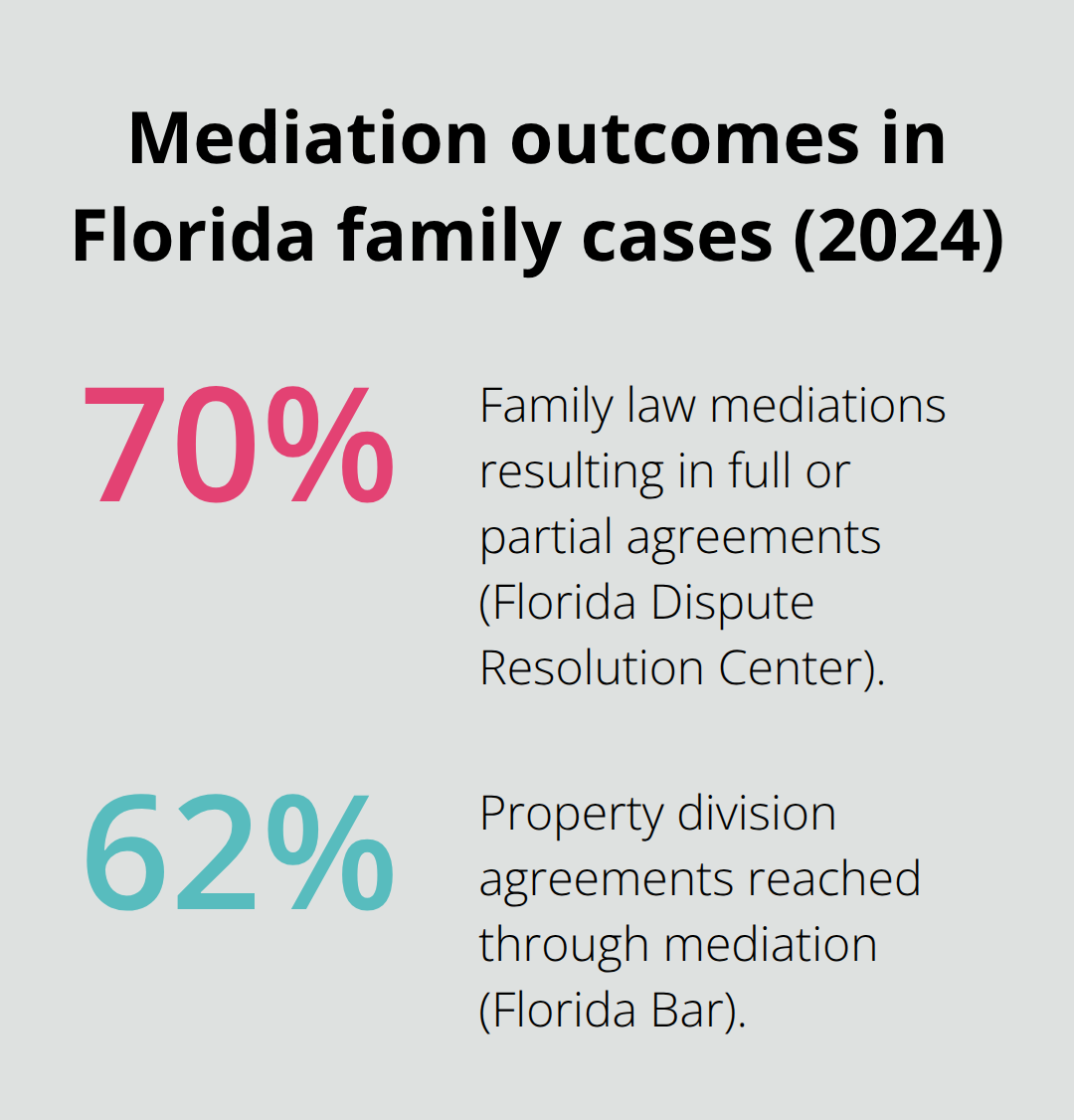
Mediation should be your priority before any trial consideration. The Florida Dispute Resolution Center reported that approximately 70 percent of family law mediations in 2024 resulted in full or partial agreements, and the Florida Bar found that 62 percent of property division agreements were reached through mediation in 2024. A mediator doesn’t impose decisions but helps you and your spouse negotiate.
Fewer than 5 percent of Florida divorces actually go to trial, meaning settlement is the realistic path forward. Approach mediation prepared with your financial documents, a reasonable list of priorities, and flexibility on secondary issues.
Understand Child Support Calculations
Child support calculations in Brevard County average around $880 monthly for one child, based on Florida Child Support Guidelines that factor in both parents’ incomes and time-sharing arrangements. If your spouse resists reasonable proposals, mediation reveals this early so you can adjust your strategy. Uncontested divorces with attorney representation typically cost $2,500 to $7,500 and resolve in 4 to 12 weeks, while contested cases that settle before trial run $7,500 to $25,000 and take 6 to 12 months. The difference between settling and fighting often determines whether you rebuild financially or spend years recovering from litigation costs.
As mediation progresses and financial disclosures become clear, the focus shifts toward court proceedings and final judgment. Understanding what happens during hearings and how judges make decisions about property, support, and custody prepares you for the final stages of your divorce.
Court Proceedings and Final Judgment
Presenting Evidence at Your Hearing
If your case reaches a hearing or trial, you present evidence to a judge who decides all remaining disputes. Florida divorce trials are bench trials, meaning the judge alone determines outcomes on property division, spousal support, child support, and time-sharing arrangements. Organize your financial documents chronologically and create clear exhibits showing income, asset values, and debt obligations. Bring original documents or certified copies, not photocopies, because judges scrutinize source materials carefully.
Building Your Parenting Case
If you have children, organize school records, medical appointments, and activity participation into a coherent narrative showing your parenting contributions. Courts awarded equal time-sharing to 58 percent of divorced parents in Florida according to 2024 data, but judges reach this decision based on evidence you present about your relationship with your children. Your documented involvement in your child’s life matters significantly when judges evaluate parenting capacity and time-sharing arrangements.
Courtroom Conduct and Presentation
Dress professionally, arrive early, and answer questions directly without elaborating unnecessarily. Your demeanor matters; judges notice when parties appear reasonable versus hostile or evasive. If your spouse presents testimony contradicting your financial disclosures or parenting involvement, stay calm and let your attorney address inconsistencies during cross-examination.
Property Division and Alimony Decisions
Property division in Florida follows equitable distribution, not automatic 50-50 splits, which means judges consider marriage length, each spouse’s economic situation, and contributions to the marriage when dividing assets and debts. A marriage lasting 20 years receives different treatment than a five-year marriage, particularly regarding alimony eligibility.
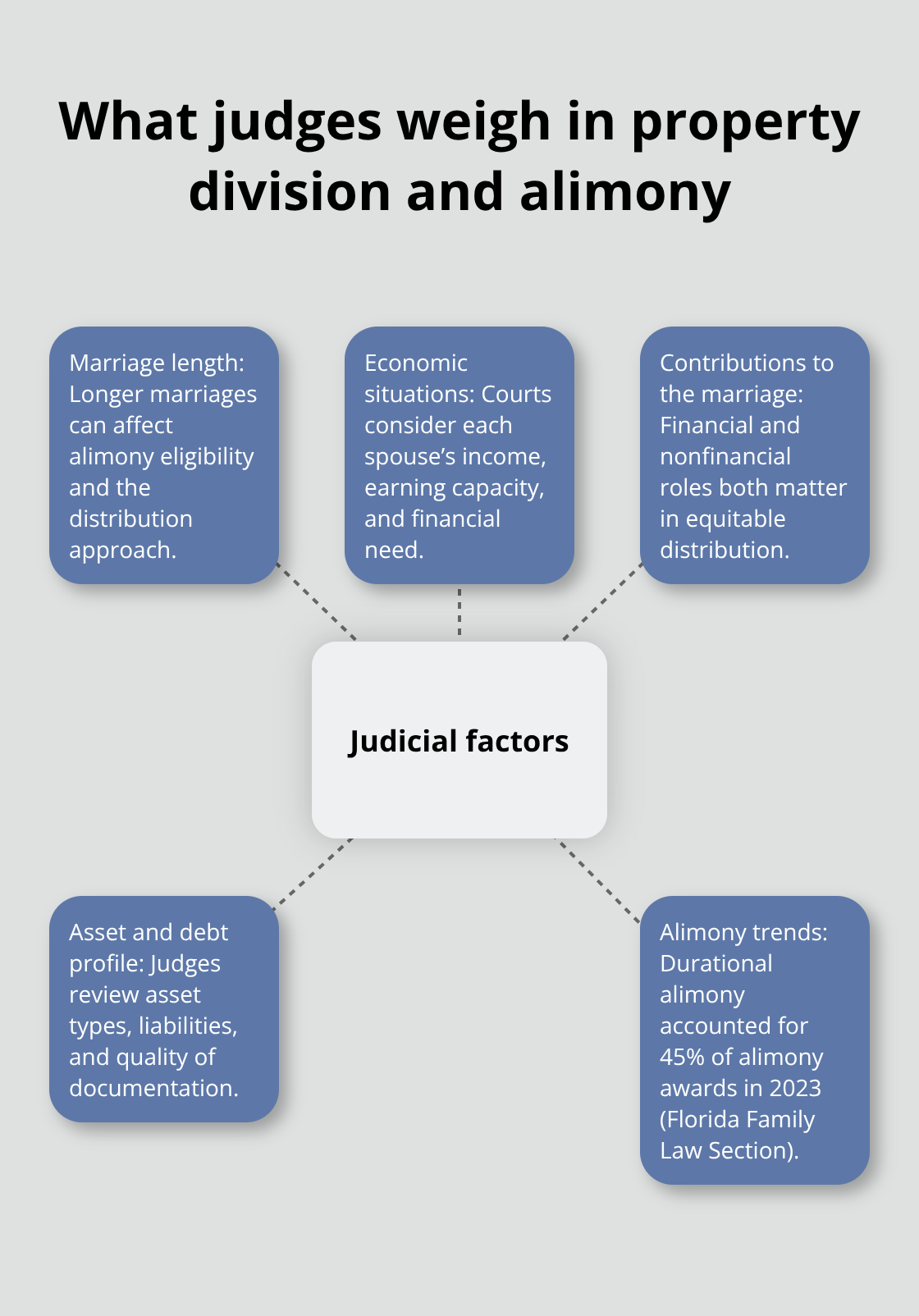
The Florida Family Law Section found that durational alimony was awarded in 45 percent of cases where alimony was granted in 2023, with longer marriages increasing the likelihood of permanent alimony.
Child Support and Final Orders
Child support calculations in Brevard County average around $880 monthly for one child under Florida Child Support Guidelines, but this figure changes based on both parents’ incomes and overnight time-sharing percentages. Provide accurate income documentation because judges can impute income if they suspect underreporting. Once the judge issues final orders on property, support, and custody, you receive a final judgment dissolving the marriage. This judgment becomes enforceable immediately, though either party can appeal within 30 days if they believe the judge made a legal error. Most parties proceed forward without appeal because litigation costs and timeline extensions make appeals economically impractical unless significant assets or custody arrangements were mishandled.
Final Thoughts
Your divorce timeline in Melbourne, Florida spans from initial filing through final judgment, with each phase presenting distinct requirements and decision points. A simplified dissolution takes three to six weeks if both spouses agree on all issues and have no minor children, while uncontested divorces with attorney representation typically resolve in four to twelve weeks. The mandatory 20-day waiting period after service, combined with the 45-day financial disclosure requirement, establishes the foundation for every divorce regardless of complexity.
After your final judgment enters, your financial and parenting responsibilities continue indefinitely. Child support obligations remain enforceable until your child reaches eighteen or graduates high school, whichever occurs later, and property division becomes final though disputes over hidden assets can trigger post-judgment motions if discovered subsequently. Rebuilding after divorce requires intentional financial planning-update beneficiary designations on retirement accounts and insurance policies, establish separate credit if necessary, and review your budget without spousal income or support.
We at Harnage Law PLLC recognize that navigating your divorce timeline in Melbourne, Florida involves far more than legal paperwork and court appearances. Contact our Melbourne family law team to discuss your specific situation and develop a strategy that protects your interests while minimizing timeline delays and unnecessary costs.