
Divorce Attorney Melbourne Florida: Finding the Right Lawyer
Our Blog
Divorce Attorney Melbourne Florida: Finding the Right Lawyer

Choosing the wrong divorce attorney in Melbourne, Florida can cost you thousands of dollars and months of unnecessary stress. The difference between a lawyer who understands your situation and one who doesn’t often determines the outcome of your case.
At Harnage Law PLLC, we’ve seen how the right legal representation transforms divorce proceedings. This guide walks you through exactly what to evaluate when selecting a divorce attorney.
What Sets Apart a Divorce Attorney Worth Hiring
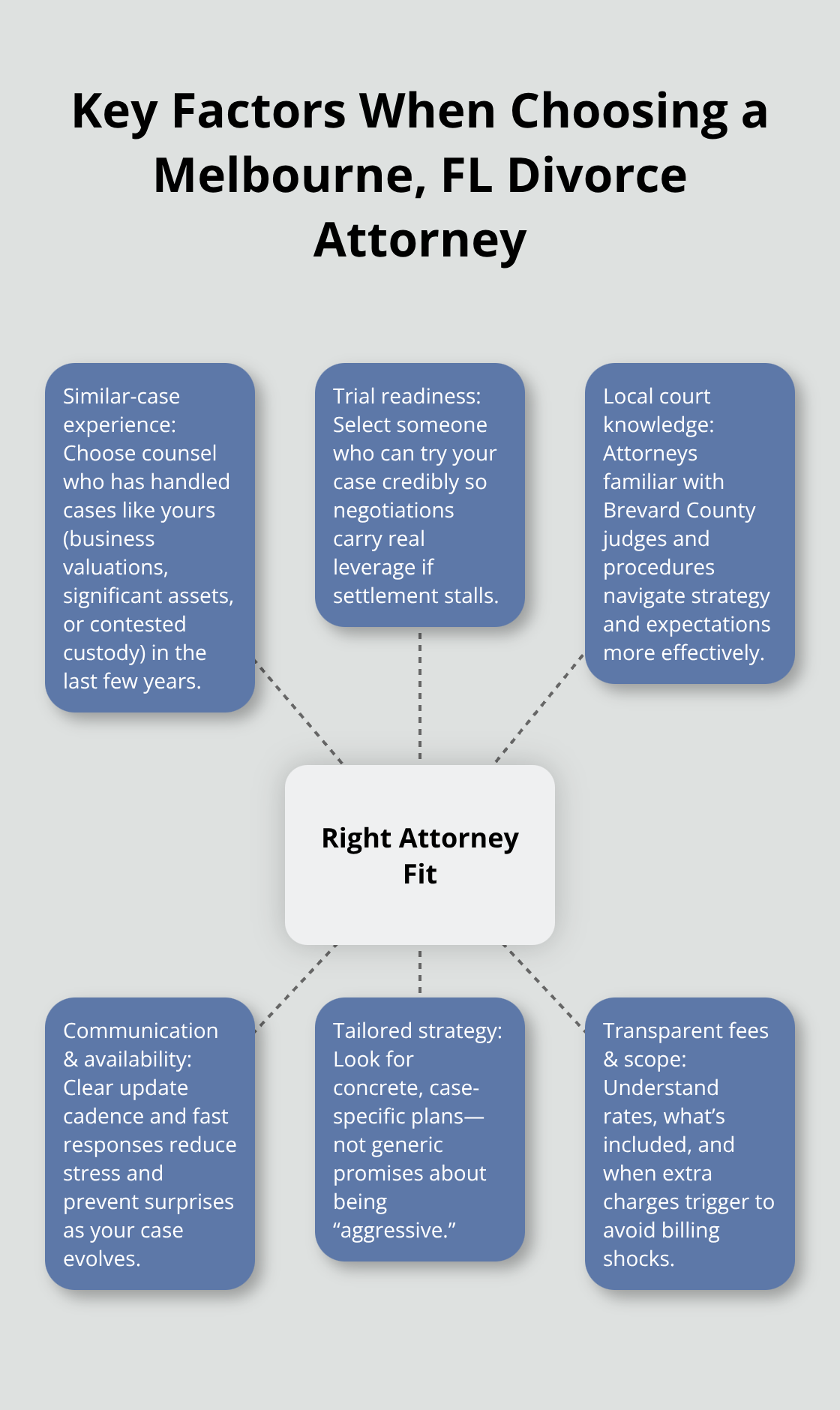
Your divorce attorney’s experience with cases similar to yours matters far more than general practice experience. An attorney who has handled 50 divorces might lack the depth needed for your specific situation-perhaps you’re dealing with a business valuation dispute, significant asset division, or contested custody arrangements. When you meet with potential attorneys, ask them directly how many cases like yours they’ve handled in the past three years. A vague answer signals they may not have focused experience.
How to Evaluate Trial Performance
Many divorce attorneys settle cases before trial, which is often appropriate. However, you need someone who can actually win in court if settlement negotiations fail. Ask prospective attorneys about their trial record specifically-not just their settlement rate. How many family law trials have they tried in front of a judge in the past two years? What were the outcomes?
Judges in Melbourne, Florida often see the same attorneys repeatedly, and courthouse reputation matters significantly. An attorney unfamiliar with local judges’ preferences and courtroom procedures puts you at a disadvantage. Settlement negotiations also become stronger when the other side knows your attorney can credibly threaten trial. This reality shifts the entire dynamic of your case.
Communication Patterns and Real Availability
An attorney who disappears for weeks between communications creates anxiety and leaves you uninformed about critical developments. Before hiring, clarify their communication policy in writing. How often will they contact you with updates? What’s their typical response time to emails and calls?
Some firms use client portals where you can track case progress independently. Request the contact information for one or two past clients and ask about responsiveness during their cases. Your attorney should be reachable when developments occur, not just available during scheduled meetings. Poor communication often causes clients to feel ignored, which damages trust precisely when you need it most.
What Questions Reveal Real Capability
The questions you ask during consultations separate attorneys who understand your case from those who don’t. Ask about their approach to your specific issues (business valuation, custody disputes, or asset division). Ask how they would handle the particular facts of your situation. Listen for concrete answers rather than generic responses about “aggressive representation” or “fighting for your rights.”
An attorney who asks detailed questions about your circumstances demonstrates genuine interest in your case. One who launches into a prepared speech about their firm signals they apply the same approach to every client. The conversation should feel tailored to you, not like a template they’ve used a hundred times before.
Common Mistakes People Make When Choosing a Divorce Lawyer
Price-Based Decisions Cost More Than You Think
Selecting a divorce attorney based primarily on cost is the most expensive mistake you can make. A lawyer charging $150 per hour who loses you $50,000 in asset division costs far more than one charging $300 per hour who protects your interests effectively. According to the American Academy of Matrimonial Lawyers, approximately 60% of clients report dissatisfaction with their legal representation, and cost-cutting decisions rank among the top reasons.

When you interview attorneys, ask what their fees cover and what tasks they handle themselves versus outsourcing. Some firms charge lower hourly rates but bill for administrative work that better attorneys handle in-house. Melbourne, Florida divorce cases with asset disputes typically require $5,000 to $15,000 in total legal fees when handled competently, but inadequate representation can triple those costs through extended litigation and poor negotiating positions.
Assuming Settlement Experience Equals Trial Capability
Many people assume that because an attorney handles divorces generally, they can manage trials effectively. This assumption leads to disaster. An attorney who settles 95% of cases might lack courtroom experience entirely, leaving you vulnerable if your case requires trial.
When you meet with potential attorneys, ask them to describe their last three trials and the specific outcomes. Request their trial win-loss record over the past two years. Ask how many times they’ve appeared before the judges in the Brevard County courthouse. Attorneys unfamiliar with local court procedures and judicial tendencies put you at a disadvantage before your case even begins.
Skipping the Strategy Conversation
Never hire an attorney without a detailed conversation about their strategy for your specific situation. Ask them how they would approach your custody dispute, asset division, or support calculations. Their answers should be concrete and tailored to your facts, not generic statements about aggressive representation.
An attorney who cannot articulate a clear strategy before engagement is signaling they haven’t thought seriously about your case. This conversation reveals whether they’ve actually considered the unique elements of your situation or simply plan to apply a standard approach. Each family law case presents distinct challenges requiring personalized strategy, not one-size-fits-all solutions.
Your next step involves evaluating how to actually compare multiple attorneys side by side, moving beyond initial impressions to concrete assessment methods.
How to Evaluate and Compare Divorce Attorneys in Melbourne, Florida
Placing attorneys next to each other reveals differences that individual consultations mask. Schedule consultations with at least three attorneys in Melbourne, Florida, then take detailed notes on how each one addresses your situation. Write down their specific answers about trial experience, local court knowledge, and your particular issues before you leave each office. Within 48 hours, the details blur together, so document everything while it’s fresh. When you review your notes days later, patterns emerge: one attorney asked probing questions about your children’s needs, another focused only on asset division, a third launched into generic speeches about aggressive representation. These differences matter enormously when you’re living with the consequences for years.
What Client Testimonials Actually Reveal
Client testimonials reveal operational realities that attorneys won’t volunteer. Search for reviews on Google, the Better Business Bureau, and Avvo that mention specific outcomes rather than vague praise. Look for comments about responsiveness, whether the attorney followed through on promises, and how they handled unexpected complications. A review stating an attorney secured 60/40 custody split when the client expected 50/50 tells you more than five-star ratings. When you evaluate case results, understand that outcomes depend heavily on your specific facts. An attorney’s success in a high-net-worth business valuation dispute doesn’t guarantee competence in your moderate-asset custody case, so ask about results in situations matching yours.
Melbourne, Florida divorce cases vary dramatically in complexity, and you need someone with a track record in your particular type of case. During consultations, ask each attorney to describe three recent cases similar to yours and what the outcomes were. Attorneys should provide this information willingly; reluctance signals they lack the relevant experience you need.
What to Ask About Real Experience
Push beyond surface-level responses when discussing experience. Don’t accept vague answers like “I’ve handled many custody cases.” Instead, ask how many contested custody cases they’ve taken to trial in the past 24 months and what percentage they won. Ask whether they’ve handled business valuations, which requires specialized knowledge most family law attorneys lack. Ask about their experience with the specific judges assigned to your case, since courthouse relationships directly impact negotiations and trial outcomes.
Request the names of two clients you can contact who had cases similar to yours, then actually call them. Most attorneys hesitate to provide references, but those willing to do so demonstrate confidence in their work. When you speak with past clients, ask whether the attorney delivered what they promised, whether communication was consistent, and whether they felt prepared for trial even if settlement occurred.
Evaluating Fee Structures and Value
Hourly rates in Melbourne, Florida for divorce attorneys range from $200 to $450 depending on experience and background, but the hourly rate alone tells you nothing about total cost. Ask each attorney to estimate the total fee for your case based on complexity level. Ask what tasks they handle personally versus delegate to paralegals, since paralegal time costs less but shouldn’t replace attorney judgment on strategy.
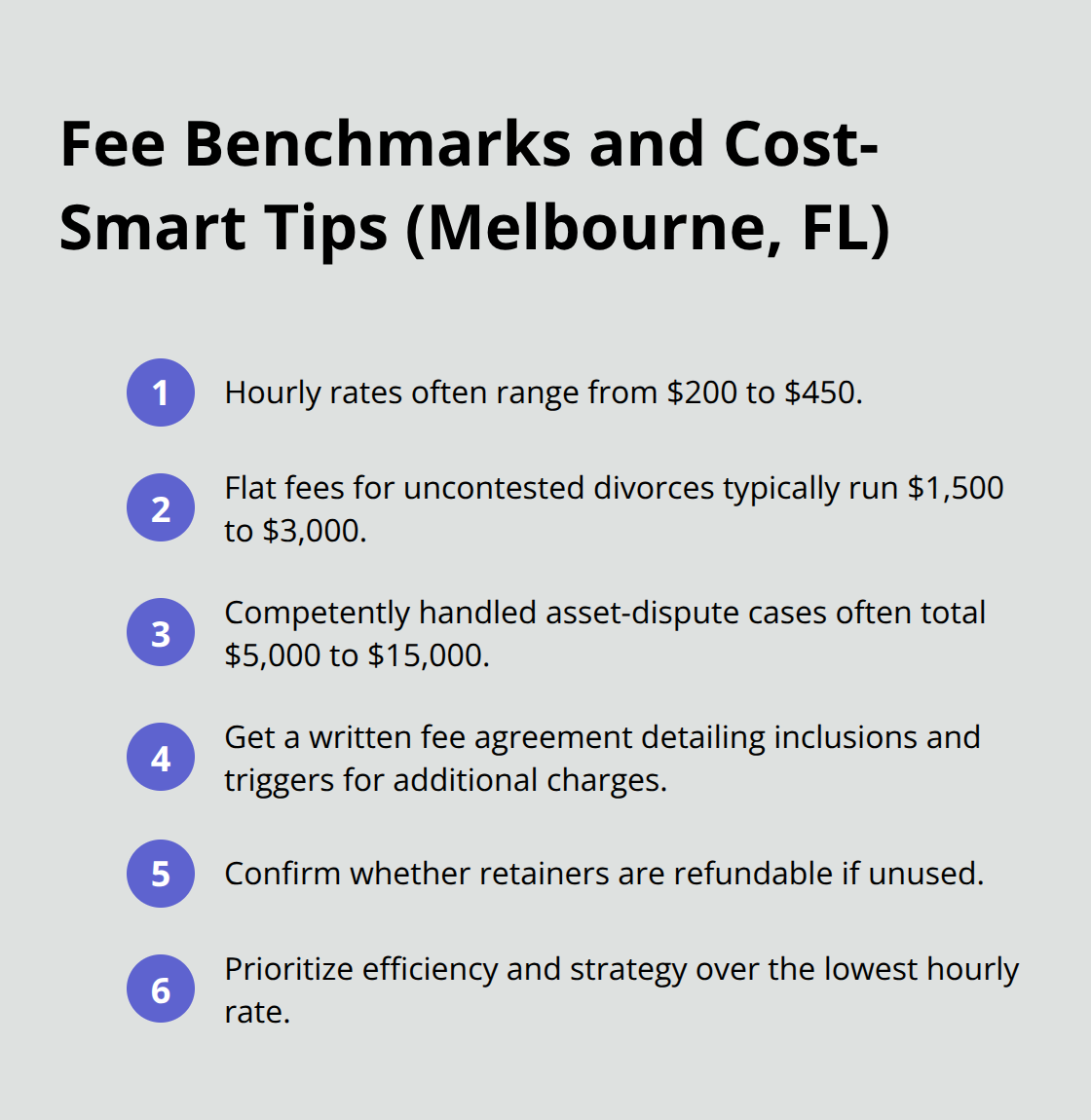
Some firms charge flat fees for uncontested divorces, typically $1,500 to $3,000, which provides budget certainty. For contested cases, flat fees become unrealistic since you cannot predict how much litigation will occur. Request a detailed fee agreement in writing that specifies what’s included, what triggers additional charges, and whether retainers are refundable if unused (this protects you from unexpected bills). The cheapest attorney rarely delivers the best outcome, but the most expensive doesn’t either. You’re seeking the attorney who understands your case deeply enough to resolve it efficiently without unnecessary motions or procedural delays that inflate your bill.
Final Thoughts
Selecting the right divorce attorney in Melbourne, Florida requires evaluating experience, trial capability, communication style, and fee structure rather than relying on initial impressions or cost alone. The attorneys you interview should demonstrate specific knowledge of your situation, familiarity with local judges and courthouse procedures, and a willingness to discuss concrete strategy before you hire them. Past client references and detailed case results matter far more than marketing claims about aggressive representation.
Your next step involves scheduling consultations with at least three attorneys and documenting their responses to your specific questions. Take notes immediately after each meeting, then review them days later when patterns become clear. Contact the references they provide and ask directly about responsiveness, follow-through, and whether they felt prepared for trial. Request written fee agreements that specify what’s included and what triggers additional charges, protecting yourself from unexpected bills.
Local representation in Florida carries real advantages that distant attorneys cannot replicate. A divorce attorney in Melbourne, Florida understands the judges in your courthouse, knows which procedural approaches work with specific magistrates, and has established relationships that strengthen settlement negotiations. If you’re ready to discuss your situation with an attorney who knows Melbourne, Florida courts and can articulate a clear strategy for your case, contact Harnage Law PLLC to schedule your consultation.