
Family law advice Florida: Practical Guidance for Local Cases
Our Blog
Family law advice Florida: Practical Guidance for Local Cases

Family law matters in Melbourne, Florida can feel overwhelming when you’re facing divorce, custody disputes, or child support questions. We at Harnage Law PLLC understand that navigating Florida’s legal system requires clear, actionable family law advice Florida residents can actually use.
This guide walks you through the core concepts, processes, and decisions you’ll encounter in Florida family court. You’ll find practical information to help you move forward with confidence.
What Makes Florida Family Law Different
Equitable Distribution vs. Community Property
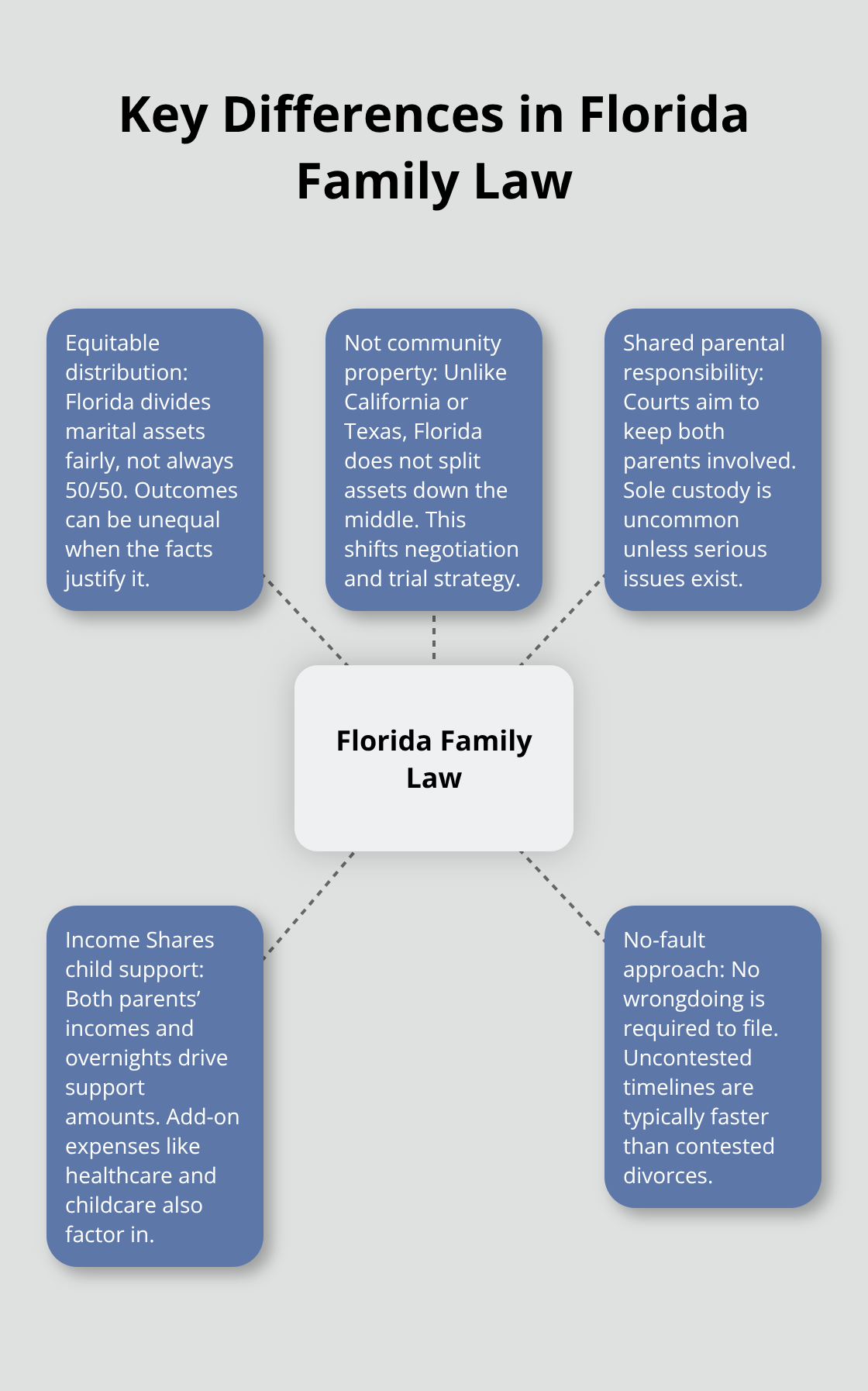
Florida’s family law system operates under specific statutes that set it apart from other states, and understanding these differences matters for your case. Florida follows the principle of equitable distribution, meaning marital assets get divided fairly but not necessarily equally between spouses. This differs from community property states like California or Texas, where courts split assets 50/50. The distinction affects how judges approach property division in Melbourne, Florida divorce cases, often resulting in unequal splits when circumstances warrant them.
Custody and Parental Responsibility
Florida courts prioritize the best interests of the child when determining custody, and the state has moved away from the outdated concept of primary custody toward shared parental responsibility. The Florida Statutes Chapter 61 governs all family law matters, and judges in Melbourne, Florida apply these statutes consistently across cases. This shift means both parents typically maintain active roles in their children’s lives unless circumstances prevent it.
Alimony Types and Calculations
One critical distinction involves alimony. Florida courts can award permanent alimony, rehabilitative alimony, durational alimony, or bridge-the-gap alimony depending on your specific circumstances. The state also recognizes common law marriage only in limited situations, which affects how property and support obligations are determined. Each alimony type serves different purposes and applies to different marital situations.
Child Support and the Income Shares Model
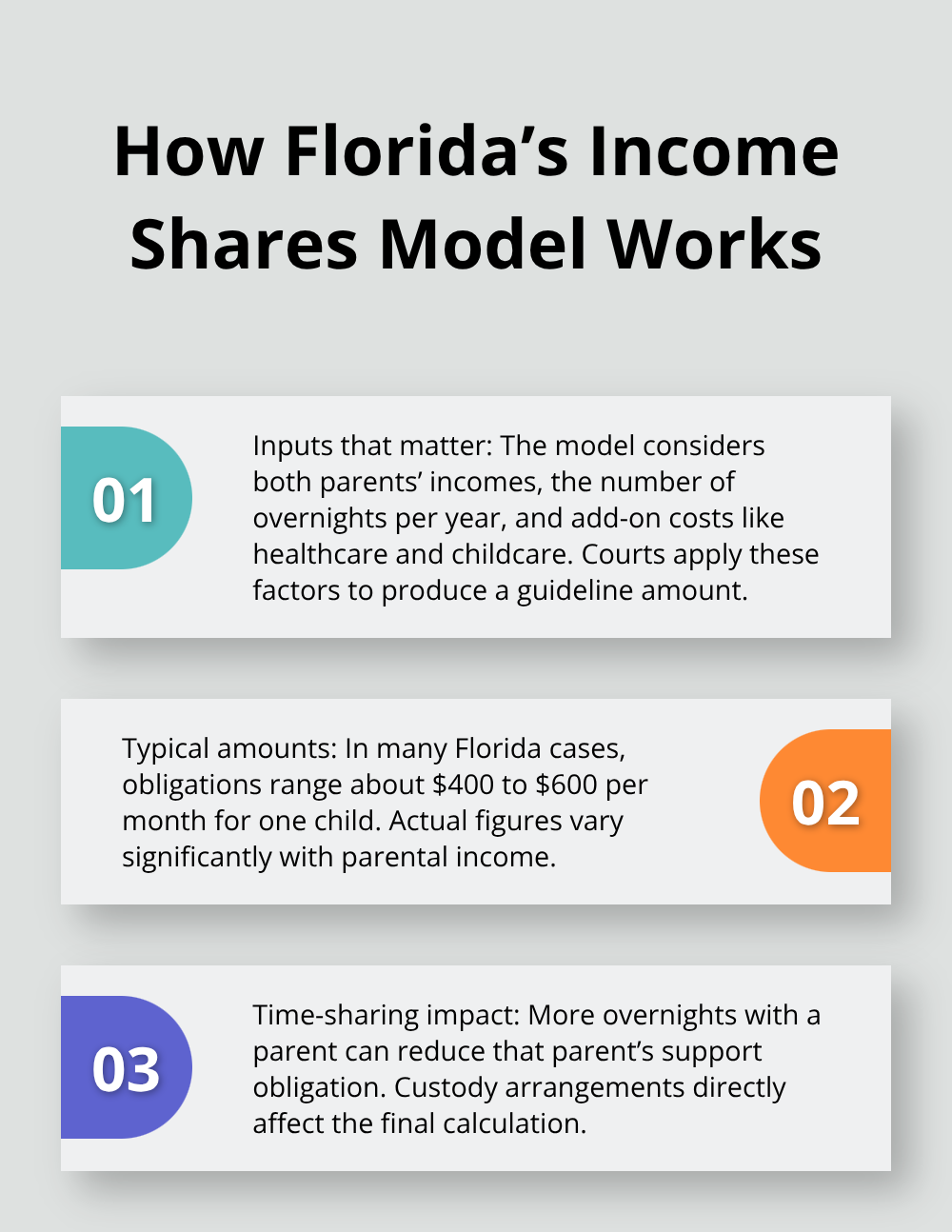
When calculating child support, Florida uses the Income Shares Model, which factors both parents’ incomes, custody time, and specific expenses like healthcare and childcare. This model produces child support obligations ranging from approximately $400 to $600 monthly per child in typical cases across Florida, though amounts vary significantly based on parental income. The model accounts for actual time each parent spends with the child, making custody arrangements directly impact support calculations.
Property Division Complexities
Florida courts consider retirement accounts, business interests, and future earnings differently than many other states, making the property division phase particularly complex. The state’s no-fault divorce law allows either spouse to file without proving wrongdoing, which streamlines the process but doesn’t eliminate disputes over assets, custody, or support. These foundational differences shape every decision your case will face, and understanding how judges apply them in Melbourne, Florida cases helps you prepare for what comes next.
Custody and Support Decisions in Melbourne Florida
How Florida Courts Determine Custody
Florida courts determine custody by applying the best interests of the child standard, which means judges evaluate multiple factors rather than following a fixed formula. Courts examine each parent’s relationship with the child, the child’s adjustment to home and school, the mental and physical health of all parties, and each parent’s ability to provide a stable environment. Florida Statutes Chapter 61 requires judges to consider whether one parent has been the primary caregiver, the length of time the child has lived in a stable environment, and the child’s preference if the child is old enough to express a meaningful opinion.
Shared parental responsibility has become the default arrangement in Melbourne, Florida cases unless one parent demonstrates inability or unwillingness to participate in parenting decisions. Courts rarely award sole custody to one parent anymore. Judges typically order both parents to maintain regular contact with their children unless abuse, neglect, or substance abuse issues exist.
Child Support Calculations Under Florida Law
The Income Shares Model that Florida uses for child support calculates obligations based on both parents’ gross monthly income, the number of overnights each parent has annually, and specific add-on expenses like health insurance and childcare costs. For a parent earning $3,500 monthly with 121 overnights per year, child support typically ranges between $450 and $650 monthly for one child, though this varies significantly based on the other parent’s income and custody arrangement.
Florida’s child support guidelines presume that this calculated amount is correct unless one parent demonstrates that applying the guideline amount would be unjust or inappropriate given the family’s circumstances. Many parents in Melbourne, Florida mistakenly believe that child support ends at age 18, but Florida law requires support to continue through high school graduation or age 19 (whichever comes first). Courts can extend support for children attending college or trade school depending on the original divorce judgment language.
Modifying Custody and Support Orders
Modifying custody and support orders requires demonstrating a substantial and material change in circumstances since the last order was entered, which is a high bar that many parents fail to meet. Courts will not modify orders simply because one parent’s financial situation improved or worsened slightly. Judges look for significant changes like job loss, remarriage, relocation, or a substantial increase in income before reconsidering previous decisions.
A parent seeking modification must file a motion with the court and provide detailed evidence of the changed circumstances. The burden falls entirely on the parent requesting the modification to prove why the existing arrangement no longer serves the child’s best interests. If you face custody disputes or need to modify support obligations, understanding these requirements helps you prepare for the legal process ahead and determines what evidence you’ll need to gather for your case.
Navigating Your Florida Divorce and Dividing What You Own
How Florida’s No-Fault Divorce System Works
Florida’s no-fault divorce system moves faster than many states because neither spouse needs to prove wrongdoing to end the marriage. You or your spouse can file a petition for dissolution of marriage, and the court will proceed regardless of who caused the breakdown. The actual timeline typically spans four to six months from filing to final judgment in uncontested cases, though contested divorces involving property disputes or custody disagreements often stretch eighteen months or longer.
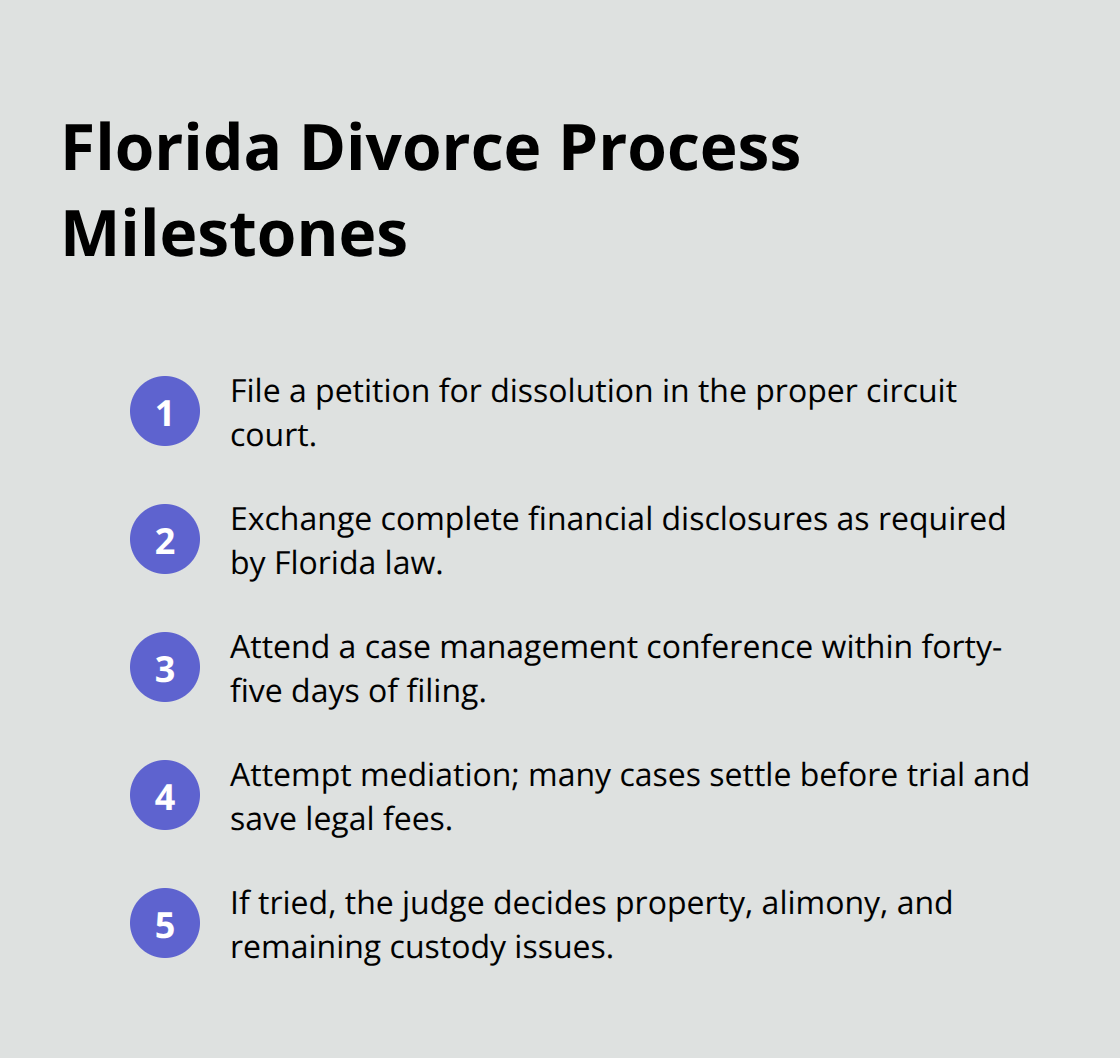
Your first step involves filing the petition with the circuit court in the county where you or your spouse resides, along with financial disclosure forms that reveal all assets, liabilities, income, and expenses. Florida law requires both spouses to exchange complete financial information, and judges will reject settlements if they discover hidden assets later.
The Court Process and Settlement Options
The court will schedule a case management conference within forty-five days of filing, where a judge discusses settlement prospects and identifies contested issues. Many Melbourne, Florida cases settle during mediation before trial, which saves substantial legal fees and gives you control over the outcome rather than leaving decisions to a judge. If your case proceeds to trial, the judge will make all decisions about property division, alimony, and any remaining custody matters.
How Florida Courts Divide Marital Property
Florida courts divide marital property using equitable distribution, which means fairly but not equally, and this distinction matters tremendously for your financial future. The court first determines what property qualifies as marital assets versus separate property-anything acquired during the marriage typically counts as marital property subject to division, while property you owned before marriage or received as a gift or inheritance remains yours alone.
Courts value marital assets as of the trial date, not the date of separation, which means a home or investment account that appreciated during litigation gets divided based on its higher current value. Judges consider each spouse’s contributions to acquiring property, including non-financial contributions like homemaking or child-rearing, when deciding how to split assets.
Retirement Accounts and Complex Assets
Retirement accounts like 401(k)s and pensions present particular complexity because courts must issue qualified domestic relations orders to divide them without triggering early withdrawal penalties, and many people lose significant retirement savings through improper division methods. Proper handling of these accounts requires careful attention to detail and understanding of tax implications that affect your long-term financial security.
Alimony: Types, Calculations, and Modifications
For alimony, Florida courts award support based on factors including the length of your marriage, each spouse’s earning capacity, the standard of living established during marriage, and each spouse’s age and health. Marriages lasting less than seven years typically qualify for rehabilitative alimony designed to help the receiving spouse become self-sufficient, while longer marriages may result in durational alimony lasting a set period or permanent alimony in rare cases.
Courts calculate alimony using guidelines that consider both spouses’ net monthly income, though judges can deviate from guidelines if circumstances warrant different amounts. The receiving spouse’s remarriage terminates alimony obligations, and significant income changes allow either party to request modification, making alimony arrangements far less permanent than many people assume.
Final Thoughts
Family law matters in Melbourne, Florida demand clear guidance and strategic action. The information throughout this guide provides the foundation you need to understand custody arrangements, support obligations, property division, and alimony calculations. However, knowing the rules differs significantly from applying them effectively to your specific situation, and family law advice Florida residents receive should be tailored to their circumstances rather than generic.
You should consider legal representation when your case involves contested custody, substantial marital assets, business interests, or disagreements over support amounts. If your spouse has already hired an attorney or disputes exist around any major issue, waiting to seek counsel only weakens your position. Courts in Melbourne, Florida see cases where one party’s lack of representation results in unfavorable outcomes that could have been prevented with proper legal strategy from the beginning.
We at Harnage Law PLLC provide legal representation for family law cases throughout Melbourne, Florida and across the state. Our firm handles sensitive matters like divorce and child custody with the advocacy your case deserves. When you’re ready to move forward, contact us to discuss your situation and explore your options.