
Property Division Florida Divorce: Dividing Marital Assets Smartly
Our Blog
Property Division Florida Divorce: Dividing Marital Assets Smartly

Florida divorce courts split marital assets using equitable distribution rules, which doesn’t always mean a 50/50 split. Many people make costly mistakes during property division Florida divorce cases by overlooking hidden assets, ignoring tax consequences, or misunderstanding retirement account values.
We at Harnage Law PLLC help clients navigate these complexities and protect their financial interests. This guide walks you through how Florida courts divide property, common pitfalls to avoid, and strategic steps to secure a fair outcome.
How Florida Courts Split Marital Assets
Florida courts approach property division differently than many states. Rather than automatically splitting everything 50/50, Florida uses equitable distribution, which means courts divide marital assets in a way the judge considers fair and just. This distinction matters significantly because fair does not always mean equal. According to Florida Statutes Section 61.075, courts can award one spouse a larger share if circumstances warrant it, such as when one spouse sacrificed career opportunities to support the family or when one spouse has significantly higher earning potential. Understanding how judges actually think about fairness helps you anticipate what a court might do and negotiate more strategically.
Marital Property vs. Separate Property
What you own matters less than when you acquired it. Marital property includes anything either spouse obtained during the marriage, regardless of whose name appears on the title or account. A house purchased during the marriage, retirement accounts funded while married, even appreciation on a premarital business-all count as marital property subject to division. Separate property stays with the original owner and includes assets owned before marriage, inheritances received during marriage, and gifts given specifically to one spouse.
Proving something is separate property requires documentation. If you inherited money but deposited it into a joint account, the court may presume it became marital property. Florida courts place the burden on you to prove separation. Without clear evidence like a separate property agreement or documented inheritance paperwork, judges assume assets accumulated during marriage belong to both spouses.
How Judges Evaluate Fairness
Courts examine multiple factors beyond just the dollar amount of assets. Florida Statutes Section 61.075 requires judges to consider the contribution each spouse made to the marriage (including homemaking and child-rearing), the length of the marriage, the age and health of each spouse, and the economic circumstances of each party. A spouse who stayed home raising children for fifteen years receives different consideration than a spouse in a three-year marriage.
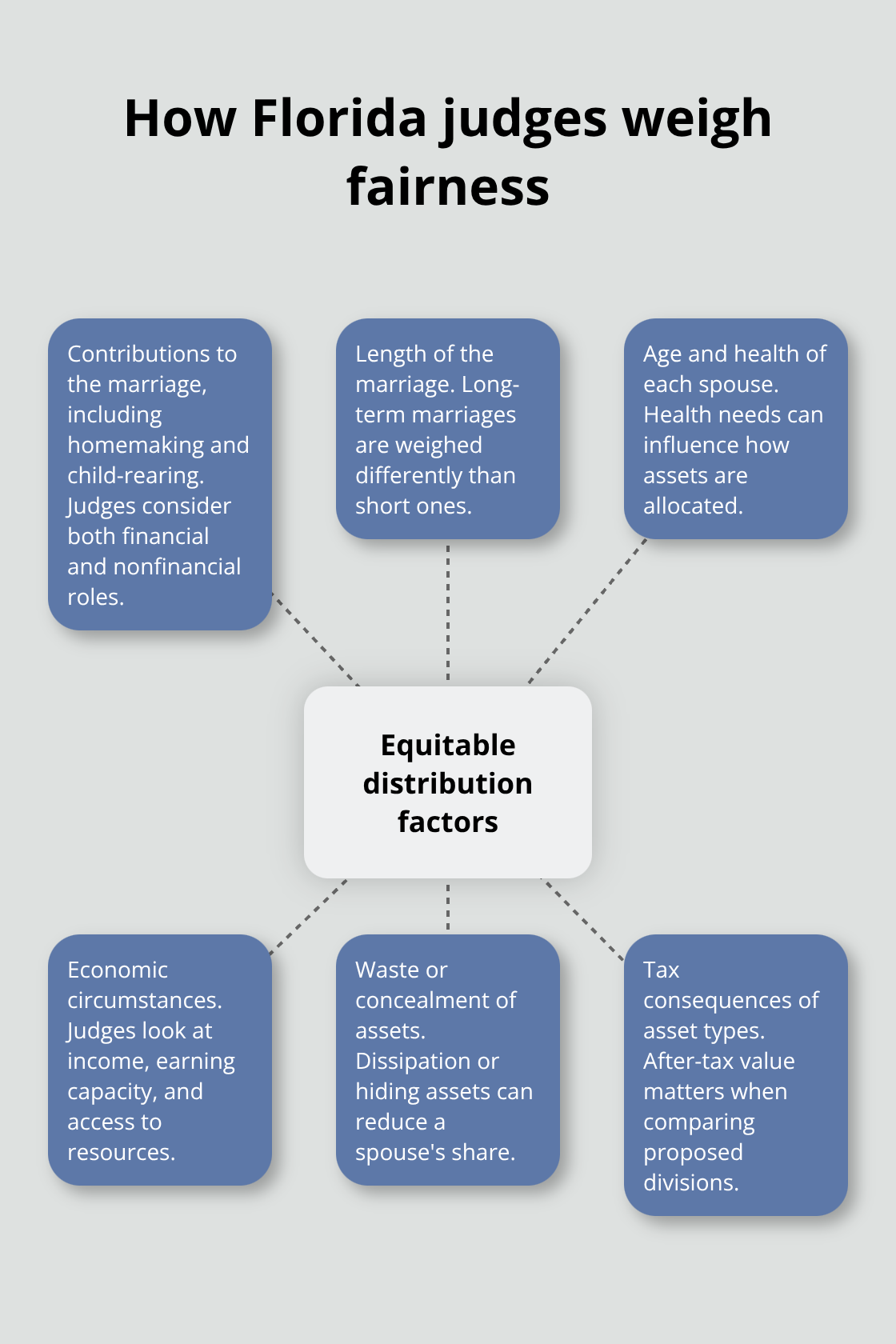
Additionally, judges look at whether one spouse wasted or dissipated marital assets and whether one spouse deliberately hid assets. Courts also examine tax consequences-receiving a retirement account worth $300,000 creates different tax obligations than receiving $300,000 in stock, yet many people accept deals without calculating these differences. Judges have discretion, and this discretion means outcomes vary. Two similar divorces can produce different divisions based on how effectively each side presents its case and how sympathetic the judge finds each spouse’s circumstances.
Why Asset Valuation Shapes Your Settlement
Getting assets valued correctly changes everything about your negotiating position. An undervalued business, retirement account, or investment property can cost you thousands in a settlement. Courts rely on appraisals and financial statements to establish what assets actually worth, which is why the next section focuses on the mistakes people make when they fail to properly value what they own.
Common Mistakes People Make in Property Division
Undervaluing Assets Costs You Thousands
Most people underestimate what their assets are actually worth, and this mistake alone can cost tens of thousands of dollars. A business valued at $500,000 might genuinely be worth $750,000 when properly appraised, yet many divorcing spouses accept the lower figure because they lack professional valuation. The same applies to real estate, investment portfolios, and retirement accounts. Courts in Florida depend on accurate valuations to divide property fairly, which means if you present a deflated number, you lose money permanently.
Getting independent appraisals before negotiations begin protects you. For businesses, hire a certified business valuator who understands your industry. For real estate, use appraisals from licensed Florida appraisers, not just comparable market analyses. For investment accounts, request detailed statements showing cost basis and current market value.
Hidden Assets Require Active Investigation
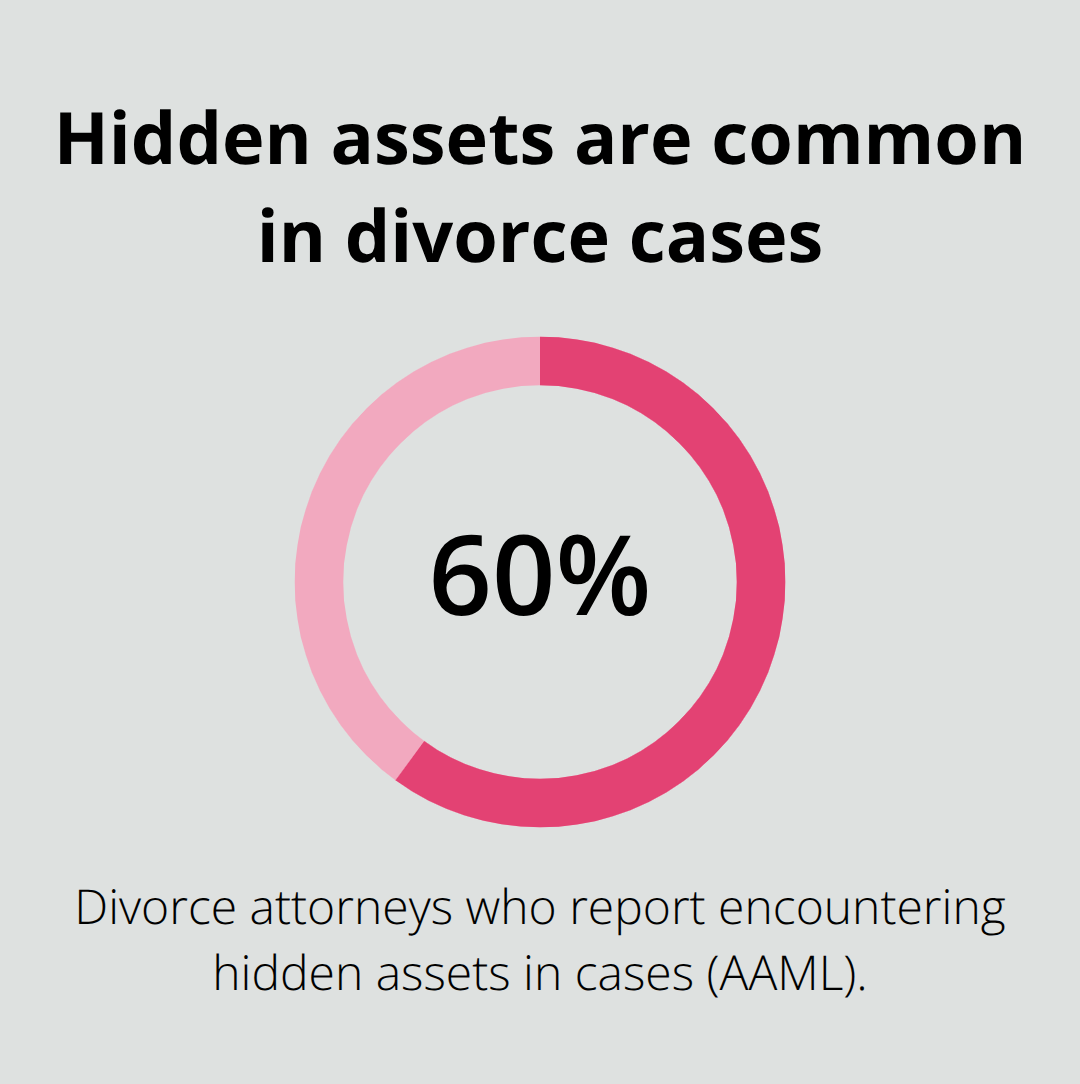
One spouse might maintain secret accounts, underreport business income, or transfer money to family members before divorce proceedings start. The American Academy of Matrimonial Lawyers reports that roughly 60 percent of divorce attorneys have encountered hidden assets in cases they handled. Florida courts can penalize spouses who conceal assets, but only if you discover the concealment and prove it.
Hiring a forensic accountant to review bank statements, tax returns, and business records costs money upfront but frequently uncovers hidden accounts worth far more than the investigation costs. Request several years of tax returns, bank statements, and credit card bills during discovery. Look for unusual transfers, unexplained withdrawals, or patterns that suggest hidden income.
Tax Consequences Destroy Settlements Without Planning
Tax implications wreck more settlements than any other factor people overlook. Receiving a $400,000 retirement account in a divorce creates immediate tax liability when you withdraw the money, yet receiving $400,000 in non-retirement investments does not. The IRS taxes retirement account distributions as ordinary income, potentially pushing you into a higher tax bracket in the year you receive the funds.
A Qualified Domestic Relations Order (QDRO) allows you to transfer retirement accounts between spouses without immediate tax penalties, but only if structured correctly. Many people accept settlements without calculating what they will actually keep after taxes. A spouse receiving a traditional IRA worth $300,000 might net only $210,000 after federal and state taxes when withdrawn, while a spouse receiving $300,000 in municipal bonds might keep nearly all of it.
Before accepting any settlement offer, calculate the after-tax value of each asset. Speak with a tax professional who understands Florida divorce law about the specific tax treatment of each asset type. Investment real estate, stock options, and business interests each carry different tax consequences that dramatically affect your long-term financial position. The difference between accepting a settlement without tax analysis and accepting one with professional tax planning can exceed $100,000 in a typical divorce. Understanding these financial realities positions you to negotiate settlement terms that actually protect your interests.
Strategic Approaches to Protecting Your Assets
Document Separate Property with Concrete Evidence
Protecting your assets in a Florida divorce starts long before you step into a courtroom. The decisions you make in the weeks and months following separation determine whether you walk away financially secure or compromised. Documentation becomes your strongest defense, and this means collecting evidence immediately. Separate property ownership requires proof that satisfies a judge, which means collecting original purchase documents, inheritance letters, gift statements from family members, and account statements showing the asset predates your marriage.
If you received an inheritance during the marriage, locate the will, trust documents, and bank records showing the money moved into a separate account you maintained independently. Courts in Florida will not simply accept your word that something belongs to you alone. Without contemporaneous documentation, judges default to treating assets as marital property. This burden falls entirely on you, making the first month after separation critical for evidence collection. Photograph valuable items, locate appraisals from before the marriage, and retrieve any prenuptial or postnuptial agreements immediately. The longer you wait, the harder it becomes to reconstruct what happened when and why.
Obtain Independent Valuations Before Negotiations
Settlement negotiations give you far more control over your financial outcome than any judge will ever grant. Courts divide property based on statutory factors and judicial discretion, but settlements allow you to negotiate terms that actually reflect your priorities and financial situation. Before entering negotiations, obtain independent valuations for significant assets.
A certified business valuator charges between $3,000 and $10,000 typically, but a business valuation can shift settlement negotiations by hundreds of thousands of dollars. Real estate appraisals from licensed Florida appraisers cost $400 to $800 and prevent accepting inflated or deflated property values. Retirement account statements should show cost basis, current market value, and any loans outstanding. Armed with accurate asset values, you negotiate from strength rather than guessing what things cost.

Calculate After-Tax Value Before Accepting Any Offer
Tax consequences destroy more settlements than any other factor people overlook. Calculate the after-tax value of each asset category before accepting any offer. If you receive retirement accounts, understand that a Qualified Domestic Relations Order (QDRO) transfer preserves your ability to defer taxes, but accepting the same value in taxable investments means immediate tax liability.
Request written settlement proposals and consult a tax professional about the actual net value you will retain after taxes. Many divorcing spouses accept settlements worth 30 to 40 percent less than they think because they fail to account for tax consequences. A spouse receiving a traditional IRA worth $300,000 might net only $210,000 after federal and state taxes when withdrawn, while a spouse receiving $300,000 in municipal bonds might keep nearly all of it. The difference between accepting a settlement without tax analysis and accepting one with professional tax planning can exceed $100,000 in a typical divorce.
Trade Assets Strategically During Negotiations
Settlement negotiations also allow you to trade assets strategically. If your spouse wants the family home, perhaps you receive full retirement accounts or investment portfolios without splitting them. These strategic trades become impossible once a judge issues an order, so use the negotiation phase to structure outcomes that maximize your financial security long-term. Understanding these financial realities positions you to negotiate settlement terms that actually protect your interests.
Final Thoughts
Property division in a Florida divorce determines your financial security for decades after the marriage ends. The decisions you make during this process-how thoroughly you document assets, whether you obtain independent valuations, and how carefully you calculate tax consequences-directly shape your long-term financial position. Courts apply equitable distribution rules with significant discretion, meaning two similar divorces can produce vastly different outcomes based on how well each side presents its case and protects its interests.
Settlements give you control that courts never will. When you negotiate, you decide which assets you receive and how they are structured. When a judge decides, you accept whatever the court determines is fair. This fundamental difference makes the negotiation phase critical, and armed with accurate asset valuations, clear documentation of separate property, and professional tax analysis, you negotiate from strength rather than accepting whatever your spouse proposes.
Professional guidance transforms property division Florida divorce cases from financial disasters into manageable transitions. A tax professional identifies which asset structures minimize your tax liability, a forensic accountant uncovers hidden assets your spouse attempted to conceal, and a business valuator ensures you understand what your family business actually costs. Contact us at https://harnagelaw.com to discuss your situation and explore how we can help protect your financial security.