
Collaborative Divorce Melbourne Florida: A Team-Based Path to Separation
Our Blog
Collaborative Divorce Melbourne Florida: A Team-Based Path to Separation

Divorce doesn’t have to mean courtroom battles and mounting legal bills. Collaborative divorce in Melbourne Florida offers couples a different path-one where both parties work together with their attorneys to reach fair agreements outside of litigation.
At Harnage Law PLLC, we’ve seen firsthand how this approach reduces conflict, saves time, and gives families more control over their future. If you’re considering separation, understanding your options matters.
What Separates Collaborative Divorce from Fighting in Court
Collaborative divorce operates on a fundamentally different principle than traditional litigation. Instead of each spouse hiring an attorney to battle for advantage, both parties and their attorneys commit upfront to negotiating a settlement without going to court. This structural difference matters enormously. According to research from the American Bar Association, couples who pursue collaborative divorce report significantly lower stress levels and better post-separation relationships compared to those who litigate. The financial impact is substantial too-litigation in Florida family law cases averages between $15,000 and $50,000 per spouse when the case goes to trial, while collaborative divorce typically costs 40-60% less because there is no discovery phase, no depositions, and no courtroom appearances.
The Neutral Professionals Who Guide the Process
Collaborative divorce in Melbourne Florida brings in professionals beyond the two attorneys. A neutral financial specialist helps both parties understand their complete financial picture, which prevents hidden assets or miscalculations that often emerge later in court. A child specialist works with couples when kids are involved, helping parents develop parenting plans that actually reflect their children’s needs rather than what a judge imposes.
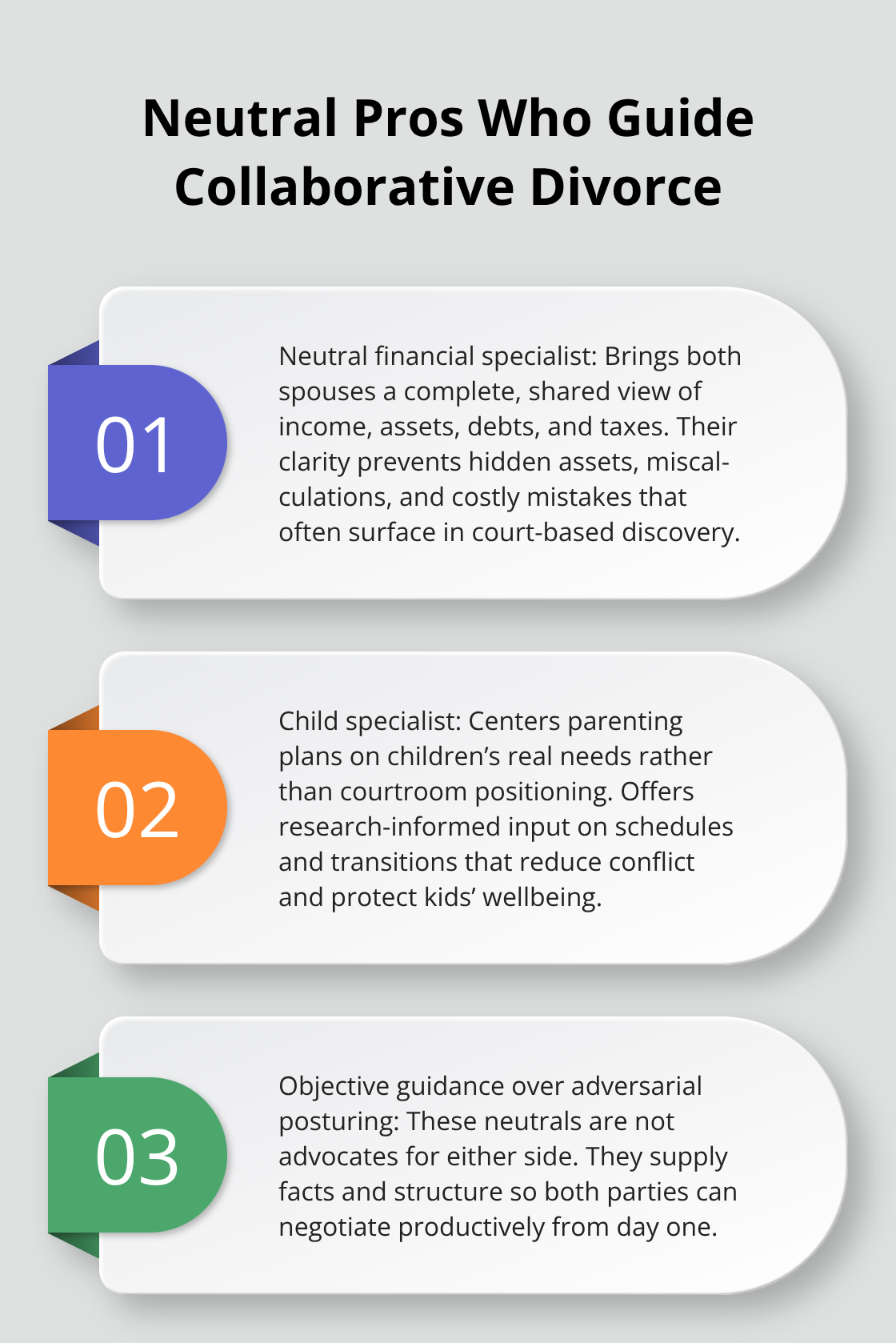
These professionals aren’t advocates for either side-they’re there to provide objective information. This approach eliminates the adversarial posturing that makes traditional divorce so emotionally draining. The setup produces better outcomes because both parties have accurate information from day one, not surprises that derail negotiations months later.
Why Couples Actually Choose This Path
Couples select collaborative divorce for concrete reasons, not idealistic ones. When children are involved, most parents recognize that maintaining civility matters for years to come. Court battles create winners and losers; collaborative processes create solutions both parties can live with. The timeline advantage is real-collaborative cases typically reach settlement in 6-12 months, while contested divorces in Florida often drag on for 18-24 months or longer. Speed matters because it reduces legal fees, limits ongoing conflict, and lets both spouses move forward with their lives. Parents also report that their children adjust better when the separation process doesn’t involve courtroom testimony and hostile proceedings. For couples with moderate to significant assets (the collaborative model prevents the scorched-earth discovery process where attorneys request mountains of documents and depositions turn into confrontation sessions).
Moving Forward with Your Separation Strategy
Understanding these differences positions you to make an informed decision about your path forward. The next section walks through exactly how the collaborative divorce process unfolds in Melbourne Florida, from the initial commitment through final settlement.
The Collaborative Divorce Process in Melbourne Florida
The Participation Agreement That Changes Everything
The collaborative divorce process starts with a formal commitment that transforms how both spouses approach negotiation. Both parties and their attorneys sign a participation agreement stating that everyone commits to settlement negotiations and will not take the case to court. This agreement includes a critical clause: if negotiations fail and either party wants to litigate, both attorneys must withdraw from the case. This provision creates real incentive for settlement because starting over with new attorneys costs time and money. In Melbourne Florida, this upfront commitment shifts how people think about the process. They stop posturing for trial and start problem-solving for actual resolution.
The initial meetings include a financial disclosure phase where both parties provide complete documentation of income, assets, debts, and expenses. Unlike traditional litigation where financial discovery can take months and involve thousands of pages of documents, collaborative divorce demands transparency from day one. This accelerated disclosure prevents the information asymmetry that creates mistrust and extends litigation timelines.
Negotiation Sessions with Both Attorneys Present
Once both parties have exchanged financial information, negotiation sessions begin with both attorneys present in the same room. These sessions focus on specific issues: child custody arrangements, child support obligations, spousal support if applicable, and asset division. The presence of both attorneys prevents miscommunication and keeps discussions grounded in legal reality.
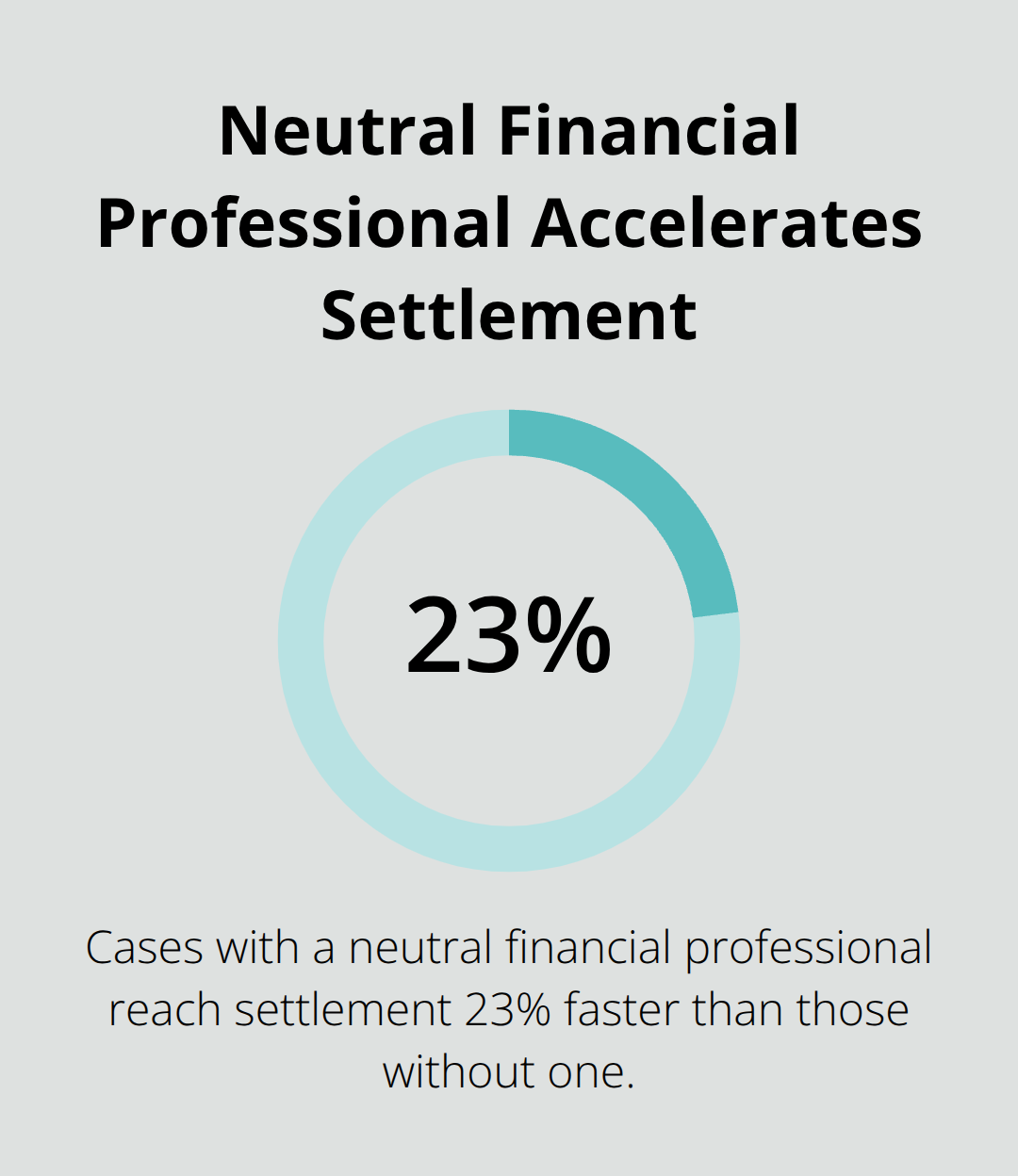
When children are involved, a child specialist participates in some sessions to provide recommendations about parenting schedules that serve the children’s actual needs rather than parental preferences. Research from the International Academy of Collaborative Professionals shows that cases involving a neutral financial professional reach settlement 23% faster than those without one. The financial specialist helps both parties understand tax implications of asset division, retirement account splits, and support calculations, which prevents costly mistakes that emerge later.
How Settlement Happens Without Court
In Melbourne Florida, collaborative cases typically reach complete settlement within 6-12 months because there are no depositions, no discovery disputes, and no courtroom delays. Asset division gets resolved through informed negotiation where both parties understand exactly what they own and what it’s worth. Child custody arrangements reflect actual parenting capacity and the children’s schedules rather than a judge’s assumptions. Support calculations account for both parties’ income, actual childcare costs, and healthcare expenses rather than formulaic guidelines that often miss real circumstances.
Once all issues reach agreement, the attorneys prepare settlement documents that both parties sign, and the divorce becomes final without courtroom involvement. This structured path produces outcomes that both spouses can accept because they shaped the results themselves rather than having a judge impose them. The next section examines the concrete advantages that couples gain when they choose this collaborative approach over traditional litigation.
Advantages of Choosing Collaborative Divorce in Melbourne Florida
How Collaborative Divorce Eliminates Discovery Costs
Collaborative divorce in Melbourne Florida eliminates the financial destruction that accompanies traditional litigation. When cases go to trial, each attorney must conduct discovery-a process where both sides exchange thousands of pages of documents, take depositions of witnesses and the opposing spouse, and prepare extensive trial materials. A single deposition in Florida family law cases averages 3-4 hours and costs between $500 and $1,500 per spouse when you account for attorney time and court reporter fees. Cases with contested custody or significant assets often involve 10-20 depositions, which means discovery costs alone can reach $10,000 to $30,000 before trial even begins. Collaborative cases skip this entire phase because both parties commit upfront to transparency and good-faith negotiation. The financial specialist reviews documents once rather than having attorneys battle over document requests for months.
The Real Numbers: Litigation Versus Collaboration
Contested divorces in Florida that proceed to trial average $25,000 to $50,000 per spouse according to data from the American Academy of Matrimonial Lawyers, while collaborative cases typically cost $8,000 to $15,000 per spouse. That 60% reduction matters enormously when you’re already dividing assets and managing the financial strain of separation. Beyond attorney fees, collaborative divorce eliminates court filing costs, expert witness fees for trial, and the hidden expense of lost productivity during depositions and trial preparation. Couples who pursue collaboration also avoid the mistake of spending $30,000 in legal fees to fight over $5,000 in contested assets-a pattern that happens repeatedly in traditional divorce litigation. The financial specialist in collaborative cases calculates the actual cost of continued litigation versus settlement, which often shocks both parties into realistic negotiation.
How Timeline Differences Compound Your Savings
Collaborative cases reach final settlement in 6-12 months while contested divorces in Florida average 18-24 months from filing to final judgment. That 12-month difference translates to 12 additional months of attorney fees in traditional litigation, plus 12 additional months of emotional stress and uncertainty about your future. Longer timelines also mean longer exposure to the risk that new conflicts emerge or that one spouse’s financial situation changes, creating additional negotiation delays.
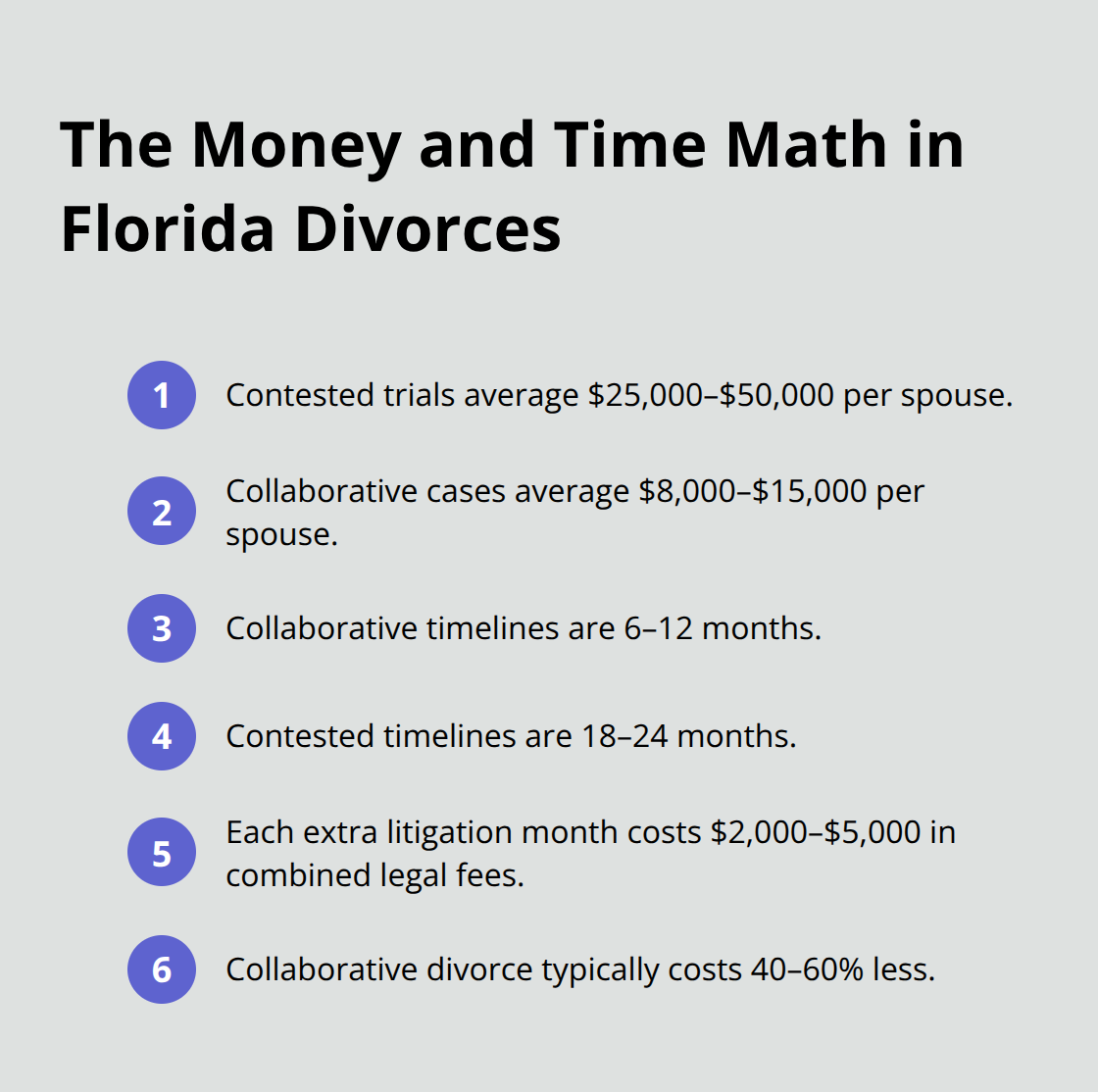
When both spouses understand that every additional month of litigation costs $2,000 to $5,000 in combined legal fees, settlement becomes financially rational rather than emotionally driven. Collaborative cases produce faster resolution because both attorneys have financial incentive to settle-if the case fails and goes to court, both attorneys must withdraw and the clients hire new counsel. This creates powerful motivation for the collaborative attorneys to solve problems creatively rather than escalate conflict. The combination of lower monthly costs and shorter overall timeline means collaborative divorce typically costs 40-60% less than litigation, which represents real money you retain to rebuild your life rather than paying to attorneys.
Final Thoughts
Collaborative divorce in Melbourne Florida gives your family a path forward that protects relationships rather than destroying them. When you choose collaboration, you decide that your children’s wellbeing and your financial stability matter more than courtroom victories. The research shows that families who separate through collaboration report better post-divorce relationships, children adjust more smoothly, and both parents retain significantly more money to rebuild their lives.
This approach works best when both spouses are willing to negotiate in good faith and want to minimize conflict. If you have children, collaborative divorce becomes even more valuable because the process keeps parents focused on parenting arrangements that actually serve your kids rather than fighting over custody as a bargaining chip. When significant assets are involved, the neutral financial specialist prevents costly mistakes in asset division and tax planning that often emerge years later in traditional divorces.
Contact Harnage Law PLLC to discuss whether collaborative divorce fits your situation and what the next steps look like for your separation. We handle sensitive family law cases including divorce and child custody matters, and we’re prepared to guide you through the collaborative process in Melbourne Florida. Our attorneys provide personalized attention and strategic counsel focused on achieving outcomes that work for your family’s actual circumstances.