
Custody rights Melbourne FL: What Parents Should Know
Our Blog
Custody rights Melbourne FL: What Parents Should Know

Custody rights in Melbourne, FL can feel overwhelming when you’re navigating family law for the first time. Florida courts apply specific standards and factors when making custody decisions, and understanding these rules helps you protect your parental rights.
We at Harnage Law PLLC have guided countless parents through custody arrangements, modifications, and enforcement issues. This guide walks you through what you need to know.
Types of Custody Arrangements in Florida
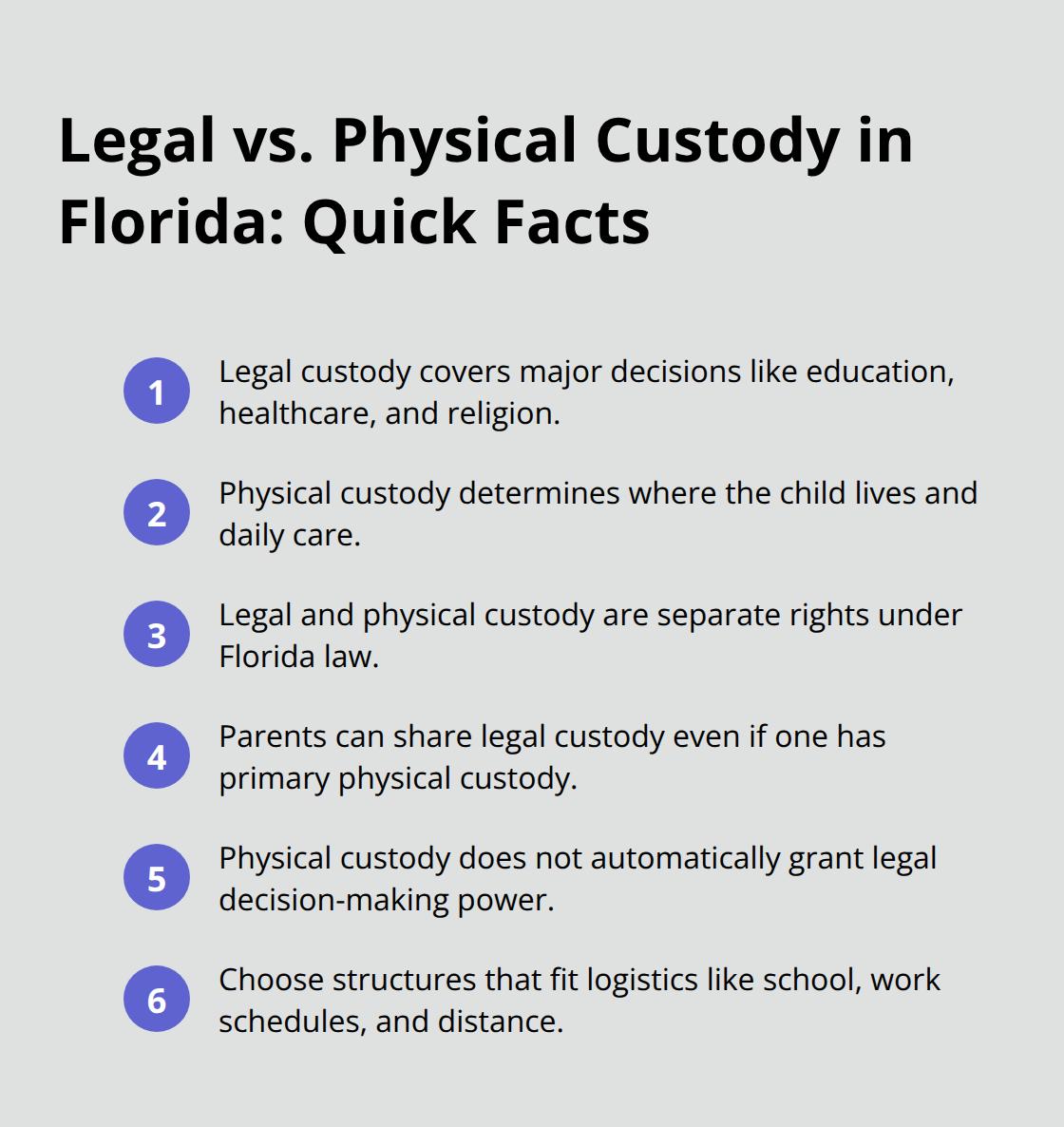
Florida recognizes two distinct forms of custody, and understanding the difference between them shapes how your parenting relationship functions after separation or divorce. Legal custody grants a parent the authority to make major decisions about the child’s life, including education, healthcare, religious upbringing, and other significant matters. Physical custody determines where the child lives and who provides day-to-day care. Florida courts can award legal custody, physical custody, or both to one parent or split them between parents. Many parents mistakenly believe that physical custody automatically grants legal custody, but Florida law treats these as separate rights. A parent might hold primary physical custody while both parents share legal custody equally, meaning the child lives primarily with one parent but both parents make major decisions together. This distinction matters significantly when you negotiate custody arrangements or enforce your rights.
How Joint and Sole Custody Work in Practice
Joint custody arrangements require both parents to participate in major decisions, which demands ongoing communication and cooperation. Florida courts favor joint custody when both parents demonstrate the ability to work together and prioritize the child’s welfare. However, if you and the other parent have a history of conflict or cannot cooperate on fundamental decisions, the court may award sole legal custody to one parent. Sole custody grants one parent complete authority over major decisions without requiring input from the other parent. Physical custody can follow different patterns: one parent might hold sole physical custody while the other has scheduled visitation, or parents might share physical custody through alternating weeks or a 50-50 split. The specific arrangement depends on factors like each parent’s work schedule, the child’s school and activities, and the distance between parental homes. Courts in Brevard County, where Melbourne is located, routinely handle these arrangements, and the judges consider the practical logistics of your family’s situation when they determine custody structure.
How Custody Structure Affects Enforcement and Modification
The custody framework you establish now determines what enforcement options exist if the other parent violates the order and what steps you must take if circumstances change. If you hold joint legal custody, you cannot unilaterally enroll the child in a different school or authorize medical procedures without the other parent’s consent, which can create practical challenges. Conversely, if you hold sole legal custody, you have clear authority to make these decisions independently. Physical custody arrangements directly impact child support calculations in Florida, as the amount of overnight time each parent has influences the financial obligation. If your custody order specifies that the child spends 30 percent or more of the time with the non-custodial parent, Florida’s child support guidelines apply a different formula than if the child spends less time with that parent. The structure also affects tax benefits, health insurance coverage, and which parent claims the child as a dependent. When you work with legal representation to establish your initial custody arrangement, you should consider not just the immediate family dynamics but also how the structure will function if you need to enforce it or modify it later. Understanding these practical implications prepares you for the next critical step: how Florida courts actually make custody decisions in the first place.
How Florida Courts Decide Custody
Florida courts apply a legal standard called the best interests of the child when making custody decisions, which means the judge prioritizes what serves the child’s welfare above all other considerations. This standard is deliberately broad because every family’s situation differs, and judges need flexibility to adapt their decisions to your specific circumstances.
The Best Interests Standard and Key Factors
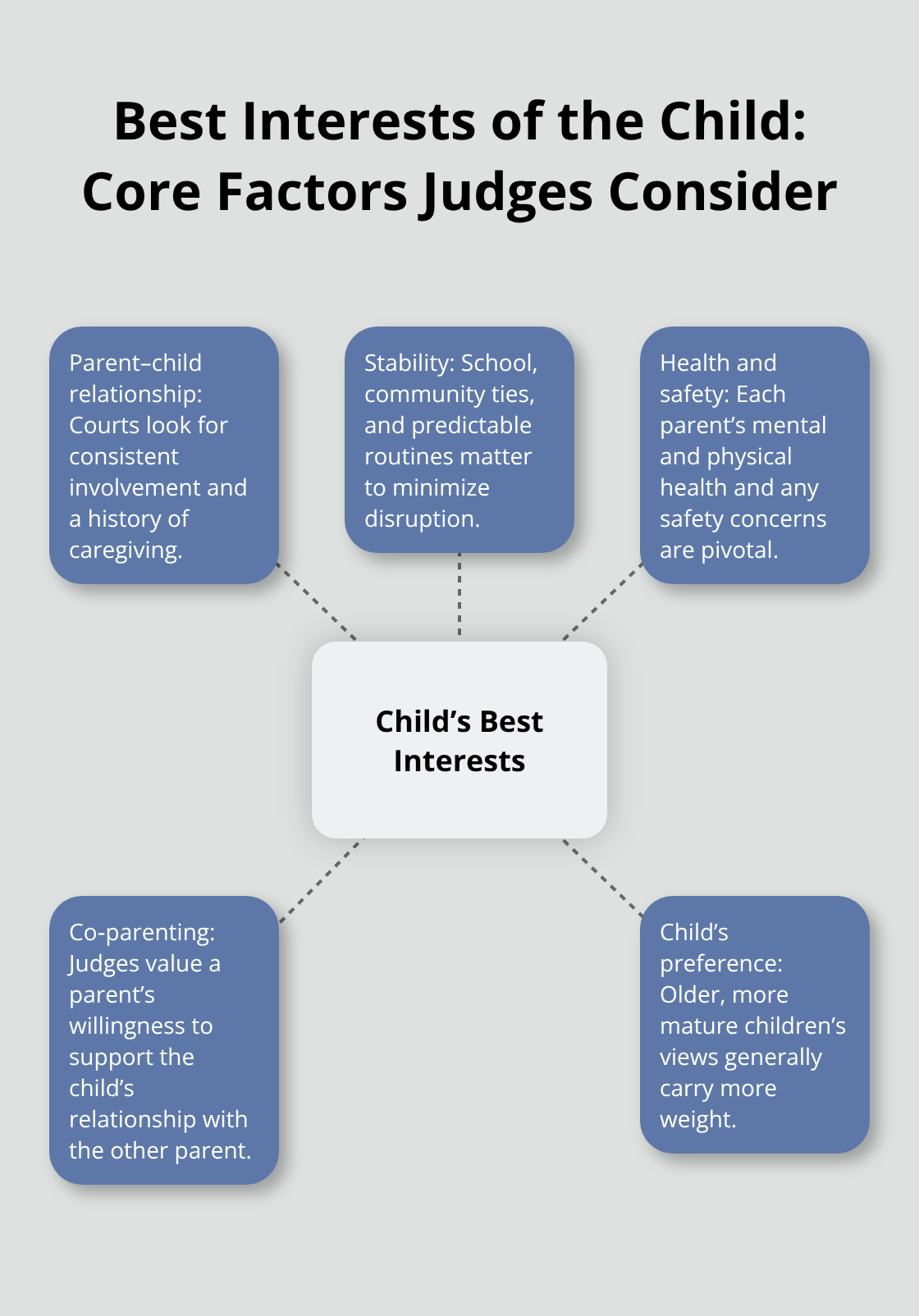
The court examines factors like each parent’s relationship with the child, the child’s adjustment to school and community, the mental and physical health of both parents, and the child’s own preferences if the child is old enough to express them meaningfully. Florida Statute 61.913 outlines these factors, and understanding them helps you anticipate what the judge will focus on during your case. The court also considers which parent has been the primary caregiver historically and each parent’s willingness to facilitate the other parent’s relationship with the child.
A parent who actively works to obstruct the other parent’s involvement can face serious consequences in custody decisions, as judges view this negatively when evaluating the best interests standard. The child’s stated preferences carry weight, though how much weight depends on the child’s age and maturity level. A teenager’s preference typically influences the outcome more substantially than a younger child’s preference, but judges do not simply award custody based on what a child wants.
Demonstrating Parental Involvement and Commitment
Your parental involvement history matters tremendously in these proceedings. If you have consistently attended school conferences, medical appointments, and extracurricular activities while the other parent has remained uninvolved, document this thoroughly because judges want concrete evidence of your commitment. Courts in Brevard County regularly hear testimony about each parent’s work schedule, involvement in the child’s education and medical care, and the stability each parent can provide.
If one parent has missed significant portions of the child’s life due to work or other commitments, the judge may view the other parent as better positioned to meet the child’s ongoing needs. The court will scrutinize each parent’s ability to provide stable housing, financial resources, and emotional support. If you have substance abuse issues, a criminal history, or a pattern of parental alienation, these factors will work against you significantly. Conversely, if you can demonstrate financial stability, a safe home environment, and genuine engagement in your child’s daily life, the court will recognize these strengths.
Biological Relationships and Demonstrated Capacity
Some parents make the mistake of assuming that being the child’s biological parent automatically grants them custody preference, but Florida law does not operate that way. The judge focuses on demonstrated parenting capacity and the child’s actual needs, not on biological relationships alone. If the other parent has been the primary caregiver for years while you worked full-time, courts often favor maintaining that stability rather than disrupting the child’s routine.
The court also considers domestic violence, substance abuse, or mental health issues that affect a parent’s capacity to care for the child safely. If either parent has a documented history of abuse or neglect, this will dominate the court’s analysis and likely result in restricted custody or supervised visitation. These serious factors can override other considerations because the judge’s primary obligation remains protecting the child’s safety and welfare above all else.
Building Your Case With Evidence
Custody decisions turn on concrete facts rather than general claims about parenting ability. You should gather documentation that demonstrates your involvement in your child’s life, including school records, medical appointment confirmations, photographs, and communications with the other parent that show your commitment to co-parenting. This evidence becomes critical when the court weighs competing claims about each parent’s role in the child’s life.
Understanding what factors the court will examine allows you to prepare strategically for the custody determination process. Once you know how judges evaluate custody decisions, the next step involves understanding what happens when circumstances change after the court issues an order-and what options you have if the other parent violates the custody arrangement you’ve established.
Modifying Custody Orders and Enforcing Your Rights
When Circumstances Justify Custody Modifications
Circumstances change after a custody order is finalized, and Florida law provides mechanisms to modify orders when those changes substantially affect your child’s welfare. A modification requires you to demonstrate a substantial and material change in circumstances since the original order was entered, which is a deliberate legal threshold designed to prevent constant litigation. Florida courts will not modify custody simply because you want more time with your child or because the arrangement has become inconvenient. The change must be significant enough that it affects the child’s best interests in a meaningful way.
Common grounds for modification include one parent relocating for work, a significant shift in either parent’s financial situation, changes in the child’s needs or preferences as they age, or documented evidence that the current arrangement is harming the child’s physical or emotional wellbeing. If the other parent has developed a substance abuse problem, lost employment affecting their ability to provide stability, or become uninvolved in the child’s life after years of active parenting, these constitute substantial changes.
Filing a Modification Petition in Brevard County
You must file a formal petition with the court in Brevard County and present evidence supporting your claim that modification serves the child’s best interests. The process mirrors the original custody determination, meaning the court will again examine the factors outlined in Florida Statute 61.913, but this time you must also prove that circumstances have genuinely shifted since the prior order. Many parents waste time and money pursuing modifications based on minor frustrations or scheduling inconveniences rather than legitimate changes in circumstances, so evaluate whether your situation truly meets this legal standard before investing in litigation.
Enforcing Custody Orders Against Violations
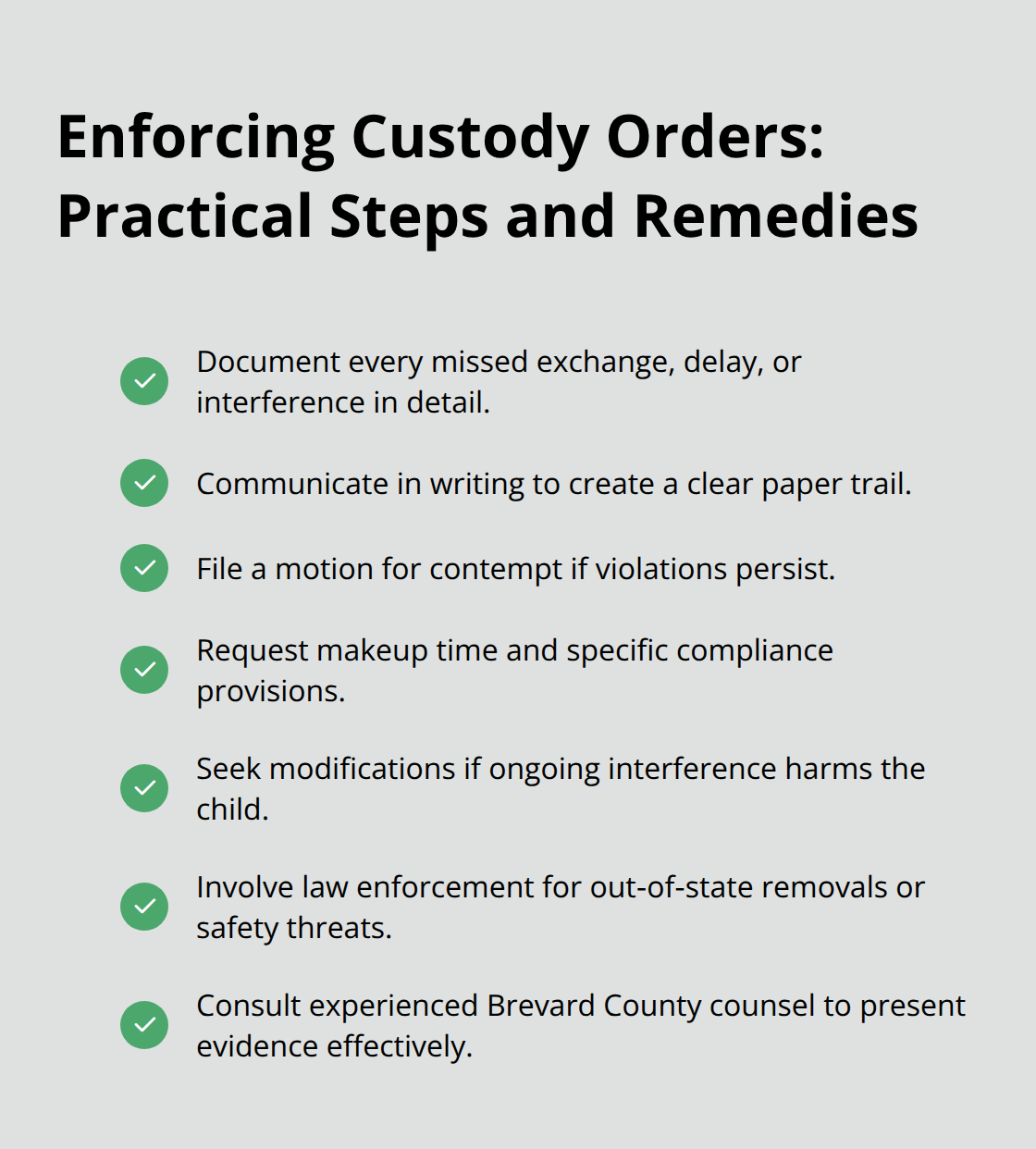
Enforcement becomes necessary when the other parent violates the custody order by refusing to return the child at the scheduled time, blocking your access to visitation, or interfering with your legal custody rights. Florida courts take custody violations seriously because consistency and predictability matter for children’s stability, and judges will hold violating parents accountable. If the other parent consistently fails to honor visitation schedules, you can file a motion for contempt of court, which allows the judge to impose sanctions ranging from fines to jail time in serious cases.
Building Documentation of Violations
Document every violation thoroughly, including dates, times, what was supposed to happen under the order, and what actually occurred. Text messages, emails, and calendar records create a clear paper trail that judges find persuasive when evaluating patterns of non-compliance. If the violation involves the other parent taking the child out of state without permission or attempting parental kidnapping, law enforcement can become involved, and you should contact local police immediately.
Court Remedies for Ongoing Interference
For ongoing interference with visitation or legal custody rights, you can request the court modify the order to impose makeup time, shift custody arrangements, or add specific enforcement provisions like requiring the other parent to post a bond or obtain court approval before traveling with the child. Judges view parents who ignore custody violations as failing to protect their own parental rights, so pursue enforcement promptly rather than allowing violations to continue. The court system in Brevard County has established procedures for handling these disputes efficiently, and experienced legal representation helps you present your case effectively so the judge understands the pattern and impact of the violations on your child and your relationship with them.
Final Thoughts
Custody rights in Melbourne, FL require you to understand how Florida courts structure parental authority, evaluate your family’s circumstances, and enforce the arrangements they establish. The framework you build now-whether joint or sole custody, legal or physical-shapes your ability to parent effectively and respond when situations change. Courts prioritize the child’s best interests above all else, which means your demonstrated involvement in your child’s life, your stability, and your willingness to support the other parent’s relationship with the child all matter significantly when judges make decisions.
The custody process does not end when the court issues an order. You need to understand when modifications become necessary, how to document violations if the other parent fails to comply, and what enforcement options exist to protect your rights. Many parents navigate these issues alone and make costly mistakes that damage their custody position or fail to hold the other parent accountable for violations. The difference between handling custody matters effectively and struggling through them often comes down to understanding the legal landscape and having someone guide you through the procedural requirements.
If you are establishing custody for the first time, modifying an existing order, or enforcing your rights against a parent who violates the court’s arrangement, contact Harnage Law PLLC to discuss your specific circumstances and develop a plan that protects your parental rights and your child’s welfare.