
Local Family Law Melbourne: Tips for Finding the Right Attorney
Our Blog
Local Family Law Melbourne: Tips for Finding the Right Attorney

Finding the right family law attorney in Melbourne can feel overwhelming when you’re facing divorce, custody disputes, or support matters. The stakes are high, and you need someone who understands local family law in Melbourne and can guide you through complex decisions.
At Harnage Law PLLC, we’ve seen how the right attorney makes a real difference in outcomes. This guide walks you through what to look for, how to evaluate your options, and how to find the representation you need.
What to Look For in a Family Law Attorney
Focus on Relevant Experience
Experience with cases like yours matters far more than years in practice alone. An attorney who handled 50 divorces over 10 years brings more value than someone with 20 years across multiple practice areas. When you call potential attorneys, ask specifically how many custody disputes, property divisions, or support matters they handled in the past three years. The answer tells you whether family law forms their primary focus or remains a side practice.
Local experience in Melbourne courts matters significantly. Attorneys familiar with how judges in your jurisdiction typically rule on custody arrangements or property division anticipate obstacles and build stronger strategies. They understand local procedures, filing requirements, and the tendencies of specific judges-knowledge that shapes case outcomes.
Evaluate Their Track Record Carefully
Track record means nothing without context. When an attorney claims high success rates, ask what they measure as success. Do they count only cases that went to trial, or do they include settlements? Do they measure by financial outcome, custody arrangements, or client satisfaction?
Request permission to speak with past clients. Focus your questions on whether the attorney communicated clearly throughout the process and whether the final outcome matched expectations. Past clients reveal patterns that marketing materials hide.
Assess Communication and Accessibility
Accessibility separates responsive attorneys from those who disappear for weeks. Ask directly about response times-do they return calls within 24 hours or 5 business days? Will they communicate via email, phone, or text, and what do they charge for each method? Some firms bill for every email exchange, while others include communication in flat fees.
Schedule a consultation to assess compatibility. Most attorneys offer free 30-minute initial meetings where you can evaluate whether their communication style matches your needs and whether they listen more than they talk. What to expect in your first consultation helps you prepare effectively and make the most of this opportunity.
Move Forward With Confidence
Once you’ve identified attorneys who meet these standards, the next step involves understanding how they structure their fees and what you can expect to pay for representation.
Family Law Matters That Affect Melbourne Residents
Property Division in Divorce Cases
Divorce and property division represent the most common family law matters affecting Melbourne residents, and the financial stakes demand careful attention from the start. Florida’s equitable distribution law doesn’t mean equal-it means fair based on factors like income, length of marriage, and contributions to the relationship. A 15-year marriage with one high-earning spouse and one who stayed home raises vastly different property division questions than a 5-year marriage between two professionals.
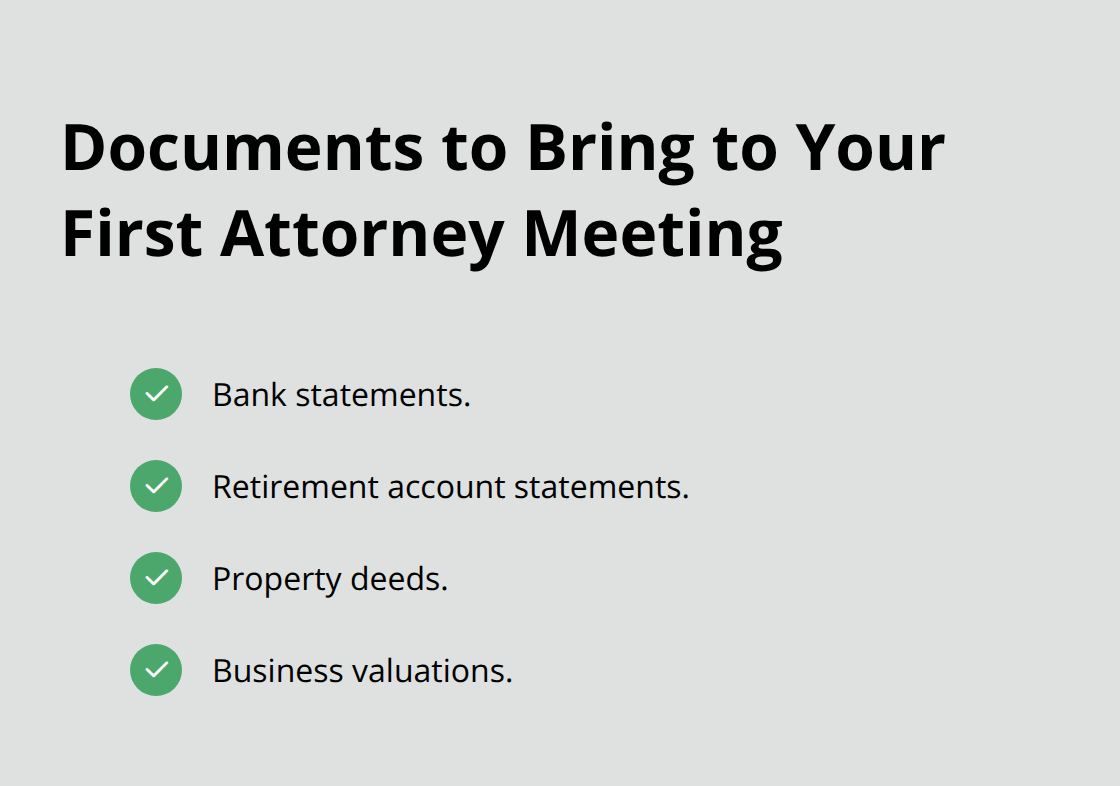
The median home value in Melbourne sits around $350,000 according to recent market data, which means property division alone can involve six figures. Retirement accounts, investment portfolios, and business interests complicate matters further. Courts in Brevard County examine financial contributions, non-financial contributions like homemaking or childcare, and the standard of living established during the marriage. Bring bank statements, retirement account statements, property deeds, and any business valuations you possess to your first attorney meeting-understanding what assets exist matters before you begin.
Child Custody and Visitation Arrangements
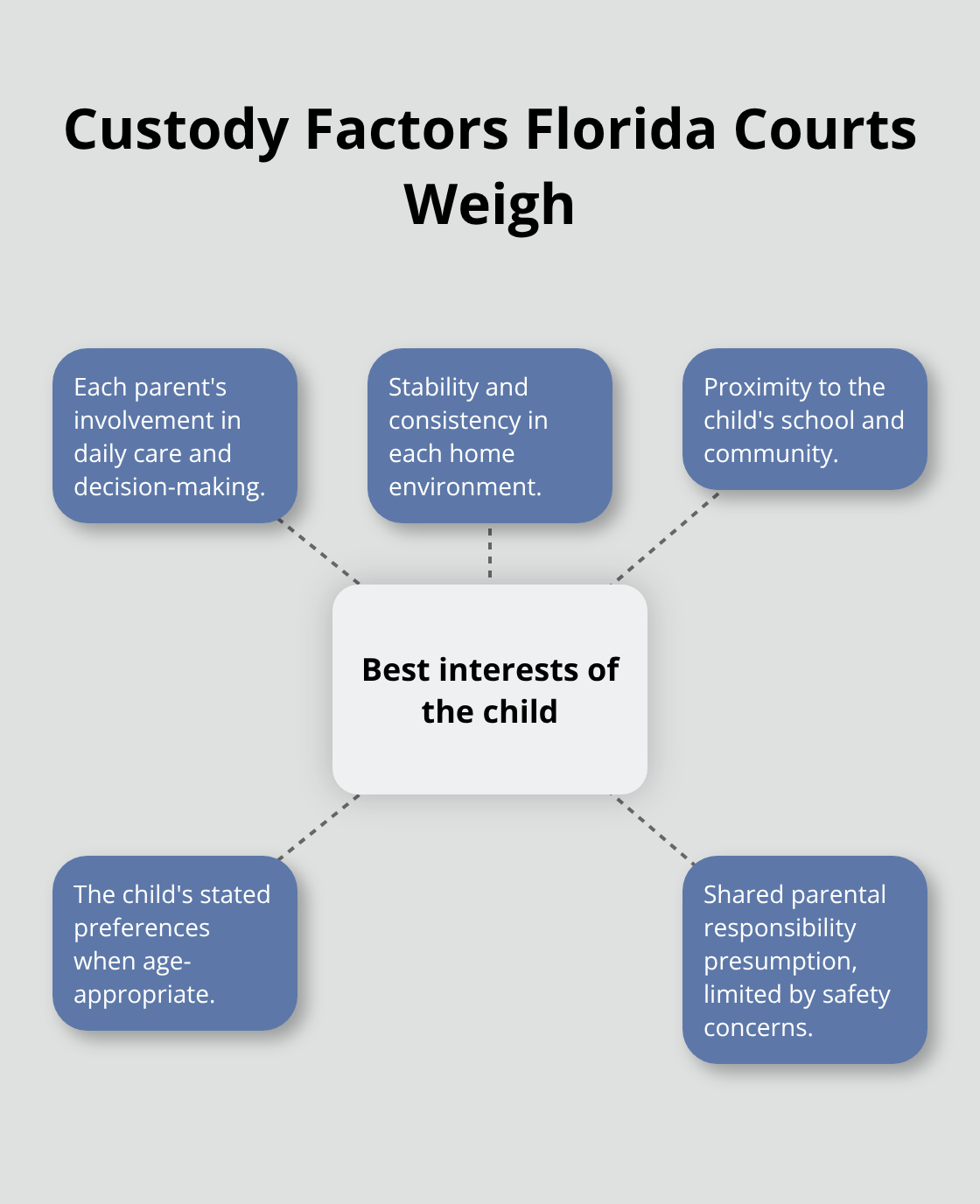
Child custody and visitation arrangements carry emotional weight that property division doesn’t, yet they require the same strategic clarity. Florida courts prioritize the best interests of the child, considering factors like each parent’s involvement in daily care, stability, proximity to school, and the child’s preferences if they’re old enough to express them. The state recognizes shared parental responsibility as a presumption, meaning courts typically favor arrangements where both parents maintain meaningful involvement unless safety concerns exist.
Visitation schedules range from simple alternating weekends to complex arrangements accounting for school calendars, extracurricular activities, and travel. These arrangements directly impact the next critical component of your case: how courts calculate financial obligations.
Child Support and Spousal Maintenance
Child support follows Florida’s guidelines based on income and custody time-sharing percentages, with calculations becoming intricate when self-employment income or multiple income sources enter the picture. The average child support obligation in Florida varies significantly based on combined parental income, ranging from hundreds to thousands monthly. Spousal maintenance, less common than child support, applies when one spouse needs financial assistance post-divorce and the other has the ability to pay.
Courts consider marriage length-marriages under 10 years rarely result in permanent alimony-plus the earning capacity and education level of each spouse. These interconnected issues demand an attorney who understands how custody arrangements impact support calculations and how property division affects each spouse’s post-divorce financial position. Understanding these financial implications helps you prepare for the next phase: evaluating which attorney can best represent your interests.
Comparing Attorneys Before You Hire
Understand Fee Structures and Hourly Rates
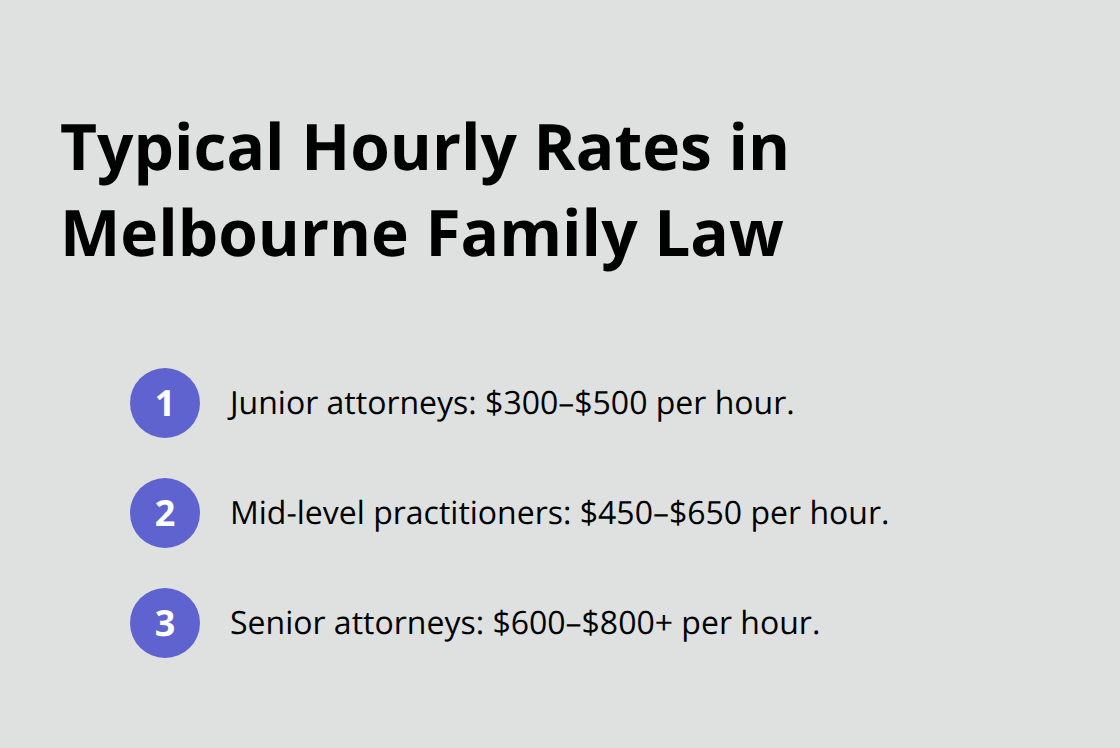
Hourly rates in Melbourne typically range from $300 to $800 per hour depending on experience level. Junior attorneys charge around $300–$500, mid-level practitioners bill at $450–$650, and senior attorneys command $600–$800 or more. Before scheduling consultations, contact multiple firms and ask about their fee structures directly. The Victorian Legal Services Board and Commissioner recommends asking six specific questions about legal costs, which helps you compare apples to apples across different firms.
Fixed-fee options exist for straightforward tasks and can save money if your case fits the mold. Uncontested divorces run $1,500–$3,500, consent orders cost $3,000–$7,000, and binding financial agreements fall between $4,000–$10,000. Ask whether your potential firm offers these fixed arrangements or relies solely on hourly billing.
Identify Hidden Costs and Billing Practices
Court filing fees, process server costs, and mediation expenses often appear as separate line items on your final bill. Clarify what gets billed separately from attorney time, and ask how the firm charges for different communication methods-some firms bill for every email while others include communication in flat fees. Initial consultations typically cost $250–$600, which gives you a chance to assess whether this attorney matches your needs without major financial commitment.
Retainers typically range from $1,500 to $20,000 depending on case complexity. You need to understand how that deposit applies to future invoices and whether unused portions get refunded. Request information about the retainer structure during your initial conversation so no surprises emerge later.
Evaluate Client Testimonials and Communication Patterns
Client testimonials reveal patterns that marketing materials hide. Look for comments about communication responsiveness, whether the attorney explained things clearly, and whether the final outcome matched expectations. Ask directly about response times-do they return calls within 24 hours or 5 business days? Will they communicate via email, phone, or text?
When you meet with potential attorneys, focus on what they’ve actually done rather than what they claim to do. Request permission to speak with past clients who handled cases similar to yours. These conversations expose whether an attorney truly listens to clients or simply pushes toward settlement regardless of your goals.
Schedule Consultations to Assess Fit
The initial meeting serves as your opportunity to determine whether an attorney’s approach and fee structure align with your circumstances and budget. Come prepared with questions about their experience with cases like yours, their communication style, and their fee structure. Take notes during the consultation so you can compare multiple attorneys objectively.
Harnage Law PLLC offers a free 30-minute consultation where you can discuss your situation, timelines, processes, and costs. This initial meeting helps you determine whether an attorney’s approach matches your needs before you commit to representation.
Final Thoughts
Selecting the right family law attorney comes down to three interconnected factors: relevant experience with cases matching yours, transparent fee structures that fit your budget, and communication patterns that keep you informed throughout the process. An attorney who spent years handling local family law Melbourne matters understands court procedures and judge tendencies in ways that generalists simply cannot match. That knowledge translates directly into better outcomes for your property division, custody arrangements, and support calculations.
Local representation matters because courts operate differently across jurisdictions, and Brevard County judges have established patterns in how they approach equitable distribution, custody decisions, and support obligations. An attorney familiar with these patterns builds strategies that work within your local system rather than against it, knowing which judges prioritize shared parental responsibility and which require stronger evidence before granting custody modifications. They understand how local property values and income patterns influence support calculations and can anticipate obstacles before they arise.
Your next step involves scheduling consultations with attorneys who meet your experience and communication standards, bringing financial documents and custody information so you can discuss realistic timelines and costs. Most initial consultations cost between $250 and $600, giving you an affordable way to assess multiple options before committing to representation. Contact us for a free 30-minute consultation where we can discuss your situation, answer your questions about local procedures and costs, and determine whether our approach aligns with your needs.