
How to Get Legal Advice Using Artificial Intelligence
Our Blog
How to Get Legal Advice Using Artificial Intelligence

Artificial intelligence legal advice tools are transforming how people access legal information for family law matters. These platforms offer instant responses to basic legal questions about divorce, child custody, and child support cases.
We at Harnage Law PLLC recognize that AI can provide valuable preliminary guidance, but understanding its capabilities and limitations remains vital for making informed legal decisions.
What AI Legal Tools Are Available Today
Legal Research Platforms and Case Law Databases
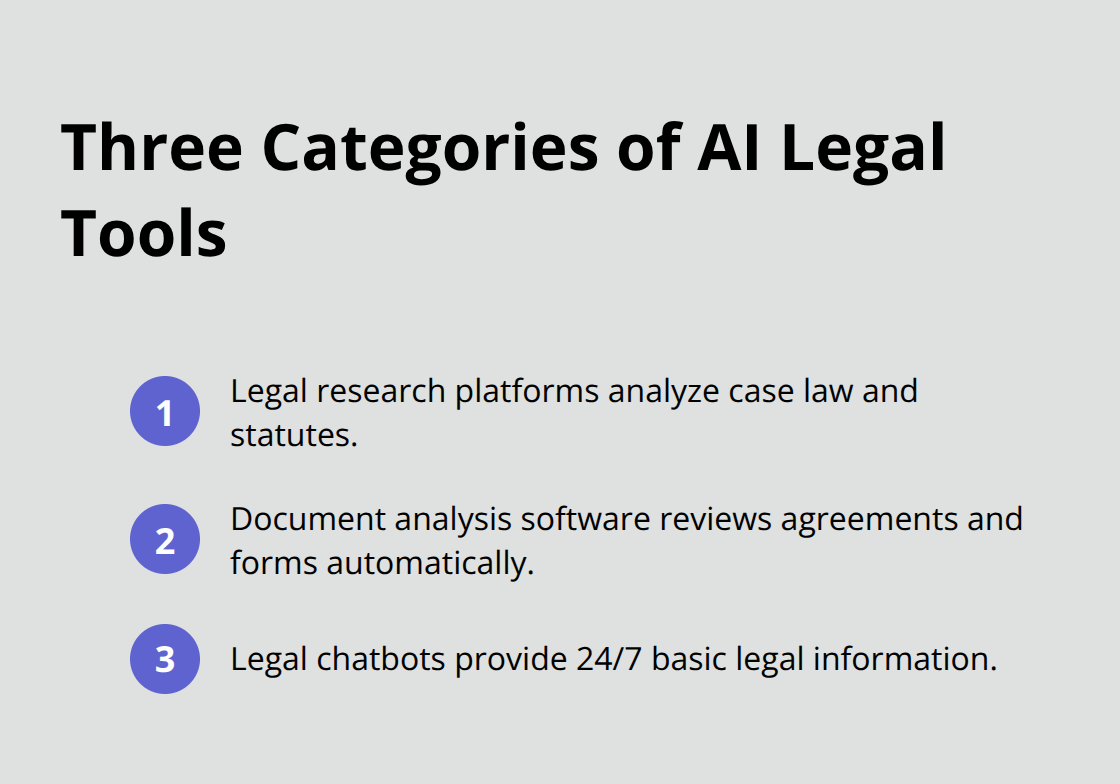
Three main categories of AI legal tools have emerged to help people handle family law matters more efficiently. Legal research platforms like Bloomberg Law’s AI Assistant and Westlaw Edge use machine learning to analyze case law and statutes. These platforms deliver relevant precedents in seconds rather than hours. They have transformed legal research by processing vast databases of court decisions and identifying patterns that human researchers might miss.
Document Analysis and Review Software
Document analysis software represents the second major category, with tools that review divorce agreements, custody arrangements, and child support calculations automatically. Hello Divorce’s AI assistant Hallie has completed beta testing with 6,000 users and provides state-specific guidance on divorce procedures and financial calculations. These platforms can process standardized forms and identify potential issues in legal documents (though attorney review remains necessary for accuracy).
Legal Chatbots and Virtual Assistants
Legal chatbots form the third category, offering 24/7 access to basic legal information about family law processes. These virtual assistants can explain filing requirements, court procedures, and documentation needs for divorce and custody cases. They answer common questions about child support guidelines and property division rules in real-time.
These tools work best for straightforward situations but cannot replace human judgment in complex family disputes. High-conflict custody battles and substantial asset divisions require the nuanced understanding that only experienced attorneys can provide (particularly in Melbourne Florida where local court procedures vary significantly).
What Are the Real Benefits and Drawbacks of AI Legal Tools
Cost Savings Transform Legal Access
AI legal tools deliver significant cost advantages that traditional legal services cannot match. Legal research that previously cost $500-800 per hour through attorney time now costs $50-100 monthly through platforms like Westlaw Edge.
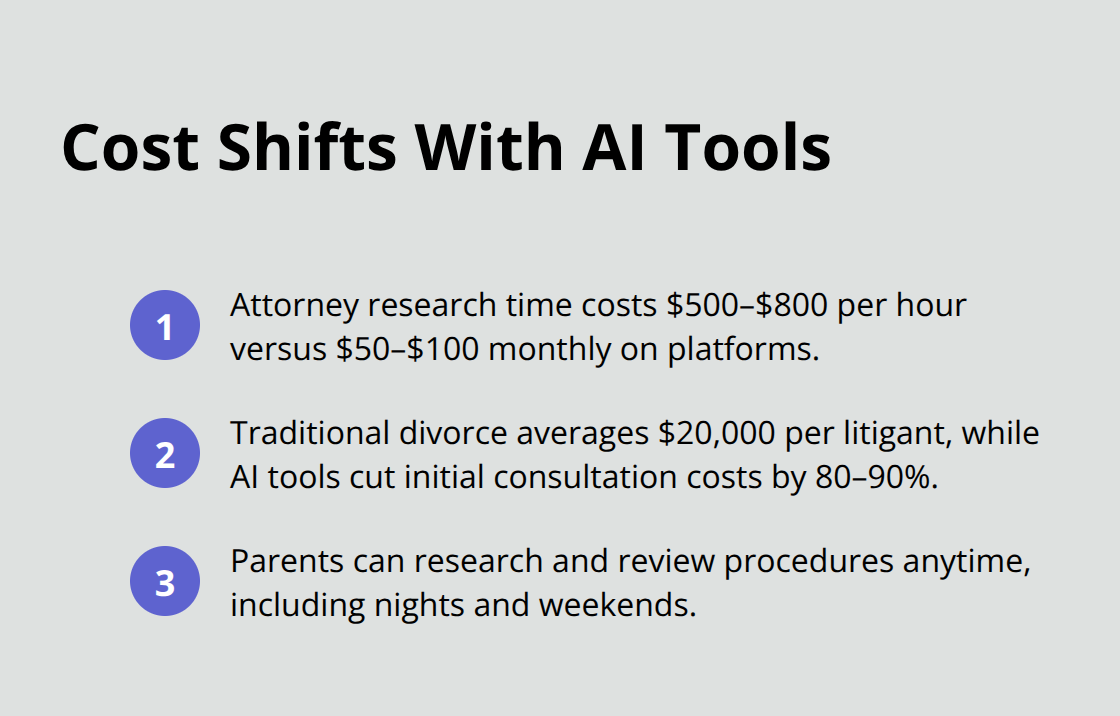
Hello Divorce reports average legal fees of $20,000 per litigant in traditional divorce cases, while AI-assisted platforms reduce initial consultation costs by 80-90%. These tools operate continuously and allow parents to research child custody guidelines at midnight or review divorce procedures during weekends when law offices remain closed.
Speed Revolutionizes Legal Research and Document Processing
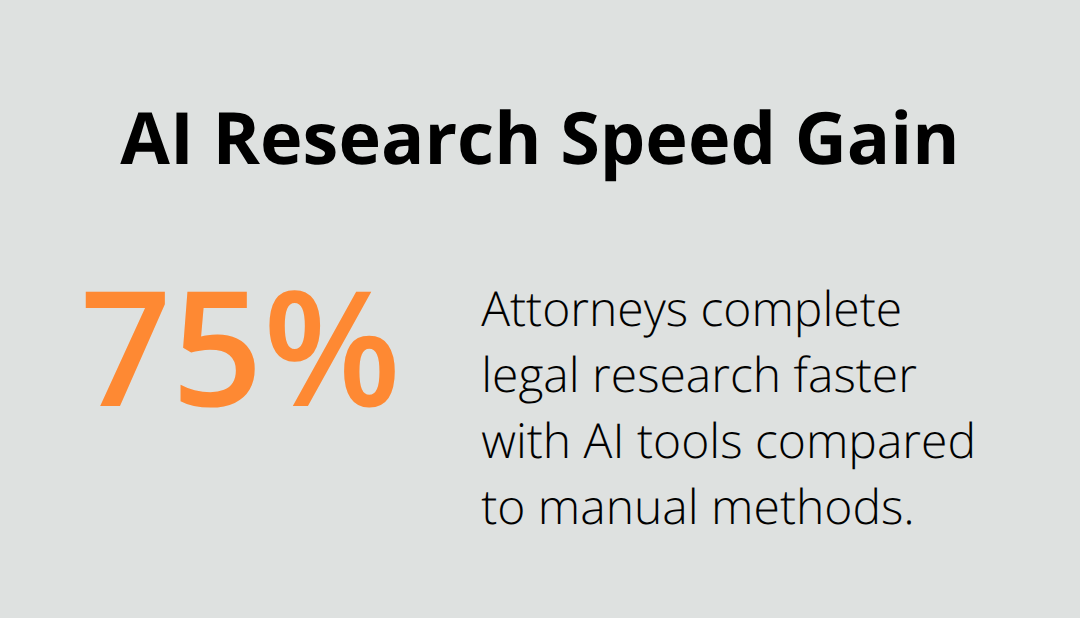
Bloomberg Law’s 2025 State of Practice survey shows attorneys complete legal research 75% faster with AI tools compared to manual methods. Document review processes that traditionally required 40-50 hours now finish in 8-10 hours with AI assistance. Contract analysis software identifies standard clause deviations in minutes rather than days.
Machine learning algorithms process vast databases of court decisions and surface relevant precedents instantly.
Accuracy Problems Create Serious Risks
However, accuracy problems plague these systems significantly. AI-generated legal information frequently contains outdated statutes or incorrect interpretations of current family law. Generic templates miss critical jurisdiction-specific requirements (particularly in Melbourne Florida where local court procedures differ substantially from other counties). These tools lack human judgment for complex custody disputes that involve domestic violence or high-asset divorces where strategic thinking proves essential.
Courts remain unsympathetic toward parties who rely exclusively on AI for legal matters. The technology cannot assess emotional dynamics or anticipate judicial preferences that experienced attorneys understand intuitively. Complex family law cases require the nuanced understanding and personalized attention that only qualified legal counsel can provide.
When Does AI Fall Short in Family Law
Complex Custody and High-Asset Divorce Cases
AI tools fail completely when attorneys must handle complex family law situations that demand strategic thinking and human judgment. High-conflict custody cases with domestic violence allegations need attorneys who understand judicial preferences and local court procedures in Melbourne Florida. Brevard County family courts follow specific protocols for protective orders and supervised visitation arrangements that AI platforms cannot navigate. Cases with substantial marital assets worth over $1 million require forensic accounting and asset valuation strategies that only experienced attorneys can coordinate effectively.
Court Representation and Legal Strategy Development
Family court proceedings demand skilled advocacy that AI cannot provide. Divorce mediation sessions require attorneys to read emotional cues and adapt negotiation tactics in real-time. Child custody hearings involve strategic evidence presentation and effective witness cross-examination. Melbourne Florida family courts have unique local rules and judicial preferences that seasoned attorneys understand through years of practice. AI tools cannot anticipate how Judge Smith handles contempt motions differently than Judge Johnson approaches parenting plan modifications.
Personalized Legal Solutions for Unique Circumstances
Every family law case presents unique circumstances that require customized legal strategies. Military divorce cases involve complex pension division rules and deployment considerations that generic AI templates cannot address properly. International custody disputes require understanding of Hague Convention protocols and interstate jurisdiction issues (which change frequently based on federal court decisions). Business owners who face divorce need sophisticated asset protection strategies and business valuation approaches that AI cannot develop through automated responses.
Final Thoughts
Artificial intelligence legal advice tools provide valuable preliminary guidance for family law matters, but they cannot replace the strategic thinking and personalized attention that complex cases require. These platforms work well for basic research and document review, yet they lack the human judgment needed for high-conflict custody disputes or substantial asset divisions. Technology serves as a powerful supplement to professional legal counsel, not a substitute.
Melbourne Florida family courts have unique procedures and judicial preferences that only experienced attorneys can navigate effectively. Complex divorce cases that involve business valuations, military pensions, or domestic violence allegations demand the nuanced understanding that AI simply cannot provide. Courts remain unsympathetic toward parties who rely exclusively on automated tools for legal representation.
You must recognize when AI tools can help and when professional representation becomes necessary. For sensitive family law matters that require court representation or strategic counsel, qualified attorneys provide the experienced advocacy that technology cannot match (particularly in complex custody or high-asset divorce cases). Harnage Law PLLC offers the personalized legal guidance that artificial intelligence tools cannot deliver.