
How to Navigate Collaborative Divorce Successfully
Our Blog
How to Navigate Collaborative Divorce Successfully

Divorce doesn’t have to be a courtroom battle. In Melbourne, Florida, many couples are choosing collaborative divorce as a way to end their marriage with less conflict and lower costs.
We at Harnage Law PLLC see firsthand how this approach works better for families who want to maintain respect and control over their own outcomes. This guide walks you through what collaborative divorce actually involves and how to make it succeed.
What Collaborative Divorce Actually Is
The Core Structure of Collaborative Divorce
Collaborative divorce is a structured negotiation process where both spouses hire separate attorneys trained in collaborative law, and these lawyers commit upfront to never take the case to court. This single commitment changes everything about how the process unfolds. Instead of positioning yourselves as opponents fighting over assets and custody, you work toward a settlement agreement that both parties have designed together. In Florida, each spouse hires a collaborative attorney who then negotiates issues like property division, custody arrangements, child support, and alimony directly with the other side. If you need input from financial professionals or child specialists, the collaborative team uses one neutral professional working for both sides rather than each spouse hiring separate accountants or psychologists. This shared professional approach cuts costs significantly and eliminates the confusion that comes from conflicting opinions.
How Collaborative Divorce Differs from Court Litigation
The difference between collaborative divorce and traditional litigation comes down to control and cost. In a standard court divorce, a judge makes final decisions on property division, custody, and support amounts based on evidence presented at trial, leaving both parties vulnerable to an outcome neither wanted. Collaborative divorce flips this dynamic entirely. You retain decision-making power throughout negotiations, which means the final agreement reflects what actually works for your family rather than what a court thinks is fair.
Melbourne, Florida couples increasingly choose this approach because it saves time and money compared to litigation. Court delays can stretch a divorce across years, while collaborative negotiations move at your own pace with sessions scheduled around your work and family obligations. The financial savings are substantial. Litigation typically costs more because attorneys spend hours preparing for trial, deposing witnesses, and filing motions that never reach a courtroom.
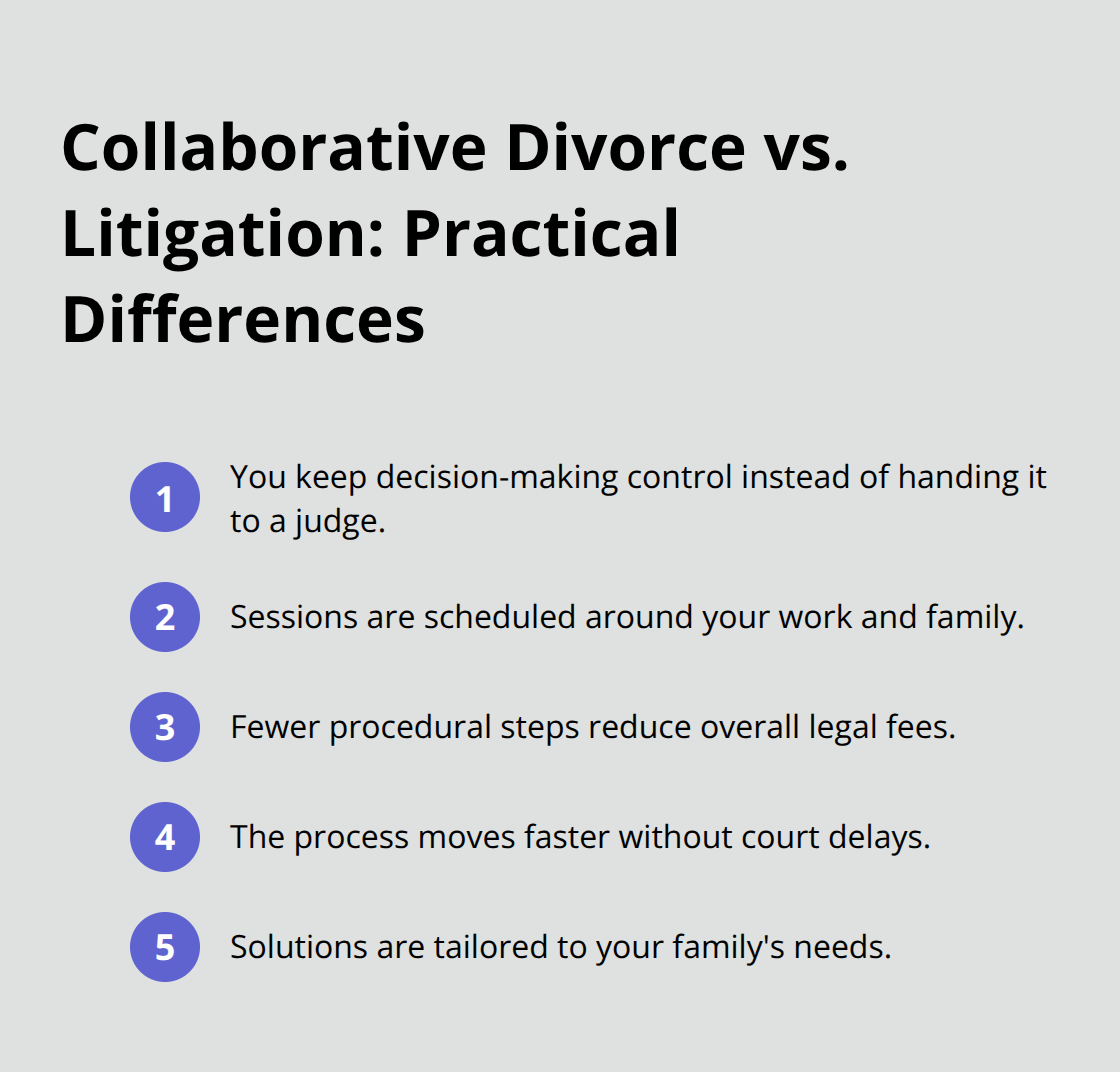
Collaborative divorce eliminates these expensive procedural steps.
Why Families Choose Collaboration Over Confrontation
Couples report that the process feels less emotionally draining because it emphasizes dialogue and problem-solving instead of confrontation. For families with children, this matters considerably since parents who negotiate their own parenting plan cooperate better after divorce and follow through on agreements more consistently. The collaborative model produces more durable post-divorce relationships because both parents had a voice in designing the terms that govern their co-parenting arrangement (rather than accepting terms imposed by a judge). This foundation of mutual agreement strengthens the likelihood that your family will adapt successfully to life after divorce. When you move forward to assembling your collaborative team, you’ll discover how the right professionals support this cooperative framework.
Building Your Collaborative Team and Starting Negotiations
Hiring the Right Collaborative Attorney
The success of your collaborative divorce hinges on assembling the right people and getting organized from day one. In Melbourne, Florida, you’ll need to hire a collaborative attorney trained specifically in this process-not just any divorce lawyer. The distinction matters because collaborative attorneys sign a pledge to withdraw from your case if negotiations fail and litigation becomes necessary. This commitment fundamentally changes how they approach your situation. They focus on settlement rather than positioning for trial. When you interview potential collaborative attorneys, ask directly about their training in collaborative law and how many cases they’ve completed using this method. An attorney with dozens of collaborative divorces under their belt will navigate the process more smoothly than one treating it as a side service.
Assembling Your Full Collaborative Team
Beyond your attorney, the collaborative team typically includes neutral financial professionals and mental health coaches brought in when needed. Unlike traditional divorce where each spouse hires separate accountants and psychologists, collaborative divorce uses one shared professional for each discipline. This approach cuts your costs significantly. If you need a child specialist to help develop your parenting plan, both of you work with the same person rather than presenting competing views to a judge.
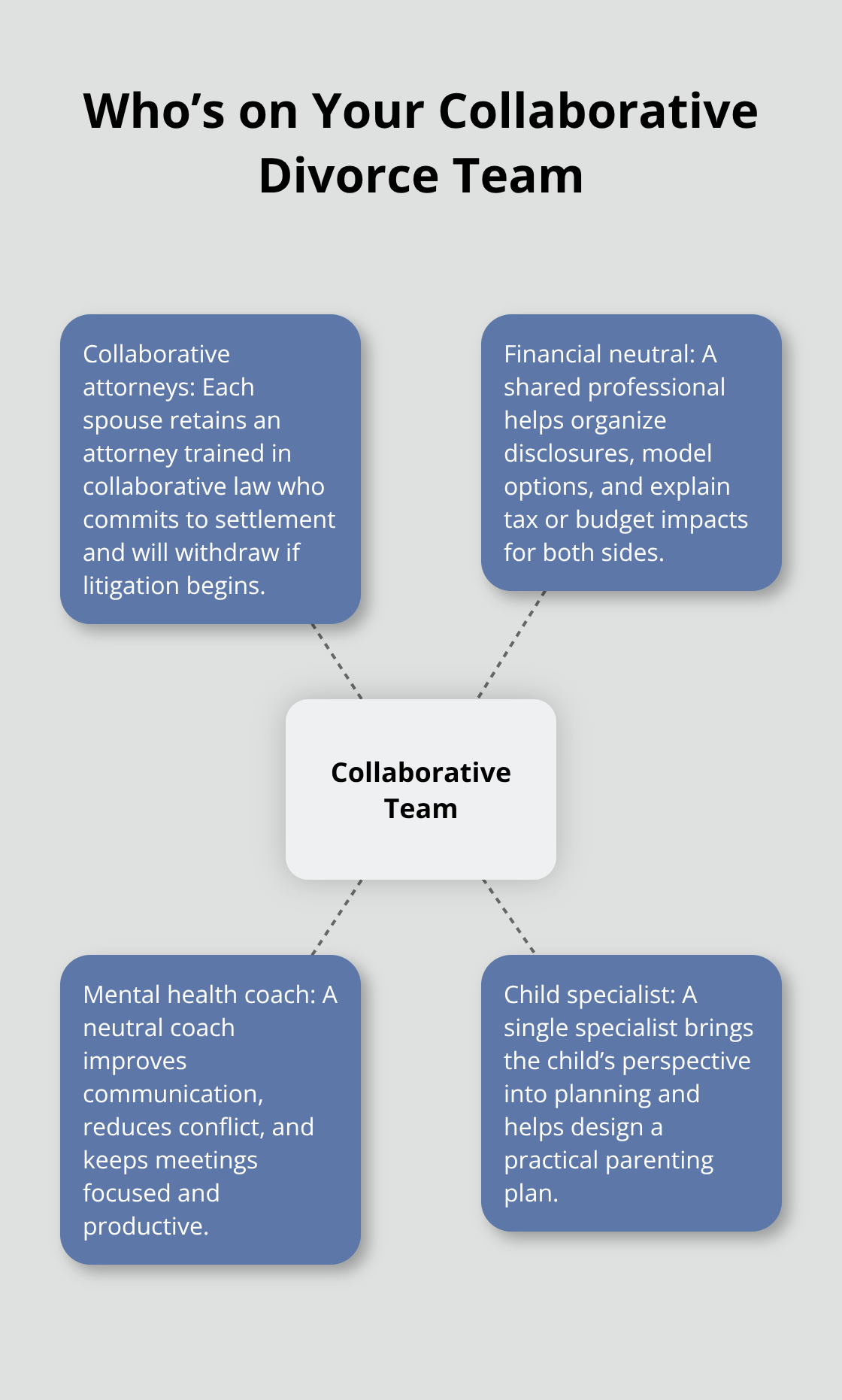
The shared professional model works because everyone’s goal is reaching agreement, not winning points.
Preparing Financial Documents and Initial Organization
Before your first formal meeting, gather comprehensive financial documents-tax returns from the last three years, recent pay stubs, bank statements, mortgage documents, investment statements, and a list of debts. Florida courts require detailed financial disclosure anyway, so preparing this material upfront prevents delays and demonstrates good faith to your spouse. Your initial meetings establish the tone and pace for everything that follows. The collaborative team typically meets in a neutral setting, often with both attorneys present from the start.
Setting Goals and Understanding the Process
During these early sessions, you’ll discuss your goals, concerns, and priorities without getting into detailed negotiations about specific assets or custody terms. This phase is where you clarify what matters most to you and listen to what matters to your spouse. Bringing a list of your priorities written beforehand helps keep discussions focused. The initial meetings also cover the participation agreement-a document both spouses sign committing to the collaborative process and agreeing that information shared during negotiations stays confidential. This confidentiality protection encourages honest communication.
Moving Through Negotiation Phases Strategically
As meetings progress into active negotiation phases, you’ll tackle specific issues systematically: property division, asset distribution, child support calculations, custody arrangements, and alimony if applicable. Florida child support guidelines use a formula based on both parents’ combined net income, but collaborative divorce allows you to negotiate variations if both parties agree. For example, if one spouse has significantly higher earning potential but currently earns less due to caring for children, you might agree to support amounts that reflect this temporary situation. The negotiation phases move faster when both sides come prepared. If property division is on the agenda for a particular session, bring detailed information about each asset’s value and your thoughts on fair distribution beforehand. This preparation prevents wasting time gathering information during expensive professional meetings. Between sessions, your attorney may assign tasks-preparing a list of retirement accounts, gathering insurance documents, or writing down your vision for a parenting schedule. Taking these assignments seriously keeps momentum moving forward. Most couples complete collaborative divorces within six to nine months, though some finish faster depending on complexity and how quickly you can schedule meetings around work and family commitments. Once you’ve assembled your team and begun negotiations, the real work of protecting your interests while maintaining cooperation comes into focus.
Making Collaboration Work When Emotions Run High
Communicate Your Needs, Not Your Grievances
Collaborative divorce demands that you communicate differently than you might in everyday conflict. Most couples arrive at collaborative meetings carrying months or years of frustration, and old patterns of blame and defensiveness surface immediately without intentional effort to prevent them. The collaborative process requires you to separate the person from the problem-you can strongly disagree about asset division while still treating your spouse with basic respect during negotiations. This distinction sounds simple but proves difficult in practice.
Start with one concrete rule: speak about your own needs and concerns rather than attacking your spouse’s character or motives. Instead of saying your spouse was irresponsible with finances, say you need reassurance about how retirement accounts will be managed going forward. This shift from accusation to need-based communication reduces defensiveness and opens space for actual problem-solving.
Leverage Professional Support for Communication
Many couples benefit from communication coaching provided by a mental health professional on the collaborative team, particularly if you and your spouse have struggled with heated arguments in the past. Research on mediated divorces shows that couples who receive communication support complete agreements faster and express greater satisfaction with outcomes than those who skip this support. The investment in professional guidance pays dividends throughout your negotiations.
Understand What Neutral Professionals Actually Do
Your collaborative team members-attorneys, financial professionals, and mental health coaches-are not there to take sides or validate your position. They work to move the process forward toward agreement, which means they will sometimes push back on unrealistic demands or point out where your proposed solution creates problems for your spouse. This can feel uncomfortable, but it’s precisely why neutral professionals accelerate progress.
If your attorney agrees with every position you take, you’re likely not receiving honest counsel about what a court would actually order if negotiations fail. When a financial professional presents numbers showing that your proposed child support arrangement doesn’t align with Florida’s guidelines, that information helps both of you make realistic decisions rather than discovering later that a judge rejected your agreement. The professionals serve the process, not your ego.
Identify Your Non-Negotiable Issues
Protecting your interests while maintaining cooperation means knowing your bottom lines before negotiations start and distinguishing between what you must have and what you prefer. Write down three to five non-negotiable issues-perhaps maintaining primary custody of your children, keeping the family home until children finish high school, or protecting retirement accounts you accumulated before marriage.
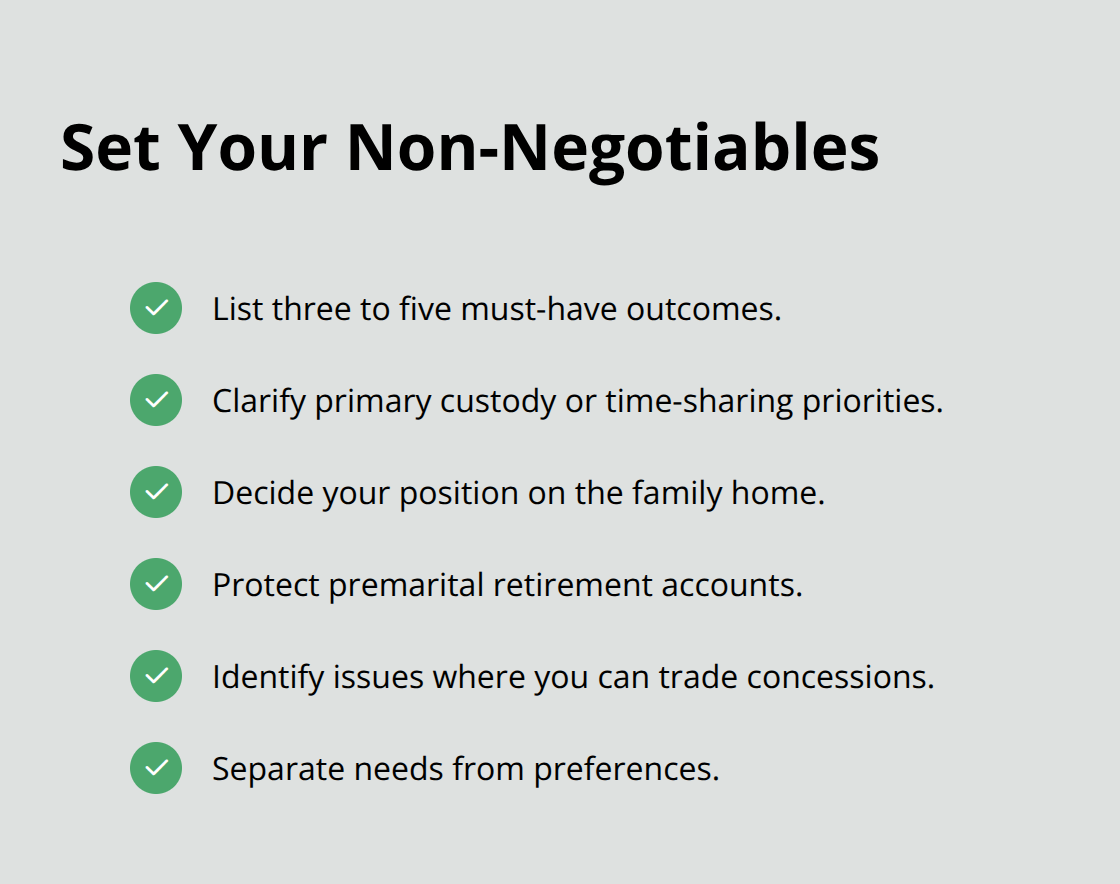
Everything else becomes negotiable territory where you can trade concessions.
Florida child support is calculated using specific formulas based on combined parental income and time-sharing percentages, so you have clear parameters to work within rather than fighting over arbitrary numbers. This framework actually protects you because both sides know the baseline. When you’re willing to compromise on less critical issues-perhaps accepting a longer alimony period in exchange for keeping more retirement savings-you signal good faith while preserving what genuinely matters to your family’s future.
Final Thoughts
Collaborative divorce offers Melbourne, Florida families a fundamentally different path through separation that puts you in control of decisions shaping your family’s future while saving substantial money compared to court litigation. The process works because it shifts focus from winning to problem-solving, from confrontation to cooperation, and from judge-imposed outcomes to agreements you design together. Success depends on three core elements: attorneys trained specifically in collaborative law and committed to settlement, your willingness to approach negotiations with realistic expectations and clear priorities, and the full collaborative team (financial professionals, mental health coaches, and child specialists) who bring clarity when emotions run high.
The financial and emotional advantages compound over time as couples who complete collaborative divorces report lower stress levels, faster timelines compared to litigation, and greater satisfaction with final agreements they shaped themselves. For families with children, the cooperative framework established during negotiations carries forward into post-divorce parenting relationships, reducing conflict and improving children’s adjustment. The right legal guidance makes the difference between a collaborative divorce process that feels manageable and one that becomes unnecessarily complicated.
At Harnage Law PLLC, we provide experienced representation in family law matters including divorce and child custody, helping you navigate collaborative negotiations with clear strategy and personalized attention. We understand the specific dynamics of Florida family law and can evaluate whether collaborative divorce fits your situation. Reach out to discuss your circumstances and take the first step toward a resolution that protects your interests while keeping your family’s wellbeing at the center.