
How to Navigate Divorce with a Narcissistic Spouse
Our Blog
How to Navigate Divorce with a Narcissistic Spouse

Divorcing a narcissistic spouse presents unique challenges that go far beyond a standard separation. The behavior patterns, manipulation tactics, and emotional dynamics require a different approach to protect yourself and your children.
At Harnage Law PLLC, we’ve guided countless clients through narcissists and divorce situations where standard strategies fall short. This guide walks you through recognition, protection, legal action, and recovery.
Recognizing Narcissistic Behavior in Your Spouse
Narcissistic traits show up consistently in how your spouse talks to you, treats decisions, and handles conflict. The American Psychiatric Association defines Narcissistic Personality Disorder as an inflated sense of importance, constant need for admiration, and lack of empathy for others’ feelings. Your spouse may dominate conversations, belittle your opinions, refuse to admit mistakes, or claim they deserve special treatment without earning it.
How Narcissism Intensifies During Divorce
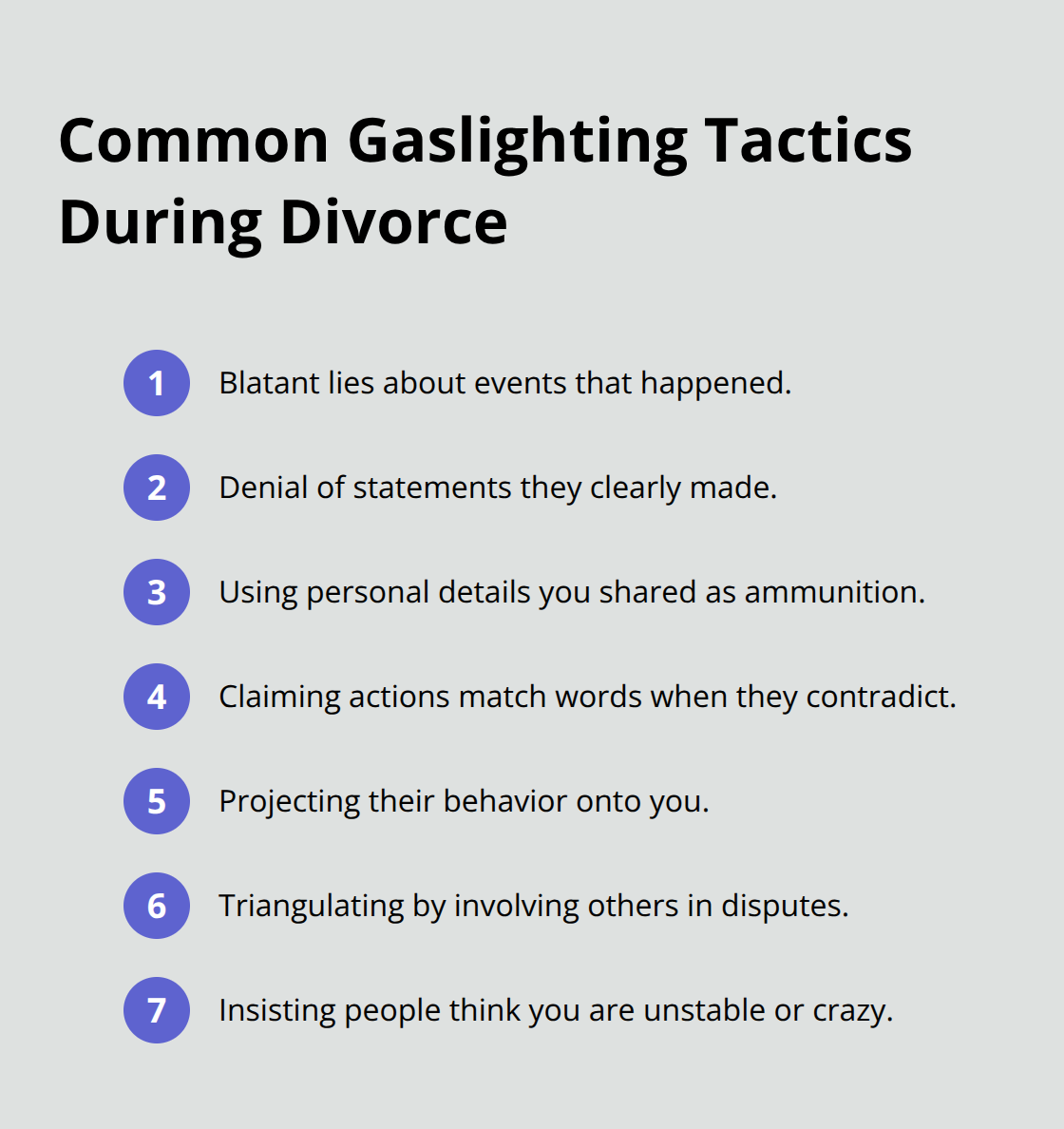
These patterns intensify during divorce because narcissists view the separation as a threat to their self-image and control. They often resist the split aggressively, use gaslighting to make you question reality, and weaponize information against you. Gaslighting takes specific forms: blatant lies about events that happened, denial of statements they clearly made, using personal details you shared as ammunition, claiming actions match words when they contradict, projecting their behavior onto you, triangulating by involving others in disputes, and insisting people think you are unstable or crazy.
When you mention divorce, expect love-bombing attempts to convince you they have changed, protests that you are overreacting, or sudden promises to improve. These tactics aim to regain control, not create genuine change.
Start Your Documentation Now
Start a daily diary immediately, not after filing papers. Write down specific dates, times, locations, what was said word-for-word, and who witnessed the behavior. Focus on factual descriptions without assumptions about their motives or mental state. Save all text messages, emails, and voicemails in their original form-screenshot texts before they disappear, transcribe threatening voicemails with exact timestamps and language, and photograph any property damage or injuries.
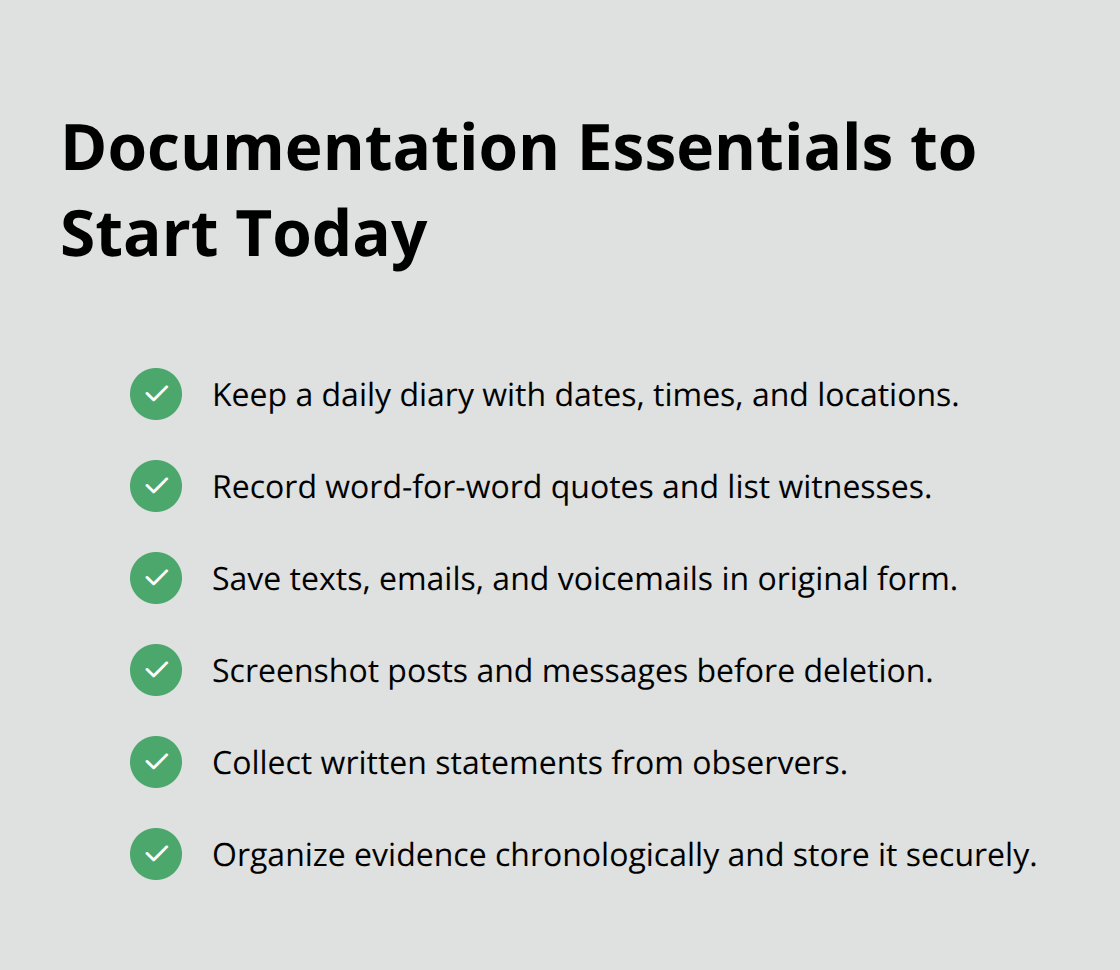
If your spouse makes inappropriate social media posts, capture screenshots immediately before deletion. Texas courts consider conduct that substantially harms the marital relationship when dividing property and determining spousal support, so documented patterns matter significantly. Collect written statements from friends, family members, coworkers, or therapists who observe narcissistic behavior regularly. Evidence documented close in time to incidents carries more weight than memories months later. Third-party accounts from people who interact with both of you add credibility that your account alone cannot provide. Keep all evidence organized chronologically and securely stored where your spouse cannot access or destroy it.
How Documentation Shifts Power in Court
Narcissists often lie in court filings, make false allegations against you, and attempt smear campaigns to gain leverage. Without documentation, your word becomes pitted against theirs. Evidence of patterns-not isolated incidents-demonstrates ongoing impact on your marriage and your children. Courts use this documentation to make informed decisions about property division, custody arrangements, and spousal support obligations.
Your diary entries, saved communications, witness statements, and photographs create an objective record that narcissistic behavior cannot rewrite. This foundation positions you to move into the next critical phase: protecting yourself through boundaries and strategic legal action.
Protecting Yourself During Divorce
Protecting yourself starts with immediate action on three fronts: controlling how your narcissistic spouse communicates with you, securing your financial information before it disappears, and surrounding yourself with people who see the situation clearly. Narcissists often escalate their control tactics once divorce becomes real, so waiting passively guarantees harm.
Lock Down Communication Channels
Stop all direct conversation about divorce, finances, or children if possible. Route everything through your attorney, a custody exchange service, or written channels only. Text, email, and WhatsApp create documented records that voicemails and phone calls cannot. When you must respond, wait 24 hours before replying to avoid emotional reactions that narcissists exploit. Keep messages brief, factual, and focused solely on your children if you have them. If a message has nothing to do with the kids, do not respond at all, but save it anyway as documentation of harassment. Narcissists count on direct engagement to maintain control, so your silence and professional distance strip away their power. If harassment continues through repeated unwanted contact, apply for a Non-Molestation Order to legally restrict communication to matters concerning your children only.
Secure Your Financial Records Immediately
Gather copies of all bank statements, investment accounts, retirement fund documents, tax returns from the past three years, mortgage statements, credit card statements, and any business records if your spouse owns a company. Store these copies in a safe location your spouse cannot access, ideally with a trusted family member or in a secure cloud storage account they do not know about. Narcissists frequently hide assets, drain accounts, or claim financial hardship once divorce is filed, so early documentation proves the true marital estate. If your spouse controls the primary bank account, open a separate account in your name alone at a different bank immediately and redirect your income there. Check your credit report through all three bureaus to catch any accounts your spouse may have opened in your name without permission.
Build Your Support Circle Strategically
Identify three to five people who understand narcissistic behavior, see through manipulation, and will not be swayed by your spouse’s inevitable smear campaign. These might include a therapist experienced in narcissistic abuse, a trusted family member, close friends who have witnessed the behavior, and your attorney. These people become your reality check when gaslighting makes you question yourself, your sounding board when decisions feel overwhelming, and your witnesses if court becomes necessary. Isolation is a narcissist’s greatest weapon, so surrounding yourself with grounded people who know your character neutralizes that tactic completely. With your communications controlled, finances protected, and support network in place, you now move into the legal phase where documentation and strategy determine outcomes in court.
Legal Strategies for Narcissistic Divorce
Selecting an Attorney Who Understands High-Conflict Cases
Hiring the right attorney makes the difference between a fair settlement and financial devastation. You need someone who has handled multiple high-conflict divorces where manipulation and false allegations function as weapons, not someone who treats your case as routine. When you interview attorneys, ask directly how many cases they have handled involving narcissistic abuse or personality disorders, what tactics they have seen narcissists use in court, and how they plan to counter gaslighting and false claims. An attorney who understands narcissistic behavior recognizes that standard negotiation approaches fail because narcissists view compromise as losing and will sabotage settlements at the last moment. Your attorney must show willingness to take the case to trial if settlement becomes impossible rather than pressuring you into an unfavorable deal just to close the file. Ask whether they have experience presenting evidence of emotional abuse, financial control, or parental alienation to judges, since many attorneys lack courtroom experience with these specific dynamics. Request references from past clients in similar situations and verify they are comfortable discussing your case strategy openly rather than keeping you in the dark about court procedures and potential outcomes.
Presenting Documentation That Courts Take Seriously
Evidence presentation determines whether courts take narcissistic behavior seriously or dismiss it as typical divorce conflict. Bring your organized documentation chronologically with a summary document highlighting patterns rather than isolated incidents, since judges process hundreds of cases and need clear context quickly. If you have witness statements, have those individuals available for testimony or provide written affidavits explaining what they observed and when. Present financial records showing hidden assets, unusual transfers, or accounts opened without your knowledge, paired with analysis if the numbers are complex. Regarding custody arrangements, courts prioritize child safety above parental rights, so evidence of emotional manipulation, threats made in front of children, or refusal to follow court orders carries significant weight.
Crafting Custody Orders That Eliminate Ambiguity
Propose specific, detailed custody orders with fixed handover times and locations rather than vague arrangements like reasonable visitation, since narcissists exploit ambiguity to create conflict and control. Include provisions requiring school and medical decisions to go through both parents or a neutral third party, preventing your spouse from making unilateral choices that exclude you. If there is any history of threats, violence, or severe emotional abuse, request that exchanges happen at a neutral custody center rather than direct handoffs.
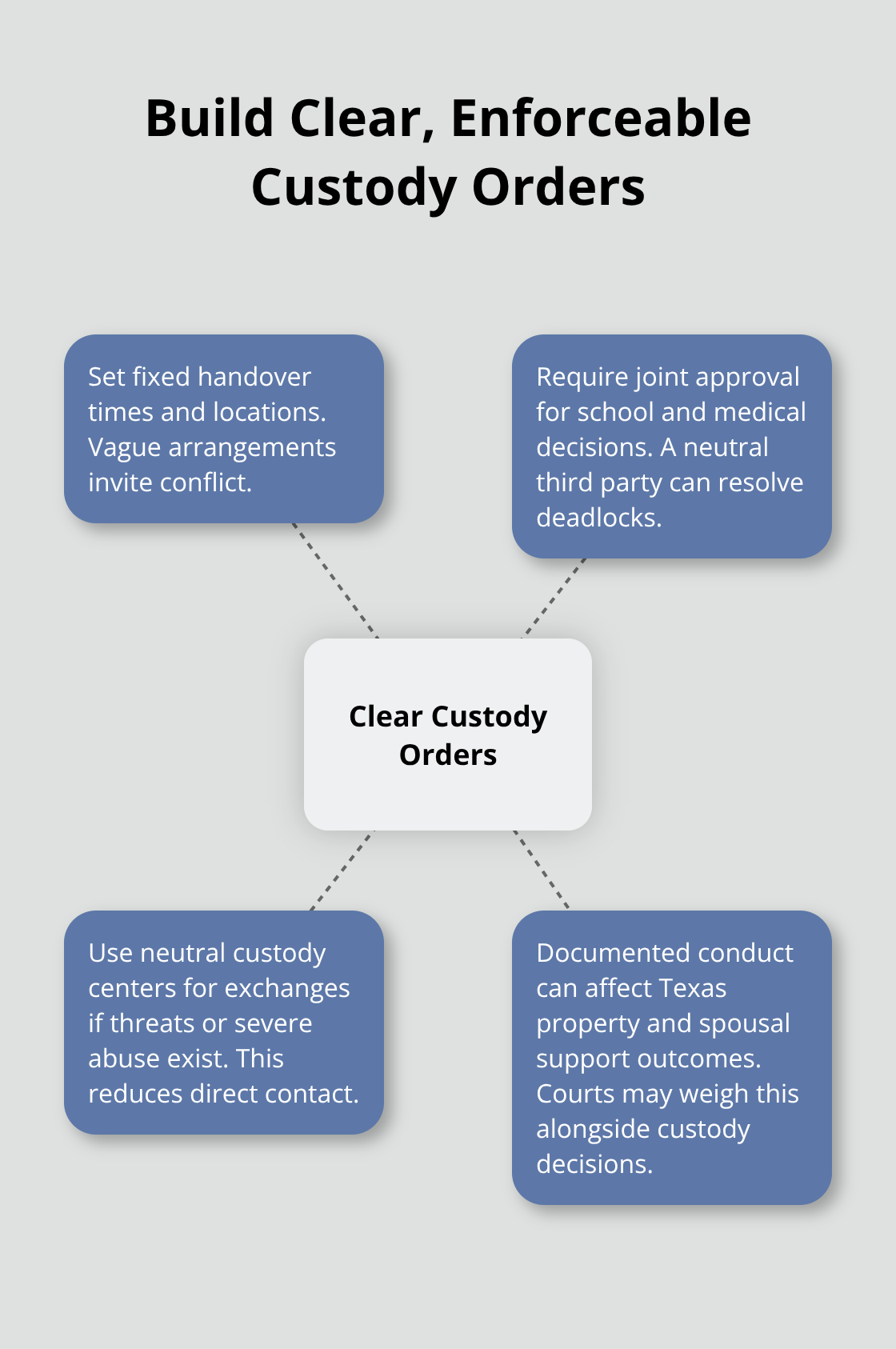
Courts in Texas consider evidence of conduct substantially negatively impacting the marital relationship when dividing property and awarding spousal support, making your documentation directly relevant to financial outcomes, not just custody decisions.
Moving Forward After Divorce
Therapy becomes non-negotiable after narcissists and divorce situations end. Cognitive-behavioral therapy, trauma-informed approaches like EMDR or TF-CBT, and acceptance and commitment therapy all address the specific damage narcissistic relationships cause. A licensed mental health professional experienced in narcissistic abuse helps you process gaslighting, rebuild trust in your own judgment, and develop coping strategies for ongoing contact if you share children. Divorce ranks among the most stressful life events on the Life Change Index Scale, and therapy accelerates your ability to move forward rather than remaining stuck in patterns the narcissist established.
Co-parenting with a narcissistic ex requires strict boundaries that protect your children while minimizing direct conflict. Do not rely on your ex for anything-clothes, food, medication, school decisions, or medical care-and engage directly with schools, doctors, and relevant services yourself. Keep communication to bare essentials about the children only, using email or text to maintain written records, and maintain consistent routines that contradict the chaos a narcissistic parent creates. Children need space to express their feelings without judgment and stability that supports their recovery.
Self-care during and after divorce directly impacts your ability to parent effectively and heal. Regular exercise, adequate sleep, healthy eating, and time with trusted people reduce stress and restore your capacity to make sound decisions, while journaling, meditation, and time in nature provide outlets for processing emotions without involving your children or your ex. We at Harnage Law PLLC understand that recovery from narcissists and divorce extends beyond legal resolution, and our attorneys provide personalized attention to help you navigate not just the legal process but the path forward. Visit our website to discuss your situation with someone who recognizes the unique demands of high-conflict family law cases.