
How to Use Collaborative Law for Your Divorce
Our Blog
How to Use Collaborative Law for Your Divorce

Divorce doesn’t have to mean months of courtroom battles and mounting legal bills. Collaborative law offers a different path where both spouses work together with trained professionals to reach fair agreements outside of court.
At Harnage Law PLLC, we’ve seen firsthand how this approach transforms divorce outcomes for families in Melbourne, Florida. This guide walks you through how collaborative law works and whether it’s right for your situation.
What Collaborative Law Actually Means in Florida
Collaborative law in Florida is a structured process where both spouses hire separate attorneys who commit to negotiating a settlement without going to court. Florida Statutes Section 61.55 defines it as a unique non-adversarial process designed to preserve dignity and reduce the emotional and financial toll of litigation. The critical distinction is that both attorneys sign a participation agreement stating they will withdraw from the case if negotiations fail and litigation becomes necessary. This creates real accountability because switching attorneys mid-divorce adds thousands in costs and delays.
Traditional litigation positions each spouse against the other, with a judge ultimately deciding property division, custody, and support. In collaborative law, you and your spouse control every outcome through direct negotiation. A 2020 analysis found traditional divorce costs averaged about $13,500 without children and over $20,000 with children in Florida. Collaborative divorce typically costs significantly less because you eliminate court filings, discovery disputes, and trial preparation. The process moves at your pace, not the court calendar’s pace, meaning you schedule sessions around work and family obligations rather than waiting months for hearing dates.
The Professionals Who Shape Your Settlement
Collaborative divorce brings together multiple professionals working toward settlement rather than victory. Your attorney handles legal strategy and negotiation, while your spouse’s attorney does the same on their side. A financial professional (typically a CPA or financial advisor) joins sessions to analyze asset division, retirement accounts, and tax implications so both spouses understand the long-term financial picture. A mental health professional or divorce coach facilitates communication between spouses, helping you discuss custody arrangements and parenting plans without escalating conflict.
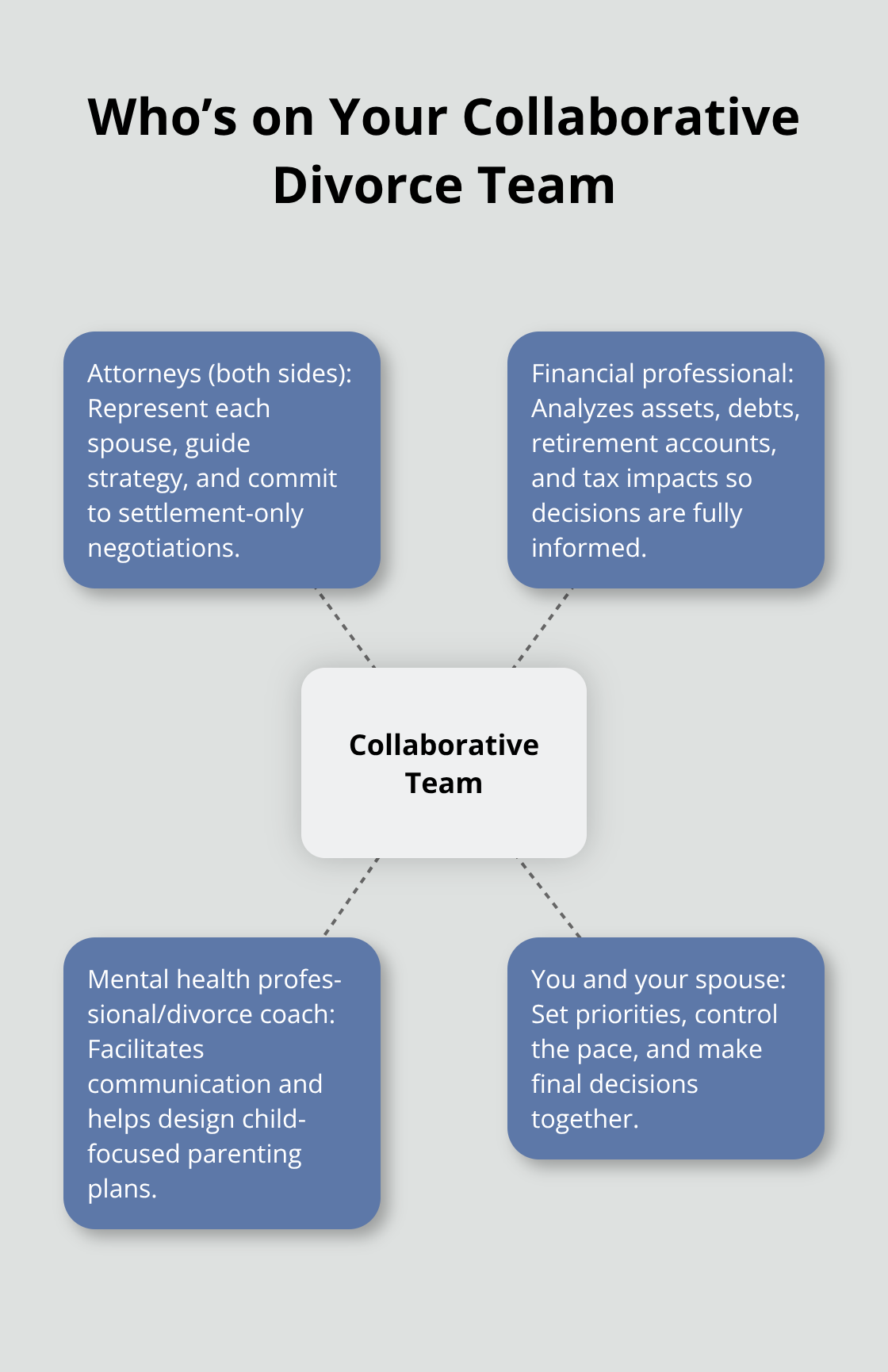
This multidisciplinary approach means you’re not relying solely on lawyers to solve emotional and financial problems. Each professional addresses their specific domain, making the process more efficient and thorough. Florida families with children benefit most from this structure because the mental health professional helps design parenting plans focused on your children’s stability rather than parental conflict. Unlike litigation where a judge imposes terms after hearing arguments, collaborative sessions let you shape solutions that actually work for your family’s unique circumstances.
What Happens Next in the Process
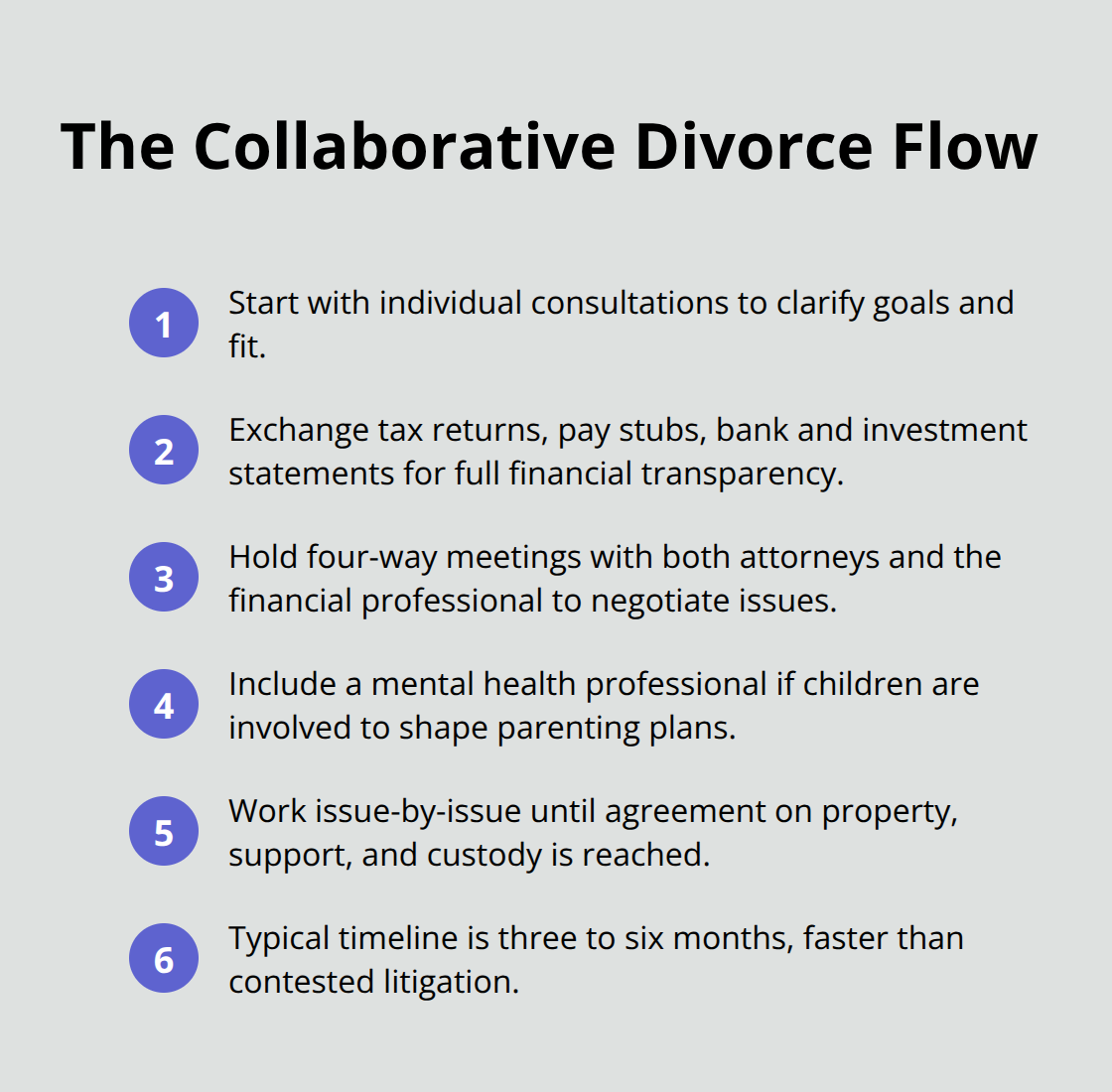
The collaborative process moves through distinct phases that you control. You and your spouse meet with your respective attorneys first to outline your priorities and concerns. Then both spouses, both attorneys, and the financial professional (and mental health professional if children are involved) gather for four-way meetings where negotiation actually happens. These sessions focus on specific issues-property division, support arrangements, custody plans-until both parties reach agreement on each topic.
Why Collaborative Divorce Costs Less and Moves Faster
The Real Financial Advantage of Avoiding Litigation
Collaborative divorce eliminates the financial drain that traditional litigation creates. When you litigate, attorneys bill for discovery disputes, motion practice, court filings, and trial preparation-expenses that vanish in collaborative settings. A 2020 analysis found traditional Florida divorces cost about $13,500 without children and over $20,000 with children. Collaborative cases typically run 30–50% lower because you skip depositions, interrogatories, and courtroom time. You stop paying for conflict and start paying for resolution.
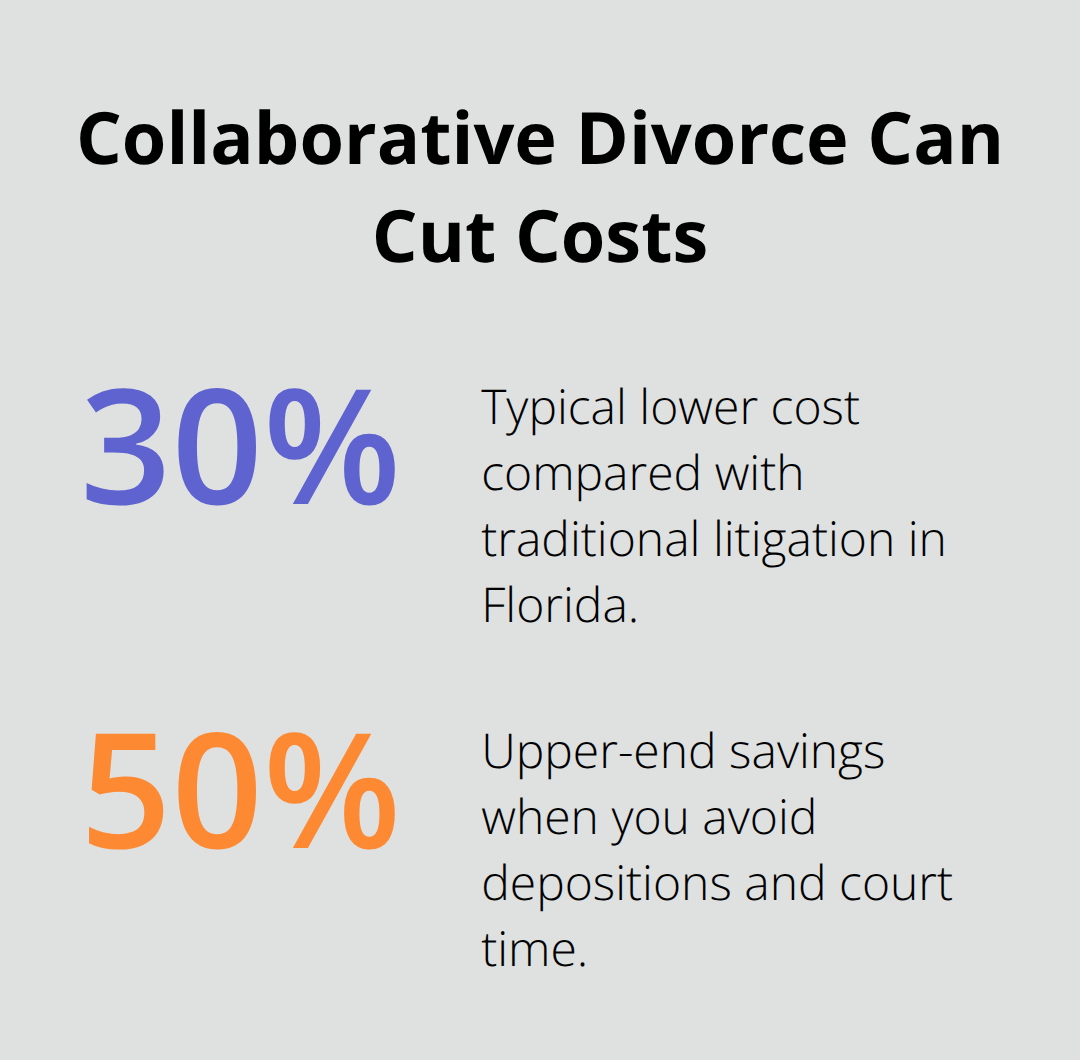
The financial professional in your collaborative team analyzes every asset and debt option upfront, so both spouses understand the tax consequences and long-term impact before agreeing. This transparency prevents post-divorce disputes that cost thousands more to litigate later. Melbourne families also control session frequency and length-you might meet twice monthly instead of waiting six months for a court date. Many collaborative divorces conclude in three to six months while contested litigation stretches beyond a year, meaning you stop paying legal fees months earlier and redirect that money toward rebuilding your life.
How You Control Your Settlement Terms
Control over your settlement terms matters more than speed or cost alone. In court, a judge imposes property division, custody arrangements, and support based on state guidelines and limited courtroom testimony. You have no say in the outcome. Collaborative negotiation lets you craft solutions that actually reflect your family’s circumstances. If you and your spouse agree that one parent should have the home while the other receives retirement accounts, you make that decision together rather than hoping a judge agrees.
Parenting plans can include flexible schedules that accommodate both parents’ work situations instead of rigid court-ordered arrangements. Spousal support can be structured to phase out over time if that works for your situation. This control extends to privacy-collaborative settlements remain confidential, unlike public court judgments. For Melbourne professionals, business owners, or anyone concerned about family details becoming public record, collaborative law protects your reputation.
Why Emotional Health Matters in Your Divorce
You also reduce emotional damage when you avoid courtroom confrontation. Mental health professionals embedded in the collaborative process help both spouses communicate about custody and children’s needs without the adversarial tone that litigation breeds. Families who maintain respectful post-divorce relationships-especially those co-parenting-benefit enormously from this cooperative framework.
The settlement agreement you negotiate reflects what both spouses actually want, not what a judge decided during a brief hearing. This foundation of mutual agreement makes the transition smoother for everyone involved, particularly children who benefit from parents working together rather than against each other. Once you understand the financial and emotional advantages of collaborative law, the next step involves learning exactly how the process unfolds from your first consultation through final settlement.
How the Collaborative Process Actually Works
Your Initial Consultation Sets the Foundation
Your first meeting with a collaborative attorney establishes the direction for everything ahead. The attorney explains the process, discusses your priorities, and answers questions about costs and timelines. This consultation determines whether collaborative law fits your situation-if you and your spouse can communicate respectfully and neither party has a history of domestic violence, you’re likely a good candidate. During this meeting, your attorney asks about your assets, debts, children, and primary concerns to understand your goals before any four-way sessions start. You’ll also learn about the participation agreement, which both spouses must sign before moving forward. This agreement commits both attorneys to withdraw if the process fails and litigation becomes necessary. The withdrawal clause protects you because it forces genuine commitment to settlement rather than positioning for court. Switching attorneys later costs thousands more in fees and delays, so both parties take negotiations seriously from day one.
Gathering and Sharing Financial Information
Before real negotiation happens, financial information must flow between both spouses and their attorneys. You’ll collect tax returns from the past three years, recent pay stubs, bank statements, investment account statements, mortgage documents, and any business ownership records. The financial professional reviews this documentation to map out your complete financial picture-total assets, total debts, monthly income, and long-term obligations. This transparency prevents surprises later and allows both spouses to make informed decisions about asset division and support arrangements. Florida Statutes Section 61.55 supports this collaborative framework, and the process typically takes three to six months from initial consultation through final settlement, compared to over a year for contested litigation.
Four-Way Meetings Drive the Negotiation Forward
Four-way meetings start once financial documents are exchanged and both attorneys have met privately with their clients. These sessions bring both spouses, both attorneys, and the financial professional together to discuss specific issues like property division, spousal support, and child support. A mental health professional may also attend if children are involved, helping shape parenting plans that prioritize stability. Each four-way meeting focuses on one or two topics so conversations stay manageable and productive. You control the pace-if a session becomes heated or unproductive, your attorney can request a break or schedule the next meeting after everyone has time to reflect. The financial professional presents analysis during these sessions, showing how different settlement options affect each spouse’s long-term finances and tax obligations.
Final Thoughts
Collaborative law works best when both spouses communicate respectfully and commit to reaching fair agreements outside court. If you and your spouse have children, divorce collaborative law becomes even more valuable because the process prioritizes stable co-parenting arrangements over courtroom conflict. You’re also a strong candidate if you want to control your settlement terms, protect your privacy, or avoid the emotional toll of litigation.
Finding the right attorney in Melbourne, Florida matters because not all family law attorneys practice collaborative law. Look for firms that explicitly offer collaborative divorce services and have experience with the process in your area. We at Harnage Law PLLC handle sensitive family law cases including divorce and child custody with personalized attention to your specific situation, and you can learn more about our approach to discuss whether collaborative law fits your circumstances.
Gather your financial documents and honestly assess whether you and your spouse can work together toward settlement. Schedule a consultation with a collaborative attorney who can evaluate your case and explain realistic timelines and costs based on your specific issues. Once you’ve decided collaborative law is right for you, signing the participation agreement signals your commitment to the process and sets the foundation for productive negotiations.