
What Are the Leading Causes of Divorce?
Our Blog
What Are the Leading Causes of Divorce?

Divorce rarely happens overnight. Most marriages end because of patterns that build over months or years, and understanding the top causes of divorce helps couples recognize warning signs before it’s too late.
Money problems, communication failures, and incompatibility are the three biggest reasons marriages fall apart. We at Harnage Law PLLC have seen firsthand how these issues destroy relationships, and we want to help you understand what leads couples to our office.
Money Fights Destroy More Marriages Than You Think
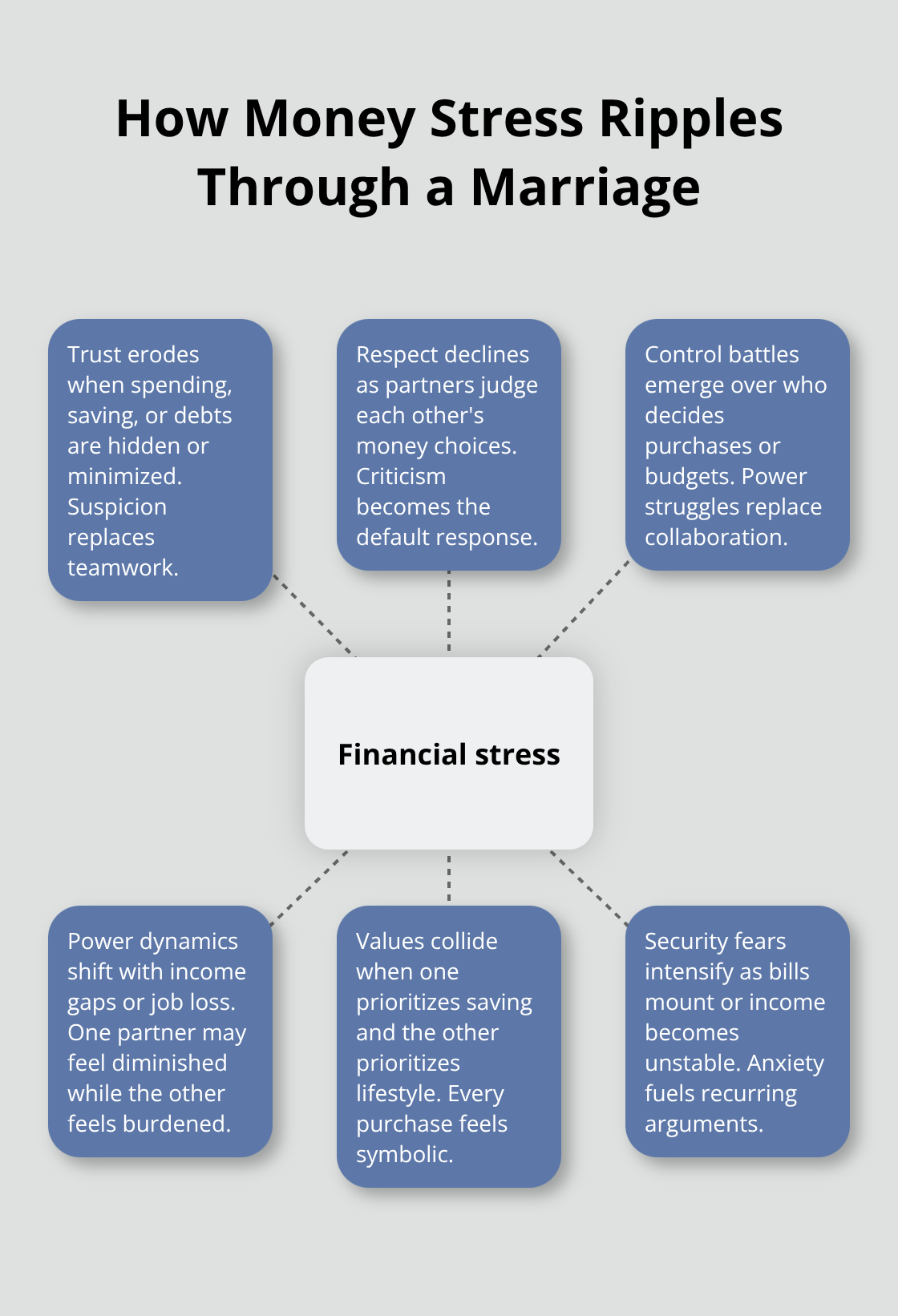
Financial stress is the single most destructive force in modern marriages, and the data backs this up. According to the National Fatherhood Initiative’s 2025 survey, financial disagreements affect over one-third of divorcing couples, making money the third-leading cause of divorce behind lack of commitment and infidelity. What makes this worse is that financial problems don’t exist in isolation-they create a domino effect that triggers arguments about trust, respect, and control. When couples fight about money, they’re often fighting about power, values, and security all at once.
Debt and Spending Habits Are Silent Killers
Debt doesn’t just strain your bank account; it strains your marriage. One partner’s credit card habit or student loan burden becomes both partners’ problem once you’re married. The friction starts when spending habits clash. One spouse saves aggressively while the other spends freely, and suddenly every purchase becomes a source of tension. What compounds this problem is that many couples never discuss their financial history or expectations before marriage. You don’t know your partner’s relationship with money until you’re already managing joint accounts. The 2025 IDFA Voice of the Customer Survey shows that many couples cite incompatibility as their reason for divorce, but when financial professionals dig deeper, they find that underlying financial fractures-unspoken spending patterns, hidden debt, or different attitudes toward risk-have been building resentment for years. The practical solution is brutal honesty about finances before marriage or immediately after. Pull credit reports together. List all debts. Discuss how you were raised around money. This conversation is uncomfortable, but it’s far less painful than a divorce.
Income Gaps and Career Stress Change Everything
When one spouse earns significantly more than the other, power imbalances emerge. The higher earner may feel resentful about carrying financial responsibility, while the lower earner feels diminished or controlled. Career pressures compound this. If one partner loses a job or decides to change careers, the financial pressure shifts entirely to the other spouse, and suddenly the marriage feels like a burden instead of a partnership. Research shows that unemployment destabilizes marriages because it forces sudden changes in labor dynamics and financial security. The spouse who was previously sharing the load now carries it alone, and that exhaustion breeds contempt. This is why financial transparency matters so much-couples need to discuss not just current income but future earning potential, job security concerns, and whether one partner wants to step back from work for caregiving.
Hidden Money Patterns Fester Over Time
Many couples avoid money conversations altogether, which allows resentment to build silently. One partner may hide purchases, lie about spending, or secretly accumulate debt while the other remains unaware. This lack of transparency erodes trust faster than almost any other behavior. When the truth finally surfaces (and it always does), the betrayed spouse feels deceived not just about money but about the entire relationship. Financial abuse-where one partner controls access to funds or prohibits the other from working-represents an extreme version of this dynamic. These patterns don’t start with malice; they start with avoidance. The couple that never talks about money is the couple that eventually stops talking about anything else that matters. What separates marriages that survive financial stress from those that don’t is whether both partners commit to honest conversations about spending, debt, and future financial goals. The next section explores how communication failures amplify these money problems and create even deeper rifts.
Communication Breakdown and Infidelity
Poor communication destroys marriages through years of unspoken frustrations that harden into resentment. Couples stop talking about what matters most, and when they do communicate, they argue without resolving anything. The National Fatherhood Initiative’s 2025 survey ranks lack of commitment as the leading cause of divorce at 73%, but that statistic masks a deeper truth: most couples who cite lack of commitment have actually stopped communicating about their needs, fears, and expectations. They become roommates who share a mortgage.
How Unresolved Conflicts Accumulate
The pattern typically starts small. One partner raises a concern, the other dismisses it, and instead of working through the disagreement, both retreat into silence. Over months and years, these unresolved conflicts pile up. The spouse who feels unheard stops trying to communicate entirely, and the other spouse interprets that silence as indifference. What makes this worse is that couples often argue about surface issues while ignoring the real problem underneath. They fight about whose turn it is to do dishes when they’re actually fighting about feeling unvalued and unsupported. Without naming the actual conflict, they can never resolve it.
Infidelity Emerges From Emotional Distance
Communication breakdown stands as one of the most significant factors in divorce, and infidelity rarely happens in a healthy marriage with strong communication. It emerges from emotional disconnection that develops over time. One partner feels neglected, unheard, or undervalued, and instead of addressing that gap directly with their spouse, they seek connection elsewhere. The affair itself becomes the symptom, not the disease. The disease is years of emotional distance and unmet needs that neither partner addressed when there was still time to fix it.
The Psychological Damage of Betrayal
When the betrayal surfaces, the damage extends far beyond the act itself. The betrayed spouse loses trust not just in their partner but in their own judgment about reality. They question whether the entire marriage was a lie. This psychological impact can take years to process, and many people struggle with trust and intimacy for a decade or longer after infidelity. The path forward requires brutal honesty about why the affair happened in the first place. Often, couples discover that one partner felt invisible or that sexual intimacy had disappeared entirely.
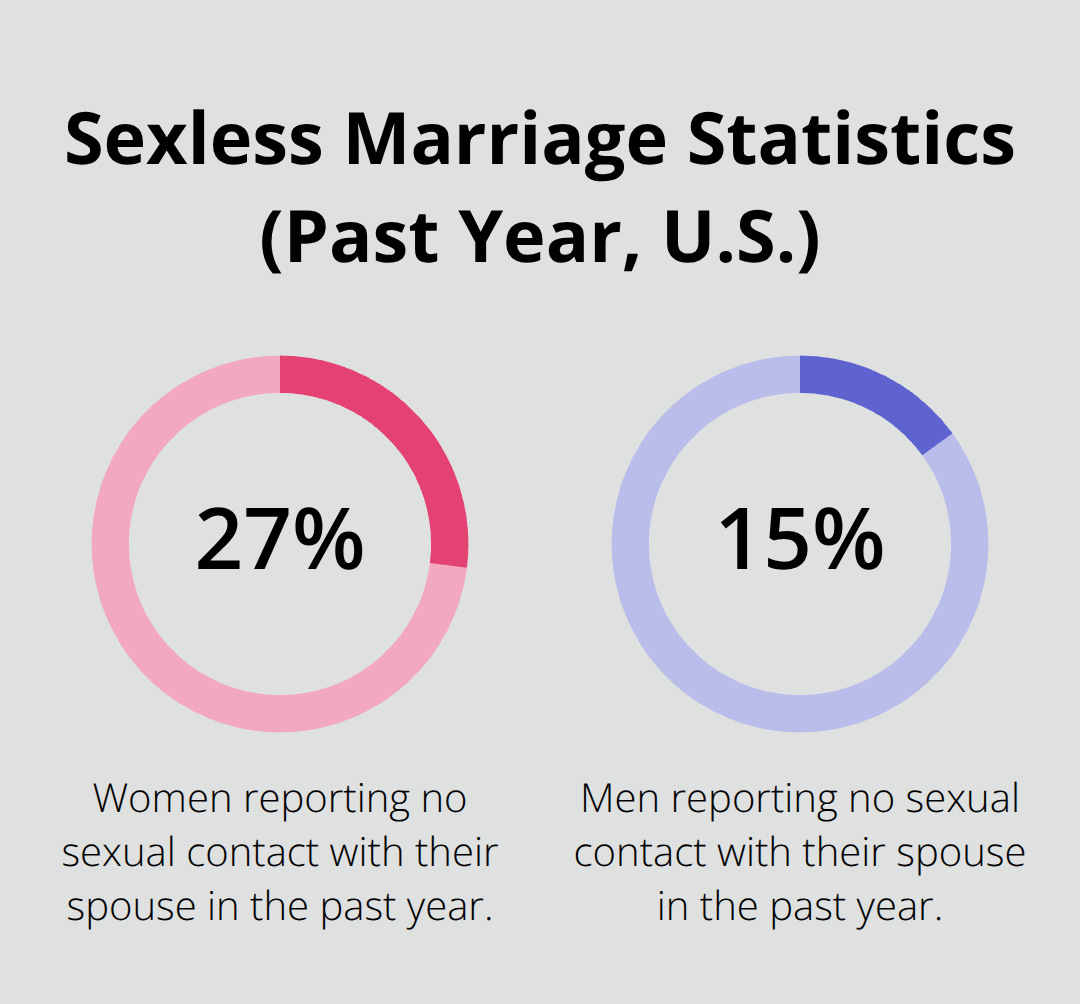
About 27% of women and 15% of men report having no sexual contact with their spouse in the past year, creating emotional voids that infidelity sometimes fills.
Preventing Disconnection Before It Leads to Betrayal
The only way to prevent this trajectory is to maintain regular, vulnerable conversations about emotional and physical needs before those needs drive someone outside the marriage. Couples who survive infidelity do so because they commit to addressing the underlying disconnection that made the affair possible in the first place. These conversations require both partners to show up honestly and listen without defensiveness. When emotional distance combines with financial stress (as it often does), the pressure on a marriage becomes nearly unbearable, and incompatibility begins to surface in ways that feel impossible to repair.
Incompatibility and Lifestyle Changes
When Values Shift and Priorities Clash
The marriages that survive financial stress and communication breakdowns often collapse under the weight of incompatibility that emerges after the wedding. Two people can start out aligned on major life goals, then five years in, one partner wants children while the other has decided parenthood isn’t for them. Or one spouse prioritizes career advancement and relocation while the other values staying close to family and community roots. These aren’t small disagreements about logistics; they’re fundamental conflicts about what life should look like. The National Fatherhood Initiative’s 2025 survey identifies lack of commitment as the leading cause of divorce, and what this really means is that couples stop wanting the same future. What separates couples who navigate these shifts from those who divorce is whether they address the conflict head-on or pretend the disagreement will resolve itself.
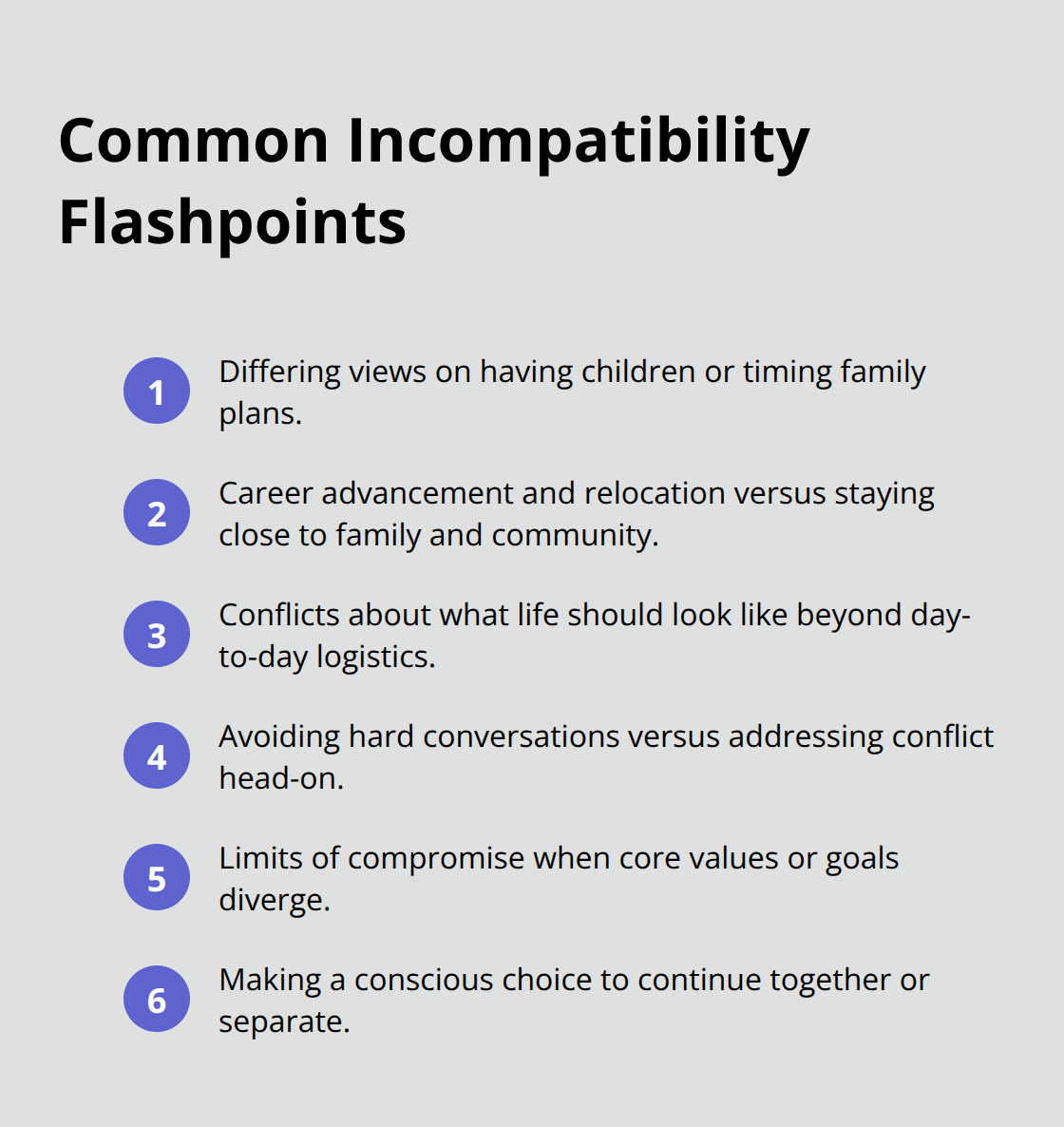
It won’t. Waiting for your partner to change their mind about having children, moving across the country, or pursuing a particular career path fails almost every time. The practical approach requires naming the incompatibility directly, discussing whether compromise is possible (sometimes it genuinely isn’t), and making a conscious choice about whether the relationship can survive the divergence. Many couples discover too late that they married someone based on who that person was at age 25, not accounting for the person they would become at 35 or 45.
How Substance Abuse Destroys Marriages
Substance abuse and untreated mental health conditions accelerate incompatibility through behavioral changes that feel like a different person entirely moved into your home. If one partner develops an addiction to alcohol, drugs, gambling, or pornography, the financial drain combines with emotional distance and broken trust to create a marriage that becomes unrecognizable. Research shows that financial stress, infidelity, and incompatible life goals create additional threats that couples must address before problems become irreversible. These aren’t moral judgments; they’re patterns that destabilize relationships because addiction demands priority over the marriage itself.
The Role of Untreated Mental Health Conditions
Untreated depression, anxiety, PTSD, or other mental health conditions create emotional unavailability that makes one partner feel like they’re parenting rather than partnering. The person you married stops showing up emotionally, and over time, the other spouse stops trying to connect. The critical difference between marriages that survive these challenges and those that end is whether the struggling partner seeks professional help and whether both spouses commit to treatment as a shared priority. A spouse who refuses to address substance abuse or mental health symptoms essentially chooses the addiction or condition over the marriage. That choice forces the other partner to decide whether they can live with someone whose commitment to their own recovery is weaker than their commitment to the relationship.
Final Thoughts
The top causes of divorce-financial stress, communication breakdown, and incompatibility-develop because couples avoid the hard conversations that could prevent them. Money problems fester when partners hide spending or refuse to discuss debt. Infidelity takes root in emotional distance that neither spouse addresses directly. Incompatibility becomes irreversible when one partner changes and the other pretends nothing has shifted.
Preventing divorce requires brutal honesty before problems become terminal. Couples who survive financial pressure talk openly about spending, debt, and future goals. Those who navigate infidelity address the emotional disconnection that made the affair possible. Partners who handle incompatibility acknowledge when their life goals have diverged and decide consciously whether compromise exists or whether separation is healthier (these conversations are uncomfortable, but they’re far less painful than the alternative).
If your marriage shows signs of these problems, seeking help early matters. We at Harnage Law PLLC understand that divorce decisions involve complex financial, custody, and legal considerations that require clear guidance. Contact Harnage Law PLLC to discuss your situation with someone who understands family law in Florida and can help you navigate whatever comes next.