
Why Do Marriages End? The Top Cause of Divorce Revealed
Our Blog
Why Do Marriages End? The Top Cause of Divorce Revealed

Marriage dissolution rates continue climbing across Florida, with Melbourne couples facing similar challenges. Research shows communication breakdown stands as the biggest reason for divorce in most relationships.
We at Harnage Law PLLC see these patterns daily in our practice. Understanding the root causes can help couples recognize warning signs before reaching the point of legal separation.
What Makes Communication the Top Divorce Trigger
Communication breakdown destroys more marriages than any other single factor. This pattern affects approximately 50% of divorcing couples according to relationship research studies. Melbourne divorce cases show couples stop talking effectively years before they file legal papers.
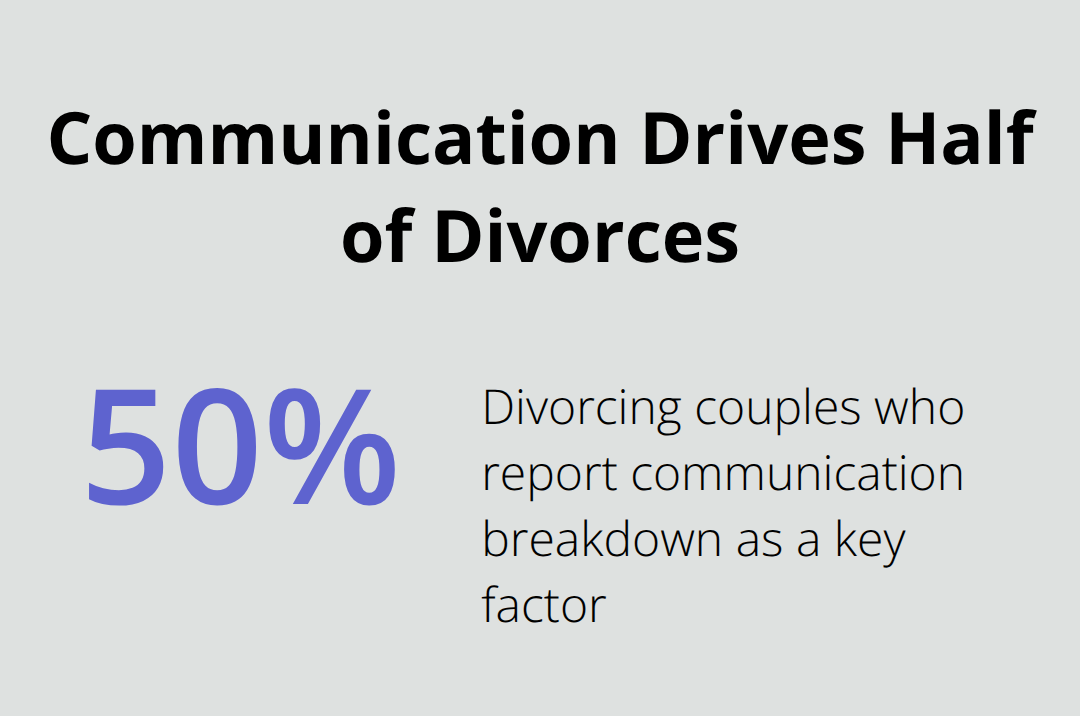
The American Psychological Association confirms that poor communication skills predict divorce more accurately than arguments about money or infidelity. Most couples fail to recognize how their daily conversation patterns slowly poison their relationship until the damage becomes irreversible.
How Destructive Communication Patterns Take Hold
Negative communication cycles typically start with small issues that couples avoid. One partner makes a criticism, the other responds defensively, and both retreat into silence or escalate arguments. The Gottman Institute research identifies four communication killers: criticism, contempt, defensiveness, and stonewalling. These patterns compound over months and years. They create emotional distance that becomes harder to bridge. Couples who interrupt each other frequently use accusatory language (starting with “you always” or “you never”) and refuse to acknowledge their partner’s perspective walk straight toward divorce court.
The Numbers Behind Communication-Related Divorces
National surveys reveal that 73% of divorced individuals cite lack of commitment as their primary reason for separation. Deeper analysis shows this often stems from communication failures that made partners feel unheard and undervalued. Financial disagreements contribute to 40% of divorces, yet these conflicts typically result from poor communication about money rather than actual financial problems. Melbourne family law cases consistently show that couples who cannot resolve disagreements through respectful dialogue face three times higher divorce rates within five years than those who maintain open communication channels.
When Communication Problems Signal Deeper Issues
Poor communication often masks underlying relationship problems that couples struggle to address directly. Partners who consistently avoid difficult conversations create a pattern where resentment builds over time. Research from the University of Utah demonstrates that couples who argue constructively (rather than destructively) maintain stronger marriages. The difference lies in how partners approach conflict resolution and whether they view disagreements as opportunities to understand each other better.
These communication breakdowns don’t happen in isolation-they often intertwine with other major factors that threaten marriages.
Other Major Contributing Factors to Divorce
Financial Stress Creates Lasting Damage
Money problems destroy marriages faster than most couples realize. The Institute for Divorce Financial Analysts reports that financial stress contributes to approximately 40% of all divorces in the United States. Melbourne couples who argue about money at least once weekly face 30% higher divorce rates than those who maintain open financial communication.

The real problem isn’t the amount of money couples have but how they handle financial decisions together. Couples who hide purchases, maintain secret accounts, or refuse to discuss financial goals create trust issues that extend far beyond money matters. The National Endowment for Financial Education research shows couples without shared financial plans face significantly higher separation rates.
Infidelity Breaks More Than Trust
Extramarital affairs contribute to divorce in 20% to 60% of cases according to various relationship studies. The American Association for Marriage and Family Therapy data reveals that infidelity affects 15% of married women and 25% of married men. Physical affairs represent only one type of betrayal-emotional affairs through social media and workplace relationships now cause equal relationship damage.
Melbourne divorce cases show that couples rarely recover from infidelity without professional intervention. The deeper issue involves broken trust that affects every aspect of the relationship. Partners who discover affairs often struggle with self-doubt and relationship anxiety that persists years after the betrayal. Couples who attempt reconciliation without addressing underlying relationship problems that contributed to the affair typically separate within two years.
Incompatible Life Goals Drive Couples Apart
Partners who develop different visions for their future face inevitable conflict. Research shows that 55% of divorced individuals cite incompatibility and growing apart as primary reasons for their separation. These differences often emerge gradually as people mature and their priorities shift.
Career ambitions, family plans, lifestyle preferences, and religious beliefs can create irreconcilable differences. Couples who marry young (before age 25) face particularly high risks because their goals often change dramatically during their twenties and thirties. The mismatch becomes apparent when one partner wants children while the other doesn’t, or when career demands conflict with family time expectations.
These major factors rarely exist in isolation-they often create warning signs that alert couples to deeper problems before divorce becomes inevitable.
Warning Signs Your Marriage May Be in Trouble
Marriage problems rarely appear overnight. The American Association for Marriage and Family Therapy research shows troubled relationships display predictable patterns months or years before couples file for divorce. Melbourne couples who recognize these early indicators can take action to prevent permanent damage. Successful intervention requires identification of specific behaviors rather than waiting for major relationship crises.
Critical Communication Warning Signs
Dead silence during disagreements signals more danger than loud arguments. Couples who stop fighting often stop caring about their relationship entirely. The Gottman Institute identifies stonewalling as one of four communication patterns that predict divorce with 94% accuracy. Partners who roll their eyes, use sarcasm during serious conversations, or refuse to acknowledge their spouse’s concerns create toxic environments that destroy emotional connections.
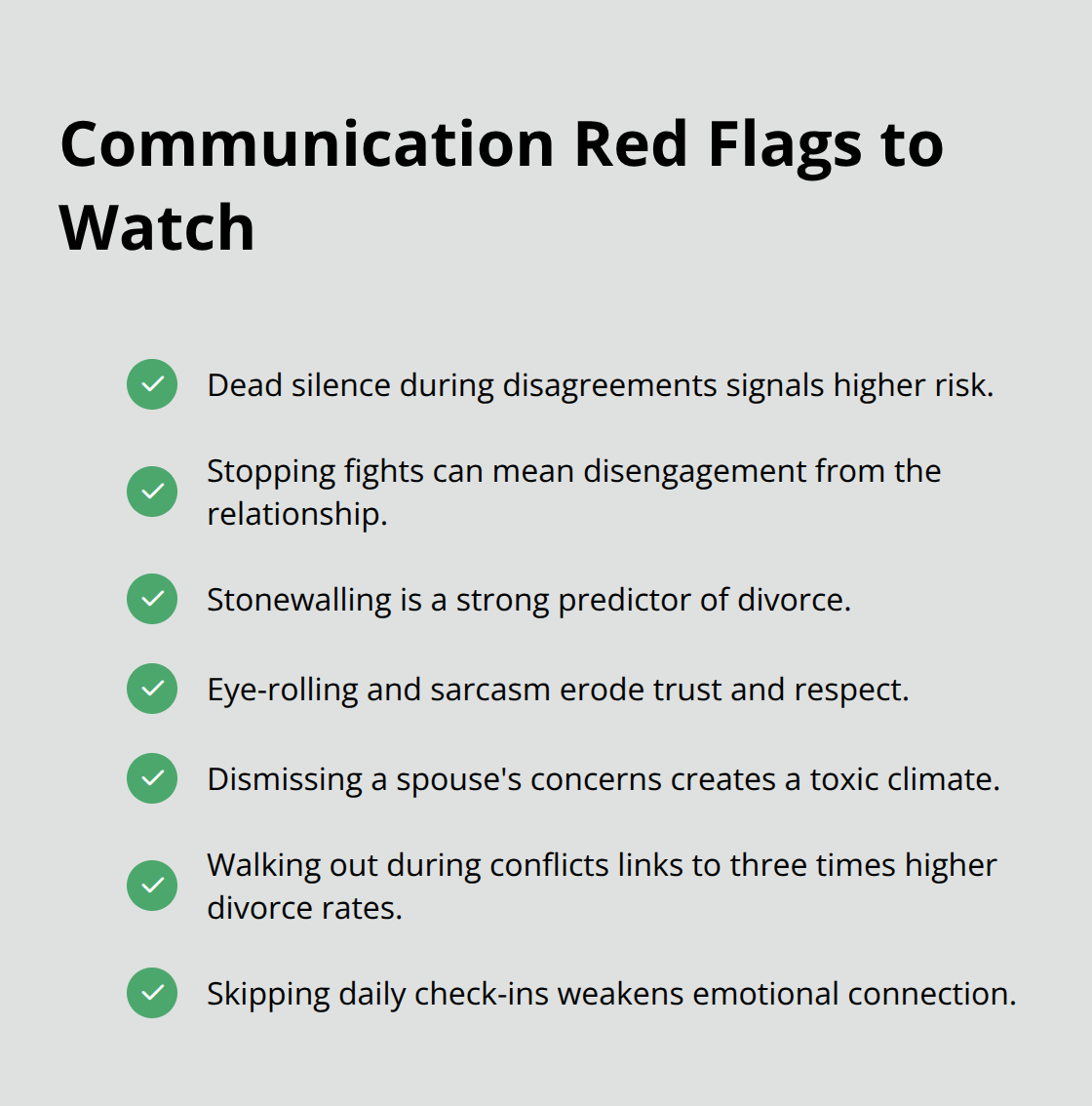
Daily interactions become transactions rather than meaningful exchanges. Couples who cannot discuss problems without one person leaving the room face three times higher divorce rates than those who stay engaged during conflicts. Another red flag appears when partners stop sharing daily experiences or asking about each other’s feelings and activities.
Money Problems That Destroy Marriages
Hidden purchases over $100 indicate serious trust issues between spouses. The National Endowment for Financial Education reports that financial secrecy contributes to 40% of relationship breakdowns. Couples who maintain separate accounts without transparency create conditions for future conflict. Partners who refuse to discuss retirement planning, debt management, or major purchases signal deeper control issues.
Credit card statements that one spouse hides from the other represent relationship betrayal beyond money matters. Arguments about spending that occur more than twice monthly predict separation within three years (according to financial therapy research). Couples who cannot agree on basic budget categories or financial priorities face inevitable future conflicts that extend far beyond money disagreements.
Behavioral Changes That Signal Deeper Issues
Physical and emotional withdrawal patterns indicate relationship deterioration long before couples acknowledge serious problems. Partners who stop expressing affection, avoid physical contact, or refuse to spend time together create emotional distance that becomes difficult to repair. Work schedules that suddenly change without explanation often mask relationship avoidance behaviors.
Social media activity that excludes a spouse or involves excessive interaction with opposite-sex contacts represents modern infidelity warning signs. Sleep pattern changes, increased alcohol consumption, or sudden interest in personal appearance improvements can indicate emotional affairs or preparation for separation. The University of Utah research shows couples who stop making future plans together have already begun the psychological process of relationship disengagement (often months before they consciously admit problems exist).
Final Thoughts
Communication breakdown stands as the biggest reason for divorce among Melbourne couples and affects half of all failed marriages. Financial stress, infidelity, and incompatible life goals create additional threats that couples must address before problems become irreversible. Partners who maintain open dialogue about money, share future goals, and address conflicts constructively reduce their divorce risk significantly.
Professional intervention becomes necessary when couples cannot resolve conflicts independently or when trust issues persist despite good-faith efforts. Marriage counselors provide tools for better communication, while financial therapists address money-related conflicts that threaten relationship stability. Regular check-ins about relationship satisfaction help identify problems before they reach the point of no return.
When reconciliation efforts fail, legal guidance protects your interests during divorce proceedings (especially when children are involved). We at Harnage Law PLLC handle family law cases including divorce and child custody matters throughout Melbourne, Florida. Melbourne couples have access to marriage counselors, financial planners, and family mediation programs that can help prevent divorce or minimize conflict during separation.