
What Is a Contested Divorce?
Our Blog
What Is a Contested Divorce?

A contested divorce happens when spouses cannot agree on key issues like property division, child custody, or support payments. When both parties dig in on their positions, the process becomes lengthy, expensive, and emotionally draining for everyone involved.
At Harnage Law PLLC, we help Melbourne, Florida families navigate contested divorces with clarity and confidence. This guide walks you through what to expect, the costs involved, and how to move forward once the process ends.
What Makes a Divorce Contested
A contested divorce in Florida means you and your spouse cannot agree on one or more key issues, forcing a judge to step in and decide for you. The most common sticking points are property division, child custody arrangements, child support amounts, and alimony payments. When disagreement exists on any of these fronts, the case automatically becomes contested, regardless of how minor the dispute seems. Florida law calls this process a dissolution of marriage, and it follows strict procedural rules that can stretch months or years depending on complexity and court availability. The difference between contested and uncontested divorces is straightforward: uncontested means both spouses have signed a Marital Settlement Agreement resolving every issue, while contested means at least one party refuses to sign or no agreement exists at all. Even if you and your spouse reach a settlement through mediation, the petitioner must still attend the final hearing in a contested divorce case. Florida courts require this attendance to verify that agreements are fair and that both parties understand what they’re signing.
The Issues That Push Divorces Into Contested Territory
Property and debt division tops the list of contested issues because spouses often disagree on what belongs to whom and how much each person owes. Marital assets acquired during the marriage must be traced and documented carefully, while nonmarital assets owned before marriage or received as gifts are treated differently. Retirement accounts like 401(k)s, IRAs, and pensions frequently become sources of conflict because they represent substantial value and involve complex division rules. Child custody and time-sharing arrangements create intense conflict when parents have different visions for their children’s lives, especially regarding which parent makes major decisions and how many overnights each parent receives. Child support calculations can become contentious when income is unclear, one spouse claims underemployment, or extraordinary expenses for the children arise. Alimony disputes emerge when one spouse believes the other should provide financial support after divorce, particularly in longer marriages where income disparity exists. Florida courts may also consider misconduct like adultery, substance abuse, or domestic violence when shaping custody, support, and property decisions, even though Florida is a no-fault divorce state where you don’t need to prove wrongdoing to obtain the divorce itself.
How Judges Make Decisions in Your Case
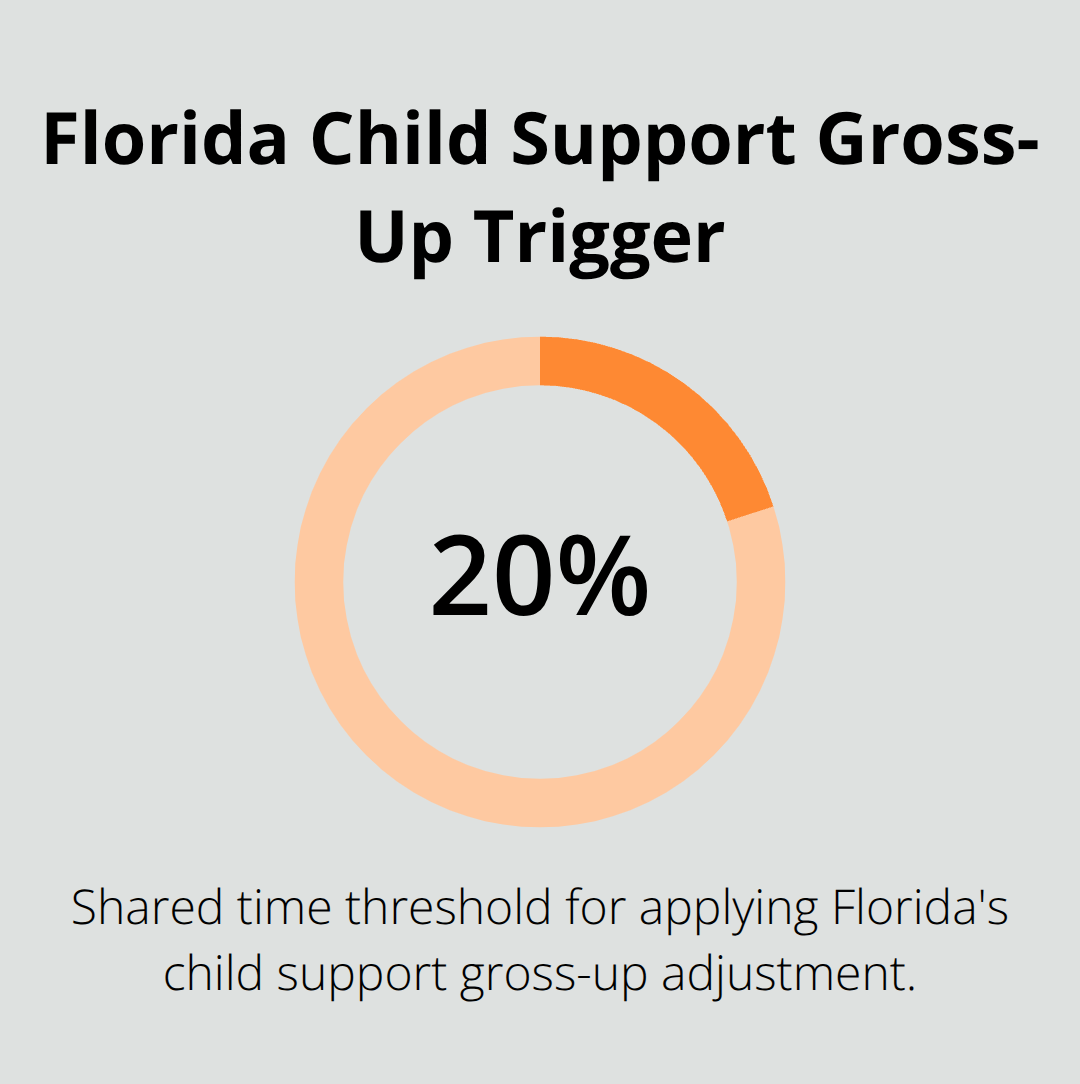
Florida courts use equitable distribution rather than automatic 50/50 splits, meaning judges have discretion to divide assets unequally based on specific circumstances. Judges consider factors including the length of the marriage, each spouse’s contribution to marital assets, the financial condition of each party, and whether one spouse sacrificed education or career opportunities to support the family. When children are involved, judges prioritize their best interests and may order child support using Florida’s statutory guidelines, which factor both parents’ combined net income and the number of children. According to Florida Statute 61.30, basic child support comes from a state table based on combined net income and number of children, with adjustments for childcare costs, health insurance, and unreimbursed medical expenses. If both parents share significant time with the child-at least 20 percent of overnights annually-the court may apply a gross-up adjustment recognizing reduced costs in two-home arrangements.
Judges can deviate from guideline amounts with written justification, considering the child’s age, extraordinary expenses, and each parent’s financial circumstances. For alimony, courts examine the standard of living during marriage, the ability of one spouse to pay, and the other spouse’s need for support.
What Happens When You Lose Control Over Outcomes
The judge’s ultimate power means you lose control over outcomes, which is why settlement before trial typically saves money and gives both spouses more say in the final arrangement. Once a case reaches trial, a judge decides all disputed matters without input from a jury, and either party can appeal if they believe a legal error affected the outcome. This uncertainty and loss of control over your family’s future makes the contested process particularly stressful. The financial and emotional toll of contested divorces often pushes parties toward settlement, even when disagreements seem insurmountable. Understanding what happens during the actual contested process-from initial filing through trial preparation-helps you make informed decisions about whether to fight in court or pursue settlement options.
How the Contested Divorce Process Unfolds in Florida
Filing and Financial Disclosure Requirements
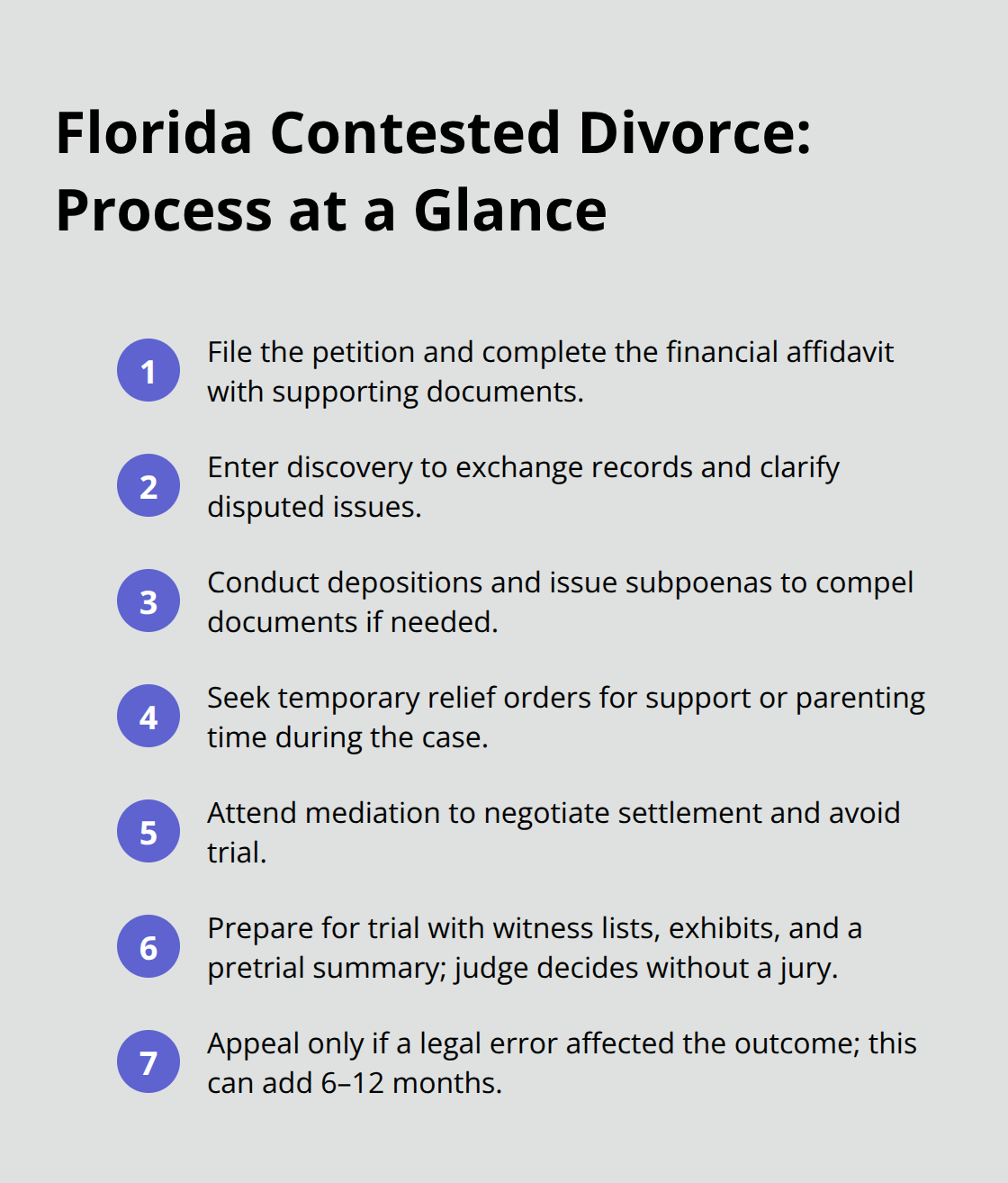
Filing your petition for dissolution of marriage starts the clock, and Florida requires you to complete a financial affidavit detailing income, assets, expenses, and debts alongside bank statements, tax returns, pay stubs, and retirement account statements. The other party then files an answer, and discovery begins-this is where both sides exchange documents and information to understand what you’re actually fighting over. This discovery phase typically takes two to four months depending on how cooperative both parties are and how complex your finances appear.
Depositions and Document Compulsion
Depositions happen next, allowing attorneys to question each spouse under oath with a court reporter present, which locks in statements and reveals weaknesses in the other side’s position. If your spouse withholds required documents, your attorney can subpoena records directly from banks or employers, and the court can compel production if needed. These tools force transparency and prevent one party from hiding assets or income during the process.
Temporary Relief and Immediate Needs
Temporary relief hearings address immediate needs like child support, spousal support, or parenting time while the case moves forward, which prevents one spouse from leaving the other without income or housing during the divorce. Courts take these temporary orders seriously and they remain in effect until the final judgment unless modified. This protection keeps families stable during months of ongoing litigation.
Mediation and Settlement Conversion
Mediation almost always comes next, and Florida courts strongly encourage it because most contested cases settle before trial. A neutral mediator helps both parties negotiate without deciding the outcome, and discussions stay confidential. If mediation produces an agreement, you convert to an uncontested divorce, which saves thousands in legal fees and eliminates trial uncertainty. If settlement fails, trial preparation requires sharing witness lists and anticipated exhibits in advance plus a written summary of disputed issues for the judge.
Trial and Post-Trial Options
Trials in Florida are decided by a judge without a jury, and both spouses must attend the final hearing. The judge hears testimony, reviews evidence, and renders decisions on property division, child support using Florida Statute 61.30 guidelines, custody arrangements, and alimony. Either party can appeal if they believe a legal error affected the outcome, though appeals add six to twelve more months to resolution. The entire contested process typically takes one to three years from filing to final judgment, depending on court backlog and how many issues remain unresolved. Once the judge signs the Final Judgment of Dissolution of Marriage, your divorce becomes final-but understanding what that judgment actually means for your finances, custody arrangements, and future obligations requires careful review of the court’s orders.
What Contested Divorces Actually Cost Your Family
Contested divorces drain resources in ways that extend far beyond legal bills. Families spend between $15,000 and $50,000 or more on attorney fees alone, depending on how many issues remain unresolved and how long discovery takes. Court filing fees in Florida run approximately $400 to $500, but that amount pales compared to the hourly rates attorneys charge-typically $200 to $400 per hour in the Melbourne area for experienced family law representation. If your case involves complex assets, a forensic accountant becomes necessary to trace hidden income or value a business, adding another $5,000 to $15,000 to your expenses. Expert witnesses for custody evaluations or substance abuse assessments can cost $2,000 to $5,000 each.
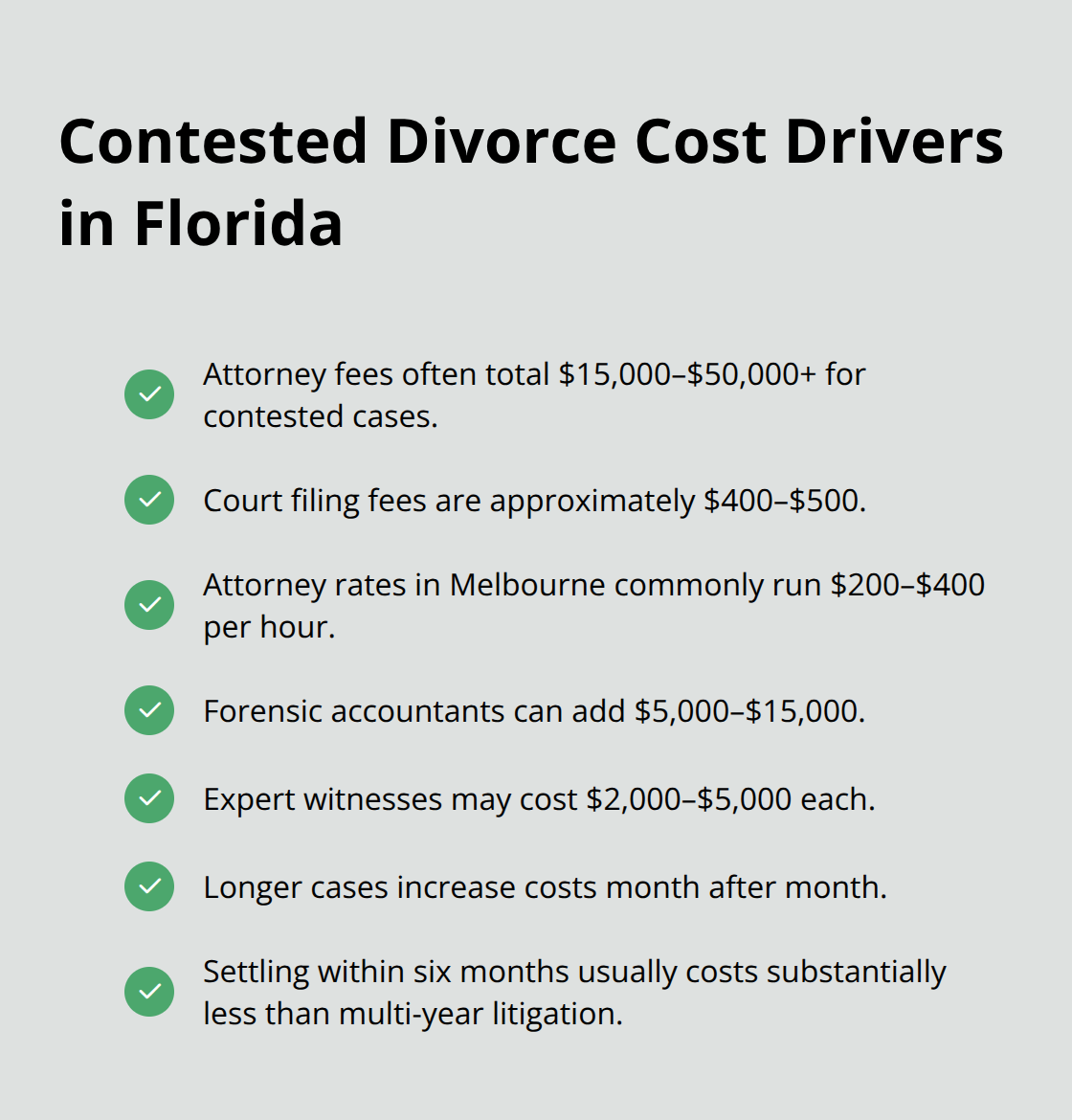
The longer your case stretches, the higher these costs climb. A contested divorce that settles within six months costs substantially less than one lasting two or three years of depositions, motions, and trial preparation. The math is brutal: every month of additional litigation adds thousands in fees that could have gone toward your children’s education, housing stability, or rebuilding your life post-divorce.
The Psychological Impact on Your Children
Children caught in contested divorces experience measurable psychological harm. Research consistently shows that prolonged parental conflict-the hallmark of contested cases-damages children’s emotional development more severely than the divorce itself. Your children will likely attend multiple court hearings, hear arguments about money and custody, and witness parents at their worst during depositions and trial testimony. If your case involves allegations of substance abuse or domestic violence, court evaluations may require your children to speak with psychologists or evaluators, adding trauma and anxiety to an already unstable situation. The uncertainty compounds their stress: they don’t know where they’ll sleep, which parent will make decisions about their schooling, or whether one parent will disappear from their life. Contested divorces also disrupt routines and stability during critical developmental years. Children in high-conflict divorces show elevated rates of anxiety, depression, and behavioral problems compared to those in uncontested or amicable separations.
How Time Slips Away During Litigation
Most contested divorces take one to three years from filing to final judgment, but many stretch longer depending on court backlog and complexity. During those months or years, your life remains in limbo. You cannot remarry, refinance your home with certainty about asset division, or fully plan your financial future. Your children cannot settle into a stable routine because custody and support remain undecided. Your stress hormones stay elevated, affecting your health, sleep, and work performance. One year of contested litigation means 365 days of uncertainty about how the court will divide your retirement accounts, whether you’ll owe alimony, or how much time you’ll spend with your children. That time cannot be recovered. The prolonged nature of contested cases also means you’ll need to take multiple days off work for depositions, hearings, and trial preparation-lost income that compounds your legal expenses. Settlement before trial collapses this timeline dramatically. Cases that settle through mediation typically resolve within six to nine months, freeing you to move forward and begin rebuilding. The opportunity cost of a three-year contested divorce versus a nine-month settled case is staggering when measured against your mental health, career advancement, financial recovery, and your children’s stability.
Moving Forward After Your Contested Divorce
Your Final Judgment of Dissolution of Marriage now sits in your hands, signed by the judge, and you must read every section carefully to understand what the document means for your daily life. Pay special attention to property division amounts, child support calculations, custody schedules, and alimony obligations, since Florida courts calculate child support using statutory guidelines based on combined parental income and the number of children with adjustments for childcare costs and health insurance. Your support obligations typically start immediately, with income deduction orders sent to your employer or the Florida Disbursement Unit if you are self-employed, and retirement account divisions require specific paperwork called a Qualified Domestic Relations Order to transfer 401(k)s or pensions without tax penalties.
Co-parenting after a contested divorce demands intentional effort because the conflict that defined your case does not automatically disappear once the judge signs the final order. Keep communication focused strictly on the children’s schedules, health needs, school events, and expenses rather than rehashing old grievances, and use written communication like email or co-parenting apps when emotions run high. Consistency across both homes reduces your children’s anxiety and helps them adjust faster to the new family structure, while respecting the custody schedule exactly as ordered prevents unnecessary conflict.
If modification becomes necessary later due to substantial changes in circumstances like job loss or relocation, Florida courts can adjust child support, alimony, or time-sharing arrangements through a modification petition. The Brevard County Clerk of Courts provides information about enforcement if the other parent fails to pay child support or violates custody orders, and the Florida Department of Revenue handles collection when payments fall behind. Contact our Melbourne office to discuss your situation and explore your options for post-divorce modifications or enforcement issues.