
Military Divorce Melbourne Florida: Special Considerations for Service Members
Our Blog
Military Divorce Melbourne Florida: Special Considerations for Service Members

Military divorce in Melbourne Florida presents unique challenges that civilian divorces don’t face. Service members navigate complex federal laws, deployment schedules, and military benefits that require specialized legal guidance.
At Harnage Law PLLC, we understand how military service intersects with family law. This guide covers the specific considerations you need to know.
How Jurisdiction and Federal Laws Shape Your Military Divorce
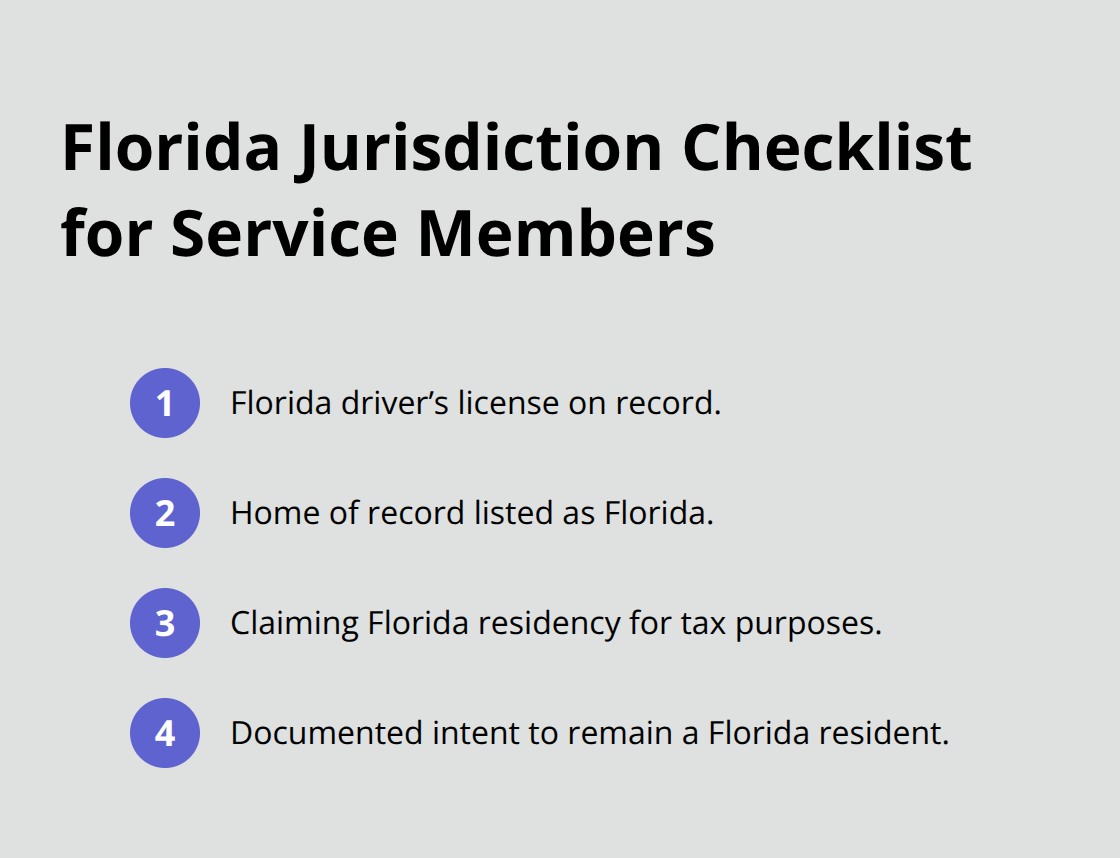
Jurisdiction determines which state’s courts handle your divorce, and for service members, this decision carries enormous weight. Florida courts can exercise jurisdiction over your military divorce if you’re stationed in Florida on active duty, regardless of whether you maintain a permanent home here. Under Florida Statutes 47.081, courts examine whether you have a Florida driver’s license, list Florida as your home of record, or claim residency for tax purposes. Your intent to remain a Florida resident matters significantly in this analysis. The timing of where you file is critical because different states apply different rules to military retirement division, spousal support, and child custody.
Filing in Florida versus another state can shift thousands of dollars in pension distributions and alter how your Survivor Benefit Plan operates. The Servicemembers Civil Relief Act provides temporary relief if you’re deployed overseas-divorce proceedings cannot commence until you’ve been stateside for at least 60 days, which protects service members from surprise litigation while stationed abroad.
Military Retirement and the 10/10 Rule
Military retirement pay qualifies as marital property divisible under Florida’s equitable distribution statute. However, the Defense Finance and Accounting Service only sends direct monthly payments to former spouses when the 10/10 rule is satisfied: the marriage lasted at least 10 years and you had at least 10 years of creditable military service overlapping the marriage. If this threshold isn’t met, retirement can still be divided through other arrangements, but you won’t receive direct DFAS payments. Only disposable retired pay-what remains after military deductions-qualifies for division. Understanding exactly which portion of retirement is marital versus separate property helps you model how different filing locations affect these calculations. The Survivor Benefit Plan allows you to designate a former spouse as a lifelong beneficiary, continuing a portion of your retirement pay after your death. You have roughly one year after the divorce order to make this election, so the timing matters if you want to protect your ex-spouse’s financial security.
Custody, Support, and Deployment Realities
Child support and custody obligations do not pause when deployment orders arrive. Florida’s child support formula applies to service members, but deployments, promotions, and base transfers can trigger modification requests because your income and availability shift dramatically. Courts must account for military assignments when establishing custody arrangements-temporary orders during deployment protect both the child’s relationship with the deployed parent and the stability of the non-deployed parent’s caregiving schedule. Visitation rights remain enforceable across state lines through interstate mechanisms, though coordinating long-distance parenting around deployment schedules requires careful planning in your custody agreement. If your ex-spouse seeks to relocate with your child, courts balance the child’s best interests against your military duties and the reality of base transfers. Building deployment timelines and anticipated reassignments into your custody framework from the start prevents repeated litigation over modifications.
Strategic Planning for Property and Support Division
The intersection of military benefits and family law creates opportunities to structure your settlement strategically. Harnage Law PLLC handles sensitive family law cases and can help you navigate how deployment schedules, base transfers, and benefit elections affect your long-term financial security. Gathering your service history, deployment timelines, retirement dates, and current beneficiary designations early allows you to model support and property divisions accurately. These details shape whether you qualify for direct DFAS payments, how much Survivor Benefit Plan coverage costs, and which state’s laws govern your final settlement. The decisions you make during divorce proceedings affect your financial picture for decades, particularly regarding military retirement and survivor benefits.
How Military Pensions Split in Divorce
Understanding Marital Property and Pension Division
Military retirement pay represents one of the largest marital assets in service member divorces, yet many personnel misunderstand how it actually divides. Florida treats military pensions as marital property subject to equitable distribution under Florida Statutes 61.075, meaning the court can award a portion to your former spouse based on factors including marriage length, each spouse’s contributions, and career disruptions. The critical threshold is the 10/10 rule: if your marriage lasted at least 10 years and you have at least 10 years of creditable military service overlapping those years, the Defense Finance and Accounting Service will send direct monthly payments to your former spouse. This matters enormously because direct DFAS payments bypass you entirely and land in your ex-spouse’s account, which removes administrative burden but locks in the division immediately.
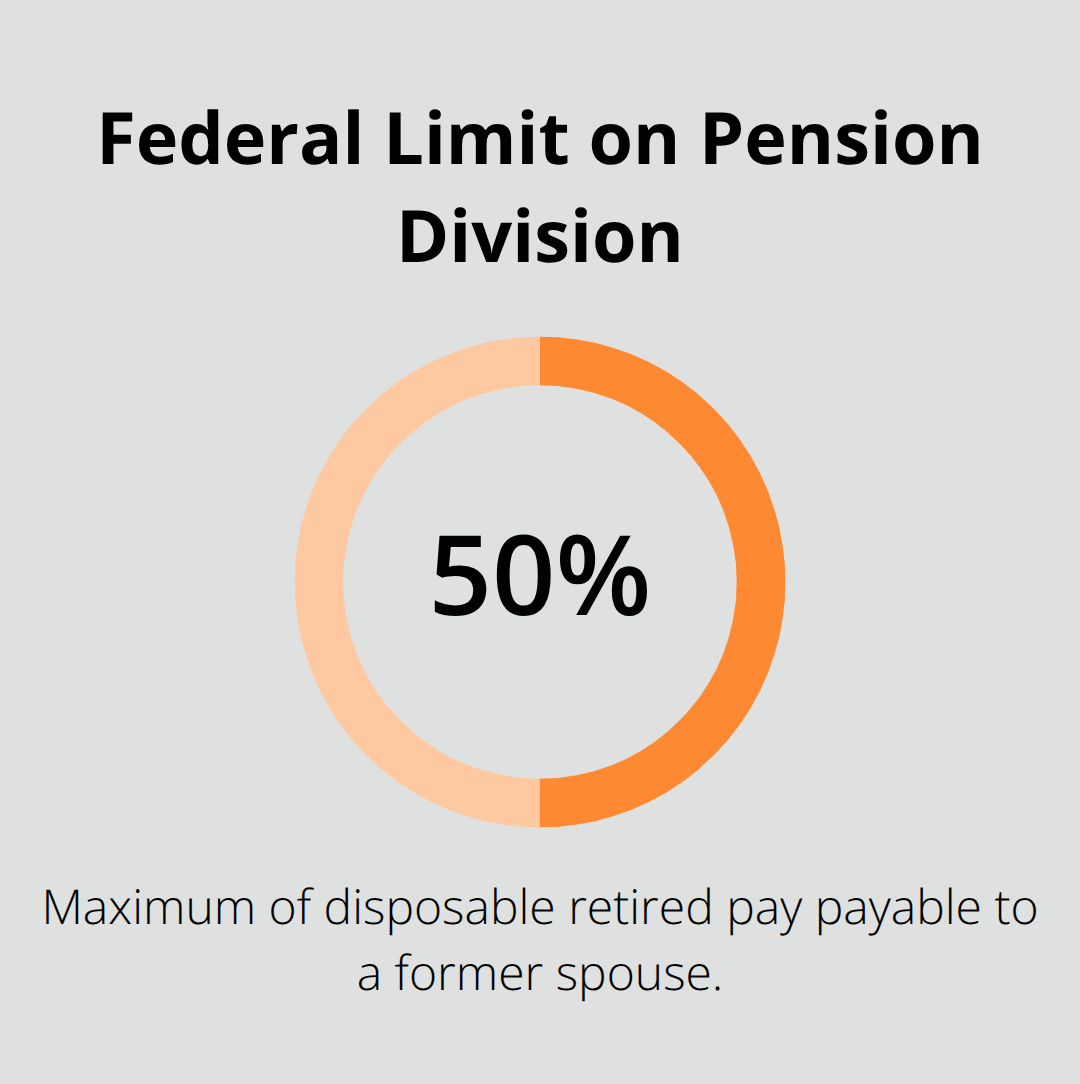
If you fall short of 10/10, your retirement still divides, but DFAS cannot process direct payments to your former spouse, forcing alternative arrangements like a portion paid through your own check or a separate agreement. Only disposable retired pay qualifies for division-the amount remaining after military deductions for taxes, health insurance, and other statutory withholdings. A former spouse cannot receive more than 50% of your disposable retired pay under federal law, even if a Florida judge orders otherwise.
Calculating Your Marital Portion
The specific calculation of your marital portion depends on when you married relative to when you entered service and when you separated. If you married before enlisting, more of your eventual pension qualifies as marital property than if you married after service began. Courts in Florida use a formula called the marital property fraction, multiplying your final retirement benefit by the ratio of marital service years to total service years. This calculation prevents a service member from hiding retirement value or a former spouse from claiming more than her fair share based on actual marriage overlap.
If you served 15 years total but only 8 years overlapped your marriage, only that 8-year portion qualifies as marital property, even though your full retirement benefit reflects all 15 years. Separate property-retirement earned before marriage or after separation-remains entirely yours, but proving those dates requires clear documentation of your service timeline and marriage/separation dates. Many service members fail to document these dates early, creating disputes years later when DFAS questions whether a payment should have gone to a former spouse.
The Survivor Benefit Plan and Long-Term Protection
The Survivor Benefit Plan operates separately from pension division and allows you to designate your former spouse as a lifetime beneficiary, continuing a percentage of your retirement pay after your death. SBP costs roughly 6.5% of your monthly retirement benefit if you elect full coverage, making it expensive but valuable for securing long-term financial protection for an ex-spouse you want to support. The critical window is roughly one year after your divorce order becomes final-if you miss that deemed election window, you cannot add your former spouse as an SBP beneficiary later without her consent.
Gathering Documentation and Preventing DFAS Delays
Starting documentation now prevents delays and ensures your divorce order contains the specific language DFAS requires to process payments correctly. Gather your Leave and Earnings Statement, your retirement estimate from the military, and your service entry and separation dates immediately-these documents let you model exactly how much retirement divides and which state’s filing location affects that calculation most favorably. The decisions you make during divorce proceedings affect your financial picture for decades, particularly regarding military retirement and survivor benefits, which is why understanding these calculations upfront matters so much.
With pension division clarified, the next critical area involves how your divorce order must address custody and support obligations that continue regardless of deployment status or base transfers.
Custody and Support When Deployment Changes Everything
Deployment orders arrive without warning, and your custody arrangement must account for months or years of separation from your child. Florida courts understand this reality and build deployment flexibility into custody orders from the start, yet most service members fail to address deployment schedules explicitly in their agreements, forcing repeated trips back to court for modifications. The better approach involves documenting anticipated deployment cycles, reassignment timelines, and how custody will shift during each absence.
Planning Custody Around Deployment Schedules
If you expect deployment within two years, your custody order should specify exactly when the non-deployed parent assumes primary responsibility, how long-distance parenting operates during your absence, and what happens if your ex-spouse seeks to relocate with your child while you’re overseas. Courts in Florida favor arrangements that preserve your relationship with your child despite military obligations, so building these details upfront demonstrates you’re thinking strategically about your child’s stability rather than reacting to deployment surprises later.
Temporary custody modifications during deployment don’t require proving a material change in circumstances the way civilian modifications do-military orders themselves qualify as the triggering event. This means you can request a temporary custody adjustment when deployment orders arrive, then revert to your original arrangement when you return stateside, without your ex-spouse arguing that your parenting ability has fundamentally changed.
Modifying Child Support for Military Income Changes
Child support modifications follow the same deployment principle. Florida’s child support formula applies rigidly to service members, but deployments, promotions, and permanent change of station orders directly affect your income and availability, justifying modifications without the typical burden of proving substantial and material change. If your base pay increases after promotion, your ex-spouse can request an upward modification; if you’re deployed and receive combat zone tax exclusions, your disposable income drops temporarily, supporting a downward modification request.
The key involves documenting the income change through Leave and Earnings Statements and military orders showing effective dates. This documentation prevents disputes about whether your modification request reflects genuine financial shifts or attempts to avoid support obligations.
Maintaining Visitation Rights Across Distance and State Lines
Visitation rights during deployment require careful construction because long-distance parenting during a nine-month deployment looks radically different than summer visitation during peacetime. Courts expect you to maintain contact through video calls, email, and scheduled phone time, and your custody order should specify frequency and timing to prevent disputes about whether you’re meeting your parental obligations despite distance.
Interstate enforcement mechanisms protect your visitation rights if your ex-spouse relocates with your child to another state-the Uniform Child Custody Jurisdiction and Enforcement Act applies across state lines, meaning Florida courts retain jurisdiction and can enforce orders even if your child moves to Georgia or another state. Many service members lose contact with their children after relocation because they assume Florida courts lose power once the child leaves the state; that assumption costs them years of visitation.
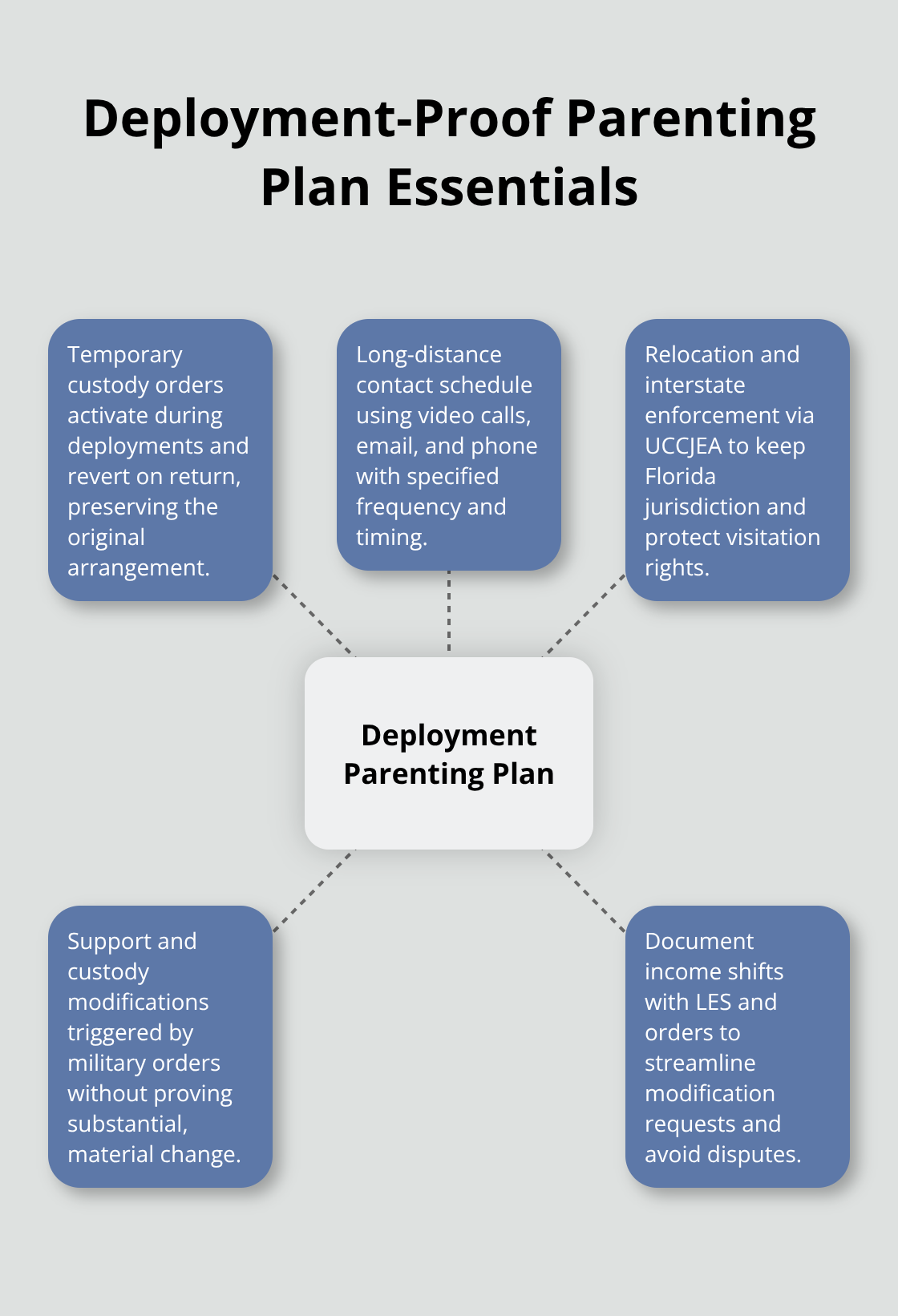
Your custody order must contain the specific language courts need to enforce long-distance parenting across state lines and your modification requests must account for deployment realities rather than treating military orders as irrelevant to your support obligations.
Final Thoughts
Military divorce in Melbourne, Florida demands attention to federal rules, deployment realities, and benefit calculations that civilian divorces simply don’t involve. The decisions you make during your divorce proceedings ripple forward for decades, affecting your military retirement income, your relationship with your child, and your financial security after service ends. Understanding the 10/10 rule, the marital property fraction, and how deployment orders trigger custody modifications without requiring proof of substantial change positions you to negotiate from strength rather than react to surprises.
The intersection of military law and Florida family law creates complexity that generic divorce attorneys cannot navigate effectively. We at Harnage Law PLLC work through the federal-state interaction that shapes military divorces, understanding how base transfers affect custody arrangements, how to structure Survivor Benefit Plan elections within the deemed election window, and how to gather the documentation DFAS requires to process retirement divisions without delay. Contact us at 321-392-5239 or visit our Melbourne office at 5425 Village Drive, Suite 105, Viera 32955 to discuss how your specific military circumstances affect your divorce strategy.
Start by gathering your service history, Leave and Earnings Statements, retirement estimates, and deployment timelines now rather than waiting until litigation begins. We serve Brevard County and surrounding areas, and we’re prepared to guide you through the federal and state rules that govern your case. The sooner you understand your pension division options, custody framework, and support obligations in military divorce, the sooner you can move forward with confidence.