
Legal Process Divorce Florida: From Filing to Final Decree
Our Blog
Legal Process Divorce Florida: From Filing to Final Decree
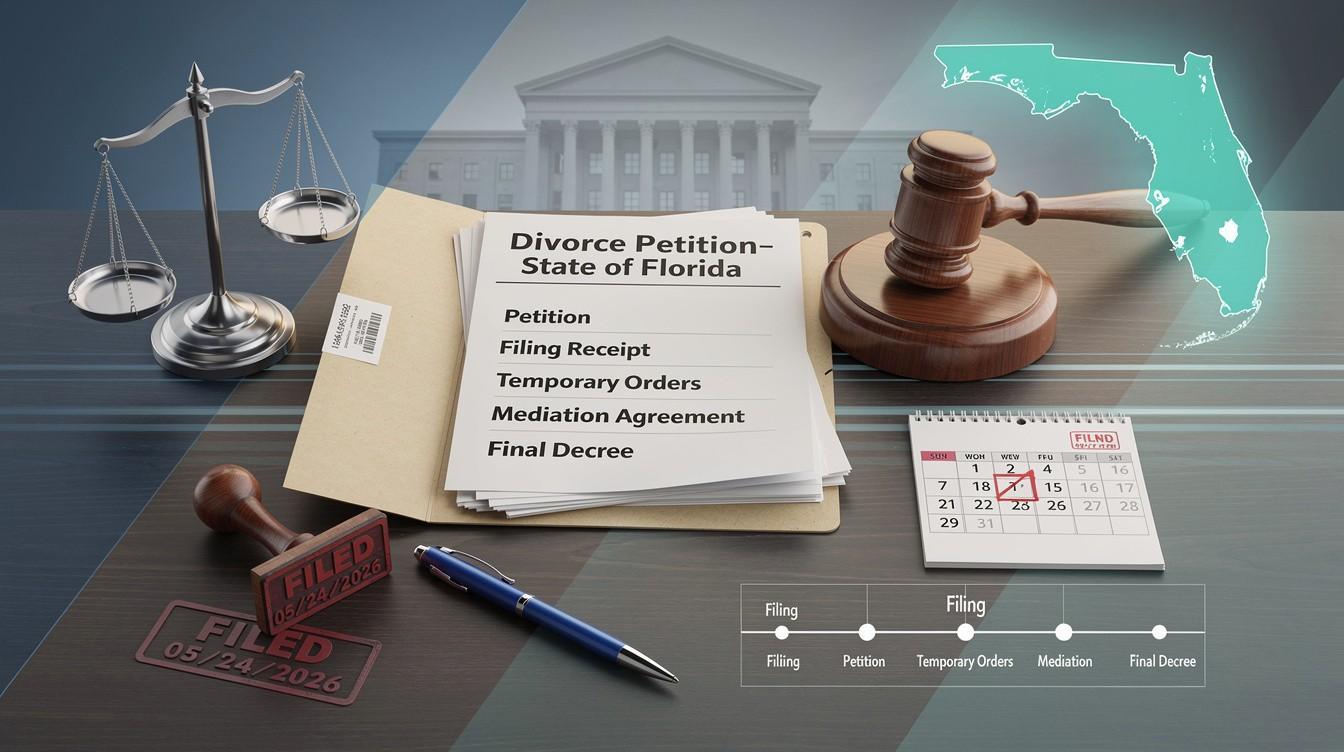
Divorce in Florida involves specific legal requirements and procedural steps that can feel overwhelming without proper guidance. The legal process for divorce in Florida requires understanding residency rules, filing procedures, and what happens after you submit your petition.
At Harnage Law PLLC, we walk clients through each stage-from initial filing through settlement negotiations or trial to your final decree. This guide breaks down the timeline and key decisions you’ll face.
What You Need to Know Before Filing for Divorce in Florida
Meet Florida’s Residency Requirement
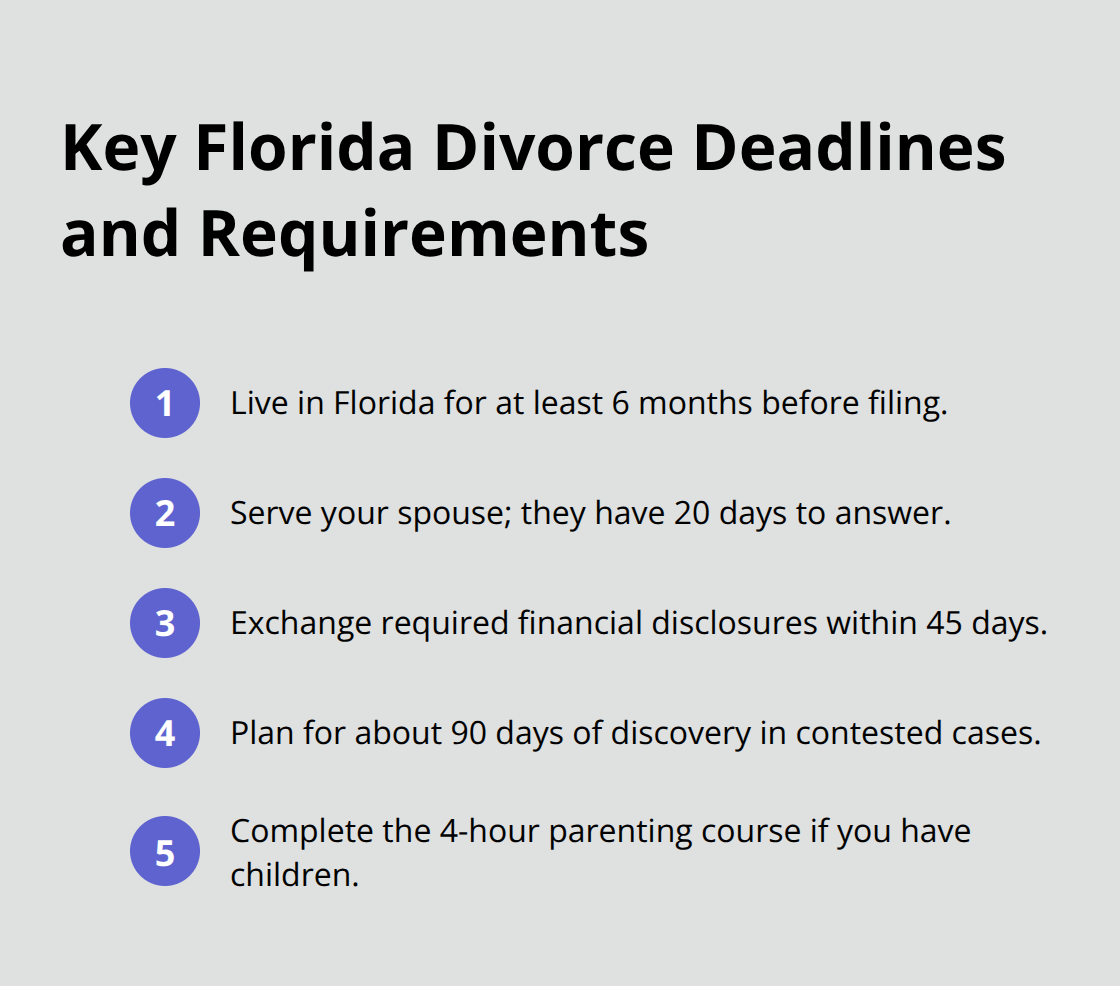
Before you file for divorce in Florida, you must meet specific legal requirements or the court will reject your petition. The most critical requirement is residency-at least one spouse must have lived in Florida for six months before filing, according to Florida Courts. You’ll need to prove this with a Florida driver’s license, state ID, or a sworn statement from a third party. This six-month rule applies in every Florida county, and the clock doesn’t start until you establish residency.
If you relocate to Florida specifically to file for divorce, document your move carefully because the court will verify your timeline. Many people file too early and waste filing fees when the petition gets dismissed, so confirm your residency status before you pay anything.
Understand Florida’s No-Fault Divorce Framework
Florida is a no-fault divorce state, which means you don’t need to prove your spouse did something wrong. According to Florida Courts, you can obtain a divorce by showing the marriage is irretrievably broken-that’s it. The only other ground is if your spouse has been mentally incapacitated for at least three years, which is rare. This no-fault framework eliminates arguments about infidelity or misconduct and speeds up the process significantly.
Calculate Costs and Prepare Your Financial Documents
Filing fees vary by county but typically range from $300 to $500 for the initial petition, plus additional costs for service of process. If you use a private process server instead of the sheriff’s office, you’ll pay $50 to $200, but private servers are faster and more reliable than sheriff service, which can take weeks. You’ll also need to file a Family Law Financial Affidavit listing your income, assets, debts, and expenses within 45 days of service, according to Florida Courts. Gather your recent pay stubs, tax returns from the last two years, bank statements, retirement account statements, and documentation of any property or debts before you file. Courts won’t accept vague numbers or estimates-they want specifics. Prepare these documents now so you don’t scramble to collect them after you file your petition.
Filing Your Petition and Moving Through Discovery
Start the Divorce Process with Your Petition
Once you confirm your residency and gather your financial documents, you file your Petition for Dissolution of Marriage with the circuit court in your county. This petition formally initiates the divorce and outlines your requests for property division, alimony, child support, and custody arrangements. After you file, the court requires that the other spouse receive the petition and summons, and this timing matters significantly. According to Florida Courts, the responding party has exactly 20 days to file an answer after service. Private process servers cut weeks off this timeline because they work faster and more resourcefully than the sheriff’s office. Once the answer arrives, both parties must exchange financial documents within 45 days of service, as required by Florida Courts.
Exchange Financial Information Accurately
The financial disclosure phase is mandatory and includes pay stubs, tax returns, bank statements, and retirement account statements. Courts reject vague financial information, so you must provide exact figures rather than estimates or rounded numbers. If both spouses agree, you can file a joint waiver to skip the formal financial affidavit, but this only works in simplified dissolutions with no children and no disputed assets. The discovery phase typically lasts about 90 days and determines how much information each side can access before settlement or trial. In contested cases, you exchange documents through formal discovery requests, depositions, and interrogatories.
Complete Required Courses and Address Immediate Needs
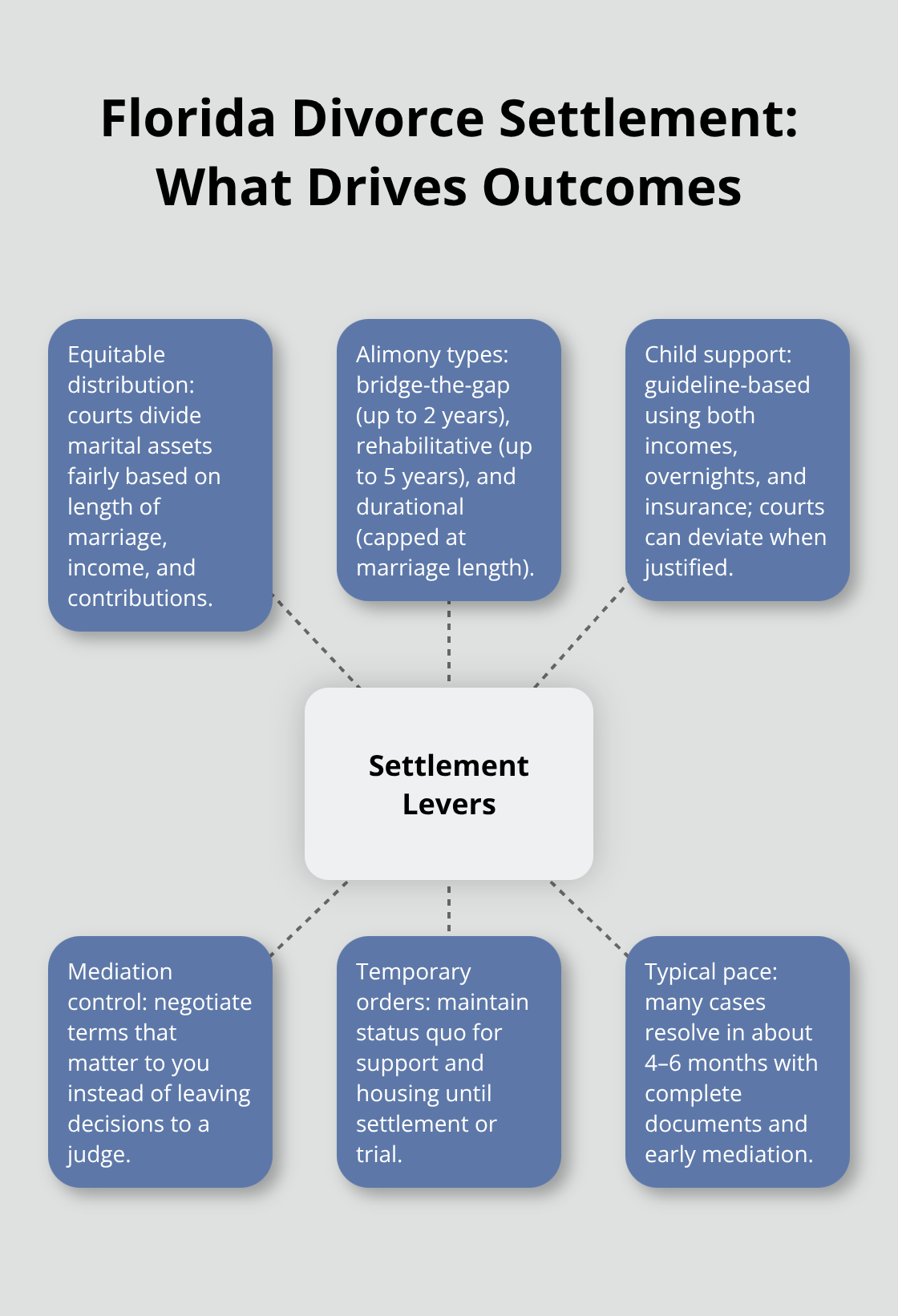
If children are involved, Florida requires a 4-hour parenting course that you can complete before or during proceedings, according to Florida Courts. Temporary orders often get scheduled during this phase to address immediate needs like temporary child support, alimony, or exclusive use of the family home while the divorce is pending. These temporary orders maintain the status quo until settlement or trial-they don’t finalize anything.
Understand Your Timeline and Acceleration Strategies
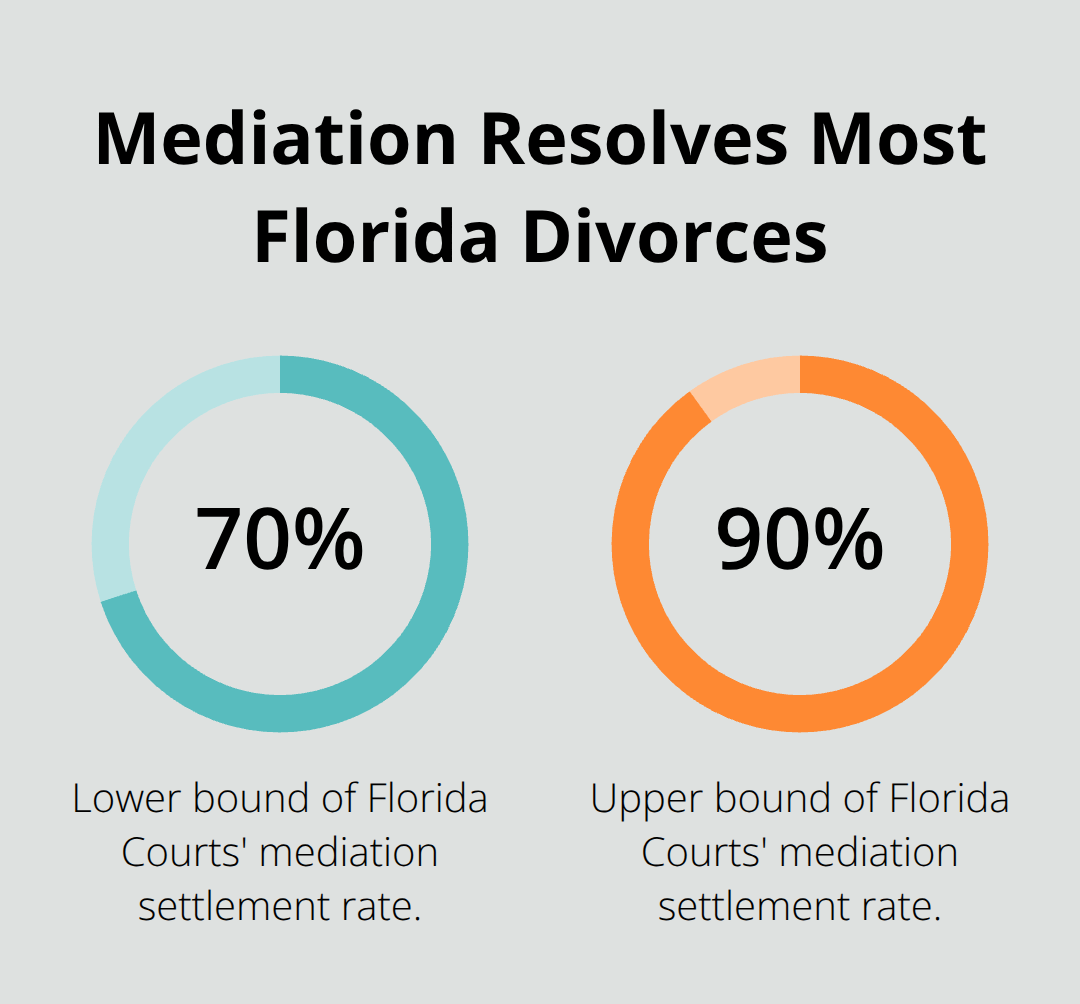
Uncontested divorces typically complete in about 4 months from filing, while contested cases average 6 months overall, according to practitioner experience. High-asset or high-conflict cases involving depositions and multiple hearings can stretch to 9 months or longer. The key to moving faster is preparing complete financial documents upfront and engaging in early mediation. Florida Courts data shows that mediation resolves about 70 to 90 percent of cases before trial, which means most divorces never reach the courtroom. Your next critical decision involves whether you’ll settle through negotiation and mediation or proceed toward trial-and that choice shapes everything that follows.
Settlement, Mediation, and Trial
Mediation Resolves Most Florida Divorces
Mediation is mandatory in every Florida divorce, and according to Florida Courts data, roughly 70 to 90 percent of cases settle at mediation without ever reaching trial. This statistic matters because it means your divorce will almost certainly resolve through negotiation and mediation rather than a judge’s decision. The mediation process typically happens after financial discovery closes, giving both sides complete information about assets, debts, and income. A neutral mediator meets with you and your spouse separately to identify common ground and work toward settlement. Most cases that reach mediation settle within 4 to 5 months from filing, according to practitioner experience.
Control Your Outcome Through Property and Alimony Negotiation
Property division in Florida follows equitable distribution, meaning the court divides marital assets fairly-not necessarily 50/50-based on factors like marriage duration, each party’s income, contributions, and future financial circumstances. You control the mediation outcome, which means you can negotiate terms that matter most to you rather than accepting a judge’s decision. If your spouse earns significantly more, you might prioritize alimony over asset division. If you have children, you might prioritize time-sharing and child support calculations over the family home. Alimony types in Florida include bridge-the-gap alimony lasting up to 2 years, rehabilitative alimony up to 5 years with a specific plan, and durational alimony based on marriage length and capped at the length of the marriage. The court considers your need and your spouse’s ability to pay, so earning potential and age matter significantly.
Calculate Child Support Based on Florida Guidelines
Child support calculations follow Florida guidelines based on both parents’ incomes and the number of children, with adjustments for substantial overnight time and health insurance costs. These calculations provide a predictable framework for support obligations, though the court can deviate from guidelines in specific circumstances. Mediation allows you to negotiate child support amounts and payment schedules that work for your family’s situation.
Prepare for Trial if Settlement Fails
If mediation fails and your case proceeds to trial, a judge makes all decisions about property division, alimony, child custody, and child support. Trials range from 4 hours to 2 weeks depending on complexity, with most lasting about one day according to practitioner experience. High-asset or high-conflict cases involving business valuations, custody disputes, or extensive depositions take longer and cost substantially more in attorney fees. The court cannot award attorney fees on a contingency basis in Florida divorce cases-it’s illegal-but the judge can order one party to pay some of the other party’s fees if that party acted unreasonably. At trial, you present evidence about your financial situation, parenting abilities, and reasons for your proposed terms. The judge applies the best interests of the child standard for custody and time-sharing decisions, emphasizing frequent and continuing contact with both parents. If you lose at trial, you have 30 days to file an appeal, though appellate courts rarely overturn trial judges’ decisions in divorce cases unless the judge made a clear legal error. Most people who reach trial regret not settling earlier because trials are unpredictable, expensive, and emotionally exhausting.
Maximize Your Settlement Chances Early
Serious settlement discussions early in your case and thorough preparation for mediation maximize your chances of reaching favorable terms without trial. Complete financial documents upfront and engage in early mediation to move your case toward resolution faster.
Final Thoughts
Your divorce journey in Florida moves through distinct phases, each with specific deadlines and decisions that shape your final outcome. Most divorces resolve within 4 to 6 months when both parties prepare financial documents upfront and engage seriously in mediation, and the 70 to 90 percent settlement rate at mediation means your case will likely never reach trial. The legal process for divorce in Florida requires careful attention to timing and documentation at each stage, from filing your petition through financial discovery and mediation.
After your divorce finalizes, several practical steps follow immediately. If you requested restoration of your former name, the final judgment includes that change, and you should update your beneficiary designations on retirement accounts, life insurance policies, and investment accounts to reflect your new circumstances. Modify your will or trust if you have one, since divorce typically revokes provisions for your former spouse under Florida law, and set up payment systems for child support or alimony to avoid contempt charges.
We at Harnage Law PLLC understand that divorce involves complex decisions about property, support, and custody that affect your financial future and family relationships. Contact us for personalized guidance through each phase of your divorce so you can move forward with confidence.