
Melbourne Florida parenting time: Balancing Time With Each Parent
Our Blog
Melbourne Florida parenting time: Balancing Time With Each Parent

Parenting time arrangements after separation affect your child’s stability and your relationship with them. Florida law provides clear frameworks for these decisions, but navigating them requires understanding both the legal requirements and practical realities.
At Harnage Law PLLC, we help Melbourne, Florida parents create parenting time schedules that work for their families. This guide walks you through the laws, practical scheduling strategies, and solutions for common disputes.
What Florida Law Says About Parenting Time
Florida Statute 61.13 and the Equal Time-Sharing Presumption
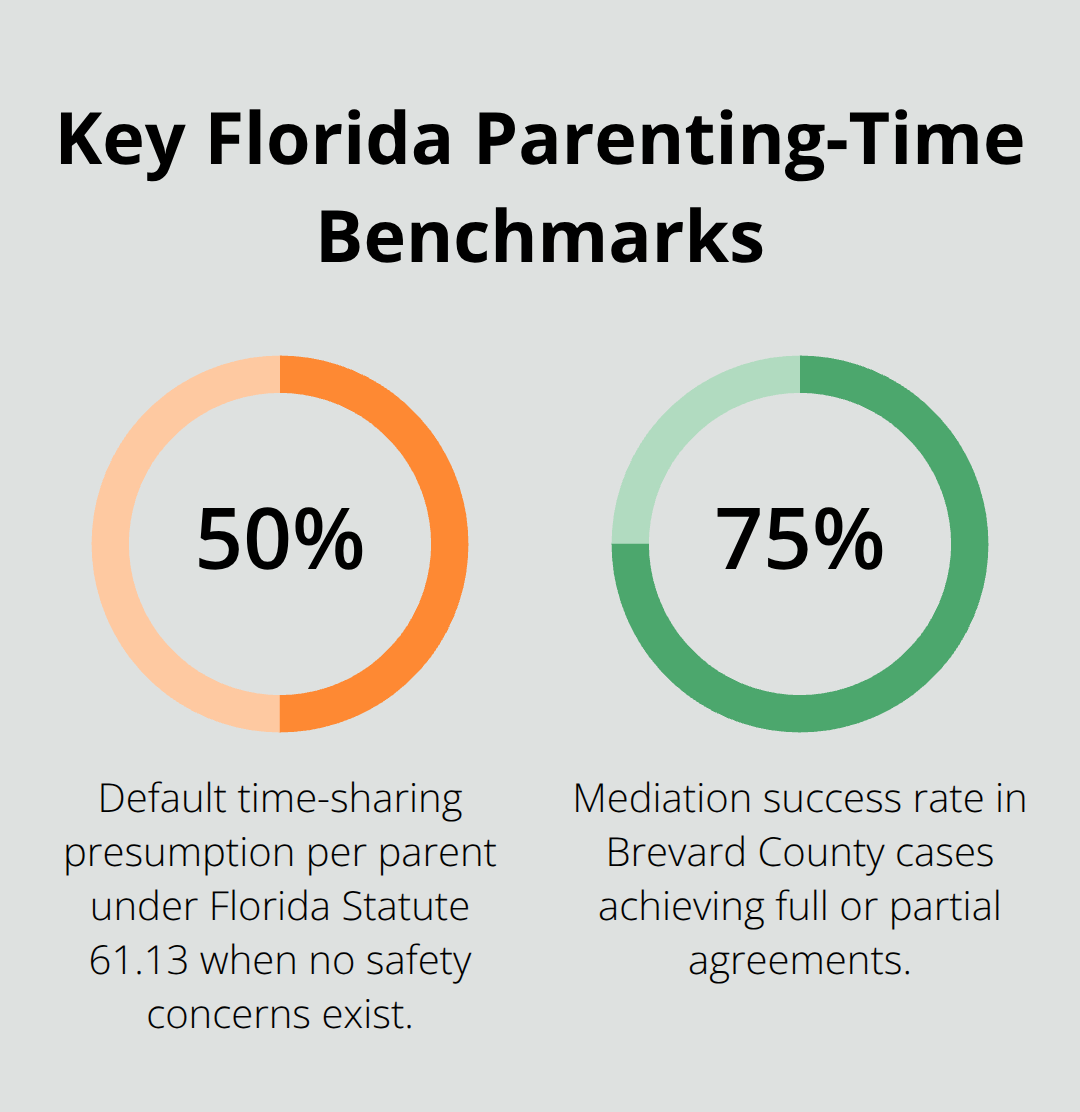
Florida Statute 61.13 forms the backbone of parenting time decisions in Melbourne, and it operates on a principle that many parents misunderstand: Florida courts start with a presumption favoring equal time-sharing between both parents unless safety concerns override that preference. This means the default position is 50/50 time, not a situation where one parent gets primary custody and the other gets weekends. The statute lists specific factors courts weigh when determining parenting time, including each parent’s ability to maintain a close relationship with the child, the child’s adjustment to home and school, the length and adequacy of each parent’s prior involvement in parenting, the child’s needs, the stability of each parent’s home environment, and the mental and physical health of all involved. Courts also consider whether one parent is more willing to support the child’s relationship with the other parent-a factor that directly impacts how judges view parenting time requests.
Understanding these statutory factors gives you concrete ground to build your case around rather than relying on assumptions about what judges prefer. If you’re planning a parenting time arrangement or facing a modification, this knowledge shapes how you present your circumstances to the court.
The Brevard County Process and Associated Costs
Courts in Brevard County determine parenting time arrangements by examining your actual circumstances, not theoretical ideals. The filing fee to begin a parenting time case is approximately $409, and most cases proceed through mediation, which succeeds in reaching full or partial agreements about 75% of the time according to court data. If mediation fails and the case goes to trial, judges may order a custody evaluation costing $1,500 to $6,000 and taking several weeks to complete.
The court process itself requires specific documentation: a parenting plan addressing daily responsibilities, health care decisions, education, and communication methods; a UCCJEA affidavit establishing jurisdiction; and child support calculations based on both parents’ incomes and the proposed time-sharing arrangement. Temporary custody orders can be issued while your case is pending, giving the court flexibility to protect your child’s interests immediately.
Modifications and Substantial Changes in Circumstances
When circumstances change substantially-such as relocating more than 50 miles, changing work schedules, or shifts in your child’s needs-you can request modifications, though courts require proof of material changes before adjusting existing orders. The goal throughout this process is creating a schedule that reflects your child’s actual needs and your family’s real logistics, not forcing your situation into a standard template that doesn’t fit. Understanding how courts evaluate these changes positions you to recognize when modification becomes necessary and how to present your request effectively to the court.
Building a Schedule That Actually Works
Match Your Schedule to Your Child’s Age and Needs
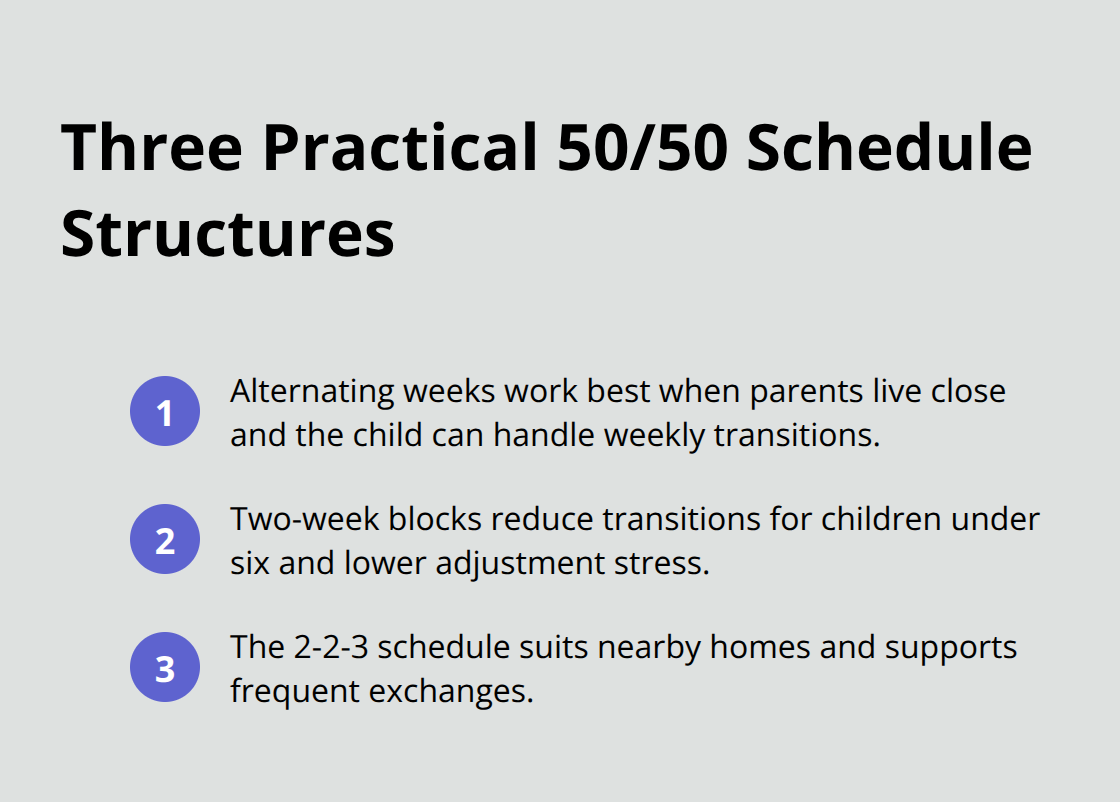
The gap between a parenting time schedule that looks good on paper and one your family can sustain comes down to logistics. Alternating weeks provide a straightforward 50/50 split, but this approach works best when parents live within reasonable distance and the child is old enough to handle transitions between homes. For younger children under age six, longer blocks with fewer transitions reduce adjustment stress, so a schedule with one parent having the child for two weeks followed by the other parent having two weeks often produces better outcomes than weekly swaps. The 2-2-3 schedule-where each parent has the child for two consecutive days, then the other parent gets two days, followed by a three-day block-offers a practical middle ground when parents live close enough for frequent exchanges.
Ground Your Plan in Real Logistics
Start with your actual schedules, not idealized versions. Document commute times, work hours, unpredictable demands, and existing commitments before mediation or court hearings. If you work retail hours that shift seasonally or teach school with summers off, a tiered approach works better than forcing one fixed schedule year-round: maintain 50/50 during school months, shift to extended blocks during summer, and clearly define holiday dates in advance. Document your child’s needs and routines too-school start times, extracurricular activities, medical appointments, and any special needs-so the schedule reinforces consistency rather than creating chaos. Every-other-weekend contact with midweek visits typically yields about 60-70% time with one parent and 30-40% with the other, but this arrangement only works if the midweek contact is reliable and frequent enough to maintain the relationship.
Use Systems to Execute Your Schedule
The most sustainable schedules fail not because they are poorly designed but because families lack systems to execute them. Digital co-parenting platforms like OurFamilyWizard and Custody X Change provide calendars, expense tracking, and communication logs that prevent disputes over forgotten exchanges or schedule changes. These platforms include features such as hostile-language detection and automated reminders that reduce conflict and last-minute scrambling. Document all schedule changes in writing through the platform or email, specifying exact dates and makeup times to prevent later disputes. Establish a clear communication protocol separating urgent matters from routine ones and set reasonable response times for non-urgent messages. Define decision-making boundaries so both parents know what requires mutual agreement and what one parent can decide independently.
Turn Your Plan Into an Enforceable Order
A mediator-produced parenting plan that your Melbourne family court approves becomes enforceable, meaning violations result in makeup time orders, attorney’s fees, parenting courses, or contempt findings. The schedule that works is the one your family actually follows because it reflects realistic logistics, includes explicit procedures for exchanges and changes, and is backed by reliable systems. Courts in Brevard County favor shared parental responsibility, and a practical, detailed plan demonstrates to the judge that you understand your child’s actual needs and can manage the logistics necessary to protect their stability. When disputes arise over schedule compliance or changes, knowing how to resolve them quickly prevents minor conflicts from escalating into court battles.
When Your Parenting Time Schedule Needs to Change
Life doesn’t follow the parenting plan you filed with the court. A job relocation, a shift in your child’s needs, or changes in either parent’s capacity to maintain the schedule all happen, and when they do, you need to know whether modification makes sense and how to pursue it without unnecessarily draining your resources.
Recognizing When Modification Becomes Necessary
Florida courts recognize that circumstances change, but they won’t modify an existing order without proof of a substantial, material, and unanticipated change. Relocating more than 50 miles from the other parent is the clearest trigger for modification requests, but job schedule changes, shifts in a child’s educational or medical needs, and demonstrated patterns of schedule non-compliance also qualify. Document the specific change with concrete evidence-job offer letters, school enrollment confirmations, medical records showing new needs-because judges require more than vague claims that circumstances have shifted. Temporary modifications can be issued while your case proceeds, protecting your child’s stability if the current schedule genuinely harms their welfare.
Understanding the Costs and Timeline of Modification
The modification process typically begins with mediation again before escalating to court hearings, so approaching this strategically matters. If the other parent refuses to negotiate and you file a modification petition, expect costs similar to your original parenting time case: mediation runs roughly $1,500 to $5,000 total, while contested court proceedings can exceed $15,000 to $50,000 depending on complexity. The timeline varies based on whether both parents cooperate or the case requires judicial intervention, but mediation typically resolves disputes faster and cheaper than trial.
Documenting Violations and Enforcement Patterns
Enforcement becomes necessary when one parent consistently violates the time-sharing schedule, and this is where many parents make costly mistakes by attempting informal resolution rather than recording violations systematically. Each missed exchange, unauthorized schedule change, or refusal to follow the parenting plan should be recorded with dates, times, and the specific violation, ideally through your co-parenting platform which creates an automatic record courts accept as evidence. The threshold for court intervention isn’t a single missed pickup; judges expect parents to work through occasional scheduling conflicts informally. However, a pattern of deliberate violations-consistently arriving late, refusing scheduled exchanges, or unilaterally changing the schedule-triggers enforcement action.
What Courts Can Order When Violations Occur
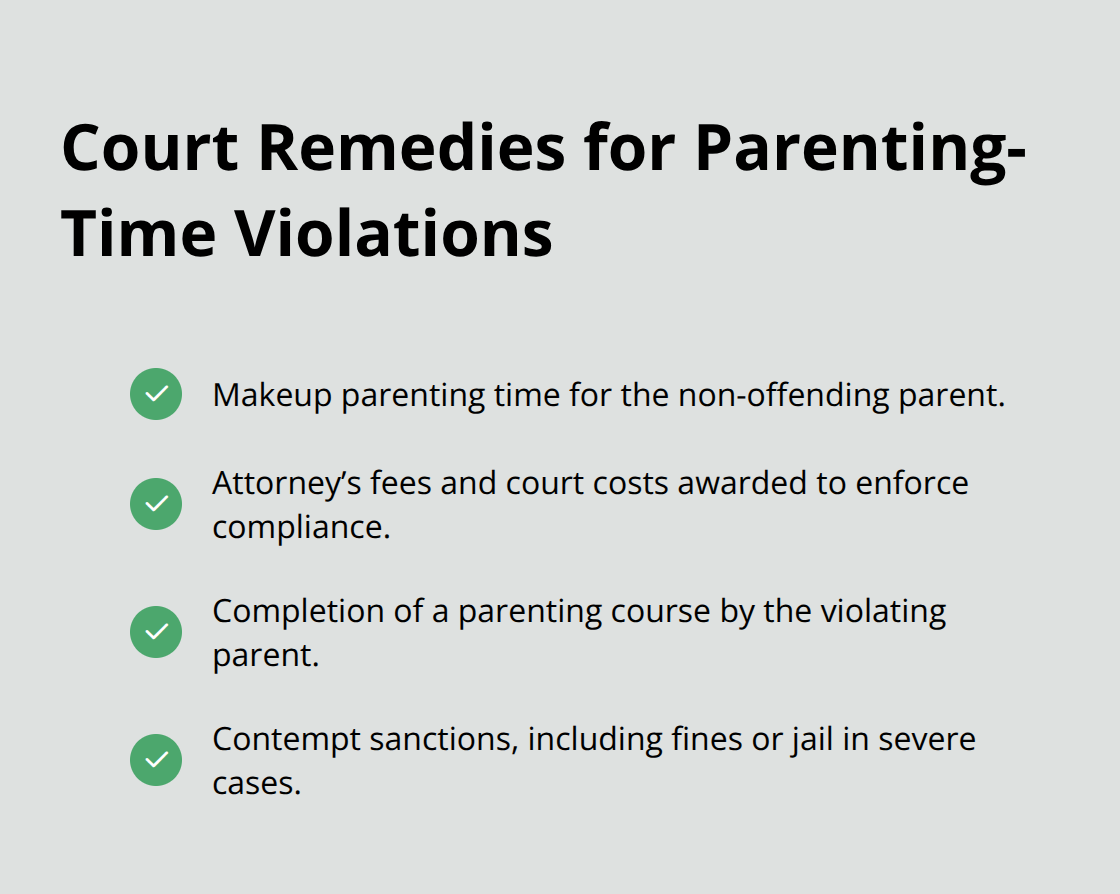
Florida courts can order makeup time for the non-offending parent, award attorney’s fees and court costs to the parent forced to enforce compliance, require the violating parent to complete a parenting course, or impose contempt sanctions that include fines or jail time in severe cases. Document violations for at least three months before filing an enforcement motion, as this pattern demonstrates intentional non-compliance rather than isolated mistakes. High-conflict situations where communication has broken down benefit from mediation before enforcement, since many violations stem from miscommunication rather than deliberate defiance, and a mediator can clarify expectations and rebuild communication protocols that prevent future disputes.
Final Thoughts
A parenting time schedule that works is one your family actually follows. Throughout this guide, we’ve covered the legal framework Florida courts use, practical scheduling strategies that fit real life, and how to handle disputes when they arise. The core principle remains constant: Melbourne Florida parenting time arrangements succeed when they balance your child’s need for stability with both parents’ capacity to maintain meaningful involvement. Your child’s age, your work schedules, the distance between homes, and existing routines all shape what actually works, and a schedule that looks perfect on paper but requires impossible logistics will fail within weeks.
Modification happens when job relocations, school changes, and shifts in your child’s needs occur-all normal parts of parenting after separation. When circumstances change substantially, the court process exists to adjust your arrangement fairly, and you should document changes with concrete evidence and approach modification strategically since mediation often resolves these disputes faster and cheaper than court battles. If the other parent consistently violates your parenting time schedule, systematic documentation through a co-parenting platform creates the record courts need to intervene, though most violations stem from miscommunication rather than deliberate defiance.
When you navigate parenting time decisions, modification requests, or enforcement disputes, working with a family law attorney who understands Melbourne’s court system makes a real difference. We at Harnage Law PLLC help parents create parenting time arrangements that protect their child’s stability and their relationship with them. Contact us to discuss your situation and develop a strategy that works for your family.