
Melbourne FL parenting time: Balancing Rights and Routines
Our Blog
Melbourne FL parenting time: Balancing Rights and Routines

Parenting time arrangements in Melbourne, FL shape your relationship with your children and affect their stability. Courts don’t simply split time equally-they apply specific legal standards and consider numerous factors unique to your family situation.
We at Harnage Law PLLC help parents navigate these decisions with clarity and confidence. This guide walks you through how courts determine parenting time, how to build workable schedules, and how to protect your rights when disputes arise.
What Standard Do Florida Courts Actually Use to Set Parenting Time
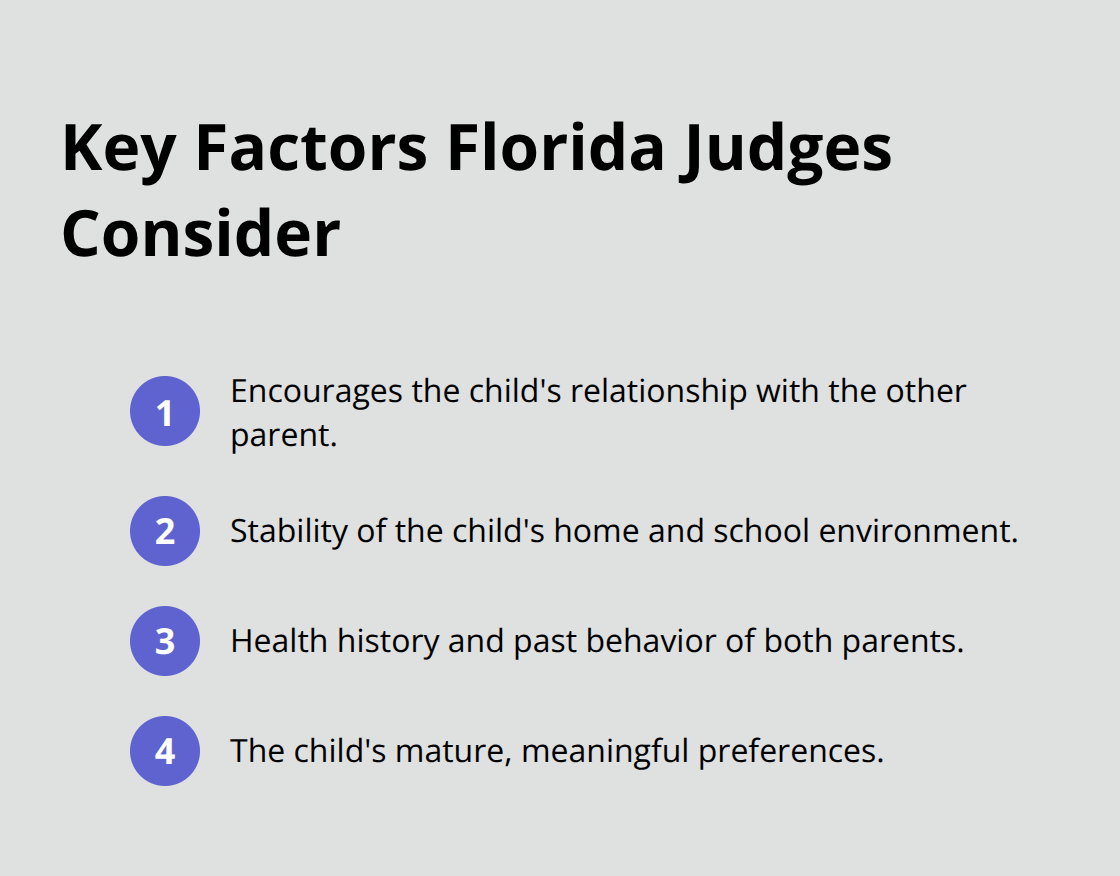
Florida courts apply the best interests of the child standard when determining parenting time, but this phrase means something specific and measurable, not vague. According to Florida Statutes, judges evaluate concrete factors like each parent’s ability to foster the child’s relationship with the other parent, the stability of the home and school environment, the health and past behavior of both parents, and the child’s own preferences if they’re old enough to express them meaningfully. Courts in Brevard County do not favor mothers or fathers-there is no presumption for either parent. What matters is what arrangement actually serves your child’s welfare based on evidence presented at hearing.
Judges Focus on Demonstrated Involvement, Not Promises
Courts look at what you have actually done, not what you say you will do. If you attend school events, medical appointments, and extracurricular activities, the judge sees this through documentation like school records, medical records, and testimony from teachers or coaches. One parent’s involvement pattern often becomes the strongest predictor of how the court will allocate parenting time. If you have been the primary parent handling daily routines, homework, and childcare logistics, judges recognize this reality and typically want to maintain continuity for the child’s stability. The burden falls on you to show your involvement through concrete evidence, not assumptions about what the judge might infer.
Changes in Circumstances Trigger Court Attention
Courts understand that parenting arrangements must shift when work schedules change, someone relocates, or a child’s needs evolve. However, modification requires showing a substantial and material change in circumstances that was not anticipated when the original order was entered. Simply wanting more time with your child is not enough. A job change that alters your availability, a relocation by the other parent, or documented changes in the child’s school or activities can justify revisiting the schedule. If you face a significant life change affecting your parenting capacity, documenting it early-through emails, calendar records, or written communication with the other parent-creates the foundation for a modification petition later if needed.
What Happens When You Build Your Case for Court
The evidence you gather now shapes how judges evaluate your parenting role. School attendance records, medical appointment documentation, and written communications with the other parent all demonstrate your active involvement in your child’s life. Judges in Brevard County examine these materials carefully because they reveal patterns of behavior rather than one-time efforts. When you prepare for a hearing, this documentation becomes your strongest tool. The next section covers how to construct a parenting schedule that reflects these legal standards and works within the practical constraints of your family’s daily life.
Building a Schedule That Fits Your Family’s Reality
Start With the Standard Plan, Then Adapt It
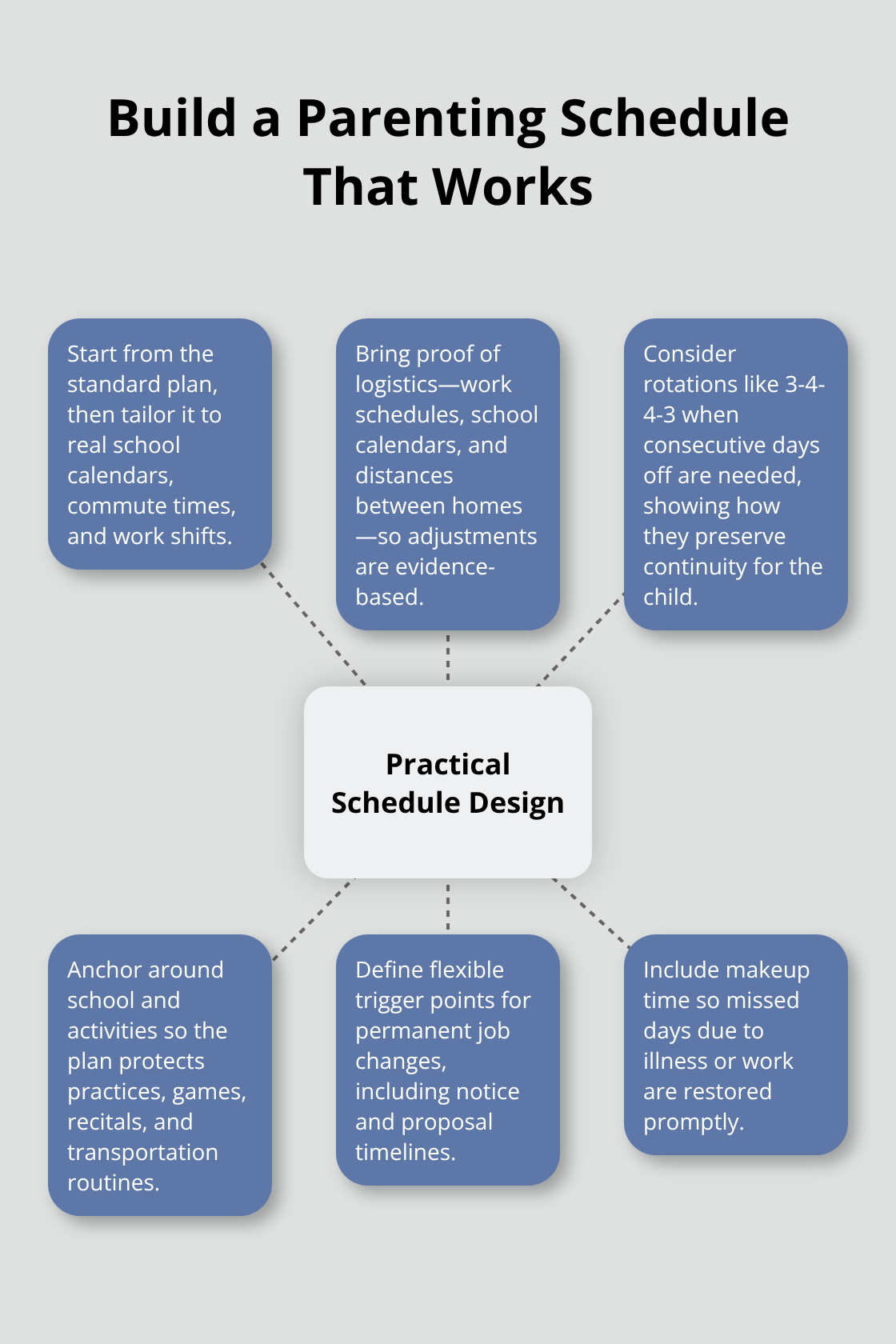
Florida’s Title IV-D Standard Parenting Time Plan provides a baseline framework, but most families in Brevard County need adjustments that reflect actual school calendars, work demands, and activity schedules. The standard plan allocates every other weekend from 6 p.m. Friday to 6 p.m. Sunday, one weekday evening per week, and alternating holiday blocks. However, this template fails for many parents because it doesn’t account for your specific situation. If you work retail hours on weekends or your child attends school 45 minutes away from one parent’s home, the standard plan creates logistical friction that builds resentment.
Courts recognize this reality.
When you propose modifications to the standard schedule during your initial parenting plan negotiations or at a modification hearing, judges want to see that you’ve thought through the practical mechanics. Bring documentation showing your work schedule, your child’s school calendar, and the distances between homes. One parent who proposed a 3-4-4-3 rotation instead of alternating weekends succeeded because she submitted her employer’s shift schedule and showed the judge that her job required consecutive days off. The court approved the adjustment because it maintained continuity for the child while accommodating her employment reality. This approach works better than requesting vague flexibility or asking for changes without supporting evidence.
Anchor Your Schedule Around School and Activities
School and activity commitments often create the strongest argument for schedule modifications. If your child participates in competitive sports, music lessons, or other structured activities, the parenting time plan must protect those commitments rather than force choices between activities and parenting time. Courts in Melbourne understand that a child’s development depends on continuing established activities, so a schedule that prevents one parent from attending soccer games or piano recitals gets scrutiny.
Build your schedule around these anchors. Document your child’s current activities, their practice and competition schedules, and which parent has been responsible for transportation and attendance. If you’ve been the parent managing these commitments, the court sees this as evidence of your involvement.
Build Flexibility That Actually Works
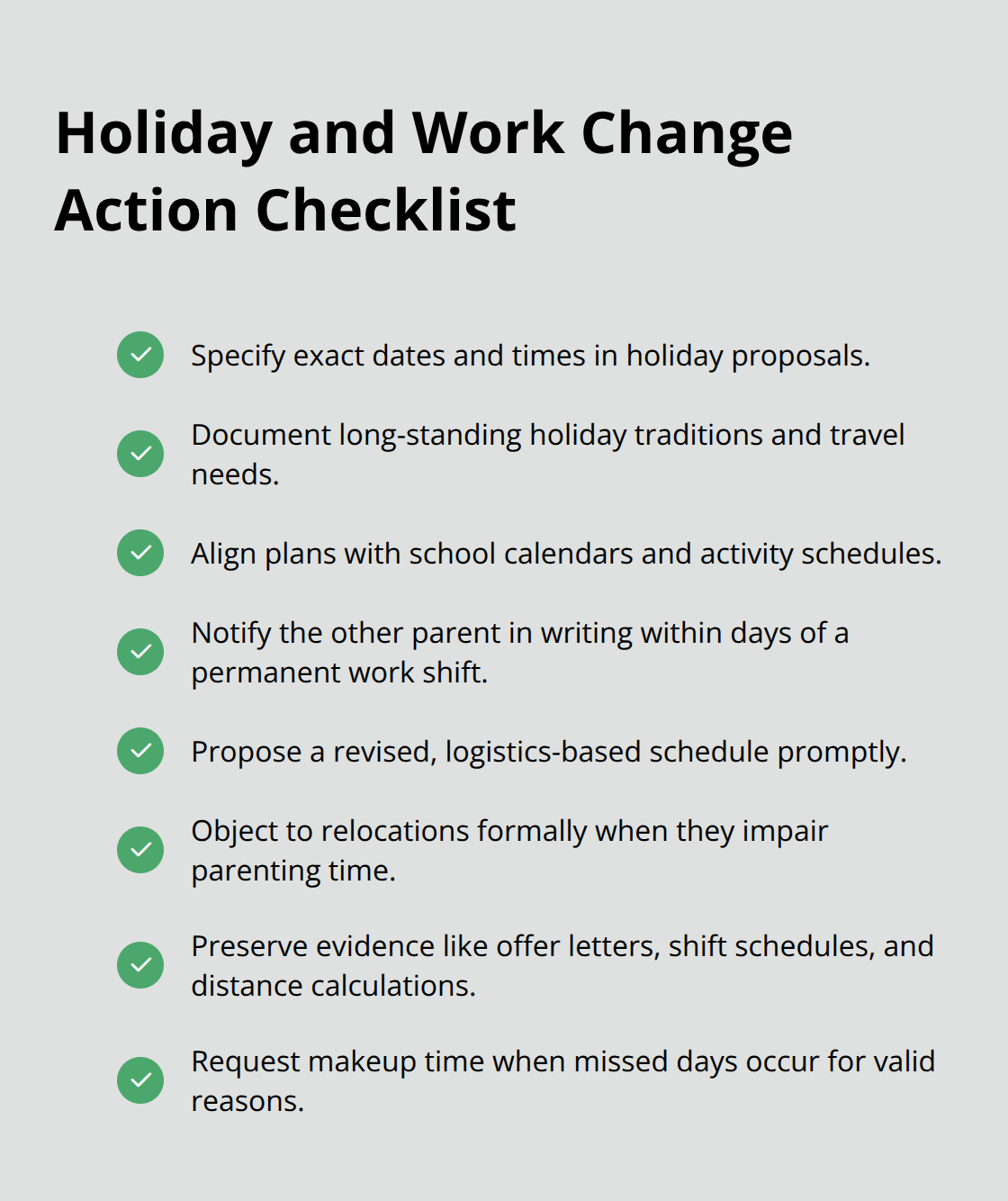
When building flexibility into your arrangement, avoid overly complex language that requires constant renegotiation. Instead of writing that parents will exchange the child whenever work schedules change, specify trigger points: if your job schedule shifts permanently, you notify the other parent in writing within 10 days, and you propose a revised schedule within 14 days. This prevents the other parent from claiming surprise while keeping the process moving.
Many parents also build in makeup time provisions, where if one parent misses scheduled parenting time due to work or illness, they receive equivalent time within the following month. Courts favor this approach because it demonstrates commitment to maintaining the relationship while acknowledging that life disrupts even the best plans. When you present a proposed schedule to the other parent or to a judge, show that you’ve anticipated problems and built in solutions. The strength of your proposal lies in its specificity and your willingness to address real-world obstacles before they become disputes.
When Holiday and Work Changes Disrupt Your Parenting Schedule
Holiday Disputes Escalate Quickly Without Clear Agreements
Holiday conflicts rank among the most frequent disputes in parenting time cases, and they intensify rapidly because emotions run high during family celebrations. The Title IV-D Standard Parenting Time Plan allocates Thanksgiving in even-numbered years from 6 p.m. Wednesday before the holiday through 6 p.m. Sunday after, and winter break splits by year with odd years covering the first half through December 26 at noon. This framework ignores what actually matters to families: extended relatives gathering for multiple days, school break timing that varies by district, and the reality that one parent often maintains established holiday traditions the child expects to continue.
When you propose holiday modifications to the other parent or present them to a judge, focus on what serves your child’s existing relationships and continuity, not on maximizing your own time. A parent who documents that the child has spent every Thanksgiving with a grandmother in another state for six years holds stronger grounds for requesting that specific block than someone simply asserting equal holiday access. Courts in Brevard County respect established patterns because children need predictability during emotionally charged occasions.
Put Holiday Proposals in Writing With Specific Details
Vague language about holiday allocation creates disputes that escalate into court battles. Write your proposal with specific dates and times rather than phrases like “around Thanksgiving.” This prevents later conflicts about whether 6 p.m. means dinner time or bedtime, or whether the break extends to the first day back at school. Courts favor parents who communicate clearly and anticipate potential misunderstandings before they occur.
Work Schedule Changes Require Immediate Notification
Work schedule changes and relocations create the second major category of disputes, and these require immediate action because delays weaken your position. If your employer shifts your availability permanently, notify the other parent in writing within days, not weeks, and propose a revised schedule that demonstrates you’ve thought through logistics. Courts view parents who communicate proactively about changes more favorably than those who simply stop showing up for scheduled parenting time and claim their job changed.
Relocation Disputes Follow Specific Legal Rules
Relocation disputes operate under different rules than simple schedule adjustments. Florida law requires the relocating parent to provide notice and often obtain court approval if the move substantially impairs the other parent’s parenting time. If the other parent wants to relocate with your child, you have the right to object in court, and judges weigh factors including whether the move serves the child’s best interests, whether the relocating parent can maintain the child’s relationship with you through virtual communication or frequent visits, and whether the move genuinely improves the child’s circumstances or simply benefits one parent.
Modification Requests Require Substantial Changes in Circumstances
Modification requests themselves follow a high bar: you must show a substantial and material change in circumstances that was not anticipated when the original order was entered. A parent who lost a job and secured new employment with different hours has clear grounds for modification. A parent simply wanting more time without a circumstantial trigger does not. When facing these transitions, get essential legal advice when separating to understand your options and protect your position. Document everything related to your changed situation-offer letters, shift schedules, relocation agreements from employers, or distance calculations between homes and schools (this documentation transforms your modification request from a preference into a compelling case supported by facts rather than emotion).
Protecting Your Melbourne FL Parenting Time
Your parenting time arrangement only works if you actively protect it through documentation and swift action when violations occur. Keep detailed records of your involvement: school attendance records, medical appointment confirmations, activity participation, and written communications with the other parent. Text messages, emails, and calendar entries showing your consistent presence in your child’s life become evidence that judges examine carefully when disputes arise.
Enforcement matters because court orders mean nothing without consequences for violations. If the other parent consistently misses exchanges, prevents you from exercising your parenting time, or ignores provisions in the order, you have legal remedies available. The court can order makeup time, require the violating parent to pay your attorney fees and court costs, or modify the arrangement if violations are severe, though enforcement requires evidence and prompt action to succeed.
When Melbourne FL parenting time disputes arise, contact Harnage Law PLLC for personalized legal counsel tailored to your family’s circumstances.