
Sole Custody Melbourne FL: Rights, Risks, and Realities
Our Blog
Sole Custody Melbourne FL: Rights, Risks, and Realities
Sole custody in Melbourne, FL gives one parent full legal and physical responsibility for a child. This arrangement isn’t right for every family, and it comes with real financial, emotional, and legal challenges that parents need to understand before pursuing it.
We at Harnage Law PLLC help families navigate these complex decisions. This guide breaks down what sole custody actually means, the risks involved, and how to protect your parental rights throughout the process.
What Sole Custody Actually Means in Florida
Florida law no longer uses the word custody. Instead, courts award parental responsibility and time-sharing arrangements. Sole parental responsibility means one parent makes all major decisions about education, healthcare, religion, and other significant matters affecting the child. The non-custodial parent may still have time-sharing rights, though these can be limited or supervised depending on the circumstances. This distinction matters because Florida’s approach to decision-making power treats decision-making authority separately from physical custody. A parent with sole parental responsibility doesn’t automatically eliminate the other parent from the child’s life. Courts view sole arrangements as exceptional outcomes, not standard practice. In Melbourne, FL, judges apply this framework consistently, but they examine the specific facts of your case before awarding sole responsibility to either parent.
How Sole Differs from Shared Parental Responsibility
Joint parental responsibility means both parents share decision-making authority on major issues. One parent might have primary physical custody while both parents participate in healthcare and education decisions. This arrangement works well when parents can communicate effectively and cooperate on the child’s welfare. Sole parental responsibility concentrates all major decisions with one parent. The other parent loses input on school choices, medical treatment, and religious upbringing. Courts rarely grant this arrangement unless documented evidence shows shared responsibility would harm the child. Florida courts favor joint arrangements because research consistently shows children benefit from meaningful relationships with both parents. If you want sole responsibility, you need credible, documented proof of risks or harm, not simply allegations or disagreements with the other parent.
Physical Custody Versus Decision-Making Authority
Physical custody determines where the child lives and how much time each parent spends with the child. Sole physical custody means the child primarily resides with one parent. The other parent may have supervised visits, daytime visits only, or overnight visitation depending on safety concerns. Legal custody, or parental responsibility in Florida terminology, covers who makes decisions about the child’s life. You can have sole legal responsibility while the other parent maintains substantial time-sharing. You can also have joint legal responsibility while one parent has primary physical custody. These arrangements require detailed parenting plans that specify the time-sharing schedule and which parent decides medical care, school enrollment, and similar matters. Florida courts craft these plans based on what serves the child’s best interests under Section 61.13 of the Florida Statutes.
What Courts Actually Look For
Courts examine specific factors when you pursue sole parental responsibility. The child’s stability in a current home environment carries significant weight in these decisions. A parent’s ability to provide a predictable daily routine matters more than most people realize.
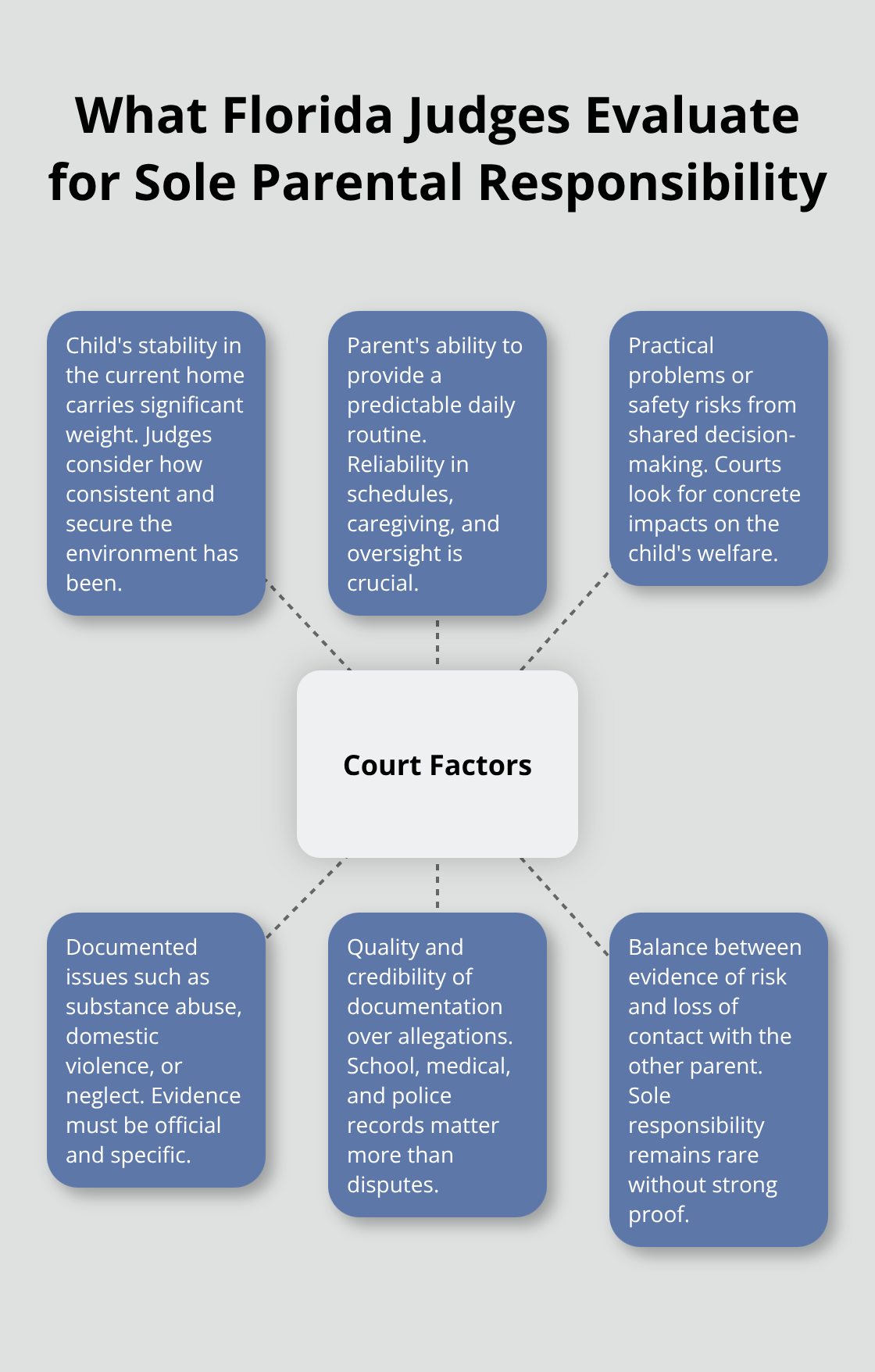
Courts also assess whether shared decision-making would create practical problems or safety risks for the child. Evidence of substance abuse, domestic violence, or documented neglect strengthens a sole responsibility case substantially. Allegations alone won’t convince a judge-you need concrete documentation, school records, medical reports, or police reports that demonstrate actual harm or risk. The court weighs the strength of your evidence against the child’s potential loss of contact with the other parent. This balancing act explains why sole responsibility remains rare in Melbourne, FL family courts. Your case’s success depends on how thoroughly you document the reasons why shared responsibility would fail and how your arrangement protects the child’s welfare and stability.
Risks and Challenges of Sole Custody Arrangements
The Financial Reality of Sole Custody
Sole custody in Melbourne, FL demands that you understand the genuine financial burden your household will face. The custodial parent pays for all childcare expenses without sharing costs with the other parent, even though Florida courts typically order child support. According to the U.S. Census Bureau, the average annual cost of raising a child through age 17 exceeds $233,000 in 2023 dollars when accounting for housing, food, education, and healthcare. You cover daycare, after-school programs, school supplies, medical copays, extracurricular activities, and transportation entirely from your income. Child support payments help offset these costs, but they rarely cover the full amount.
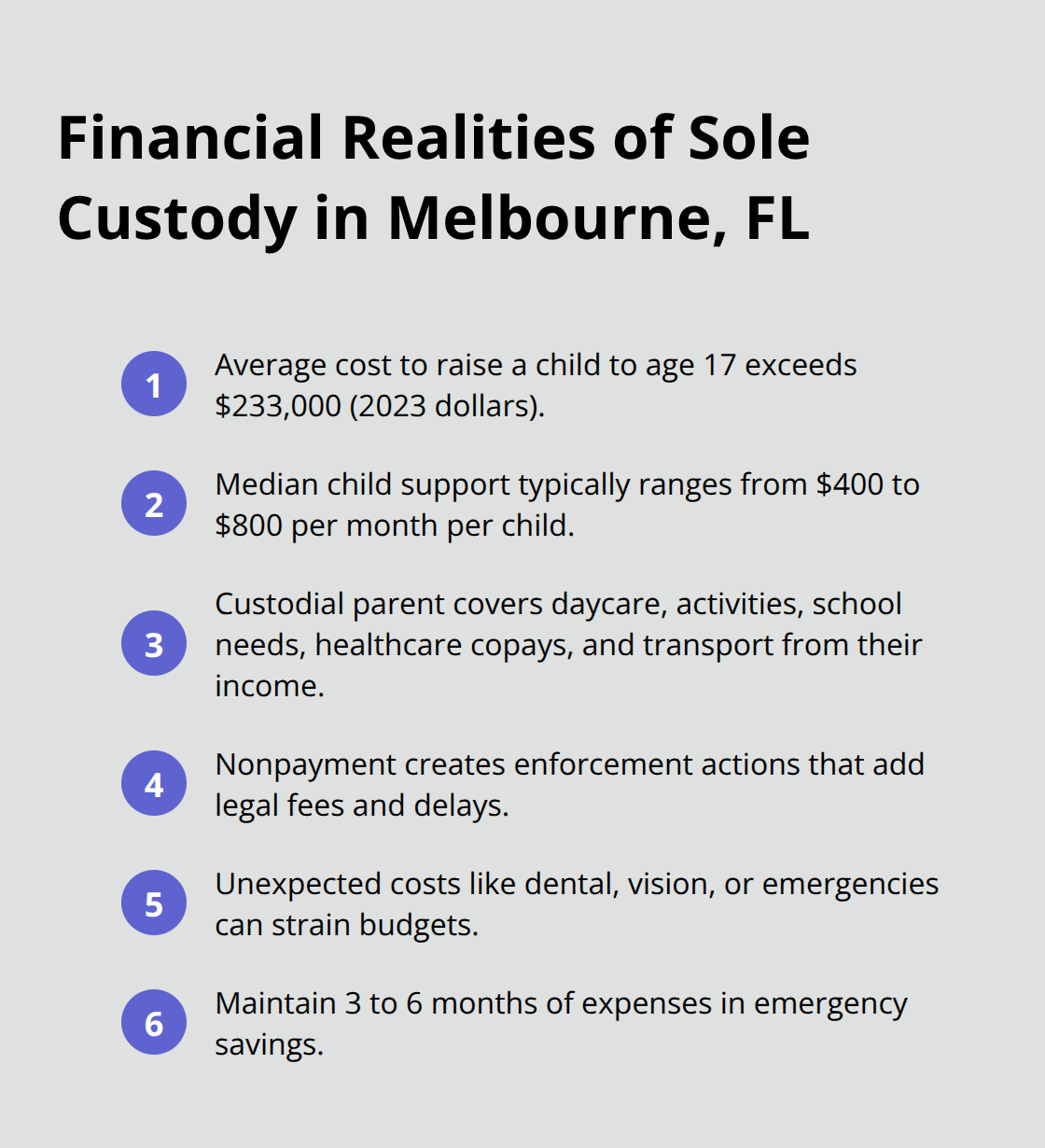
The median child support order in Brevard County averages between $400 and $800 monthly per child, depending on the payor’s income and custody arrangement. If the other parent loses employment or refuses to pay, you face the burden alone while pursuing enforcement through the court system, which adds legal fees and delays. Many custodial parents report that unexpected expenses like dental work, vision correction, or emergency medical care strain their budgets significantly because they cannot split these costs with the other parent. You need stable employment, emergency savings of at least three to six months of expenses, and realistic expectations about your lifestyle changes.
How Sole Custody Affects Your Child Emotionally
Children in sole custody arrangements experience emotional challenges that courts weigh differently than parents expect. Research from the American Psychological Association indicates that children benefit from maintaining meaningful relationships with both parents, and sole custody can create feelings of loss or abandonment even when the non-custodial parent’s absence serves a protective purpose. Children ages 8 to 14 often struggle with guilt, believing they caused the separation or wondering why one parent wants limited contact. Teenagers may experience anger toward you for what they perceive as preventing the relationship with their other parent, regardless of the documented reasons. Complications arise when the non-custodial parent fails to appear for scheduled visits or stops contact entirely, leaving your child confused and hurt. You cannot shield your child from the reality that one parent has stepped back, and attempting to do so through negative comments about the other parent backfires dramatically in court if the judge learns about it. Visitation disputes create additional stress when the non-custodial parent challenges the arrangement or seeks modifications, forcing your child through repeated court processes.
Navigating Visitation and Non-Custodial Parent Conflicts
The non-custodial parent’s involvement creates practical complications that extend beyond the initial court order. Even with sole parental responsibility, the other parent typically retains some time-sharing rights unless the court documents serious safety concerns. These visits require coordination, transportation arrangements, and adherence to court-ordered schedules. The non-custodial parent may challenge the arrangement later, filing motions to modify the time-sharing schedule or requesting increased contact with the child. Each modification attempt forces you back into court, incurring legal fees and emotional strain on your family. The other parent might also interfere with your parenting decisions (despite lacking legal authority to do so), creating conflict that your child witnesses. If the non-custodial parent fails to pay child support or misses scheduled visits, you must decide whether to pursue enforcement or modification through the court system. These ongoing disputes mean sole custody does not eliminate the other parent from your life-it simply restructures their role in ways that often require continued legal attention and financial investment.
Preparing for the Long-Term Reality
Sole custody works best when you prepare your child emotionally for the arrangement, maintain realistic expectations about the other parent’s involvement, and avoid using custody as a weapon in ongoing parental conflict. The financial and emotional toll extends far beyond the initial court decision. You will manage a household budget that stretches thin, handle medical and educational decisions alone, and support a child who processes complex feelings about their family structure. The non-custodial parent’s actions-whether they maintain contact, pay support consistently, or challenge your authority-will directly impact your family’s stability and your child’s well-being. Understanding these realities before you pursue sole custody helps you make informed decisions about whether this arrangement truly serves your family’s needs. The next section examines how a divorce lawyer in Melbourne, Florida can help families build strong cases for sole custody when the evidence supports this outcome and how we protect your parental rights throughout the legal process.
How We at Harnage Law PLLC Help You Build Your Sole Custody Case in Melbourne, FL
Sole custody cases succeed or fail based on documentation, not emotion or conflict with the other parent. We at Harnage Law PLLC see families lose cases because they rely on complaints about the other parent’s behavior without concrete evidence that sole responsibility actually serves the child’s best interests. You need school records that show your child thrives under your care, medical documentation of consistent healthcare decisions you’ve made, and evidence of stable housing and routines you provide. If safety concerns justify sole custody, you must gather police reports, substance abuse treatment records, medical evaluations, or domestic violence incident reports from official sources. The court will scrutinize whether these documents directly connect to harm or risk for your child, not simply whether you dislike the other parent.
Collect Evidence That Courts Actually Accept
Start collecting documentation immediately, even before you file, because judges in Brevard County expect thorough preparation. Custody evaluators, appointed in complex cases, typically cost between $1,500 and $6,000 depending on complexity, and their written reports significantly influence the judge’s decision. We recommend organizing your documentation chronologically and labeling it clearly so the court can quickly understand the pattern you’re establishing. Many parents underestimate how much evidence the judge actually needs; vague concerns about parenting style rarely persuade courts to award sole responsibility when the law strongly favors shared decision-making. School attendance records, medical appointment documentation, and photographs of your home environment all strengthen your position substantially.
Develop a Detailed Parenting Plan
Florida courts require you to articulate a detailed parenting plan that addresses education, healthcare decisions, religion, extracurricular activities, and how major conflicts will be resolved if they arise. Your plan should specify which parent makes decisions about school enrollment, medical treatment, and similar matters, and it should explain why your proposed arrangement protects the child better than shared responsibility would. The filing fee for a custody petition in Brevard County runs $409, though fee waivers exist for qualifying individuals. Courts in Melbourne, FL apply Florida Statute 61.13 consistently, evaluating your child’s stability, your ability to provide predictable routines, and whether shared decision-making creates documented problems specific to your family’s circumstances.
Navigate Mediation and Court Proceedings
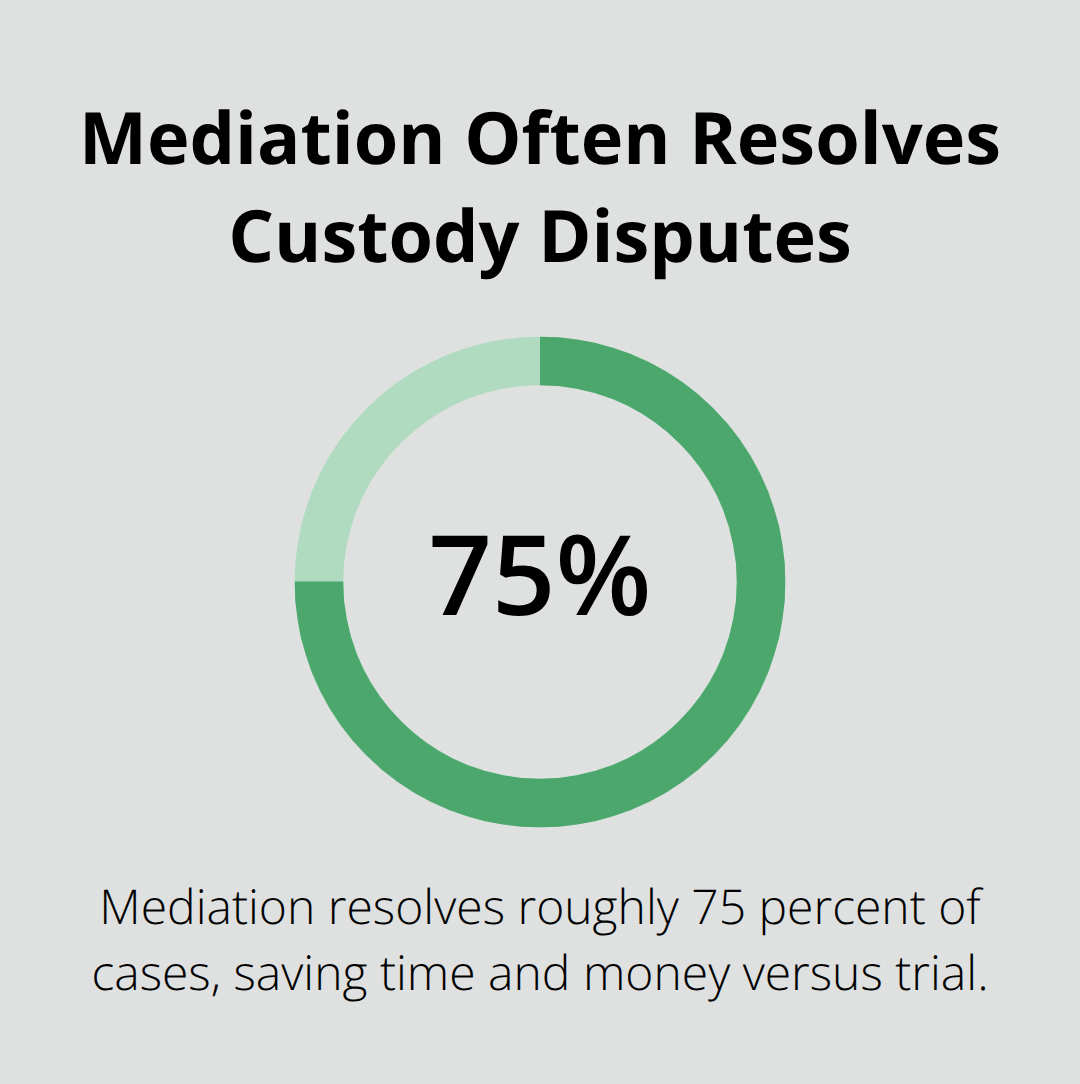
Mediation occurs early in most cases and succeeds in reaching full or partial agreements roughly 75 percent of the time, according to court data, making it faster and considerably cheaper than proceeding to trial. If mediation fails, the court may order a custody evaluation before trial. During court hearings, present your evidence methodically through school records, attendance at medical appointments, examples of your child’s stability, and testimony about how your household functions. The burden of proof rests with you, meaning you must demonstrate that shared responsibility would create genuine harm or impracticality for your child, not simply that you’d prefer to make all decisions alone. We at Harnage Law PLLC handle the strategic presentation of evidence so judges understand exactly why your case warrants sole responsibility.
Final Thoughts
Sole custody Melbourne FL remains difficult to achieve because Florida courts prioritize your child’s relationship with both parents unless documented evidence proves otherwise. The financial burden, emotional complexity, and ongoing legal challenges make this arrangement suitable only when shared responsibility genuinely threatens your child’s safety or welfare. Courts will examine your evidence carefully, and vague complaints about the other parent’s parenting style will not persuade a judge to award sole parental responsibility.
The realistic path forward requires honest assessment of whether your situation truly warrants sole custody or whether a modified time-sharing arrangement with clear boundaries better serves your child. Many families discover that negotiated parenting plans with enforceable provisions accomplish their goals without the expense and emotional toll of contested litigation. Mediation resolves roughly 75 percent of cases, saving time and money compared to trial.
You need legal representation immediately if you face custody disputes or believe sole custody serves your child’s best interests (attempting to handle these matters alone typically results in incomplete documentation and procedural errors that judges view unfavorably). An attorney with local experience understands how Melbourne, FL judges apply Florida Statute 61.13 and can help you gather the specific evidence your case requires. Contact us at Harnage Law PLLC to discuss your situation and determine the strongest path forward for your family.