
Divorce Timeline Florida: From Filing to Final Judgment
Our Blog
Divorce Timeline Florida: From Filing to Final Judgment

Divorce in Florida moves through several distinct phases, each with its own requirements and timelines. Understanding the divorce timeline in Florida helps you prepare for what’s ahead and avoid costly delays.
At Harnage Law PLLC, we guide clients through every step of this process. Knowing what to expect-from initial filing through final judgment-gives you clarity during a challenging time.
Getting Your Divorce Started in Florida
Required Documents for Your Divorce Filing
The Petition for Dissolution of Marriage serves as your formal request to end your marriage. This document tells the court your name, your spouse’s name, and whether minor children are involved. If you have minor children, Florida law requires you to file a UCCJEA Affidavit, which establishes that Florida has jurisdiction over custody matters. The Financial Affidavit ranks equally in importance-this sworn statement lists your income, expenses, assets, and debts. Courts will not move forward without it, and incomplete or inaccurate financial information can trigger sanctions or delays. You can obtain these forms from the Florida State Courts website or the Brevard County Clerk’s Office in Melbourne. Many people attempt the paperwork phase without an attorney, but mistakes at this stage cost time and money later.
Filing Fees and Where to Submit Your Paperwork
Brevard County charges approximately $408 to $410 for the filing fee, plus a $10 summons fee if you need the Sheriff or a process server to deliver papers to your spouse. You submit all documents to the Clerk of Court at the Brevard County courthouse in Melbourne. The court assigns a case number once you file, and your spouse then has twenty days to respond. If they do not answer within that window, you can request a default judgment, though contested divorces rarely conclude that simply. The 20-day waiting period is mandatory under Florida law-the court will not enter a final judgment before that deadline passes, regardless of how quickly you and your spouse reach agreement.
Florida’s Residency Requirement
At least one spouse must have lived in Florida continuously for six months before filing. Melbourne residents typically meet this requirement with a driver’s license or voter registration showing your address. If you have lived in Florida fewer than six months, you will need to wait or file in another state where you qualify. This hard deadline means even simplified divorces where both parties fully cooperate take a minimum of three weeks from filing to judgment.
What Happens After You File
Once the court assigns your case number, the discovery and negotiation phase begins. Your spouse’s response (or lack thereof) sets the tone for what comes next-whether your case moves toward settlement or heads toward contested proceedings.
Discovery and Negotiation in Your Florida Divorce
The 45-Day Financial Disclosure Deadline
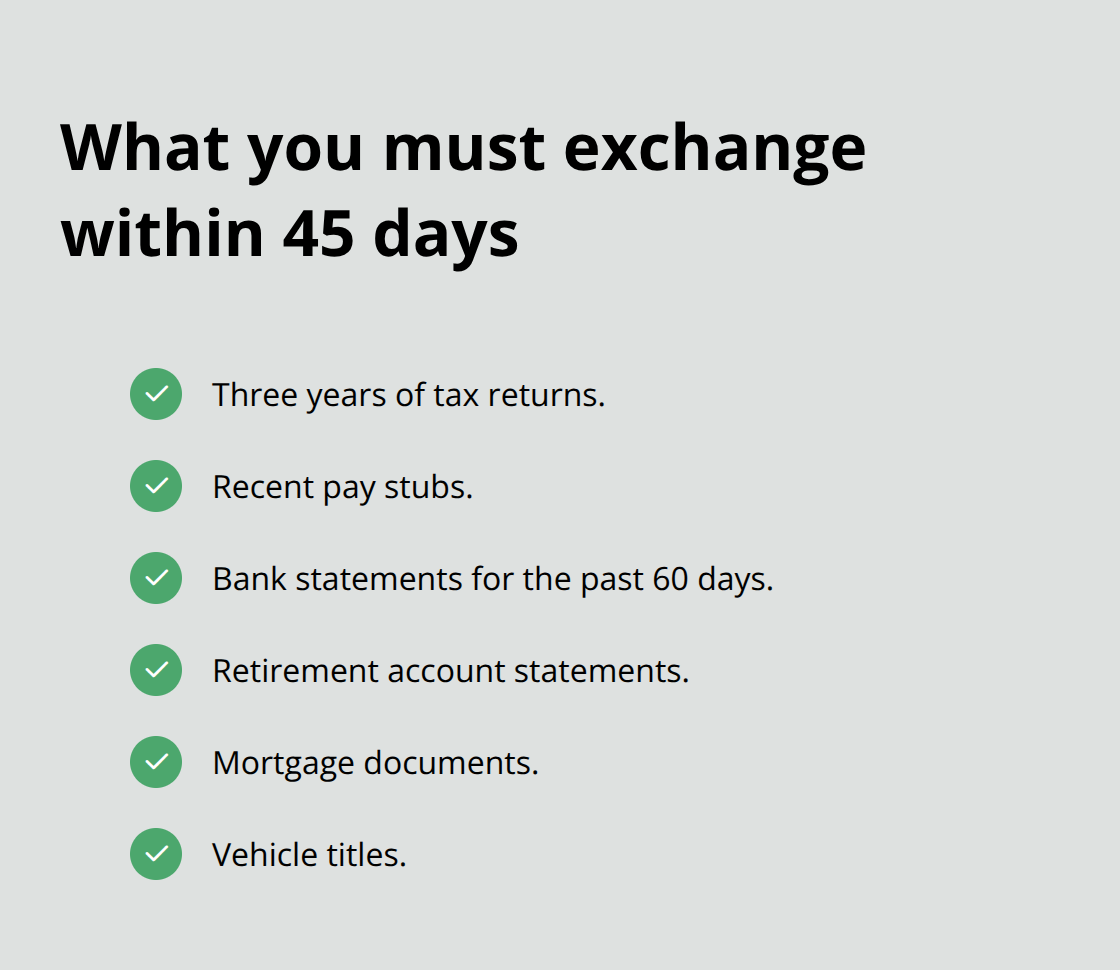
After your spouse responds to the petition, Florida law requires both sides to exchange financial information within 45 days of service. This deadline is not flexible. You must provide three years of tax returns, recent pay stubs, bank statements for the past 60 days, retirement account statements, mortgage documents, and vehicle titles. Missing this deadline triggers sanctions from the judge, including attorney fees and court costs charged against you.
The Brevard County courthouse processes hundreds of divorces yearly, and judges there enforce discovery rules strictly because incomplete disclosure wastes court time and harms the other spouse.
Extended Discovery in Contested Cases
In contested cases, discovery extends far beyond financial disclosures. Each side can send up to 30 interrogatories (written questions) with 30-day response deadlines, request production of documents, and conduct depositions where witnesses answer questions under oath for two to four hours. A single complex discovery dispute over hidden assets or business valuations can add three to six months to your timeline. Melbourne courts see this frequently in cases involving small business owners or investment portfolios. Prepare a comprehensive asset inventory early-real estate, vehicles, retirement accounts, and digital assets such as cryptocurrency-to facilitate the process and reduce disputes.
Mediation: Your Path to Control
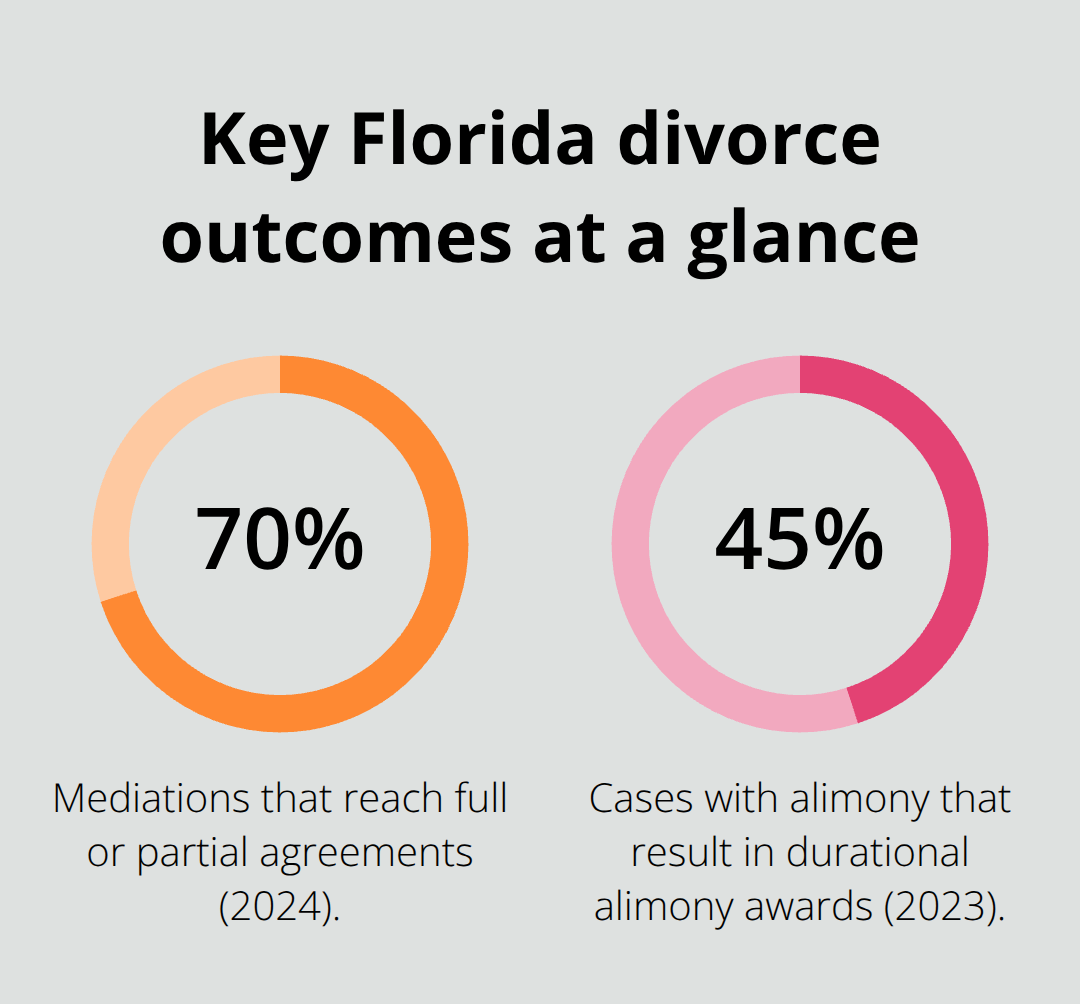
Mediation happens in most Melbourne divorces and represents your best opportunity to control the outcome. Florida Dispute Resolution Center data from 2024 shows 70 percent of mediations reached full or partial agreements, meaning most cases never reach trial. Private mediators in the Melbourne area charge $250 to $400 per hour, though court-sponsored programs cost less. Mediation typically lasts four to six hours and occurs after initial discovery.
Come prepared with a realistic settlement range for property division, support obligations, and time-sharing arrangements if children are involved.
Settlement Timelines and Alimony Considerations
Judges award durational alimony in 45 percent of cases where alimony is granted (according to 2023 data), so understand Florida’s alimony types before negotiating. If you and your spouse reach agreement at mediation, your case can move to final hearing within two to four weeks. If mediation stalls, expect discovery to continue for another three to eight months, depending on complexity. Cases with simple assets and clear income sources settle in four to twelve weeks total. High-asset cases or disputes over business value routinely stretch six to twelve months before reaching resolution or proceeding to trial.
What Happens When Settlement Fails
When mediation does not produce agreement, the court schedules pre-trial conferences to narrow remaining disputes and prepare for trial. These conferences give both sides a final opportunity to settle before a judge hears your case. Most divorces resolve at this stage rather than proceeding to a full trial, but understanding what happens next helps you prepare for either outcome.
Court Hearings and Trial Process
Pre-Trial Conferences in Brevard County
Pre-trial conferences in Brevard County occur after discovery concludes and settlement negotiations stall. The judge meets with both attorneys (or you and your spouse if unrepresented) to review remaining disputes, narrow issues, and discuss settlement one final time. Judges in Melbourne take these conferences seriously because fewer than 5 percent of Florida divorce cases proceed to trial, meaning most resolve before this stage. Prepare a written summary of your position on property division, support, and time-sharing if children are involved. Bring documentation supporting your claims-bank statements, pay stubs, school records, or evidence of parenting involvement.
What Judges Expect From You
The judge will ask direct questions about your willingness to settle and may suggest outcomes based on Florida law. Many judges push parties toward resolution because trials consume court time and cost both sides significantly more than mediation. If you refuse reasonable settlement offers at this conference, the judge will remember that during trial when deciding custody or support amounts. This is not a theoretical concern; judges in Brevard County regularly factor settlement behavior into their rulings on discretionary matters like alimony duration or time-sharing schedules.
Trial Preparation and Scheduling
Trial itself involves presenting evidence, examining witnesses, and arguing your position before a judge who makes the final decision. Your case will be scheduled weeks or months ahead, and Melbourne courts often have backlogs pushing complex trials 6 to 9 months out from the conference date. Preparation determines outcomes more than courtroom theatrics. Organize documents chronologically, prepare witnesses to answer questions directly without rambling, and anticipate the other side’s arguments.
How Judges Decide Custody and Support
Judges decide custody and support based on specific legal factors. For time-sharing, Florida Statute 61.13 requires judges to evaluate each parent’s involvement in the child’s life, the child’s relationship with each parent, the stability of each home, and each parent’s ability to meet the child’s needs. Bring school attendance records, medical appointment documentation, and evidence of extracurricular involvement to demonstrate active parenting. Child support calculations follow Florida’s guidelines based on both parents’ income, the number of children, and the time-sharing arrangement, though judges can deviate if circumstances warrant. Alimony decisions rest on marriage length, each spouse’s earning capacity, the standard of living during marriage, and the recipient’s actual need-longer marriages favor durational or permanent alimony awards.
Why Trial Outcomes Matter Long-Term
The judge’s decision becomes binding and difficult to modify later without proving a substantial change in circumstances. This permanence makes thorough preparation essential before you step into the courtroom.
Final Thoughts
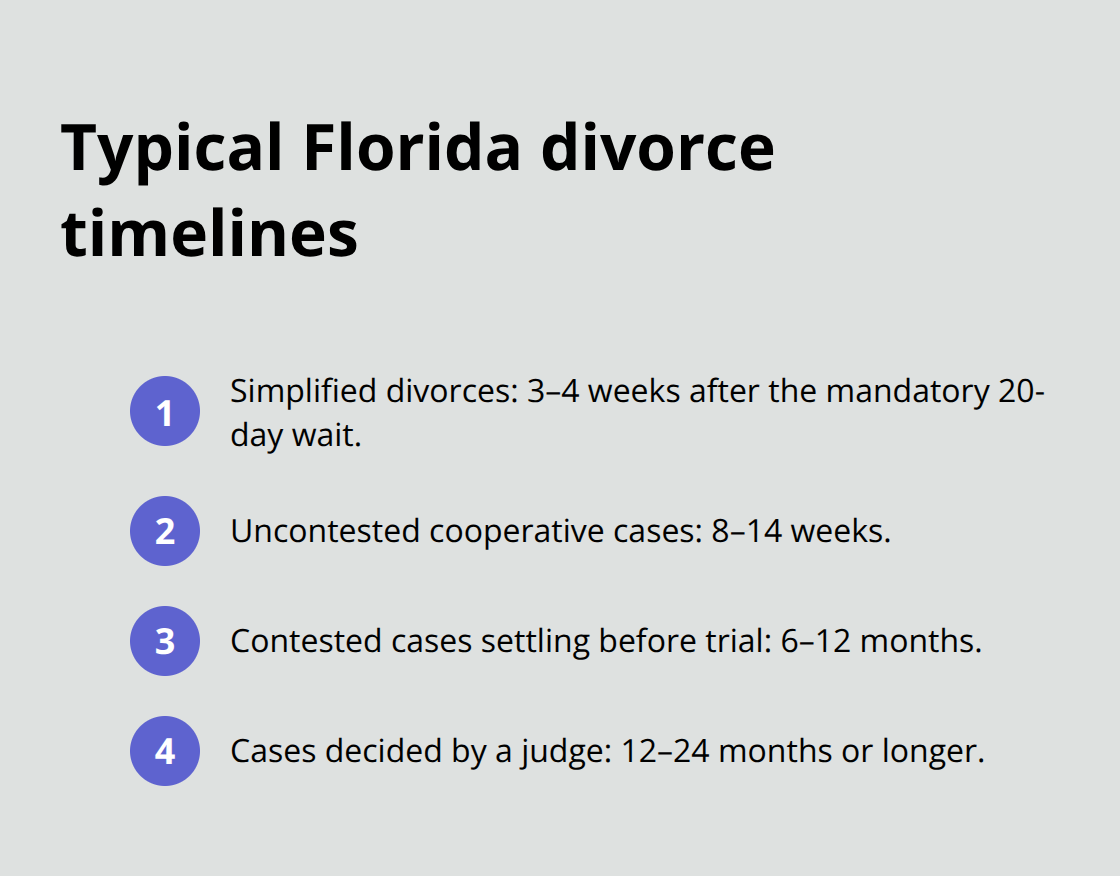
Your divorce timeline in Florida depends on how quickly you and your spouse reach agreement and how thoroughly you prepare your paperwork. Simplified divorces with full mutual agreement finish in three to four weeks after the mandatory 20-day waiting period expires, while uncontested cases where both sides cooperate typically conclude in eight to fourteen weeks. Contested divorces that settle before trial average six to twelve months, and cases proceeding to a judge’s decision often stretch twelve to twenty-four months or longer.
Spousal cooperation matters most-couples who respond promptly to requests, exchange financial documents without delay, and approach mediation in good faith consistently finish faster. Gathering complete financial records before filing (including three years of tax returns and recent bank statements) prevents the 45-day disclosure deadline from becoming a bottleneck, and asset complexity also drives duration since simple marital property divides in weeks while business valuations require months of forensic accounting. Geographic factors play a role too, as Miami-Dade County backlogs can push trials six to nine months out compared to other Brevard County courts that move faster.
We at Harnage Law PLLC understand that divorce timelines create stress and uncertainty, and our team provides personalized attention throughout your case whether your divorce timeline in Florida spans weeks or months. Contact us today to discuss your situation and learn how we can guide you toward resolution efficiently.