
Child Custody Evaluation Florida: Insights Into a Professional Evaluation
Our Blog
Child Custody Evaluation Florida: Insights Into a Professional Evaluation

Child custody evaluations in Florida carry significant weight in family court decisions. These professional assessments examine each parent’s relationship with the child, living conditions, and ability to provide care.
At Harnage Law PLLC, we guide clients through this process with clarity and support. Understanding how evaluators work helps you prepare effectively for what lies ahead.
What Custody Evaluations Actually Are and Why Courts Use Them
A child custody evaluation in Florida is a formal assessment conducted by a licensed psychologist to help judges understand each parent’s capacity to care for a child and what arrangement serves the child’s best interests. Florida Family Law Rules of Procedure 12.360 and 12.363 require that evaluators hold specialized training in forensic and custody evaluation work, not just general psychology. The evaluation examines parenting abilities, the parent-child relationship, each parent’s stability, and any factors that might affect the child’s wellbeing. Courts order these evaluations when parents cannot reach agreement on time-sharing and the judge needs objective information to make an informed decision. The evaluation is not therapy for anyone involved; it is purely investigative and advisory to the court. Judges place significant weight on these reports, though they retain discretion to consider other evidence presented during hearings.
Who Conducts These Evaluations
The psychologist performing the evaluation must hold a Florida license and demonstrate specialized knowledge in child development, family dynamics, and the impact of custody disputes. The American Psychological Association and the Association of Family and Conciliation Courts have established standards that require evaluators to maintain objectivity and avoid conflicts of interest-they cannot have prior relationships with either parent or the child. Verify any evaluator’s credentials through their curriculum vitae, training history, prior publications, and references from past cases. A qualified evaluator should document their specialized training and cite research supporting their methods and conclusions. When evaluators lack supporting literature for their opinions, their credibility suffers significantly in court. The evaluation typically costs between $4,500 and $15,000, though some evaluators charge considerably more; parents usually share this cost or the court may order one party to bear it.
When Courts Order Evaluations
Courts order evaluations when mediation fails to produce a time-sharing agreement and the judge needs professional insight into the child’s best interests. This occurs frequently in contested custody cases where each parent claims they can better meet the child’s needs. The evaluation becomes necessary when the case involves complex issues such as allegations of abuse, substance use, mental health concerns, or when one parent’s parenting capacity is genuinely in question. Evaluations take several weeks to complete, so delaying agreement through mediation can cost your family time and money. If you anticipate a custody dispute, working with legal representation from the outset helps you understand whether your case will likely require an evaluation and how to prepare.
What Happens Next in the Evaluation Process
Once a court orders an evaluation, the psychologist begins gathering information about your family through interviews, observations, and psychological testing. The evaluator will interview both parents separately, speak with the child, and contact collateral sources such as teachers, neighbors, and healthcare providers. This phase establishes the foundation for the assessment and determines what additional steps the evaluator will take. The thoroughness of this initial phase directly influences the quality and credibility of the final report that the judge will review.
How the Evaluation Actually Unfolds
Initial Interviews and Information Gathering
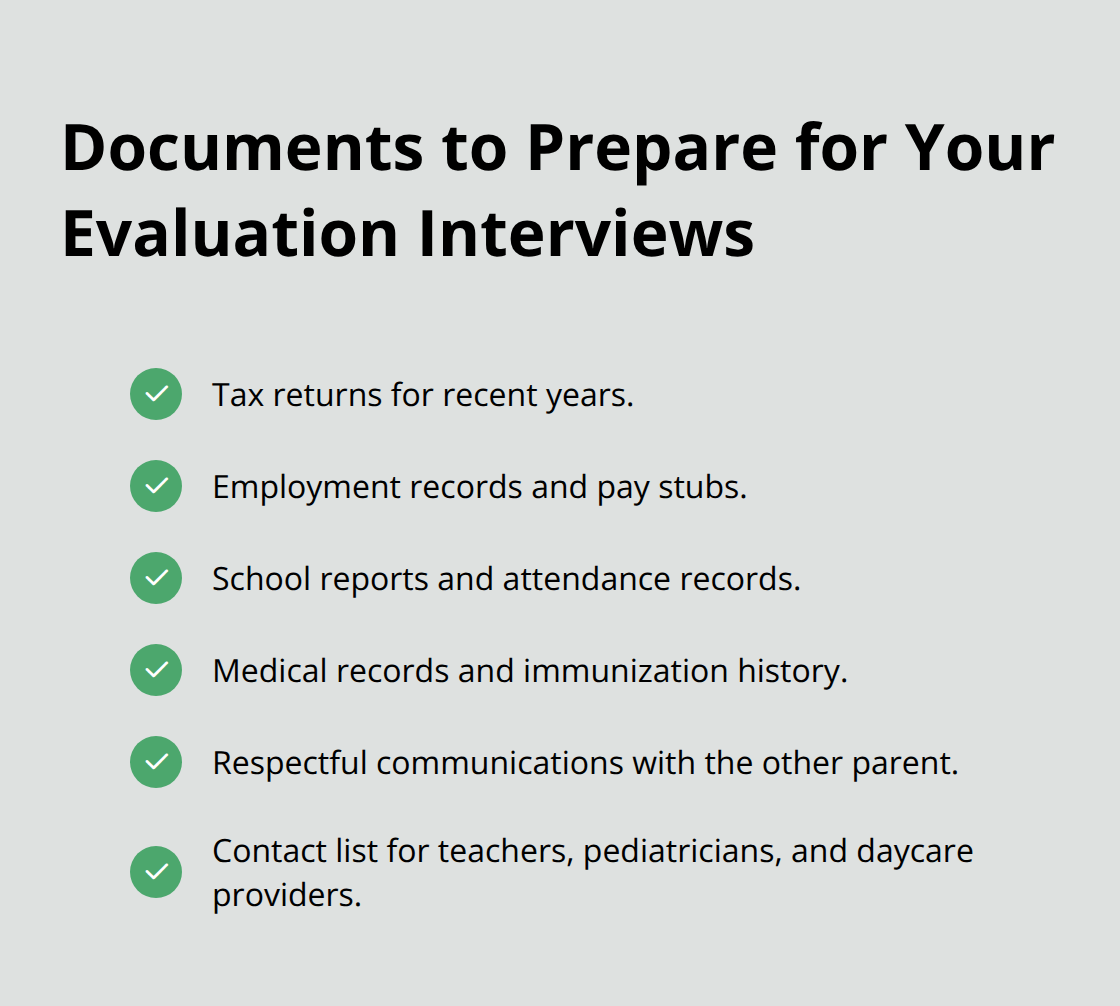
The psychologist begins by conducting separate interviews with both parents, typically lasting two to four hours each. These sessions cover your parenting history, relationship with the child, daily routines, involvement in school and activities, mental health status, and financial stability. The evaluator asks detailed questions about your knowledge of the child’s needs, preferences, and developmental milestones. Organize documents before your interview, including tax returns, employment records, school reports, medical records, and any communication with the other parent that demonstrates your involvement. The psychologist also contacts collateral sources such as teachers, pediatricians, daycare providers, and neighbors who can speak to your parenting abilities and the child’s wellbeing.
This information-gathering phase establishes the factual foundation for everything that follows.
Psychological Testing and Child Interviews
Psychological testing typically includes objective measures like the MMPI-2 and MCMI-III, which have strong validity and reliability in custody contexts. Projective tests such as the Rorschach or Thematic Apperception Test carry weaker scientific support; if an evaluator relies heavily on these, question their methodology during cross-examination. Intelligence testing rarely becomes necessary unless directly relevant to your parenting capacity or the child’s specific needs. The psychologist conducts a formal interview with your child, explaining confidentiality limits and the purpose of the assessment. Children are typically interviewed in neutral settings, and the evaluator should spend roughly equal time with each parent to maintain fairness.
Home Visits and Environmental Assessment
Home visits and observations occur at each parent’s residence, where the evaluator assesses living conditions, safety, the child’s room, and how you interact with the child in your own environment. These visits reveal practical details about daily routines, meal preparation, homework support, and the overall quality of the home. Some evaluators observe unstructured time with the child, which exposes parenting strengths and weaknesses more authentically than office-based interviews. The evaluator documents specific observations about the physical space and parent-child dynamics during these visits.
The Comprehensive Report and Recommendations
After completing all interviews, testing, and observations, the psychologist compiles a comprehensive report detailing each parent’s strengths and concerns with equal coverage. The report prioritizes data over theory and explicitly connects findings to recommendations for time-sharing. A strong report includes demographics, dates, procedures, specific test scores, and who was evaluated. The evaluator recommends a parenting plan that addresses decision-making authority, time-sharing schedules, and any need for future reevaluations as the child ages. The report reaches the judge and becomes central to the custody determination, though the judge retains discretion to weigh other evidence presented at hearing. Understanding what the evaluator will examine during home visits and interviews helps you present your parenting strengths authentically and prepare your household accordingly.
What Evaluators Really Examine About Your Parenting
How Evaluators Assess Your Daily Involvement
Evaluators focus intensely on how you interact with your child and whether you meet their concrete needs day to day. The psychologist observes your knowledge of your child’s schedule, preferences, medical history, and developmental stage. During interviews, expect detailed questions about what your child ate yesterday, their current friendships, their teacher’s name, their bedtime routine, and how you handle conflicts with them. Parents who cannot answer these questions accurately lose credibility immediately. The evaluator will ask you to describe a typical weekday and weekend with your child, testing whether your account matches what the child and collateral sources report. Inconsistencies between your claims and documented facts signal to the court that your involvement may be overstated.
Stability Across Employment, Housing, and Health
Evaluators assess your stability across employment, housing, finances, and mental health because these directly impact your ability to provide consistent care. They review tax returns, employment records, and medical documentation to verify your claims. A parent earning $50,000 annually with stable employment and housing scores higher than one with irregular income and frequent moves, even if both claim deep commitment to the child. The psychologist examines whether you maintain consistent housing, hold steady employment, and manage your finances responsibly. Mental health records matter too; the evaluator will obtain documentation of any treatment, medication, or diagnoses that could affect your parenting capacity. A parent with one DUI conviction five years ago followed by successful completion of a substance abuse program presents differently than one with three arrests for drug possession in the last two years.
Communication Patterns and Co-Parenting Willingness
The evaluator examines your communication with the other parent through text messages, emails, and court filings to determine whether you genuinely support the child’s relationship with them or actively undermine it. Courts strongly favor parents who demonstrate willingness to co-parent effectively. If your communications show hostility, name-calling, or attempts to alienate the child from the other parent, the evaluation will reflect this negatively. The psychologist looks for evidence that you encourage the child to maintain contact with the other parent, attend their events, and speak positively about them. Parents who shield children from conflict and facilitate the other parent’s involvement strengthen their position significantly in custody proceedings.
History of Abuse, Substance Use, and Criminal Behavior
Evaluators scrutinize any history of abuse, substance use, or criminal behavior with particular attention. Florida courts presume that equal time-sharing serves the child’s best interests unless one parent proves otherwise by a preponderance of evidence. However, documented abuse or substance abuse can overcome this presumption entirely. If you have a history of domestic violence, substance abuse, or criminal convictions, the evaluator will obtain police reports, court records, and treatment documentation. The evaluator wants concrete evidence of change and accountability, not promises. Your willingness to acknowledge past mistakes and demonstrate genuine behavioral change matters significantly in how the psychologist frames their recommendations to the judge. Treatment completion, consistent sobriety, and years without further incidents all strengthen your credibility in the evaluation.
Final Thoughts
The child custody evaluation Florida process produces a detailed report that judges rely on heavily when making time-sharing and parental responsibility decisions. An attorney helps you understand what the evaluator will examine, prepares you for interviews and home visits, and ensures you present your parenting strengths authentically. Your lawyer can also review the evaluation report before it reaches the judge, identify any factual errors or unsupported conclusions, and prepare cross-examination questions if the evaluator testifies at hearing.
Compliance with the custody order matters enormously after the judge issues it; violations can lead to contempt findings, modification of your custody arrangement, or other penalties. As your child grows, their needs change, and circumstances may shift enough to warrant modification of the existing order. Working with legal representation from the outset positions you to protect your relationship with your child and navigate custody matters with confidence.
Contact Harnage Law PLLC in Melbourne, Florida to discuss your family law needs and begin preparing for what lies ahead. We at Harnage Law PLLC guide clients through every phase of custody evaluations with strategic counsel tailored to your family’s circumstances. Your child’s wellbeing depends on sound legal strategy and thorough preparation throughout this process.