
Custody evaluation Florida: Understanding the Process and Outcome
Our Blog
Custody evaluation Florida: Understanding the Process and Outcome

A custody evaluation in Florida is a formal assessment that helps judges make informed decisions about parenting arrangements. The evaluator examines each parent’s relationship with the child, their ability to provide care, and what’s best for the child’s wellbeing.
At Harnage Law PLLC, we help families navigate this process with clarity and confidence. Understanding what to expect can reduce stress and help you prepare effectively for what comes next.
What Happens During a Florida Custody Evaluation
The Scope and Structure of the Evaluation
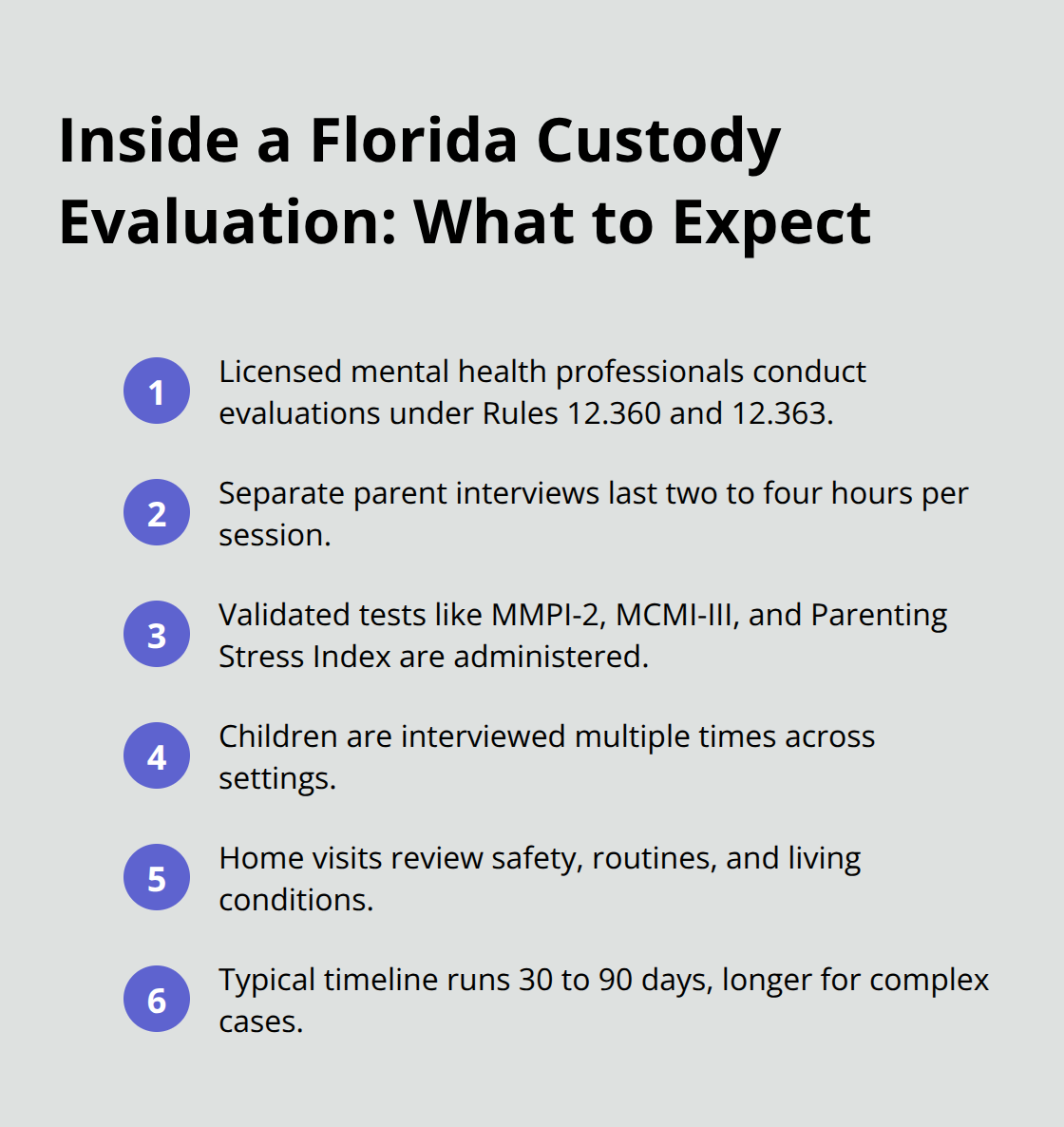
A custody evaluation in Florida involves far more than a single conversation with a psychologist. Licensed mental health professionals-typically psychologists, licensed clinical social workers, or licensed mental health counselors-conduct these assessments under Florida Family Law Rules of Procedure 12.360 and 12.363. The evaluator interviews both parents separately over two to four hours per session, administers standardized psychological testing using instruments like the MMPI-2, MCMI-III, and Parenting Stress Index, interviews your children multiple times, and observes how you interact with them in different settings. Home visits are standard practice, allowing the evaluator to assess living conditions, safety, routines, and whether basics like bedrooms, food access, and appropriate space exist for the children. This comprehensive approach typically takes 30 to 90 days from start to finish, though complex cases can extend longer.
Collateral Contacts and Records Review
Collateral contacts matter significantly-the evaluator will reach out to teachers, pediatricians, therapists, coaches, and daycare providers who have actually witnessed your parenting, not just character references. Florida courts expect evaluators to review school records, medical files, prior court documents, and any Department of Children and Families involvement. These sources provide the evaluator with a fuller picture of how you parent in real-world situations.
The Role of Psychological Testing
The psychological testing component carries real weight in custody decisions. Objective tests like the MMPI-2 and PAI have strong validity evidence and structured scoring, making them far more reliable than projective tests like the Rorschach, which courts increasingly view with skepticism due to limited reliability and questionable normative data. A quality evaluator will emphasize data-driven conclusions, listing all sources, dates, participants, and procedures used. The report will address how well each parent supports the child’s relationship with the other parent-a factor under the best interest of the child standard-and will examine stability, mental health history, substance abuse concerns, and documented abuse or violence.
Preparing Yourself and Your Children
The evaluator must remain neutral and free of unfound biases; prior relationships with either parent typically disqualify someone from conducting the evaluation. When you prepare for your interviews, bring organized documents, arrive early, dress appropriately, answer only what is asked, and focus entirely on the child’s best interests rather than criticizing the other parent. Avoid coaching your children before their interviews, and instead explain simply what to expect. The evaluator will assess whether your child’s statements reflect genuine preferences or adult influence, and older children’s input carries more weight than younger children’s preferences.
Cost Considerations
Costs range from $3,000 to $15,000 depending on the evaluator’s qualifications and testing scope, and Florida courts typically order that parents split these expenses or pay based on ability. Understanding these financial obligations helps you plan accordingly and avoid surprises as the process unfolds.
This snapshot evaluation shapes custody arrangements that affect your family for years, making honesty and preparation essential. As you move through the evaluation, you will also encounter specific factors that Florida courts weigh heavily when making custody decisions-factors that go well beyond what the evaluator observes in a single home or office setting.
What Happens at Each Stage of Your Evaluation
Initial Appointment and Background Information
The evaluation unfolds in a deliberate sequence designed to gather comprehensive information about your family. Your first appointment involves detailed background information gathering where the evaluator collects your personal history, parenting timeline, relationship details with your children, and documentation of any concerns. Bring organized records including tax returns, school transcripts, medical records, and communications with the other parent. The evaluator will ask specific questions about your daily routines with the children, how you handle discipline, your work schedule, and your ability to support your child’s relationship with the other parent. This initial session typically lasts two to four hours and sets the foundation for everything that follows. Some evaluators request written questionnaires before this meeting, so clarify expectations during scheduling.
How to Present Yourself Effectively
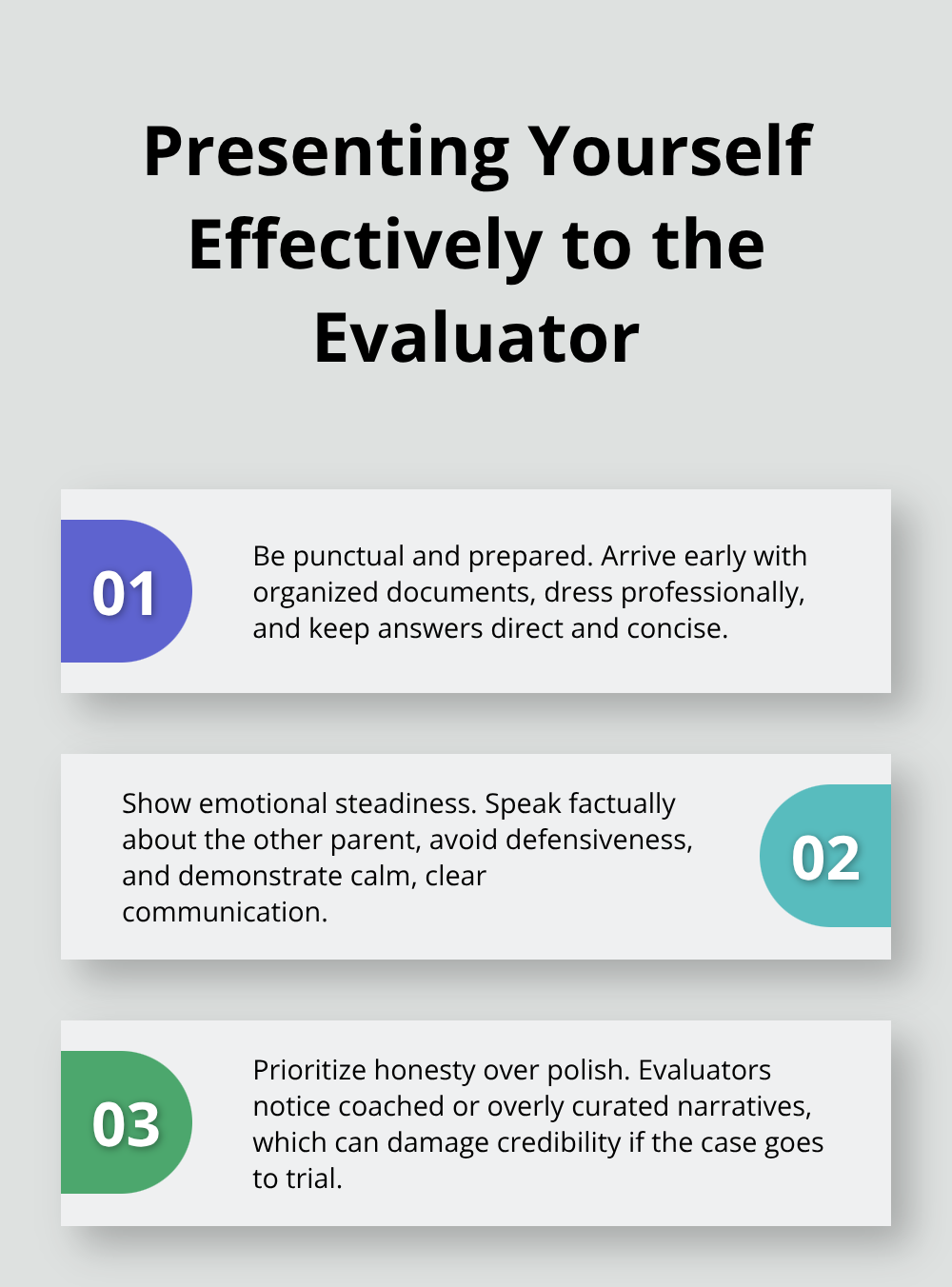
Arrive early, dress professionally, and answer questions directly without over-explaining or becoming defensive. The evaluator assesses not just what you say but how you communicate, your emotional stability, and whether you can discuss the other parent factually rather than emotionally. Honesty matters far more than appearing perfect-evaluators recognize when parents try to present an artificially polished version of themselves, and such attempts often backfire during cross-examination if your case reaches trial.
Psychological Testing and Child Interviews
Psychological testing follows, using validated instruments like the MMPI-2, PAI, and Parenting Stress Index to measure personality traits, mental health functioning, and parenting capacity. These tests include validity scales that detect inconsistent or dishonest responses, so answer truthfully even when questions feel uncomfortable or personal. Simultaneously, the evaluator conducts separate interviews with each child, adjusting their approach based on age and developmental stage. Young children may use play or drawings to express themselves, while teenagers face more direct questioning about their adjustment and preferences.
Home Visits and Collateral Observations
Home visits happen without advance notice in many cases, allowing the evaluator to see your actual living environment rather than a staged version. They assess whether your children have appropriate sleeping arrangements, access to food, safety hazards, and overall cleanliness. This is where parenting beyond the office becomes visible. The evaluator also contacts collateral sources like teachers, coaches, and pediatricians who have observed your parenting in real situations. Their observations carry substantial weight because they come from people watching you parent over months or years, not hours in an office.
Maintaining Composure Throughout the Process
Respond promptly to all requests for documents and testing, maintain your composure during home visits, and ensure your children attend all scheduled interviews. The evaluator will synthesize all this information-your statements, test results, your children’s accounts, home conditions, and third-party observations-into a comprehensive report that addresses the specific factors Florida courts weigh when making custody decisions.
What Florida Courts Actually Weigh in Custody Decisions
The Parent-Child Relationship and Daily Involvement
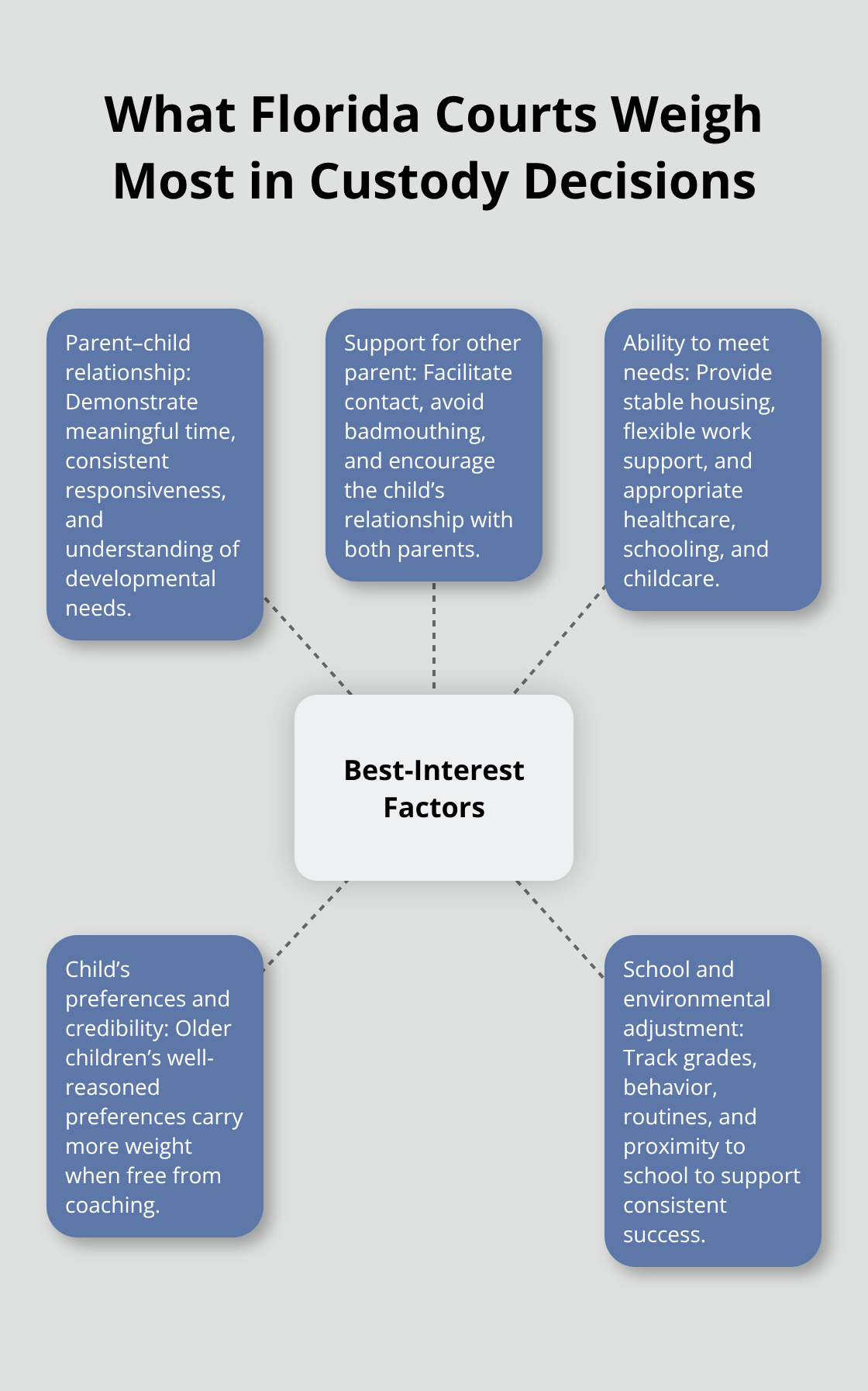
Florida Statute 61.13 sets out specific factors that judges must consider, and understanding these matters because they directly shape what the evaluator will emphasize in their report. The quality of your relationship with your child ranks at the top. Courts want to see evidence that you spend meaningful time with your child, understand their developmental needs at their current age, and respond to those needs consistently. If your child attends elementary school, the evaluator will observe whether you help with homework, attend school events, and maintain routines around bedtime and meals.
For teenagers, courts examine whether you respect their growing independence while still providing structure and guidance.
The evaluator will ask your child specific questions about these interactions and will verify answers through school records and teacher interviews. A teacher’s note that you attended three school conferences this year carries more weight than your claim that you’re involved in your child’s education. This is why home visits matter so much-the evaluator sees whether your child’s bedroom reflects their interests, whether you have photos together displayed, and whether your space accommodates their activities and friendships.
Supporting the Other Parent’s Relationship with Your Child
The evaluator also assesses your ability to support your child’s relationship with the other parent, which Florida courts consider essential. This does not mean you must like the other parent; it means you cannot actively undermine their relationship with your child. Courts view parents who speak negatively about the other parent or discourage contact as posing a genuine risk to the child’s wellbeing. Research from the American Psychological Association shows that children benefit significantly when both parents remain involved, even after separation. If your custody evaluation report documents that you consistently encourage phone calls, facilitate visitation, and avoid badmouthing the other parent, this strengthens your position substantially.
Meeting Your Child’s Actual Needs
Your capacity to meet your child’s actual needs determines much of the evaluation outcome, and this extends beyond basic necessities. Evaluators examine whether you can afford quality childcare, whether you maintain stable employment that allows flexibility for school events and medical appointments, and whether your living situation provides safety and appropriate space. If your child has special needs (whether learning disabilities, anxiety, or chronic health conditions), the evaluator will assess how well each parent understands these needs and implements necessary support. A parent who attends every therapy appointment and can articulate their child’s treatment plan demonstrates competence; a parent who cannot explain their child’s diagnosis or recent progress does not. School records, medical records, and therapist interviews will confirm whether you actually follow through on these commitments or merely claim to.
Your Child’s Stated Preferences and Credibility
Your child’s stated preferences carry weight, particularly as they reach their teenage years, but evaluators remain skeptical of preferences that appear coached or influenced. A ten-year-old who suddenly insists on living with one parent after that parent’s lawyer contacted them raises red flags. A fourteen-year-old who articulates specific, age-appropriate reasons for preferring one parent’s home-proximity to their school, access to their friend group, or a parent’s flexibility around their sports schedule-carries more credibility. The evaluator will interview your child separately, ask follow-up questions designed to detect coaching, and cross-reference their statements against observable facts.
School Performance and Environmental Adjustment
Adjustment to school and home environment matters equally. If your child’s grades have dropped significantly since the separation, if teachers report behavioral changes, or if your child shows signs of anxiety or depression, these factors influence custody recommendations. The evaluator reviews school records from before and after the separation to establish a baseline. They also assess which parent’s home environment supports your child’s success-which parent lives closer to the school, which parent has established routines that support homework completion, which parent’s work schedule allows presence during critical times. A parent working night shifts may struggle to support a child’s morning school routine, while a parent with flexible daytime hours can facilitate that consistency more effectively.
Final Thoughts
A custody evaluation in Florida shapes parenting arrangements that affect your family for years, making the process worth taking seriously. The evaluation report synthesizes interviews, psychological testing, home observations, and collateral contacts into a comprehensive assessment that judges rely on heavily when making custody decisions. While courts are not strictly bound by the evaluator’s recommendations, they typically give substantial weight to these professional findings, particularly when the evaluation follows recognized guidelines and produces data-driven conclusions.
If the report supports your position, you can present it to the court as evidence. If the report contains inaccuracies or conclusions you dispute, you have options including requesting a meeting with the evaluator to clarify their reasoning, hiring your own mental health professional to critique the evaluation process, or presenting additional evidence at trial to counter specific findings. Significant life changes after the evaluation-such as relocation, remarriage, or new safety concerns-can justify requesting a new evaluation or modification of custody arrangements.
At Harnage Law PLLC, we help families navigate custody evaluation Florida matters with strategic counsel tailored to your situation. Our attorneys understand how evaluations influence court decisions and can guide you through preparation, help you respond to unfavorable findings, and represent your interests throughout the process.