
Divorce Attorney Florida: Finding the Right Lawyer
Our Blog
Divorce Attorney Florida: Finding the Right Lawyer

Divorce is one of the most stressful decisions you’ll make, and choosing the right divorce attorney Florida can significantly impact your outcome. At Harnage Law PLLC, we understand that finding qualified legal representation in Melbourne, Florida requires knowing what questions to ask and what red flags to watch for.
This guide walks you through the essential qualities to look for in a divorce attorney, common issues you’ll face, and practical steps to evaluate lawyers in your area.
What Matters Most When Hiring a Divorce Attorney
Finding the right divorce attorney in Florida means looking past credentials alone. You need someone who understands Florida’s specific divorce laws, has a real track record with cases like yours, and communicates clearly throughout the process. According to Clio’s 2026 Legal Trends data, the national average hourly rate for family law work is around $357, though Florida rates typically hover between $275 and $300 per hour. Before you hire anyone, you should know what questions to ask and what red flags signal trouble ahead.
Florida Divorce Law Knowledge Matters More Than You Think
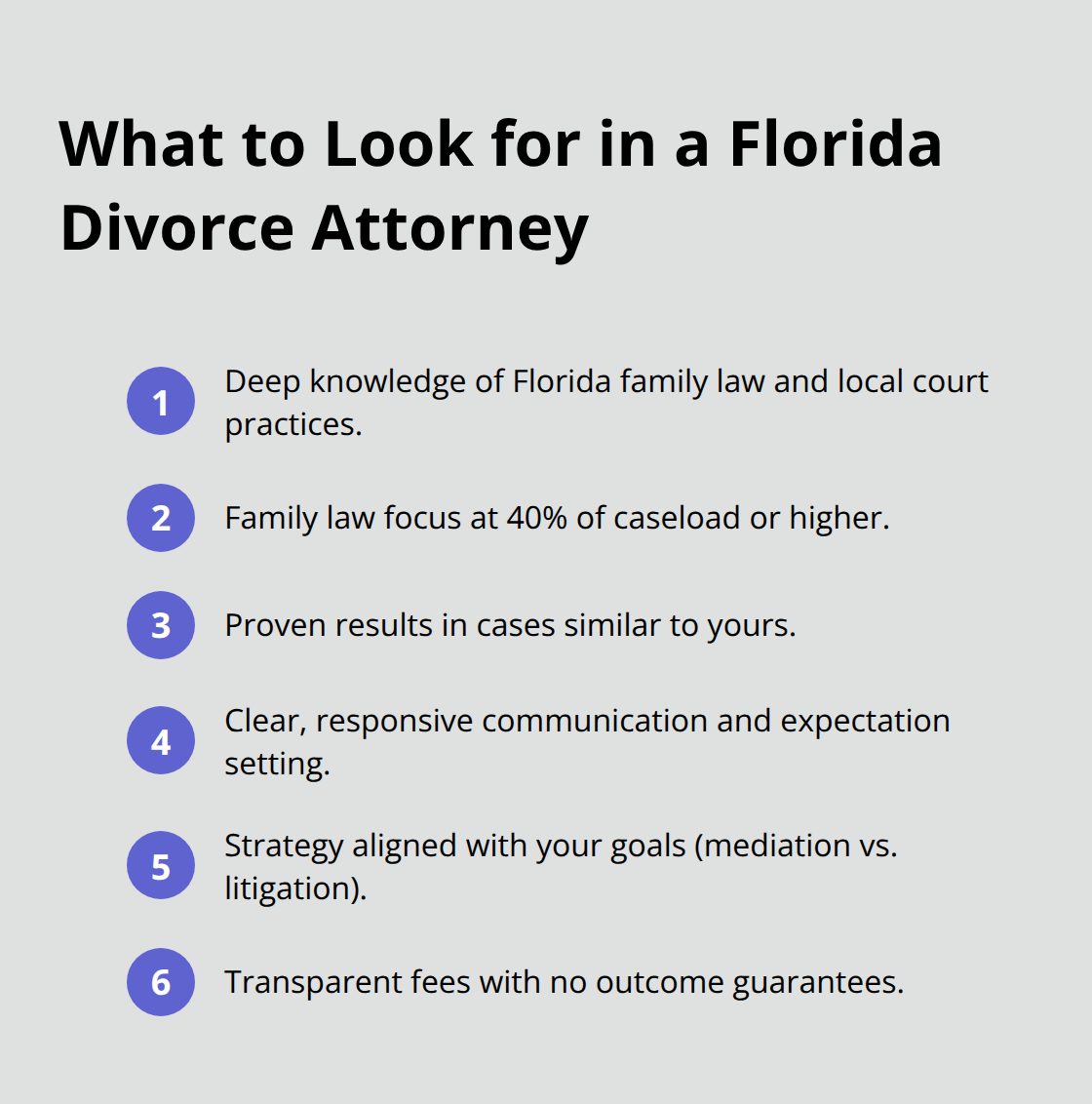
An attorney who practices divorce in Florida must understand how the state handles property division, alimony, and child support. Florida doesn’t split assets 50/50 automatically. Instead, Florida Statutes 61.075 requires equitable distribution, which means fair but not necessarily equal. This distinction changes everything about how your assets and debts get divided. Some attorneys practice general law and occasionally handle divorce cases. That’s different from someone who focuses on family law year after year. When you contact lawyers, ask them what percentage of their practice involves divorce and family law. If the answer is less than 40 percent, keep looking. You want someone whose daily work involves navigating Florida courts and judges, not someone dusting off their family law skills between other types of cases. Ask specifically about their experience with cases involving your situation, whether that’s military benefits, a business you own, or custody disputes.
Results and Communication Shape Your Case Outcome
Client reviews on Avvo and Google matter, but they’re just one piece of the puzzle. High ratings signal responsiveness and client satisfaction, but you need to understand how an attorney actually works. During your consultation, ask how they’ve handled cases similar to yours and what outcomes they achieved. Don’t accept vague answers. Ask for specifics about child custody arrangements they’ve negotiated, alimony amounts they’ve secured, or property divisions they’ve managed. Some attorneys emphasize mediation and negotiated settlements, while others lean toward courtroom litigation. Neither approach is automatically better, but you need to know which matches your goals. If you want to minimize conflict and cost, mediation-focused attorneys typically charge $275–$300 per hour and can resolve cases faster. If you’re facing a contested custody battle or significant asset disputes, litigation experience becomes non-negotiable.
How Attorneys Communicate Reveals Their True Approach
Communication style matters intensely. During your consultation, notice whether the attorney listens to your concerns or pushes immediately toward their preferred strategy. Red flags include guarantees about outcomes, vague fee structures, difficulty getting responses, or dismissive attitudes toward your questions. You should work directly with the attorney, not get handed off to paralegals for routine matters. Martindale-Hubbell recognizes attorneys who meet high professional standards. In Brevard County, some attorneys hold AV Preeminent ratings or Peer Reviewed designations, which signal credibility and peer respect. Look for these credentials when you evaluate candidates in the Melbourne area. The right attorney listens more than they talk during your first meeting.
The Three Major Divorce Disputes in Florida
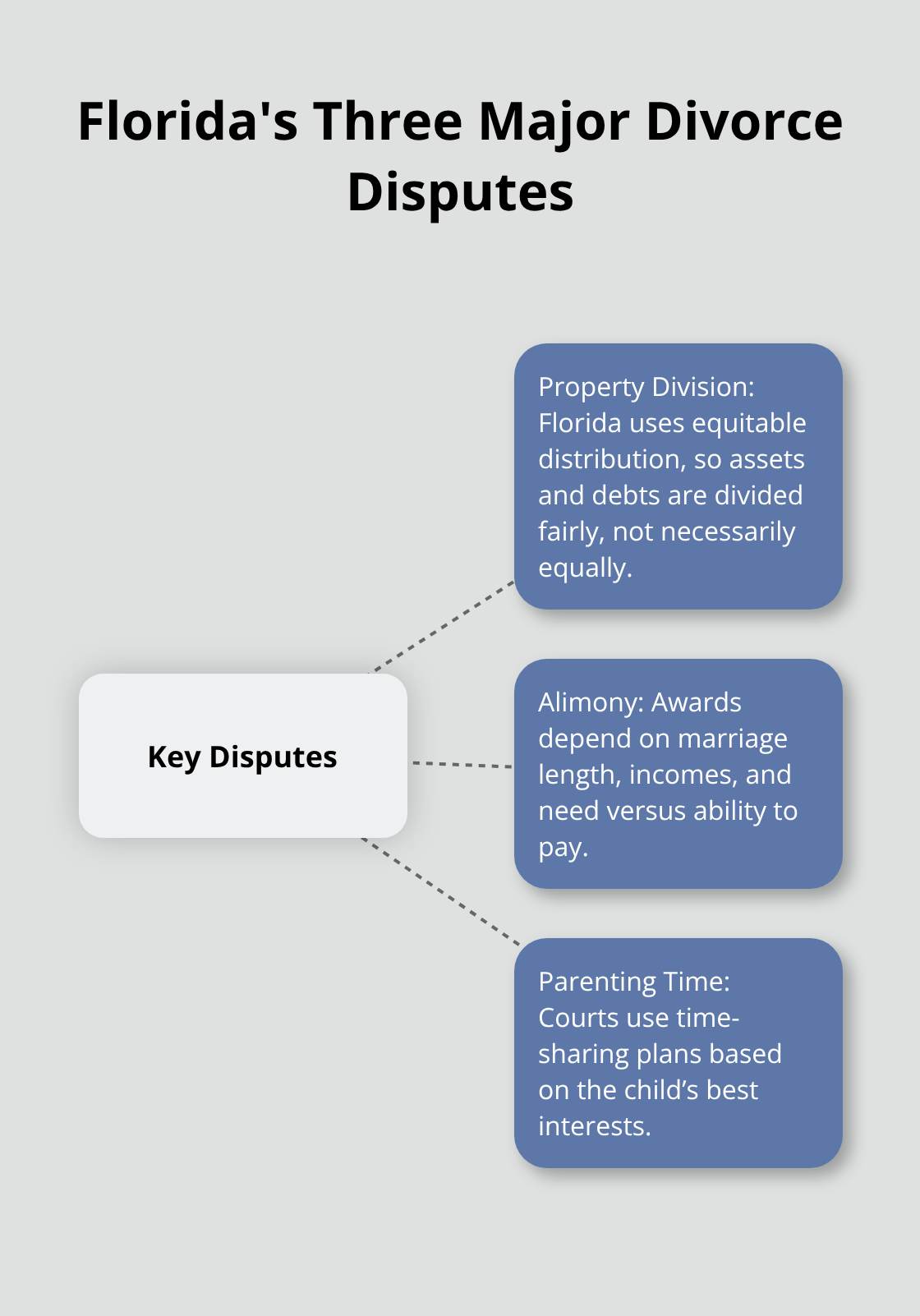
Florida divorce cases center on three areas that directly affect your financial security and family structure: how assets and debts get divided, whether one spouse pays the other ongoing support, and how parenting time gets allocated between you and your ex. Each area involves specific Florida law, and each one demands different negotiation strategies depending on your situation. Understanding what these disputes actually cost and how they get resolved helps you make smarter decisions with your attorney.
Property Division Requires Full Financial Disclosure
Florida law requires equitable distribution of marital property, not equal splitting. The court divides assets and debts fairly based on factors like the length of the marriage, each spouse’s contributions, and earning capacity. If you own a business, hold retirement accounts, or have significant real estate, the division becomes complex fast. Many couples underestimate how much property division actually costs in legal fees. If you and your spouse agree on asset division through mediation, you’ll spend roughly $275–$300 per hour on attorney time rather than fighting it out in court. Full litigation over property disputes often runs $5,000 to $15,000 or more because it requires financial experts, document review, and depositions. Before meeting with an attorney, gather documentation of all assets, debts, retirement accounts, and property titles. Bring bank statements from the last year, mortgage documents, and any business valuations. This preparation cuts attorney time dramatically and reduces your total cost. If your spouse hides assets or undervalues property, your attorney needs experience spotting these tactics. Ask potential attorneys whether they’ve handled cases involving business valuations, retirement account divisions, or complex asset concealment.
Alimony Decisions Hinge on Income and Marriage Length
Alimony in Florida depends on several factors: how long you were married, each spouse’s earning capacity, standard of living during the marriage, and age and health status. Short-term marriages under seven years rarely involve permanent alimony. Marriages lasting 17 years or longer typically result in alimony awards, though the amount varies widely. Bridge-the-gap alimony lasts only until a specific event occurs, like one spouse finishing a degree. Durational alimony has a set end date. Permanent alimony continues until the receiving spouse remarries or either party dies. The difference between negotiating alimony and fighting it in court is substantial. A skilled negotiator can secure lower monthly payments or a shorter duration by emphasizing your spouse’s ability to become self-sufficient. Conversely, aggressive litigation tactics often backfire and lead judges to award more alimony than either side initially expected. Ask your attorney how they approach alimony negotiations and what outcomes they’ve achieved for clients in similar income situations. Request specific numbers, not general statements about their track record.
Child Custody Arrangements Center on Parenting Time
Florida courts award custody based on the best interests of the child, evaluating factors like each parent’s involvement in the child’s life, stability, and ability to provide care. Time-sharing plans replace the old custody terminology. A typical arrangement might be 50/50 parenting time, but many result in one parent having primary physical custody with the other having scheduled visitation. Child support calculations in Florida follow a formula based on both parents’ incomes, the number of children, and the percentage of parenting time. According to Florida’s child support guidelines, you can estimate obligations using online calculators, though actual amounts depend on gross income, health insurance costs, and childcare expenses. If one parent earns $60,000 annually and the other earns $100,000, with 50/50 parenting time and one child, the higher-earning parent typically pays several hundred dollars monthly. Contested custody disputes are expensive and emotionally draining. Courts appoint a Guardian Ad Litem in disputed cases, which adds $1,500–$3,000 to your costs. If you and your spouse develop a parenting plan together or through mediation, you avoid this expense entirely and maintain control over the arrangement.
Parenting Plans Protect Your Rights and Your Children’s Needs
Parallel parenting plans work when parents can’t cooperate directly but must communicate about children. These structured plans minimize conflict by keeping parents’ roles separate and reducing decision-making overlap. Your attorney should understand how to draft plans that protect your parental rights while serving your children’s actual needs. The cost difference between a negotiated plan and a contested custody battle often reaches tens of thousands of dollars. When you meet with potential attorneys, ask them how they’ve handled parenting plan negotiations and what specific arrangements they’ve secured for clients in your situation. An attorney who listens to your concerns about your children’s welfare and your relationship with them will craft a plan that reflects your priorities, not just a generic template. The next section covers how to find qualified attorneys in the Melbourne area and evaluate whether they’re the right fit for your case.
Finding Divorce Lawyers in Melbourne, Florida
Searching for a divorce attorney in Melbourne, Florida means starting with local resources that show you who practices family law in Brevard County right now. The Best Lawyers directory and Avvo are your primary starting points because they list attorneys focused on divorce and family law, filter by location, and display client ratings alongside credentials. When you search for Melbourne divorce attorneys, you’ll find lawyers across nearby communities including Rockledge, Cocoa, Titusville, and Merritt Island, many of whom serve the same courts you’ll navigate. Avvo Client’s Choice Awards from 2025, 2024, and 2022 indicate attorneys with consistently high client satisfaction, not just one-time positive reviews.
Research Ratings and Credentials Before You Contact Anyone
Google reviews matter, but they’re incomplete without checking Avvo ratings, which show verified client feedback and sometimes include specific case outcomes. Look specifically for attorneys whose practice focuses on family law at 40 percent or higher. If someone lists divorce as a secondary practice area, they won’t have the court familiarity or negotiation experience you need. Read at least five to ten reviews for any attorney you’re considering, focusing on comments about communication, responsiveness, and actual outcomes rather than generic praise. One client mentioning that an attorney explained the process clearly and returned calls within 24 hours tells you more than five vague five-star ratings.
Check Martindale-Hubbell ratings too. An AV Preeminent rating or Peer Reviewed designation signals that other attorneys respect the lawyer’s work. In Brevard County, attorneys hold AV Preeminent status, which matters because it reflects peer assessment, not just client satisfaction.
Schedule Multiple Consultations to Assess Fit
Schedule consultations with at least three attorneys before making your decision. Most offer free 30-minute initial consultations, and you should use this time to assess whether they listen to your situation or immediately push their preferred strategy. During your consultation, ask directly how much of their practice involves divorce versus other family law matters, what percentage they spend on litigation versus settlement, and how they handle day-to-day client communication.
Request specific examples of outcomes they’ve achieved in cases similar to yours, including child custody arrangements they’ve negotiated and alimony amounts they’ve secured. A good attorney answers these questions with concrete details, not generalities. Notice whether the attorney works directly with you or hands you to paralegals for routine matters. You should expect direct attorney involvement in strategy decisions and important communications.
Understand Fee Structures and Payment Options
Typical Florida divorce attorney fees range from $275 to $300 per hour, though this varies. Ask upfront whether they charge hourly rates, flat fees for specific services, or retainers. Retainers typically range from $2,000 to $5,000 for straightforward cases, with contested disputes often requiring $5,000 to $10,000 or more. Ask how the retainer is applied, whether unused funds are returned, and how they bill beyond the retainer.
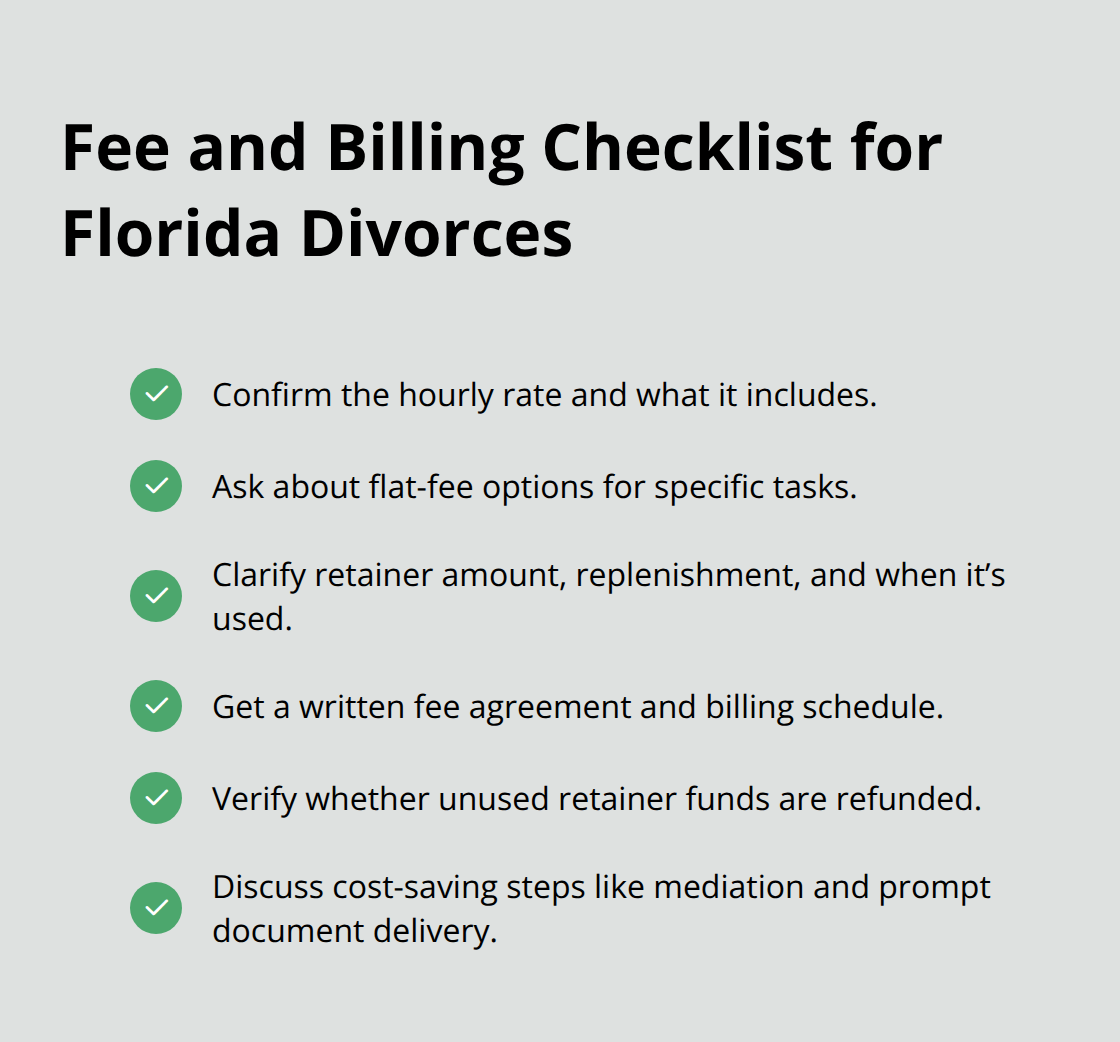
If an attorney guarantees a specific outcome, won’t provide written fee agreements, or becomes evasive about costs, that’s a red flag. Cost-saving strategies include providing documents promptly, setting clear priorities, and considering less confrontational approaches to reduce litigation hours. Mediation-focused representation typically costs less than full litigation because it requires fewer billable hours and expert witnesses.
Evaluate Communication Style and Approach
The right fit is the attorney whose approach aligns with your goals and with whom you feel comfortable sharing sensitive information about your marriage, finances, and children. During your consultations, notice how each attorney responds to your questions and concerns. An attorney who listens more than they talk during your first meeting signals genuine interest in understanding your situation rather than pushing a predetermined strategy.
Red flags include dismissive attitudes toward your questions, difficulty getting responses to calls or emails, or immediate pressure toward litigation. You want someone who explains complex legal concepts in understandable terms and keeps you informed throughout the process. The attorneys serving Melbourne and surrounding Brevard County communities bring varying levels of experience in divorce and family law, so comparing their backgrounds helps you identify who matches your needs.
Final Thoughts
Selecting the right divorce attorney Florida requires you to balance experience, communication style, and practical fit with your specific situation. Start by narrowing your list to attorneys whose practice focuses on divorce and family law at 40 percent or higher, then check their Avvo ratings, Google reviews, and Martindale-Hubbell credentials. Schedule consultations with at least three candidates and assess whether they listen to your situation, answer questions directly with concrete examples, and communicate in ways you understand.
During your consultations, ask about their experience with cases similar to yours, their approach to settlement versus litigation, and their fee structure. Request written fee agreements before hiring and notice whether they work directly with you or hand you to paralegals for routine matters. A $275-per-hour attorney who negotiates efficiently may cost less overall than a cheaper attorney who drags out litigation unnecessarily.
We at Harnage Law PLLC understand that divorce decisions affect your entire future, and our team provides personalized attention and strategic counsel to achieve the best possible outcomes in family law cases. If you’re ready to move forward with qualified representation in Melbourne, contact us today to schedule your consultation and discuss your situation with an attorney who listens.