
Child Custody Melbourne FL: Navigating Courtroom Procedures
Our Blog
Child Custody Melbourne FL: Navigating Courtroom Procedures
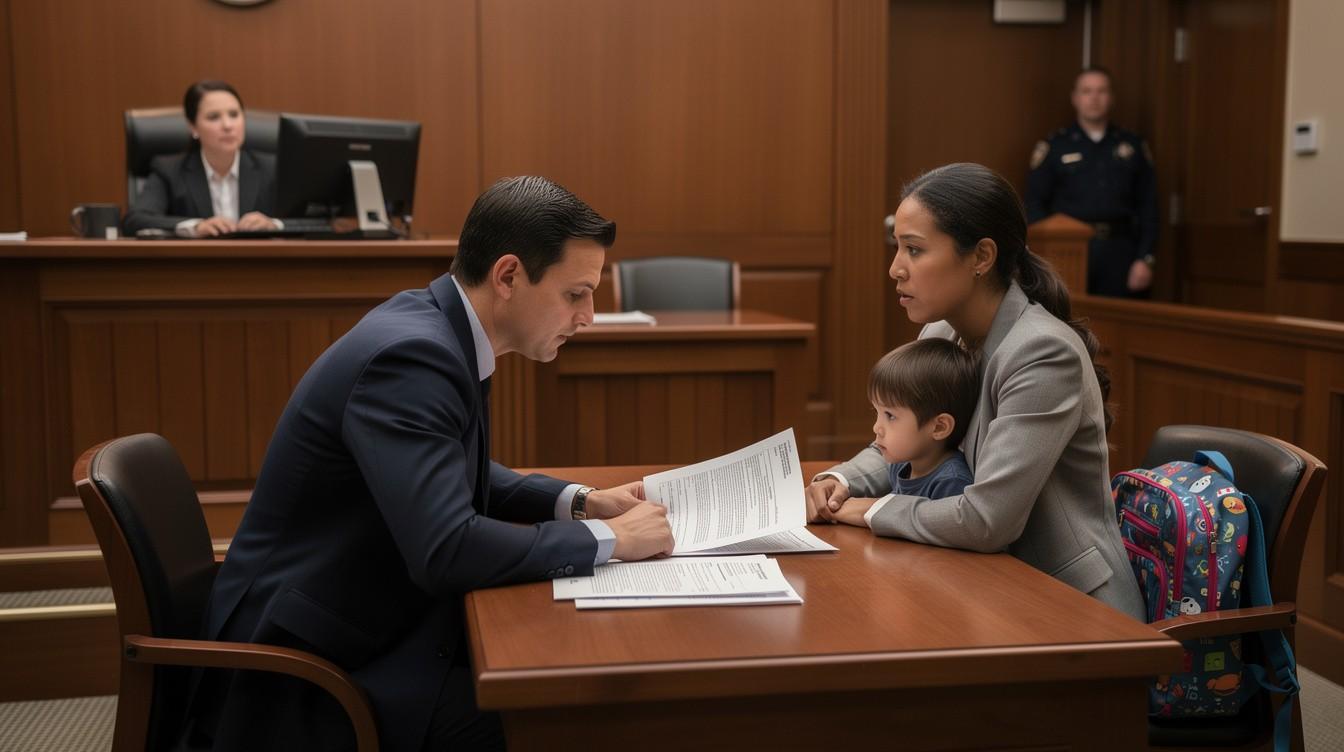
Child custody disputes in Melbourne, FL can feel overwhelming when you’re facing court procedures for the first time. The stakes are high, the paperwork is complex, and one wrong move can impact your relationship with your children.
We at Harnage Law PLLC understand these challenges. This guide walks you through Florida’s custody laws, courtroom procedures, and practical steps to strengthen your case.
What Custody Arrangements Does Florida Law Recognize
Florida courts recognize three primary custody structures that form the foundation of most custody arrangements. Shared parental responsibility, often called joint custody, means both parents retain decision-making authority over major life issues affecting the child (including education, healthcare, and religious upbringing).
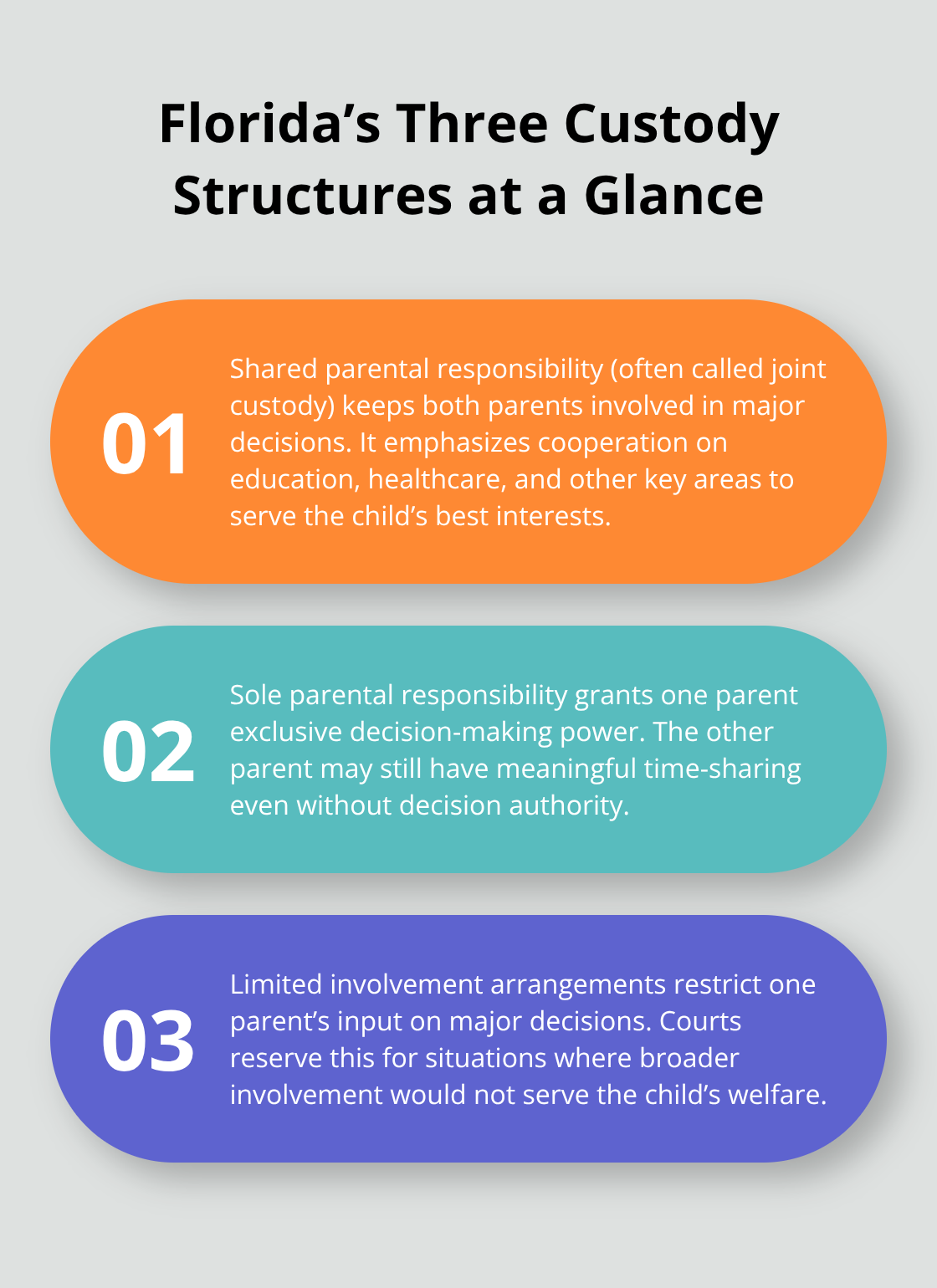
Sole parental responsibility grants one parent exclusive decision-making power while the other parent may still have substantial time-sharing rights. The third option, parental responsibility with one parent and limited involvement from the other, occurs when courts determine that one parent should have minimal input on major decisions.
Florida Statute 61.13 requires courts to consider the best interests of the child when determining which arrangement fits each family’s circumstances. Time-sharing schedules operate independently from decision-making authority, meaning a parent without custody decisions can still spend significant time with their child. Courts in Brevard County and across Florida have moved away from the outdated concept of custody going to one parent and instead focus on maximizing both parents’ involvement unless safety concerns exist.
How Courts Evaluate What Serves Your Child’s Best Interests
Florida courts apply specific statutory factors when determining custody arrangements, and understanding these factors strengthens your case significantly. The statute requires judges to examine each parent’s capacity to provide a stable home, the child’s emotional ties to each parent, the length of time the child has lived in a stable environment, the school and community ties the child maintains, and each parent’s willingness to support the child’s relationship with the other parent.
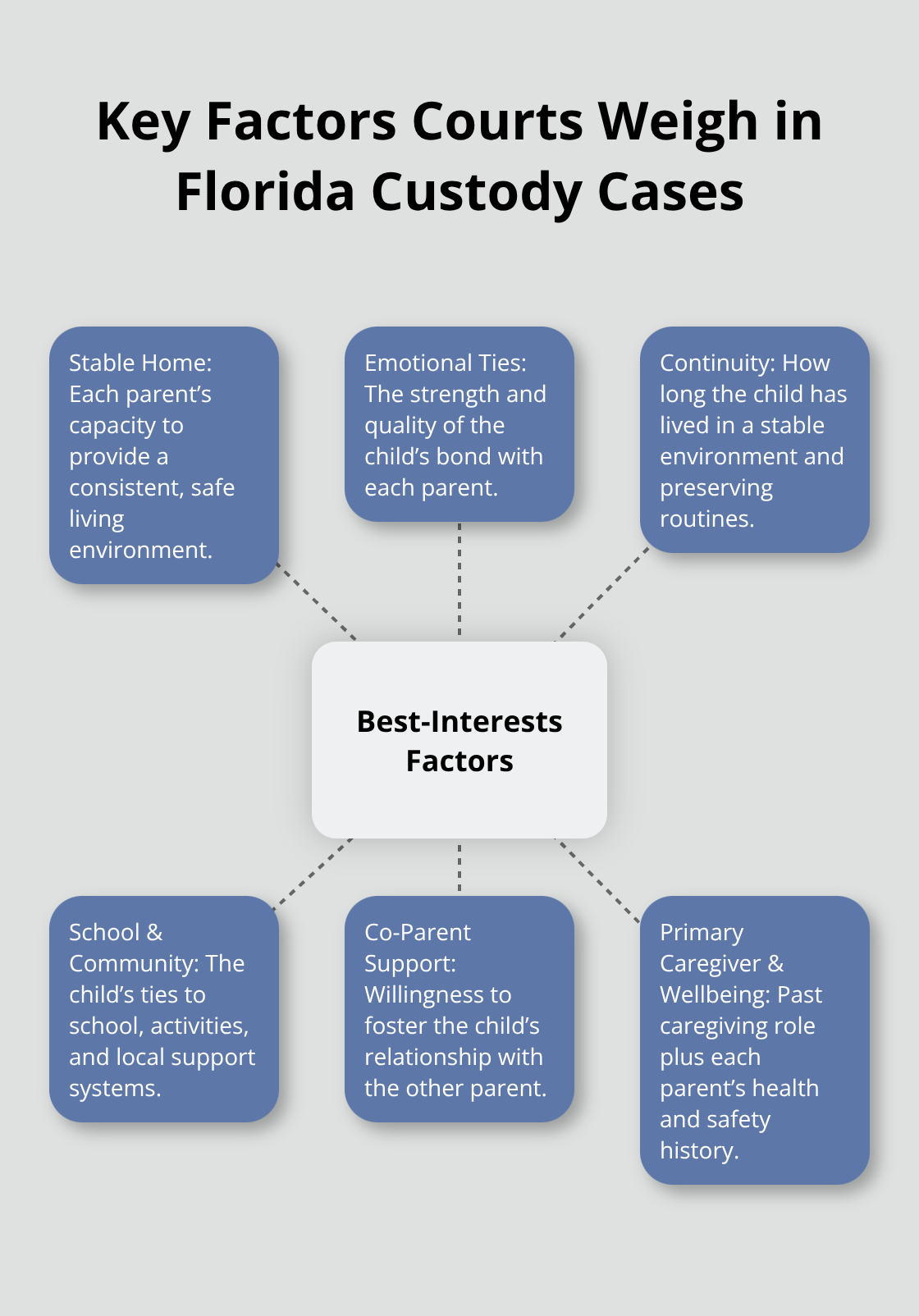
Courts also assess each parent’s mental and physical health, substance abuse history, any history of domestic violence or child abuse, and the child’s preferences if the child is mature enough to express them meaningfully. The child’s age matters considerably-courts typically give more weight to preferences from teenagers than from younger children. One critical factor that courts heavily weigh involves which parent has been the primary caregiver during the child’s life.
Documenting Your Parenting Role
If you have managed school pickups, medical appointments, homework help, and daily routines, document this thoroughly because courts recognize that disrupting established caregiving patterns harms children. Courts also consider whether each parent can meet the child’s specific needs (including any special education requirements, medical conditions, or developmental challenges). Judges want to see that you understand your child’s individual needs and have concrete plans to meet them.
Gathering Evidence That Supports Your Case
The factors courts consider aren’t abstract concepts-they require tangible evidence and specific documentation. Gather records showing your involvement in your child’s life: school attendance records, medical appointment confirmations, extracurricular activity participation, and teacher communications. Create a detailed parenting log documenting your daily interactions, bedtimes, meals, activities, and time spent with your child over several months.
Collect character references from teachers, coaches, neighbors, and family friends who can speak to your parenting abilities and your child’s stability in your care. If the other parent has substance abuse issues, domestic violence history, or mental health challenges affecting parenting capacity, gather police reports, medical records, or court documents that substantiate these concerns. Courts take allegations seriously only when supported by documentation rather than unsupported claims.
Presenting Financial Stability and Special Needs Support
Financial records demonstrating your ability to provide housing, food, healthcare, and educational opportunities matter substantially. If your child has special needs, compile medical records, therapy reports, and educational evaluations showing how you have supported their development. This evidence directly addresses the statutory factors judges must evaluate, and organized presentation of these materials makes your case significantly stronger when you appear before the court.
How Florida’s Custody Court Process Works
Filing Your Custody Petition in Brevard County
Filing your custody case in Melbourne requires submitting a Petition for Determination of Parental Responsibility, Time-Sharing, and Other Parental Rights and Responsibilities to the Brevard County Circuit Court. Florida courts demand specific documentation upfront: a completed Family Law Financial Affidavit showing your income and expenses, a proposed Parenting Plan outlining your suggested time-sharing schedule and decision-making arrangement, and proof of your child’s residence for the past six months. The filing fee in Brevard County runs approximately $300–$400, though fee waivers exist for qualifying low-income parents. You must also file a Notice of Related Cases if any other family law matters involving your child are pending.
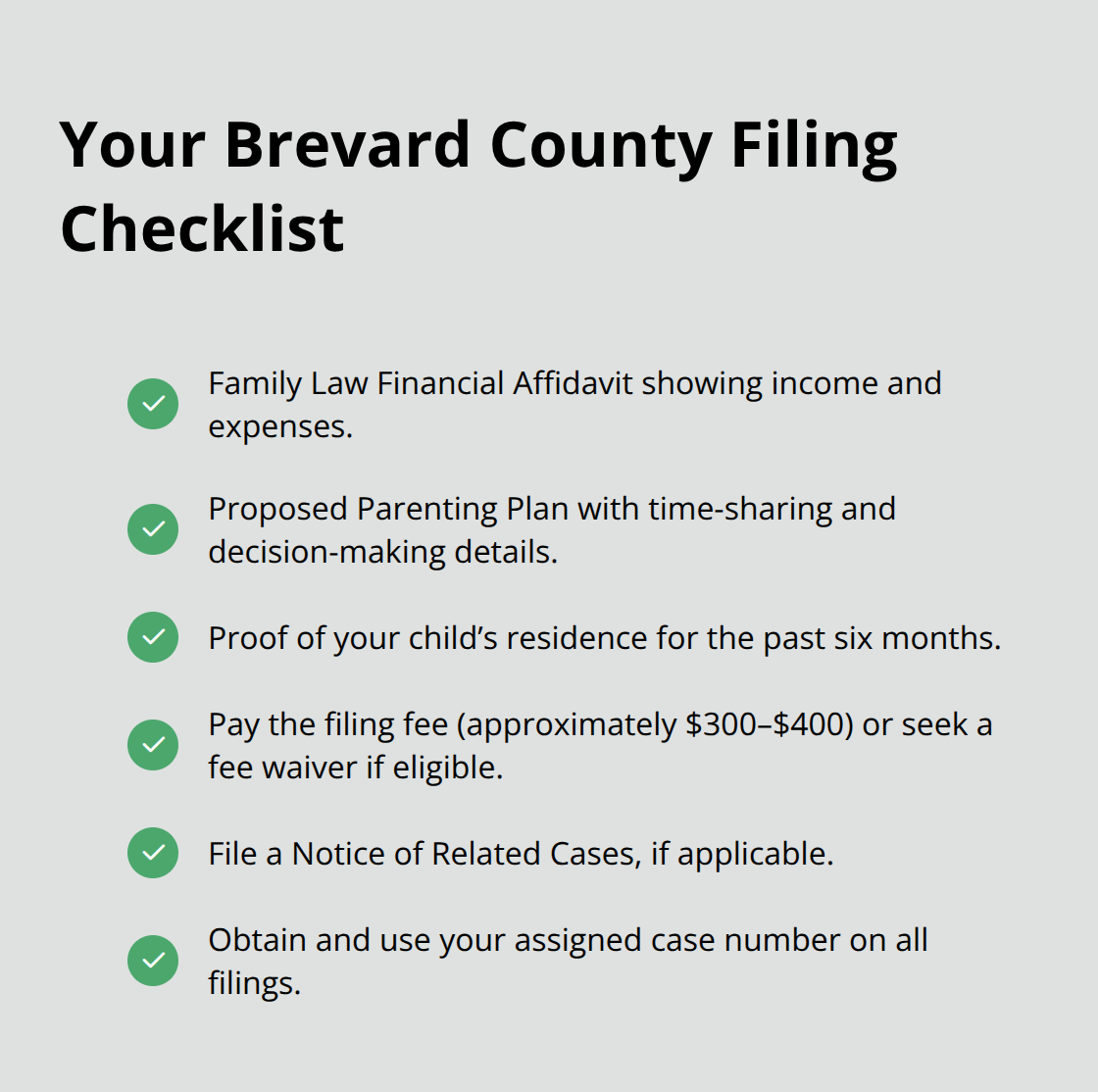
The court clerk will assign your case a judge and provide you with a case number; this number appears on all subsequent filings and correspondence. Missing these initial requirements forces courts to reject your petition, delaying your case by weeks or months.
Understanding the Discovery Process
The discovery process begins after your petition is filed and the other parent responds. Both sides exchange financial documents, parenting schedules, communications between parents, and any evidence related to the custody factors courts must evaluate. Florida’s civil procedure rules give each party 30 days to respond to discovery requests unless the court extends this timeline. Many custody cases require a Guardian ad Litem appointment-a neutral third party who investigates each parent’s fitness and reports findings to the judge. This Guardian ad Litem process typically costs $1,500–$3,000 and takes three to six months to complete.
Mediation as an Alternative Path
Courts in Brevard County increasingly encourage mediation before trial; a certified mediator helps parents negotiate custody terms outside the courtroom, which costs roughly $300–$600 per session but often resolves disputes faster than litigation. This approach allows both parents to maintain control over the outcome rather than leaving decisions entirely to a judge.
What Happens During Your Custody Hearing
Your custody hearing itself usually lasts between one and three hours, though complex cases involving abuse allegations or special needs considerations extend longer. During the actual hearing, you’ll present evidence supporting your proposed arrangement, answer the judge’s questions about your parenting capacity and your child’s needs, and respond to the other parent’s arguments. Judges in Melbourne issue custody orders within two weeks of the final hearing, detailing parental responsibility assignments, time-sharing schedules, and child support calculations based on Florida’s statutory guidelines. Understanding these procedures prepares you for what lies ahead, but the real challenge emerges when you must gather the specific evidence and documentation that judges actually examine.
How to Build a Winning Case Before Court
Start Your Documentation Immediately
The period between filing your petition and stepping into the courtroom determines whether you’ll present a compelling case or scramble to explain gaps in your evidence. Most parents underestimate how much preparation separates successful custody outcomes from disappointing ones. Start immediately with a detailed parenting log covering the past 12 months-not just recent weeks. You should document school drop-offs, medical appointments, homework sessions, weekend activities, and bedtimes with specific dates and times. This log becomes powerful evidence because judges see patterns of involvement rather than isolated moments.
Gather School, Medical, and Financial Records
Simultaneously, you should gather school records showing your child’s academic performance and any communications from teachers about your involvement in school events. Request medical records from your child’s pediatrician, dentist, and any specialists, then organize them chronologically to demonstrate your participation in healthcare decisions. Collect photographs and videos showing you engaged in everyday parenting activities-cooking meals together, helping with schoolwork, attending sports events. These visual materials make your role tangible to the judge in ways written documents cannot. Financial records matter equally; you must compile tax returns, pay stubs, bank statements, and housing documentation proving your financial stability. If your child has special needs, you should gather all therapy reports, educational evaluations, and medical diagnoses with treatment plans you’ve implemented.
Build Your Character References and Safety Documentation
Character references carry surprising weight in custody disputes, so you should contact teachers, coaches, neighbors, therapists, and family friends willing to write letters describing your parenting abilities and your child’s stability in your home. Ask them to include specific examples rather than general praise-a teacher’s observation about how you attend every parent-teacher conference carries more impact than vague statements about being a good parent. If the other parent presents safety concerns, you must gather documentation immediately: police reports from domestic violence incidents, DUI arrest records, substance abuse treatment documentation, or mental health evaluations. Courts in Brevard County take such allegations seriously only when supported by official records, not accusations.
Avoid Mistakes That Weaken Your Case
You should avoid common mistakes that weaken otherwise solid cases: never badmouth the other parent to your child or in written communications (courts view this as parental alienation), don’t skip mediation sessions thinking they waste time (they often resolve disputes faster than litigation), and never miss a scheduled custody exchange or fail to follow temporary orders while your case is pending. Courts interpret these actions as disrespect for the legal process. Finally, you should resist the urge to handle discovery requests yourself or communicate directly with the other parent about case details-written communications often become evidence that contradicts your later testimony. The documentation you gather now and the restraint you show during these months directly influence the custody arrangement the judge will impose.
Final Thoughts
Florida’s child custody procedures demand careful attention to statutory factors, thorough documentation, and strategic presentation of evidence. Courts in Brevard County evaluate custody arrangements based on concrete factors: your involvement in your child’s daily life, your financial stability, your child’s established routines, and your willingness to support your child’s relationship with the other parent. The documentation you gather, the character references you secure, and the parenting log you maintain directly influence whether a judge awards you the custody arrangement you’re seeking.
Child custody Melbourne FL cases succeed when parents approach them strategically rather than emotionally. This means resisting the urge to communicate negatively about the other parent, following all temporary orders precisely, and presenting organized evidence that addresses each statutory factor. The discovery process, mediation sessions, and pre-hearing preparation determine your courtroom performance far more than your testimony alone.
Professional legal representation matters substantially in custody disputes because attorneys understand which evidence judges actually weigh, how to present documentation effectively, and which procedural mistakes courts penalize. Contact Harnage Law PLLC to discuss your case and develop a strategy tailored to your family’s situation.