
Child Custody Melbourne Florida: Navigating Local Courts
Our Blog
Child Custody Melbourne Florida: Navigating Local Courts
Child custody decisions in Melbourne, Florida involve complex legal standards and local court procedures that directly affect your family’s future. Judges in Brevard County apply specific factors when determining custody arrangements, and understanding how these courts work gives you a significant advantage.
At Harnage Law PLLC, we help families navigate these local custody matters with clarity and confidence. This guide walks you through what Melbourne family courts consider, the custody options available, and how to prepare your case effectively.
What Judges Actually Look At in Melbourne Custody Cases
The Best Interest of the Child Standard
Melbourne family court judges don’t make custody decisions based on feelings or assumptions. The Brevard County courts apply the “best interest of the child” standard, which is the legal framework that governs every custody determination in Florida. This standard isn’t vague-judges evaluate specific, measurable factors about each parent’s capacity to care for the child. Courts examine each parent’s physical and mental health, financial stability, willingness to support the child’s relationship with the other parent, and demonstrated involvement in the child’s life before the case even begins.
What Courts Examine as Evidence
Judges look at school records, medical histories, work schedules, and housing situations. A parent’s criminal history, substance abuse issues, or history of domestic violence carries significant weight. Courts also consider the child’s own preferences if the child is old enough to express a meaningful opinion, though this isn’t the deciding factor.
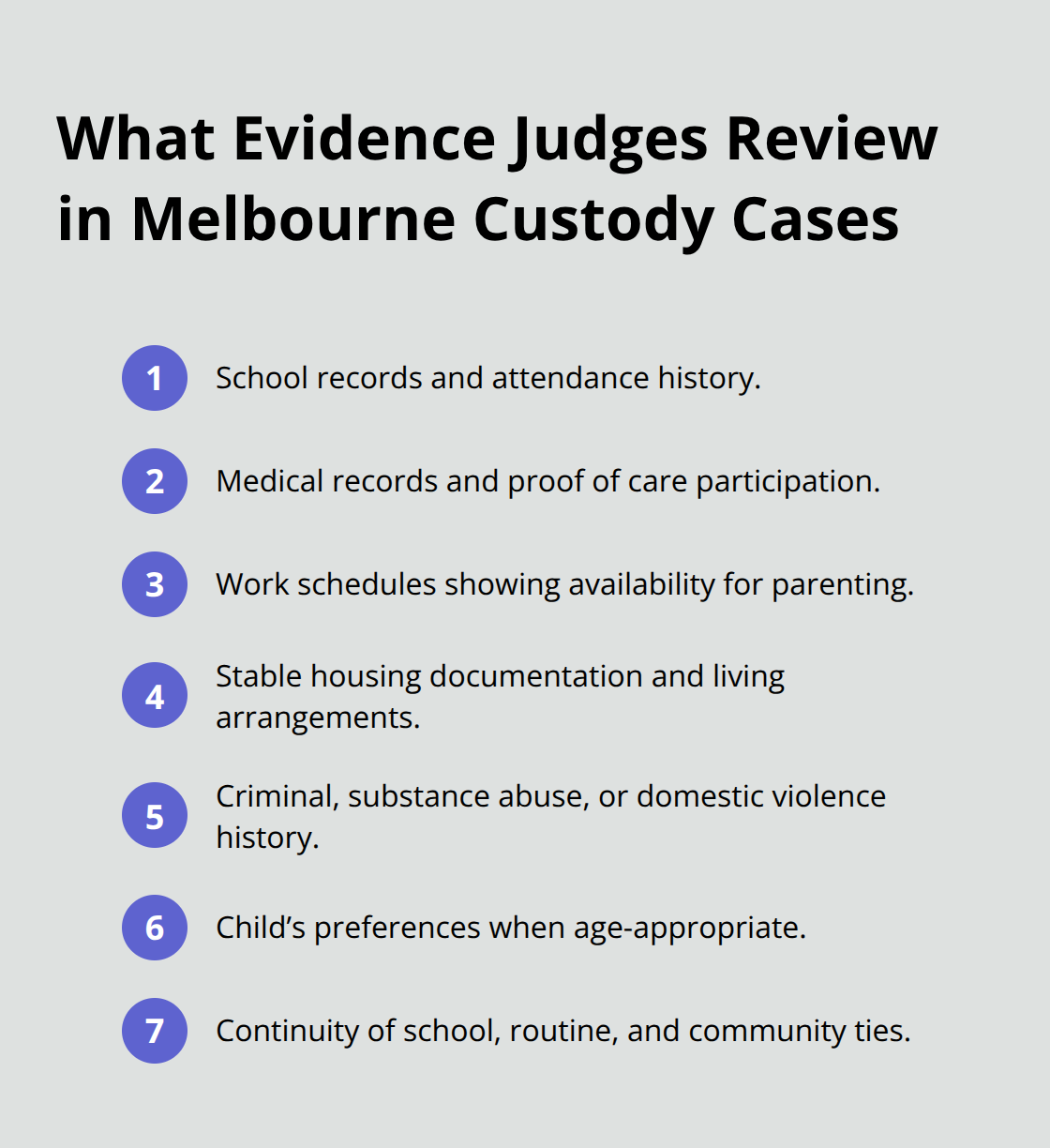
Stability matters enormously-judges strongly prefer arrangements that minimize disruption to the child’s existing routine, school, and community connections. If a child has attended the same school for years with one parent as the primary caregiver, courts are reluctant to uproot that arrangement without compelling reasons.
The Unified Family Court Approach in Brevard County
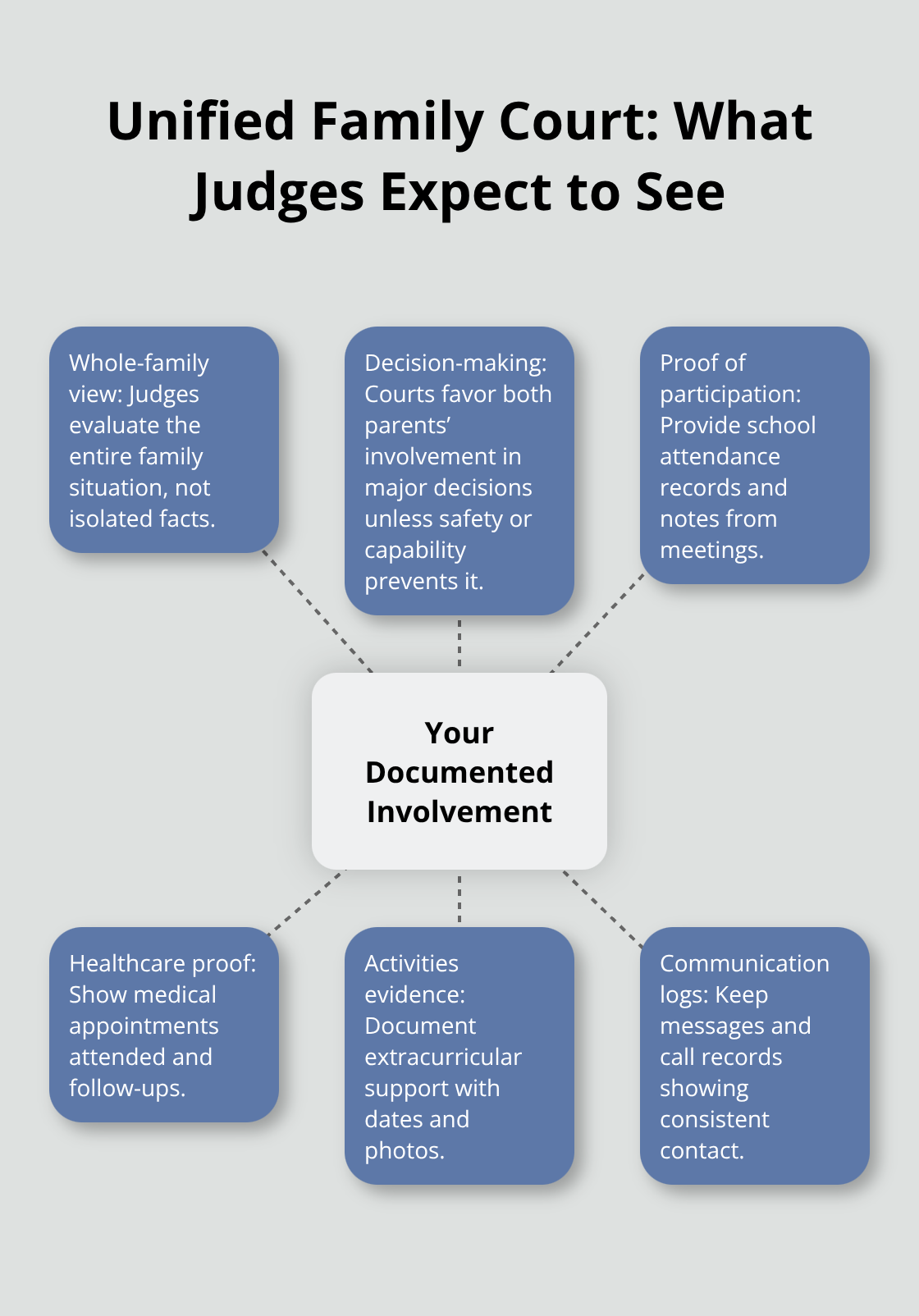
The Brevard County Local Parenting Plan Guidelines provide a framework that judges use to evaluate proposed time-sharing arrangements, and these guidelines emphasize that both parents should remain involved in major decisions affecting the child unless circumstances prevent it. Courts in the 18th Judicial Circuit, which includes Brevard County, follow the Unified Family Court approach-this means judges consider the entire family situation, not just isolated facts. Judges want to see documentation showing your involvement: school attendance records, medical appointments you attended, extracurricular activities you supported, and communication patterns with your child. If you were absent from these areas, that absence becomes evidence against you.
Building Your Documentation Strategy
Temporary custody orders can be issued early in your case while the full process unfolds, and these temporary orders often influence the final arrangement because judges view them as a working model. Courts also require a detailed parenting plan that addresses not just time-sharing schedules but how major decisions about education, healthcare, and religious upbringing will be made. Gather documentation now that proves your involvement and capability-don’t wait until court. School records, medical appointment confirmations, photos of activities you attended with your child, and written communications all build a compelling picture of your parental engagement.
The documentation you compile becomes the foundation for your parenting plan, which judges scrutinize carefully before finalizing any custody arrangement. Working with an experienced family law attorney ensures your documentation strategy aligns with what Melbourne judges actually prioritize.
What Custody Arrangements Work in Brevard County
Joint Legal Custody and Parental Decision-Making
Melbourne family courts recognize three primary custody structures, and understanding which one applies to your situation determines your legal rights and obligations. Joint legal custody means both parents share decision-making authority over major issues like education, healthcare, and religious upbringing, and Brevard County courts strongly prefer this arrangement because it keeps both parents involved in their child’s life. Sole legal custody gives one parent complete authority over these decisions, and courts only award this when the other parent has demonstrated an inability to participate responsibly, such as through substance abuse, incarceration, or a documented history of neglect.
Physical Custody and Time-Sharing Schedules
Physical custody addresses where the child actually lives, and this is where Brevard County’s local guidelines become critical. Joint physical custody requires both parents to maintain significant time with the child, typically following the Brevard County Local Parenting Plan Guidelines, which provide specific time-sharing percentages based on how involved each parent was before the custody case began. Courts rarely impose equal 50-50 splits unless both parents actively participated in the child’s daily care before separation. If one parent was the primary caregiver handling school drop-offs, medical appointments, and homework while the other worked long hours, the court will likely maintain that arrangement rather than uproot it.
Modifying Custody Orders in Brevard County
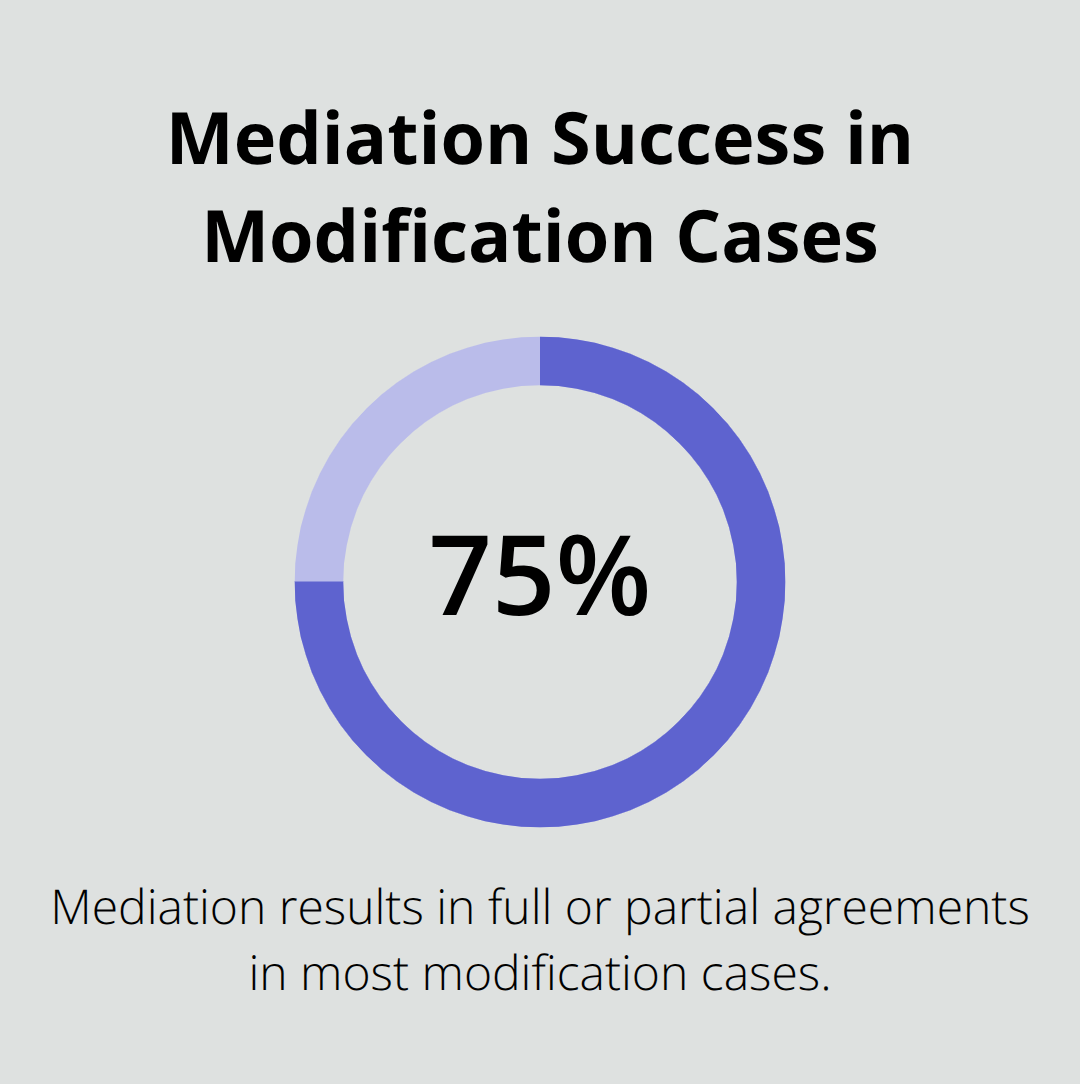
Modification requests happen frequently, and Florida law sets a high bar for success. You must demonstrate a substantial, material, and unanticipated change in circumstances since the last order was issued, which means minor inconveniences don’t qualify. A parent’s job relocation, a child’s special education needs that require different parental involvement, or a documented safety concern involving the other parent typically meets this standard. Mediation becomes mandatory again during modification cases, and the 75% success rate for reaching full or partial agreements through mediation means most modifications settle before court. If you’re considering modifying an existing order, the cost of mediation typically runs far less than trial preparation, and the process often improves communication between co-parents for handling future disputes.
Why Courts Resist Reopening Custody Orders
Courts strongly prefer stable, long-term arrangements and won’t reopen orders without legitimate reasons, so approach modification requests only when circumstances genuinely require change. The documentation you compiled for your initial custody case becomes relevant again during modification proceedings, as judges want to see how circumstances have shifted since the original order took effect. Understanding these modification standards helps you assess whether your situation truly warrants court intervention or whether alternative solutions might address your concerns more efficiently.
As you prepare to present your case to Melbourne family courts, the specific documentation and evidence you gather will determine how judges evaluate your fitness as a parent and your proposed custody arrangement.
Building Your Case Before Melbourne Family Court
Melbourne family court judges decide custody cases based on documentation, not promises or good intentions. Start collecting evidence immediately, even before you consult an attorney. School records showing your attendance at parent-teacher conferences, medical appointment confirmations where you were present, work schedules that prove your availability, housing documentation, and written communications with your child all form the foundation of a credible case. Courts in Brevard County examine these concrete details to evaluate your parental involvement. Judges do not trust vague claims about how involved you are; they want receipts, appointment cards, school emails, and dated photos. If you attended your child’s soccer games, keep the registration confirmations and photos. If you managed medical care, compile appointment summaries and vaccination records.
The Brevard County filing fee for a custody petition is $409 as of 2023, though fee waivers are available if you cannot afford this cost. This documentation becomes your evidence during the mediation process that Florida law mandates for contested custody cases. Mediation has approximately a 75% success rate for reaching full or partial custody agreements according to local court data, which means most cases settle before trial. Mediation typically costs far less than proceeding to a custody evaluation or trial, and the process often improves communication between co-parents for handling future disputes.
How Mediation Works in Brevard County
Mediation is not optional in Melbourne custody cases; courts require it for contested matters before scheduling hearings. A neutral third-party mediator meets with both parents to help negotiate a parenting plan that works for your family. Bring your documentation to mediation because mediators often suggest compromises based on what each parent can realistically provide. If mediation fails to produce an agreement, the court may order a custody evaluation conducted by a mental health professional, which typically costs between $1,500 and $6,000 depending on complexity. This evaluator assesses family dynamics and makes recommendations to the judge, so their assessment directly influences the final custody order.
Understanding Court Structure and Procedures
Brevard County Circuit Court processes family law cases through the Unified Family Court system, which means your case may be assigned to a General Magistrate or a circuit judge depending on complexity. In-person hearings are largely required for longer matters as of October 1, 2024, though remote participation may be allowed with court approval. Understanding court procedures and timelines prevents costly delays that extend your case unnecessarily.
Modification Cases and Mandatory Mediation
If you need to modify an existing custody order later, modification cases also require mandatory mediation, restarting the same process. The documentation you compiled for your initial custody case becomes relevant again during modification proceedings, as judges want to see how circumstances have shifted since the original order took effect. Modification requests demand that you demonstrate a substantial, material, and unanticipated change in circumstances since the last order was issued.
Final Thoughts
Child custody Melbourne Florida cases require preparation, documentation, and clear understanding of how local courts operate. The judges in Brevard County follow established standards and procedures that reward parents who gather evidence, participate in mediation, and present organized cases. Your involvement in your child’s life before custody proceedings begin directly influences how courts evaluate your fitness as a parent.
The resources available through Brevard County courts simplify the filing process significantly. The Pro Se Coordinator at 321-633-7780 provides free procedural guidance, form reviews, and notarization services, while the Florida E-Filing Portal allows you to submit documents electronically. These resources exist specifically to help parents navigate custody matters without unnecessary complexity.
We at Harnage Law PLLC provide experienced legal representation for family law matters, including child custody cases in Melbourne. Contact us to discuss how we can help you navigate your custody case with confidence and clarity.