
Child Support Disputes Melbourne: Steps to Resolve Effectively
Our Blog
Child Support Disputes Melbourne: Steps to Resolve Effectively

Child support disputes in Melbourne can strain finances and relationships between parents. When income changes, custody arrangements shift, or disagreements arise over expenses, the path forward becomes unclear.
We at Harnage Law PLLC help families navigate these conflicts with practical solutions. This guide walks you through resolution options-from negotiation and mediation to court proceedings-so you can reach a fair arrangement quickly.
Why Child Support Disputes Happen in Melbourne
Income Changes Trigger Most Disputes
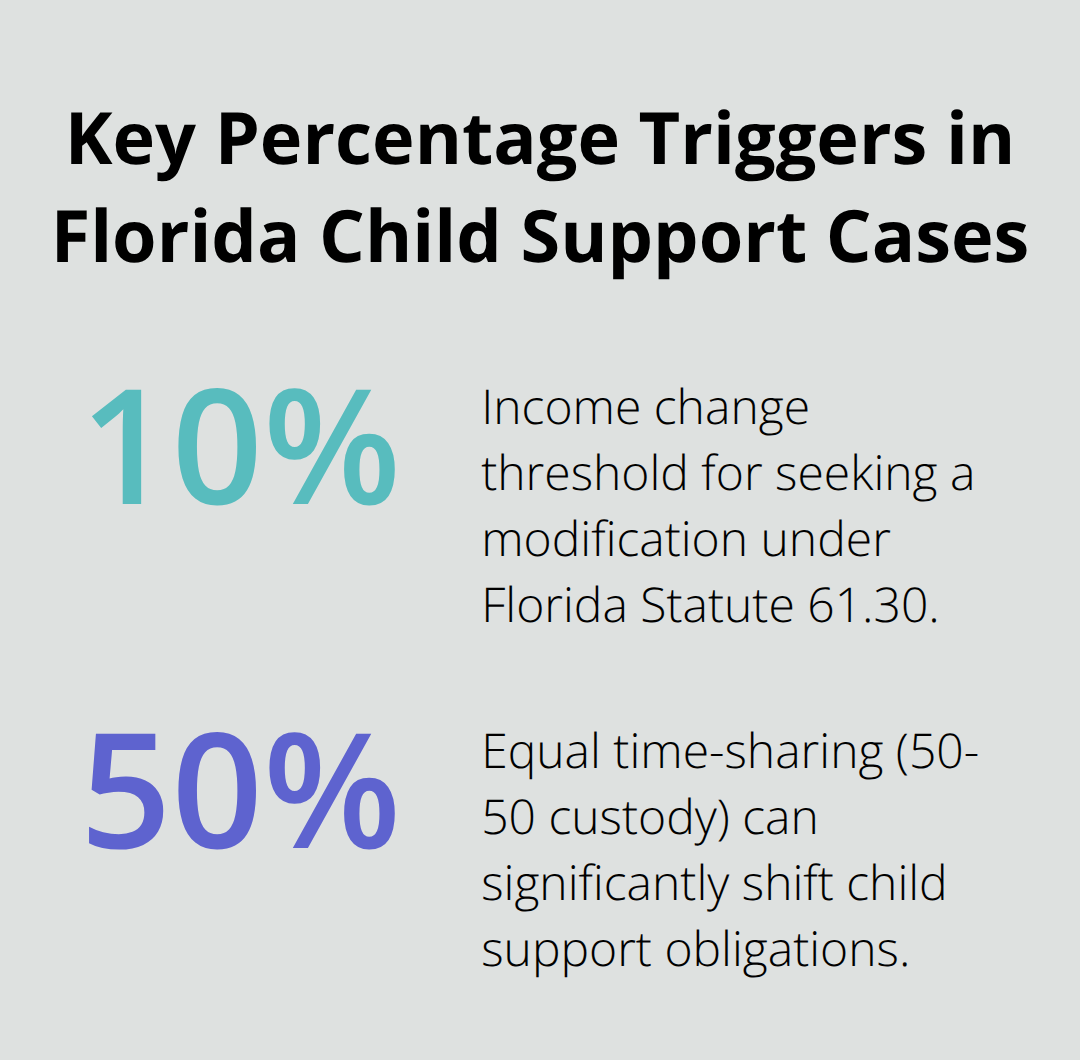
Income fluctuations represent the most common trigger for child support disputes in Melbourne. When a parent loses a job, receives a significant pay cut, or experiences a major career change, the original child support order no longer reflects their actual financial situation. Florida courts recognize this reality and allow modifications when income changes exceed 10 percent from the original order, according to Florida Statute 61.30. A parent earning $60,000 annually who drops to $48,000 has clear grounds for modification.
Documenting this change properly separates successful modifications from rejected requests. You need filed documentation showing the income change, tax returns from the past two years, and proof of current employment status. Many parents attempt informal adjustments without court approval, which creates legal problems later. Waiting months to address an income reduction only accumulates unpaid support arrears that become increasingly difficult to manage.
Custody Changes Shift Financial Obligations
Custody arrangement modifications also destabilize existing child support agreements. When one parent gains additional custody time or the child’s living situation changes substantially, the support calculation shifts dramatically. A parent who previously had the child every other weekend but now shares 50-50 custody experiences a major modification in their financial obligation.
Florida’s child support guidelines tie payments directly to custody percentages, so any custody change requires a corresponding support review. The parent with reduced custody time may qualify for lower payments, while the parent with increased custody time may receive higher support. These shifts happen automatically under state law once you file the proper modification request.
Disagreements Over Necessary Expenses
Disagreements over necessary expenses create a third category of disputes that many parents underestimate. What one parent considers essential medical care, educational costs, or extracurricular activities, the other parent views as discretionary spending. A child’s orthodontic treatment costing $5,000, private school tuition, or specialized tutoring can spark significant conflict about who pays and how much.
These disputes intensify when parents have different financial capacities and different views on what constitutes reasonable spending for the child’s benefit. The sooner you address these situations through proper legal channels rather than informal arrangements, the faster you move toward a sustainable solution. Understanding which resolution path fits your situation-negotiation, mediation, or court intervention-determines how quickly you reach that fair arrangement.
How to File and Prepare for Child Support Modification in Melbourne
Start the Modification Process Correctly
Filing a modification request requires you to take action yourself-Florida courts will not automatically adjust your child support obligation when circumstances change. You must initiate the process, and the paperwork matters significantly. Florida’s Department of Revenue handles many routine modifications, but contested cases require filing directly with the court in the county where the original order was issued. The filing fee in Brevard County, which covers Melbourne, runs approximately $408 for family law matters as of 2026. Obtain the Case Information Statement form and the Supplemental Petition to Modify Child Support from the courthouse or through the clerk’s office website. Incomplete submissions get rejected, delaying resolution by weeks or months.
Gather Financial Documentation That Courts Examine Closely
Financial documentation determines whether you win or lose your modification case. Collect your last two years of federal tax returns, recent pay stubs covering the past 30 days, and current employment verification letters. Self-employed parents should prepare profit and loss statements and business tax returns. Courts in Florida examine gross income, not net income, which surprises many parents who expect deductions to lower their obligation.
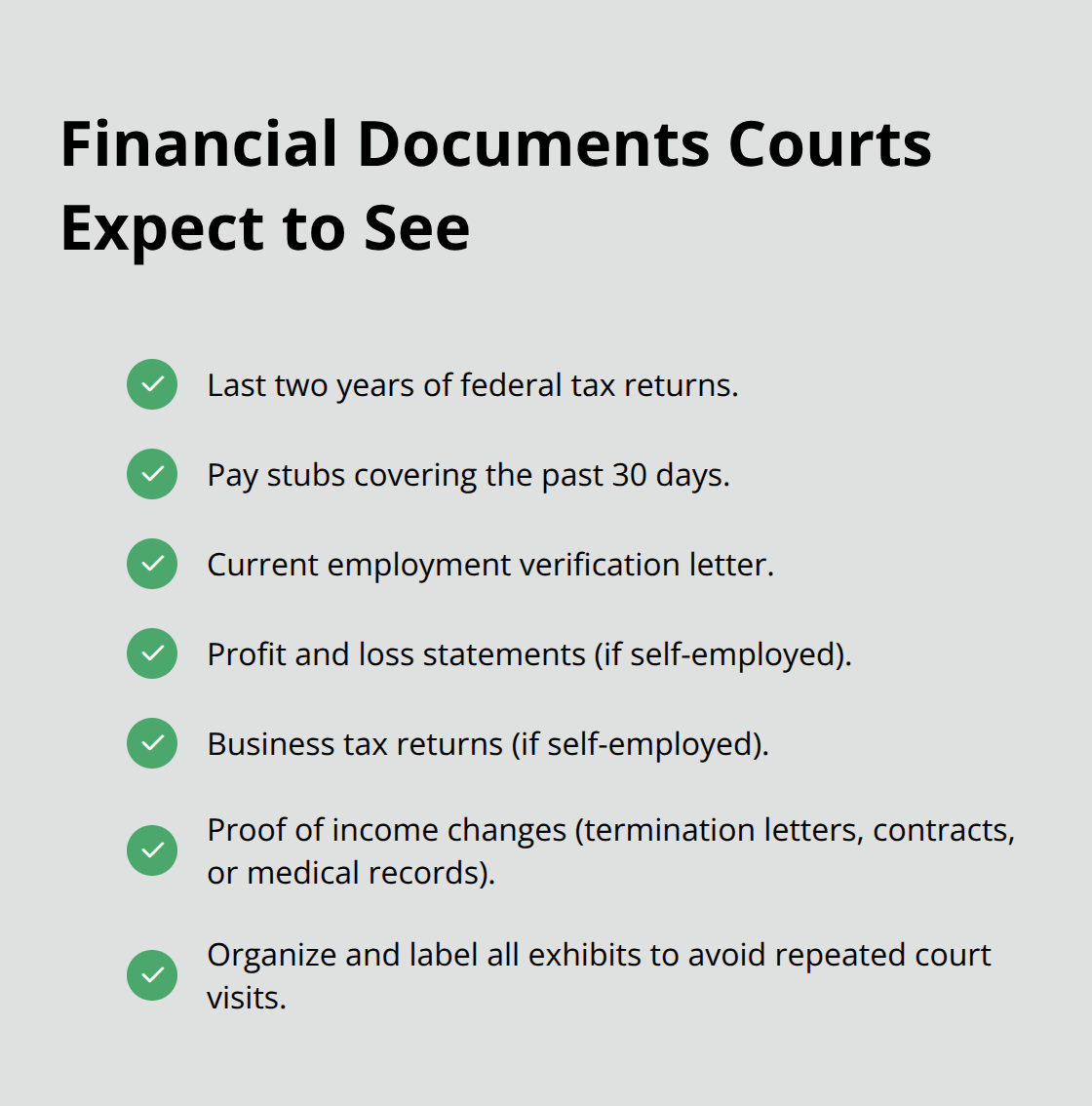
Include documentation of any income changes such as job termination letters, new employment contracts, or medical records proving disability affecting work capacity. The other parent will scrutinize every number, so accuracy matters. Incomplete documentation forces you to return to court multiple times, extending the dispute resolution timeline and increasing your legal costs significantly.
Prepare Your Narrative and Anticipate Judicial Questions
Court hearings demand preparation beyond financial documents. Develop a clear narrative explaining your income change and its timeline. Practice answering the judge’s likely questions about your job search efforts if you experienced unemployment or about your new position’s stability if you recently changed employment. The judge will question whether your situation represents a temporary setback or a permanent change justifying modification. Judges in Brevard County appreciate parents who arrive prepared with organized documents rather than loose papers and vague explanations.
Consider Mediation as a Faster Alternative
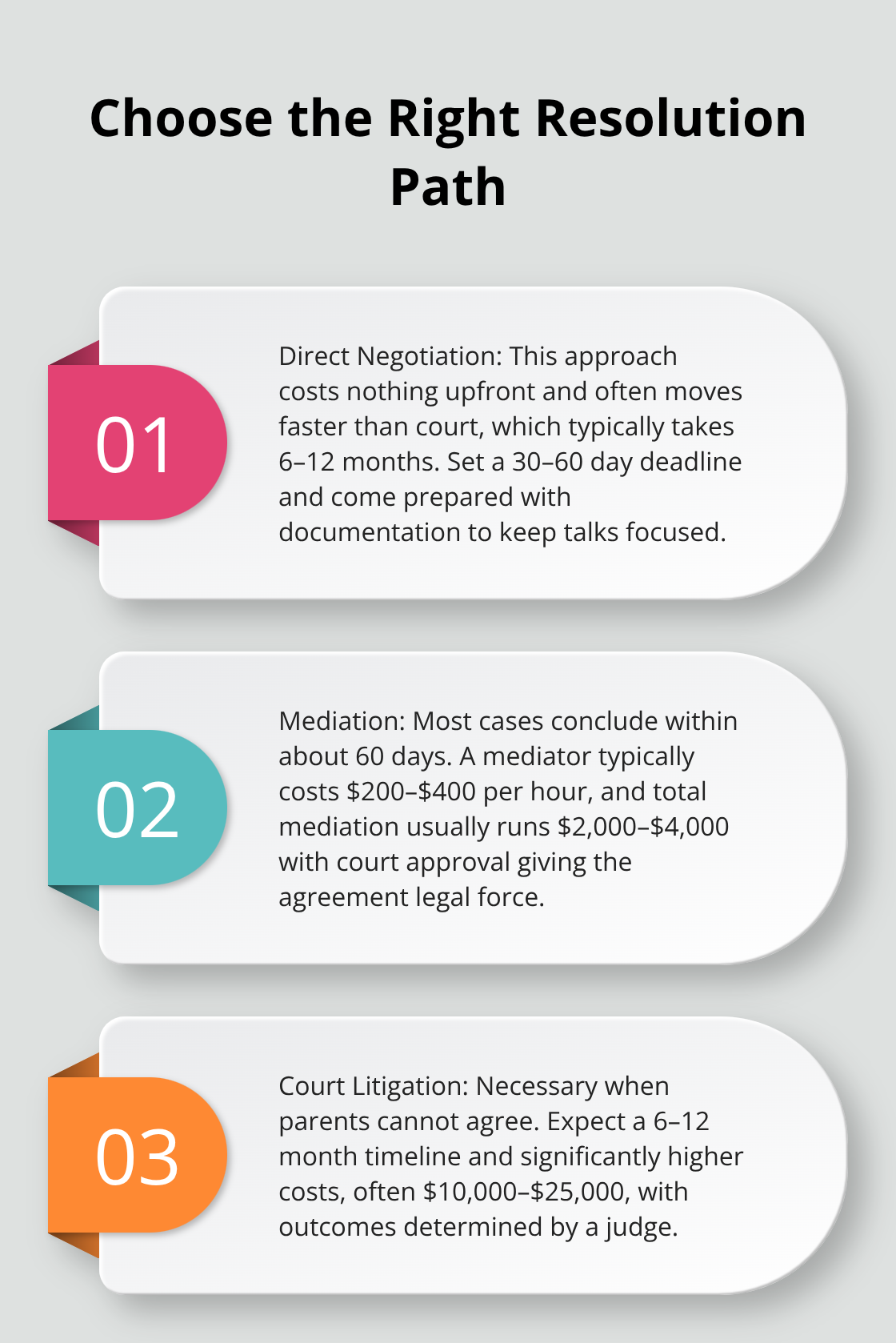
Mediation offers a faster path when both parents cooperate. Most Melbourne mediators complete the process within 60 days compared to 6–12 months for contested court hearings. A qualified family law mediator charges between $200–$400 per hour in the Melbourne area, and splitting these costs typically costs less than court litigation. Both parents meet with a neutral third party to negotiate terms without judicial intervention. This process works best when both parents genuinely want to reach agreement rather than win at all costs. Successful mediation produces a settlement agreement that the court then approves, avoiding the unpredictability of a judge’s decision. Once you and the other parent reach agreement through mediation or direct negotiation, the next step involves formalizing that arrangement through proper legal channels.
Resolving Disputes Without Involving the Court
Direct Negotiation Produces Fast Results
Direct negotiation with the other parent works when both parties prioritize reaching agreement over proving a point. This approach costs nothing upfront and moves faster than court proceedings, which typically take 6–12 months in Brevard County. Schedule a conversation focused solely on child support, separate from other parenting disputes. Bring your financial documentation showing income changes and explain how your circumstances have shifted since the original order. Present numbers objectively rather than emotionally, which opens dialogue more effectively.
Set a specific deadline for reaching agreement, typically 30–60 days, which creates urgency without forcing rushed decisions. If direct negotiation stalls after two or three conversations, moving to mediation prevents months of continued conflict. Many parents find that this straightforward approach resolves straightforward income changes without additional expense or delay.
Mediation Offers a Structured Alternative
Mediation services in Melbourne offer a structured middle ground that courts increasingly recommend before litigation. A neutral mediator costs $200–$400 per hour, and splitting this expense between parents usually totals less than $2,000–$4,000 for complete resolution compared to $10,000–$25,000 in contested court litigation. The mediator does not decide your case but guides both parents toward mutually acceptable terms.
This process works particularly well when income changes are straightforward and both parents acknowledge the need for modification.
Mediation sessions typically conclude within 60 days, and agreements reached through mediation carry the same legal weight as court orders once a judge approves them. You maintain control over the outcome rather than leaving decisions to a judge who knows nothing about your family’s specific circumstances. This control matters significantly when you want to preserve your relationship with the other parent while still achieving fair child support terms.
Legal Representation Strengthens Your Position
An attorney can help draft settlement agreements after mediation concludes, ensuring the language protects your interests and complies with Florida law. Harnage Law PLLC handles sensitive family law cases including child custody and support modifications, offering personalized attention to your specific situation. Having legal representation during negotiation or mediation often accelerates agreement because both parents understand that their terms will withstand judicial scrutiny. An attorney also identifies potential issues you might miss (such as tax implications or future modification triggers) that could create problems later.
Final Thoughts
Child support disputes in Melbourne require action, not avoidance. The resolution path you select-negotiation, mediation, or court intervention-determines how quickly you reach a fair arrangement and how much the process costs your family. Income changes, custody modifications, and expense disagreements all have clear legal pathways forward under Florida law, and starting the process promptly with proper documentation matters far more than hoping the situation resolves itself.
Direct negotiation works when both parents cooperate and acknowledge the need for change, while mediation accelerates resolution when negotiation stalls (typically completing within 60 days at a fraction of litigation costs). Court proceedings become necessary only when parents cannot agree, though this path takes 6–12 months and costs significantly more. Regardless of your chosen approach, financial documentation proves essential-tax returns, pay stubs, and employment verification separate successful modifications from rejected requests.
Contact Harnage Law PLLC to discuss your specific circumstances and determine the most effective resolution strategy for your family’s situation in Melbourne. Our team handles sensitive family law cases including child custody and support modifications, offering personalized attention to your unique needs. Moving forward means taking action today rather than accumulating arrears or operating under outdated orders.