
Child Support Modification Florida: When and How to Seek Changes
Our Blog
Child Support Modification Florida: When and How to Seek Changes

Child support orders aren’t permanent fixtures. Life changes-job losses, custody shifts, unexpected medical bills-and your payment obligations should reflect your actual circumstances.
At Harnage Law PLLC, we help parents navigate child support modification in Florida when their financial situations shift. The process has clear rules and deadlines, and getting it right matters for your family’s stability.
When You Must Request a Modification
Income Changes Demand Quick Action
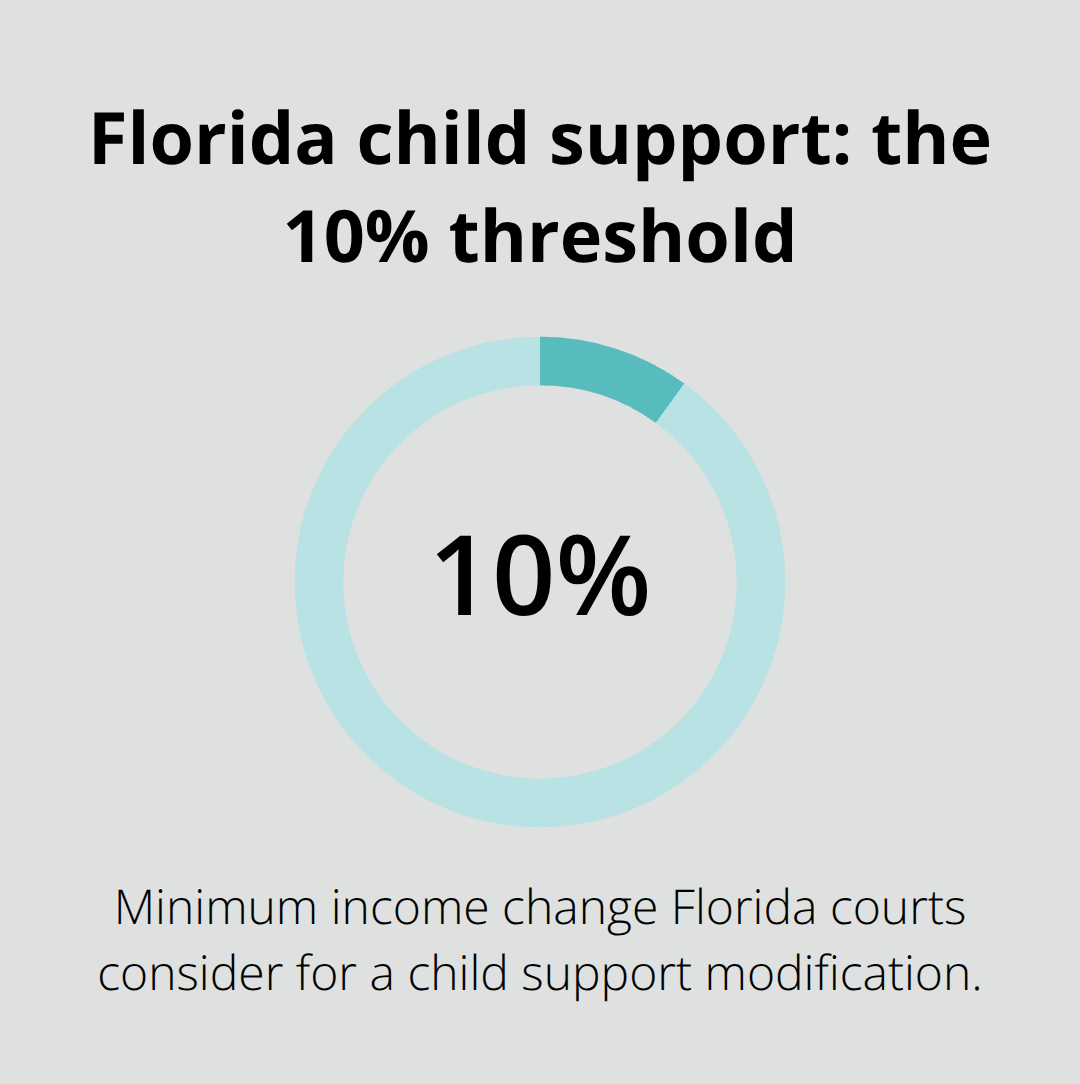
Income swings happen fast in Florida’s economy. A job loss, a promotion, or a shift to contract work dramatically changes what you actually earn compared to what the court calculated when setting your support obligation. Florida’s median household income sits at $77,700, but individual circumstances vary wildly, and your child support order was based on income figures that may no longer reflect reality. If your earnings dropped by 10 percent or more, Florida courts take that seriously as grounds for modification. Similarly, if you received a significant raise or started a second job, the other parent can petition to increase your obligation. The state’s unemployment rate hovered around 3.7 percent in May 2025, meaning job transitions remain common. File your petition within a reasonable timeframe after income changes occur-courts prefer to see modifications requested promptly rather than months later.
Custody Shifts Reshape Financial Obligations
Custody arrangements trigger modification requests because parenting time directly affects financial needs and responsibilities. When you gain primary custody of your child, your expenses for housing, food, and daily care jump substantially, which affects how much you can pay toward support. Conversely, if you lose significant parenting time, your support obligation might decrease since the other parent now covers more direct expenses. Florida courts recalculate support based on the percentage of overnights each parent has, so custody modifications automatically justify reviewing child support numbers. The connection between parenting time and payment capacity is straightforward-your obligation must align with your actual role in the child’s daily life.
Unexpected Expenses Create Legitimate Hardship
Major unexpected expenses create pressure that a support order never anticipated. Medical emergencies, necessary home repairs, or sudden caregiving obligations for aging parents strain finances beyond what the original calculation covered. Courts recognize that genuine hardship isn’t an excuse to ignore obligations, but it is grounds to adjust them temporarily or permanently. Parents often delay modification requests because they fear appearing irresponsible, yet courts respect those who address changed circumstances honestly rather than fall behind on payments. Filing for modification stops the accumulation of arrears and demonstrates good faith to the court. The worst approach is ignoring the problem until you owe months of back support plus interest-that debt becomes nearly impossible to discharge and damages your credibility with the judge.
Taking Action Before Arrears Mount
Your next step involves understanding exactly what documentation the court requires and how Florida’s guidelines calculate your new obligation amount.
How to File and Win a Child Support Modification in Florida
Submitting Your Petition with Complete Documentation
Filing a modification petition requires you to submit a Petition for Modification of Child Support with the same court that issued your original order, typically in your county’s family court. Florida requires you to attach documentation proving the substantial change in circumstances that justifies the modification. A 10 percent or greater income change meets the legal threshold, but you need paycheck stubs, tax returns, or unemployment documentation to prove it. The court will not accept vague claims about financial hardship without evidence. Many parents file without complete financial records, forcing the judge to deny their petition or schedule a continuance that delays relief by months.
Gather your last three months of pay stubs, your most recent tax return, and written explanations of any job changes before you contact an attorney or appear in court. If you are self-employed, bring profit-and-loss statements and business tax returns. If childcare costs increased, bring invoices from your provider showing the new rates.
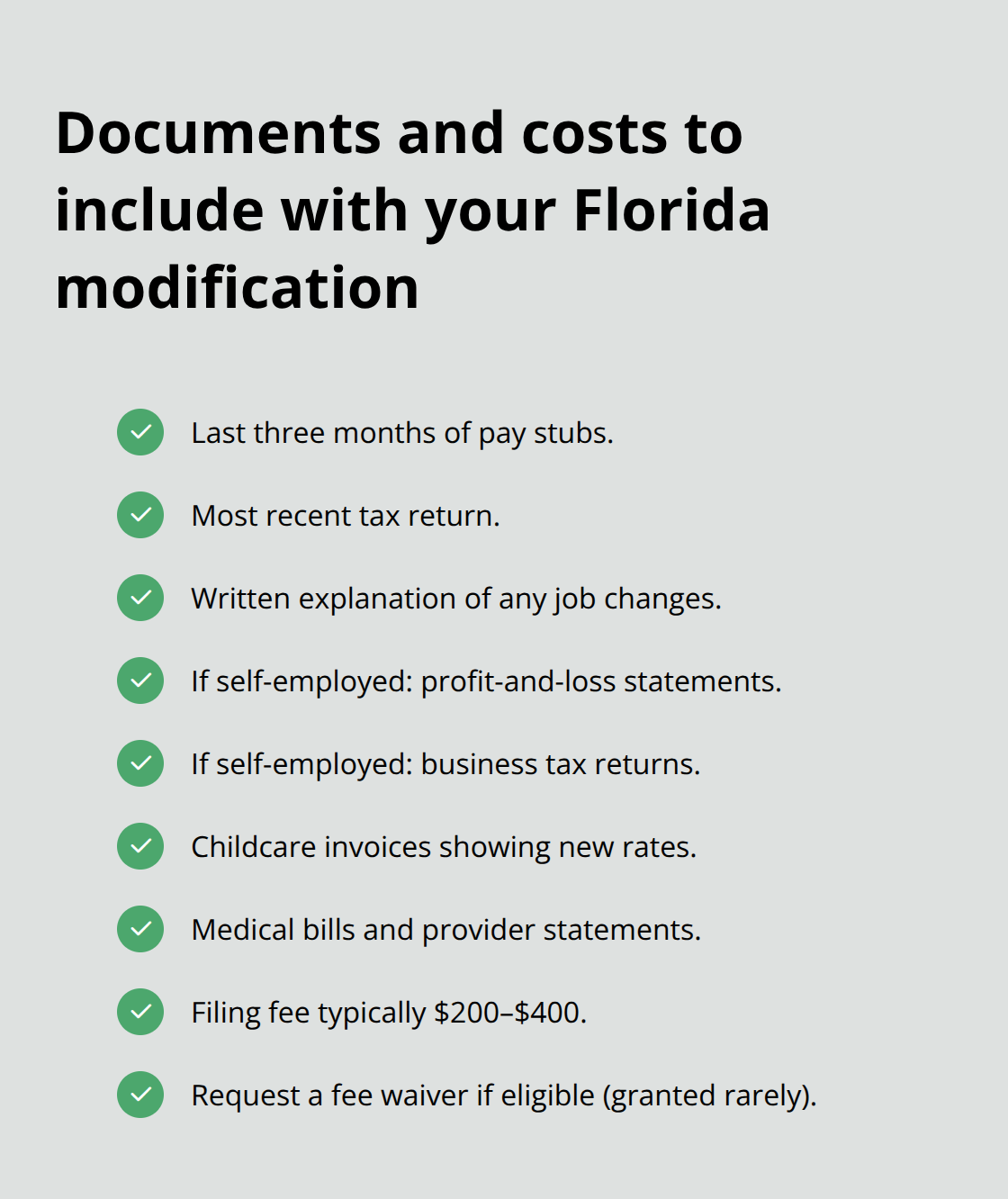
Medical expense increases require bills and statements from healthcare providers. The filing fee varies by county but typically ranges from $200 to $400. Some Florida counties allow you to request a fee waiver if you meet income-based hardship criteria, though the court rarely grants these in modification cases where one parent already receives support.
Understanding Florida’s Income Shares Model
Florida’s child support calculation method operates mechanically once you plug in the correct numbers, which is why accurate financial documentation matters so intensely. The state uses the income shares model, meaning both parents’ combined income determines the base support obligation, then that obligation splits proportionally based on each parent’s earnings percentage. With Florida’s median household income at $77,700 according to 2024 data, courts regularly see modifications where one parent’s income dropped below or exceeded the figures used in the original calculation.
The guidelines cap income consideration at $250,000 per month for each parent as of 2025, though judges retain discretion to consider income above that cap if the case warrants it. The calculation also factors in the percentage of overnight custody each parent has, healthcare costs, childcare expenses, and any existing child support obligations from other relationships. If you gained primary custody, your percentage of overnights increased substantially, which automatically reduces your obligation.
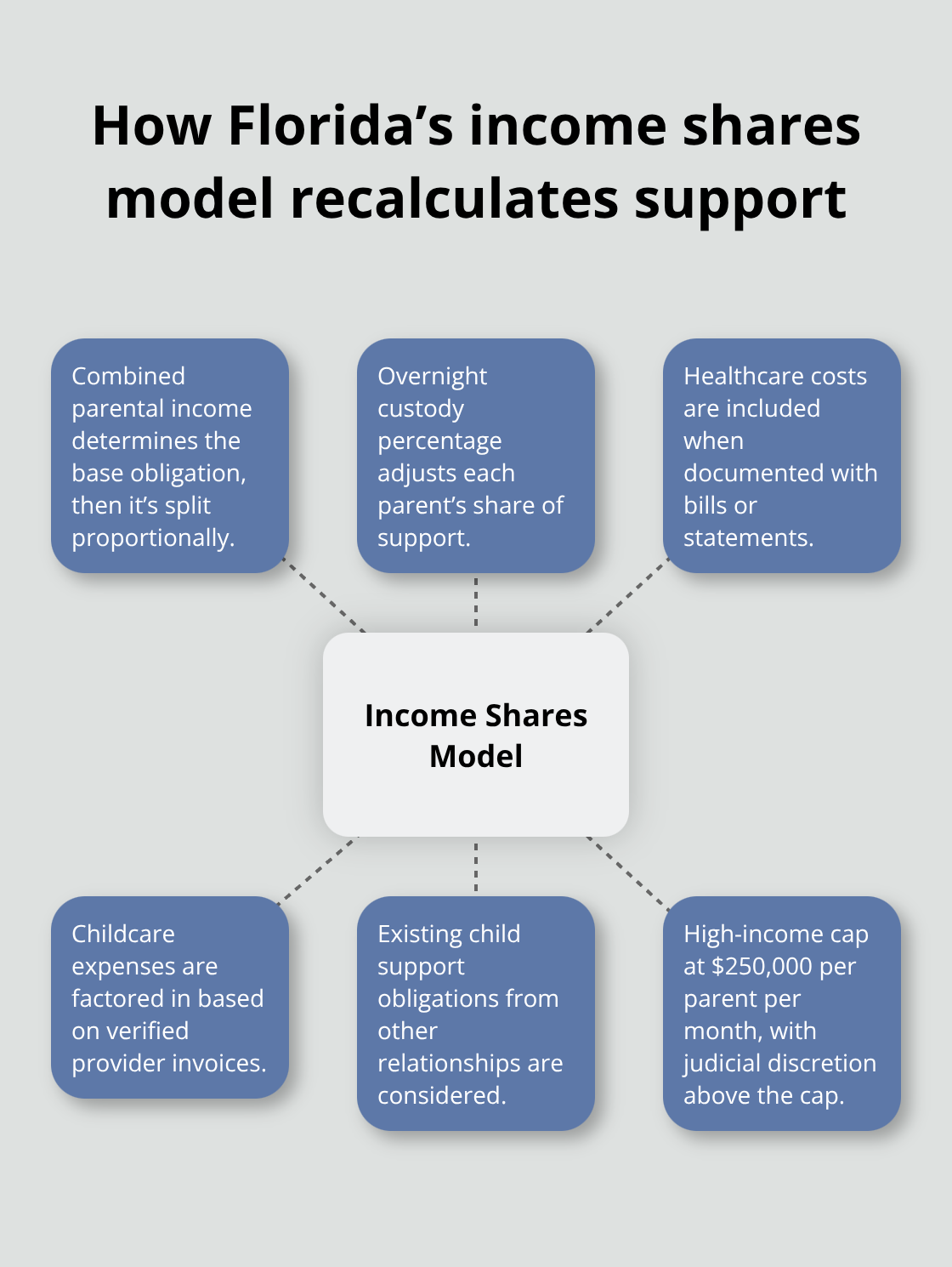
The court recalculates using the same formula that determined your initial order, so understanding how your income percentage changed within the combined family income shows you exactly what your new obligation should be.
Calculating Your Expected Outcome Before Filing
Calculate your likely new obligation before filing so you understand what to expect and whether the modification actually benefits your situation. Many parents file for reductions only to discover the court’s recalculation produces minimal savings once all expenses are factored in, yet they’ve already incurred legal costs. The judge reviews your petition, considers the evidence you’ve submitted, and either grants the modification, denies it, or schedules a hearing where both parents present arguments and testimony.
Once the court makes its decision, you’ll need to understand what happens next if the judge schedules a hearing or if circumstances require additional action to enforce the new order.
Common Reasons Courts Actually Approve Modifications
Job Loss Triggers Immediate Recalculation
Florida judges approve child support modifications when you present concrete evidence that circumstances have shifted materially since the original order. Job loss stands as the clearest trigger-when you lose employment, your income drops immediately and measurably, which directly contradicts the earnings figure the court used in its calculation. Courts do not require you to find new work at the same salary before filing; they recognize that job transitions take time and that your obligation should reflect your current earning capacity, not an outdated assumption.
If you earned $60,000 annually when the court set your support obligation and you are now unemployed, that represents a 100 percent income reduction that justifies immediate modification. Bring your termination letter, final paycheck stub, and documentation of job search efforts to show the court you are actively seeking work. A substantial reduction in earnings-typically 10 percent or more according to Florida’s legal threshold-qualifies even if you remain employed, such as when you transition from full-time to part-time work or when your commission-based income drops during economic downturns.
Florida’s unemployment rate sat around 3.7 percent in May 2025, but individual circumstances vary dramatically. A parent in construction faces different income volatility than one in healthcare. The court recognizes these sector-specific realities and adjusts your obligation accordingly when you provide evidence of the income change.
Childcare and Medical Expenses Justify Modifications
Childcare and medical expenses create another approval pathway because these costs directly impact your ability to pay support. When your child’s school switches to full-time in-person instruction after remote learning, or when your preschooler moves to a more expensive facility, childcare costs can increase by $500 to $1,500 monthly depending on your area. Courts require actual invoices from your provider showing the new rates-not estimates or verbal agreements.
Medical expenses gain traction when they are ongoing rather than one-time emergencies. A child diagnosed with asthma requiring regular medications and specialist visits, or braces that cost $6,000 over three years, represent legitimate modifications. You must submit bills and statements from healthcare providers to substantiate these claims. Courts view recurring medical obligations as material changes that affect your financial capacity to maintain the current support level.
Relocation and Custody Changes Reshape Obligations
Relocation scenarios work differently because they involve custody percentage changes. When you move to another county or across state lines for employment, your parenting schedule typically adjusts, which automatically justifies recalculating support. If your move reduces your overnight custody from 40 percent to 20 percent, the court recalculates your obligation proportionally.
Courts view relocation-based modifications as straightforward recalculations rather than discretionary decisions because the underlying custody percentages have genuinely changed. Document your new residence, your employment situation in the new location, and the specific custody arrangement that results from the move. The income shares model that Florida uses recalculates your obligation based on the new custody percentages, so the court’s decision becomes mechanical once you establish the factual changes.
Final Thoughts
Child support modification in Florida succeeds when you act promptly and document everything thoroughly. Income changes, custody shifts, and unexpected expenses all justify requesting modifications, but the court won’t approve your petition without concrete evidence. Gather your pay stubs, tax returns, custody documentation, and expense receipts before filing, since the longer you wait after circumstances change, the more back support accumulates if the court eventually grants your modification retroactively.
Filing your petition requires submitting complete financial documentation to your county’s family court along with a clear explanation of what changed since your original order. Florida’s income shares model recalculates your obligation mechanically once you provide accurate numbers, so the outcome depends entirely on the evidence you present. A 10 percent or greater income change meets the legal threshold, but you must prove it with documentation.
Your next step involves gathering your financial records and understanding exactly what documentation your specific situation requires for a child support modification in Florida. We at Harnage Law PLLC handle sensitive family law cases including child custody and child support modifications, and we provide personalized attention to help you navigate the modification process. Contact us to discuss your situation and determine whether your circumstances justify requesting changes to your current obligation.