
Divorce mediation Melbourne FL: Reaching Agreement Without Litigation
Our Blog
Divorce mediation Melbourne FL: Reaching Agreement Without Litigation

Divorce mediation in Melbourne, FL offers a path forward that keeps decisions in your hands rather than leaving them to a judge. At Harnage Law PLLC, we’ve seen firsthand how mediation resolves disputes faster and at a fraction of the cost of courtroom battles.
This guide walks you through how mediation works, what it costs compared to litigation, and which issues you can settle through this process.
How Mediation Structures Your Divorce Settlement
The Mediator’s Role in Guiding Discussions
Divorce mediation in Florida operates through a structured process where a neutral third party helps both spouses communicate and reach agreements on contested issues. The mediator does not make decisions for you, and Florida Statute 44.102 requires mediators to maintain neutrality throughout. The mediator facilitates dialogue, identifies common ground, and helps both parties understand the financial and practical implications of proposed settlements. This differs fundamentally from litigation, where a judge imposes decisions after hearing arguments from both sides. In court, you lose control over outcomes, and the American Bar Association reports that contested divorces cost between $15,000 and $30,000 per person on average, while mediation typically ranges from $1,500 to $5,000 total for both parties combined.
Key Stages of the Mediation Process
The process typically begins with an intake session where the mediator explains procedures and both spouses agree to participate in good faith. Florida mediators usually conduct joint sessions initially, then move to separate caucuses where they meet with each spouse individually to discuss positions and concerns. This approach allows each party to speak candidly without the other present, which research from the Florida Supreme Court’s Dispute Resolution Center shows increases settlement rates significantly.
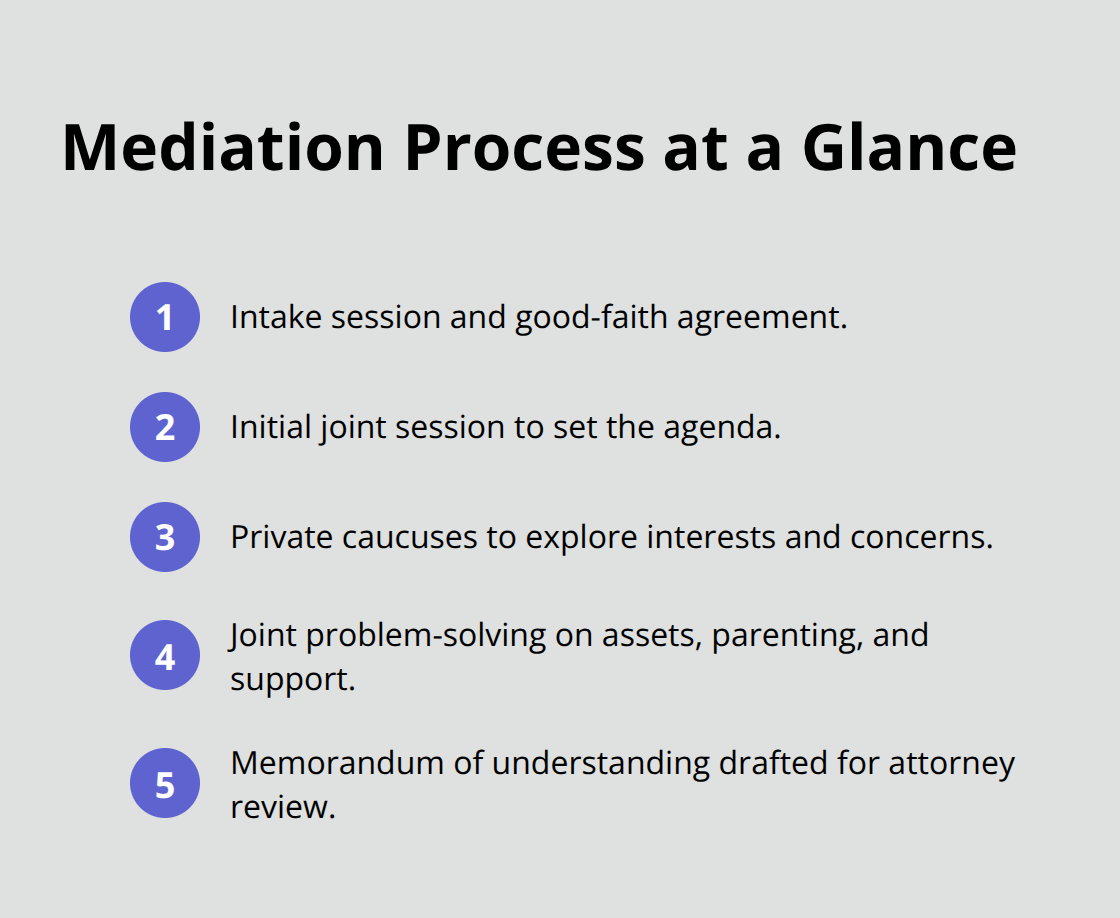
In the joint sessions that follow, both spouses address specific issues like asset division, child custody, and support obligations directly. Most Florida mediation cases resolve within three to six sessions, compared to litigation timelines that frequently extend 12 to 24 months or longer. The mediator prepares a memorandum of understanding once both parties reach agreement, which your attorney then converts into formal divorce documents for court filing.
Why Legal Representation Matters During Mediation
Having your own lawyer review all proposals before signing protects you from accepting unfavorable terms under pressure, since mediators cannot provide legal advice to either party. Your attorney identifies potential issues that you might overlook and advocates for your interests throughout the process. This legal guidance strengthens your negotiating position significantly and prevents costly mistakes that could affect your financial future or custody arrangements.
The next section explores the specific advantages mediation offers compared to courtroom litigation, including the financial benefits and timeline improvements that make this approach attractive to many divorcing couples in Melbourne, FL.
Advantages of Choosing Mediation Over Court
Cost Savings That Protect Your Financial Future
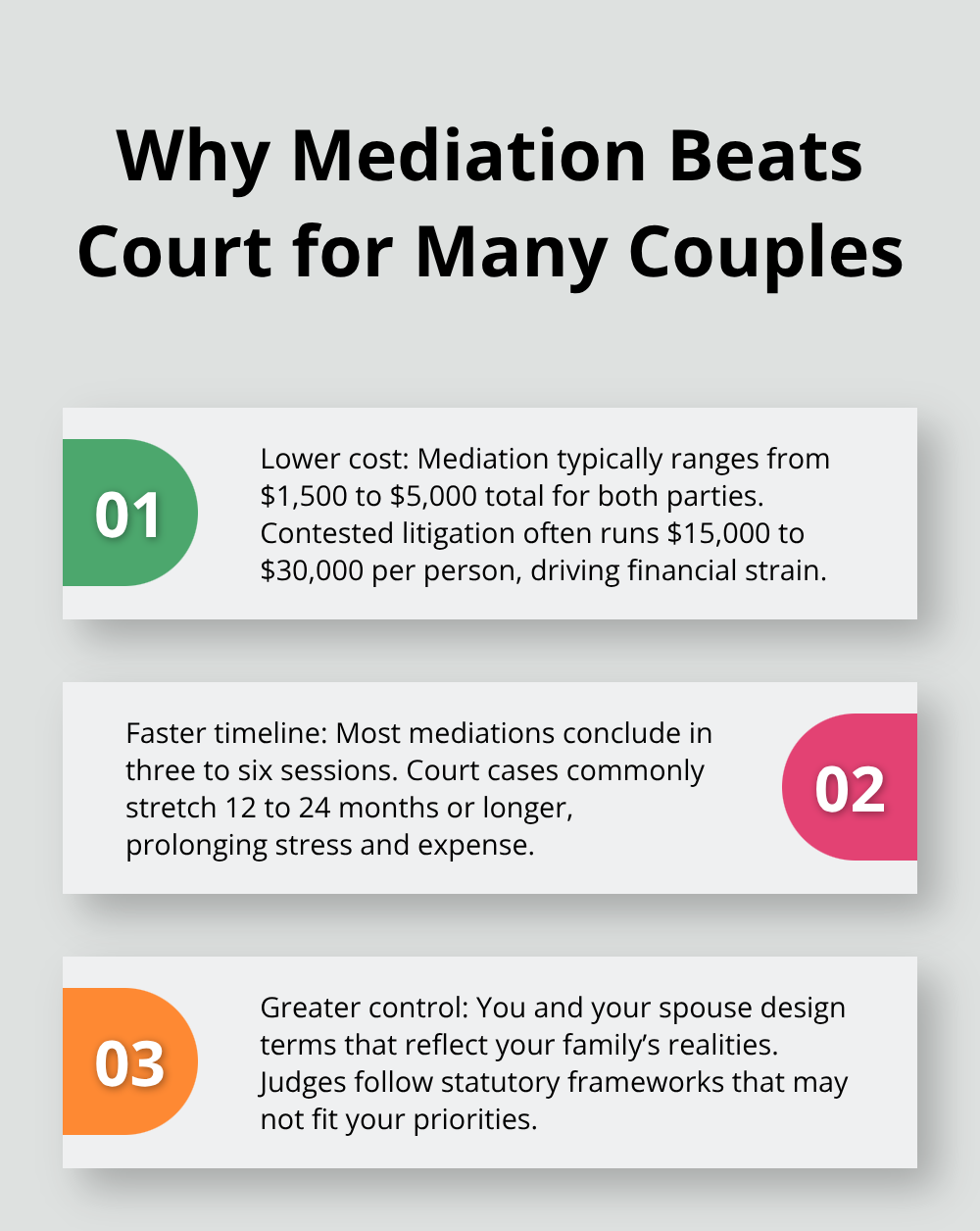
Mediation eliminates the financial drain that courtroom litigation creates. The American Bar Association reports that contested divorces in court cost between $15,000 and $30,000 per person on average, while mediation typically ranges from $1,500 to $5,000 total for both parties combined. This difference matters significantly because litigation requires depositions, discovery exchanges, expert witnesses, and multiple court appearances-each adding thousands to your legal bills. Mediation avoids these expenses entirely. You pay a mediator’s hourly rate, usually between $150 and $400 per hour in Florida, and split that cost with your spouse.
Faster Resolution and Timeline Benefits
Most mediation cases resolve within three to six sessions compared to litigation timelines that frequently extend 12 to 24 months or longer. That extended timeline in court means prolonged legal fees, continued emotional stress, and delayed closure on your marriage. In mediation, you control the pace and can schedule sessions around your work and family obligations rather than waiting for court docket availability. This acceleration directly reduces your overall legal expenses and allows you to move forward with your life sooner.
Greater Control Over Outcomes and Terms
When you litigate, you sacrifice control over how your case proceeds and what happens to your assets, custody arrangements, and support obligations. A judge makes these decisions based on Florida family law statutes, which means outcomes often follow predictable patterns that may not reflect your family’s actual circumstances or priorities. Mediation allows you to craft solutions tailored to your situation. You might agree that one parent receives the family home while the other gets a larger share of retirement accounts-an arrangement that works for your family but a judge might never order. You decide what matters most, whether that’s maintaining flexibility in parenting schedules or protecting a family business. This control directly impacts your financial security and your relationship with your children after divorce.
When Mediation Requires Legal Guidance
Having your own lawyer review all proposals before signing protects you from accepting unfavorable terms under pressure, since mediators cannot provide legal advice to either party. Your attorney identifies potential issues that you might overlook and advocates for your interests throughout the process. This legal guidance strengthens your negotiating position significantly and prevents costly mistakes that could affect your financial future or custody arrangements. Mediation works best when both spouses approach negotiations honestly and with reasonable expectations about what constitutes a fair division. If one party refuses to disclose financial information or consistently acts in bad faith, litigation becomes necessary to protect your rights.
The specific issues you can resolve through mediation-from asset division to child custody to support obligations-form the foundation of most successful settlements in Melbourne, FL.
What Issues Can You Actually Settle in Mediation
Asset Division and Financial Arrangements
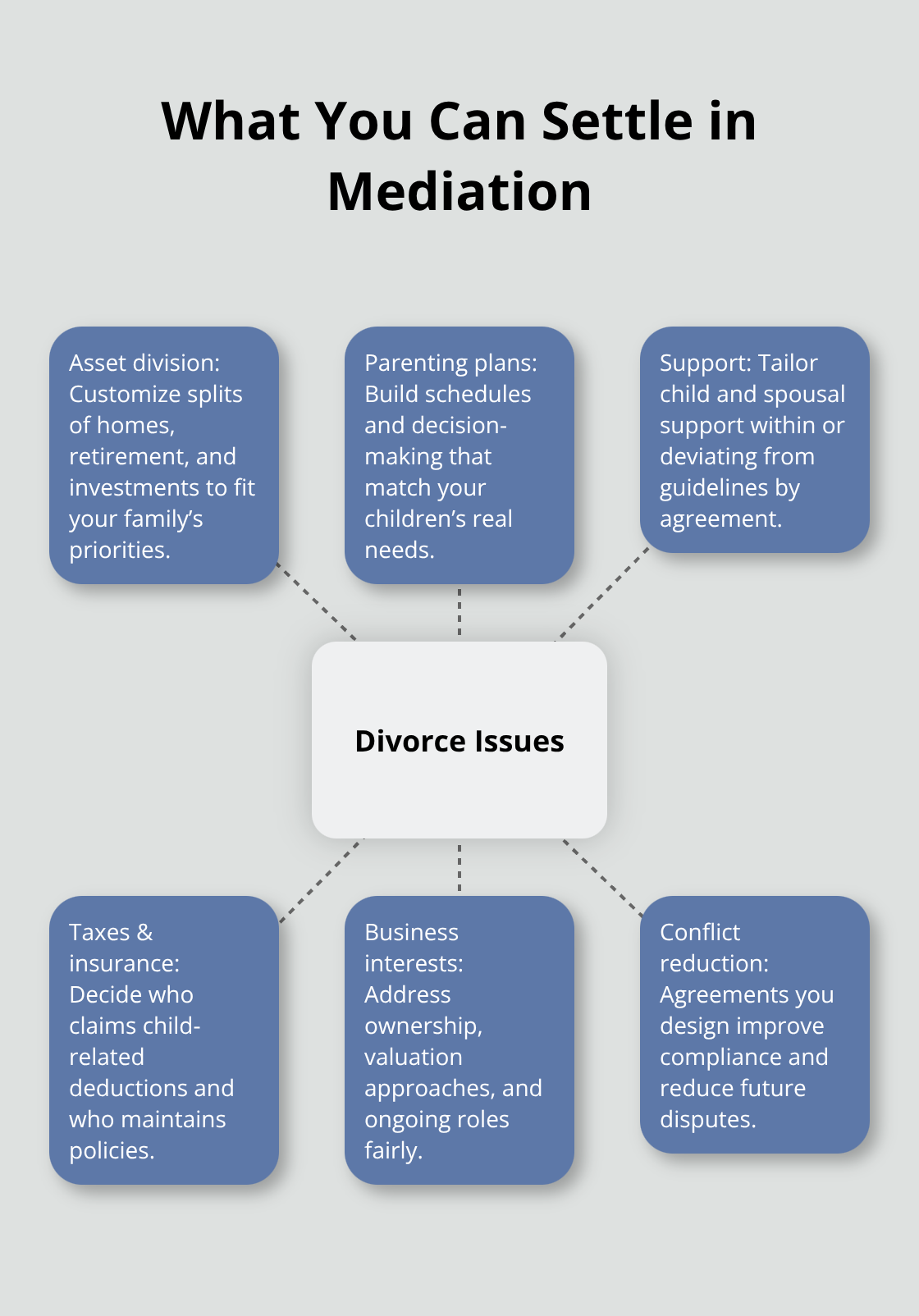
Mediation in Melbourne, FL resolves the three categories of issues that consume most divorce disputes, and understanding what each entails helps you prepare realistic expectations before your first session. Asset division represents the most straightforward category because it involves concrete financial items with measurable value. Florida is an equitable distribution state, meaning courts split marital assets fairly but not necessarily equally, and most couples find they can negotiate better outcomes than what a judge would impose. You might agree that one spouse keeps the family home while the other receives retirement accounts and investment portfolios, or you could split everything proportionally. The key advantage is flexibility-you can weight decisions based on what matters most to your family rather than following statutory formulas.
Mediation also handles the financial details that judges often overlook, such as which spouse claims tax deductions for children, who maintains life insurance policies, and how to handle the family business or professional practice. These granular decisions significantly impact your financial position after divorce, and mediation allows you to address them comprehensively rather than leaving them unresolved for future court battles.
Child Custody and Parenting Arrangements
Child custody and parenting arrangements form the emotional core of most divorces, and mediation excels here because it prioritizes your children’s actual needs rather than legal custody labels. You craft schedules that reflect your family’s reality-perhaps one parent works irregular hours or travels frequently, so a flexible arrangement serves everyone better than a rigid 50-50 split. You decide how holidays rotate, which parent handles medical decisions, and how you’ll communicate about school issues.
Research from the Florida Supreme Court’s Dispute Resolution Center shows that children adjust better when parents create their own parenting plans rather than having arrangements imposed by courts, because both parents feel invested in the outcome. This collaborative approach produces stronger compliance with custody terms and reduces future disputes over parenting decisions.
Spousal Support and Child Support Negotiations
Spousal support and child support negotiations require careful attention to Florida’s statutory guidelines, but mediation allows you to deviate from those guidelines if both parties agree. Florida calculates child support using a formula based on income and custody time, but you might agree to different amounts if one parent has special needs or unusual expenses. Spousal support similarly follows statutory guidelines, yet mediation lets you negotiate duration, amount, or even trade spousal support for a larger property settlement.
The critical factor is that both spouses must fully disclose their financial situations-income, debts, assets, and liabilities-so you can make informed decisions. If one party hides income or assets, mediation fails, and litigation becomes necessary to compel disclosure through court orders. Settlement agreements you reach in mediation become legally binding once both parties sign, and your attorney converts these agreements into formal divorce documents filed with the court. This means the terms you negotiate directly shape your financial future and your relationship with your children.
Final Thoughts
Divorce mediation in Melbourne, FL gives you something litigation cannot: control over decisions that shape your financial future and your relationship with your children. Mediation costs significantly less than courtroom battles, resolves disputes in months rather than years, and produces outcomes tailored to your family’s actual circumstances rather than generic judicial formulas. Couples who mediate spend between $1,500 and $5,000 total compared to $15,000 to $30,000 per person in contested litigation, and most cases resolve within three to six sessions.
Mediation works best when both spouses commit to honest communication and reasonable negotiation. If one party refuses to disclose financial information or consistently acts in bad faith, you need litigation to protect your rights through court-ordered discovery and judicial intervention. An attorney reviews any settlement proposals before you sign, identifies financial or custody issues you might overlook, and ensures the agreement protects your interests.
Starting your mediation journey begins with selecting a qualified mediator and having your own lawyer review the process before your first session. Your attorney can advise whether mediation suits your situation or whether litigation is necessary given your spouse’s behavior or the complexity of your assets. We at Harnage Law PLLC handle family law cases including divorce and child custody matters, and we guide clients through mediation or litigation depending on what serves them best.