
Effects of Childhood Divorce on Mental Health
Our Blog
Effects of Childhood Divorce on Mental Health

Divorce reshapes a child’s world in ways that extend far beyond the immediate family breakdown. The effects of childhood divorce on mental health are real and measurable, affecting everything from emotional stability to academic performance.
At Harnage Law PLLC, we recognize that understanding these impacts helps parents navigate this difficult transition with greater awareness and compassion for their children’s needs.
How Divorce Affects a Child’s Mental Health and Development
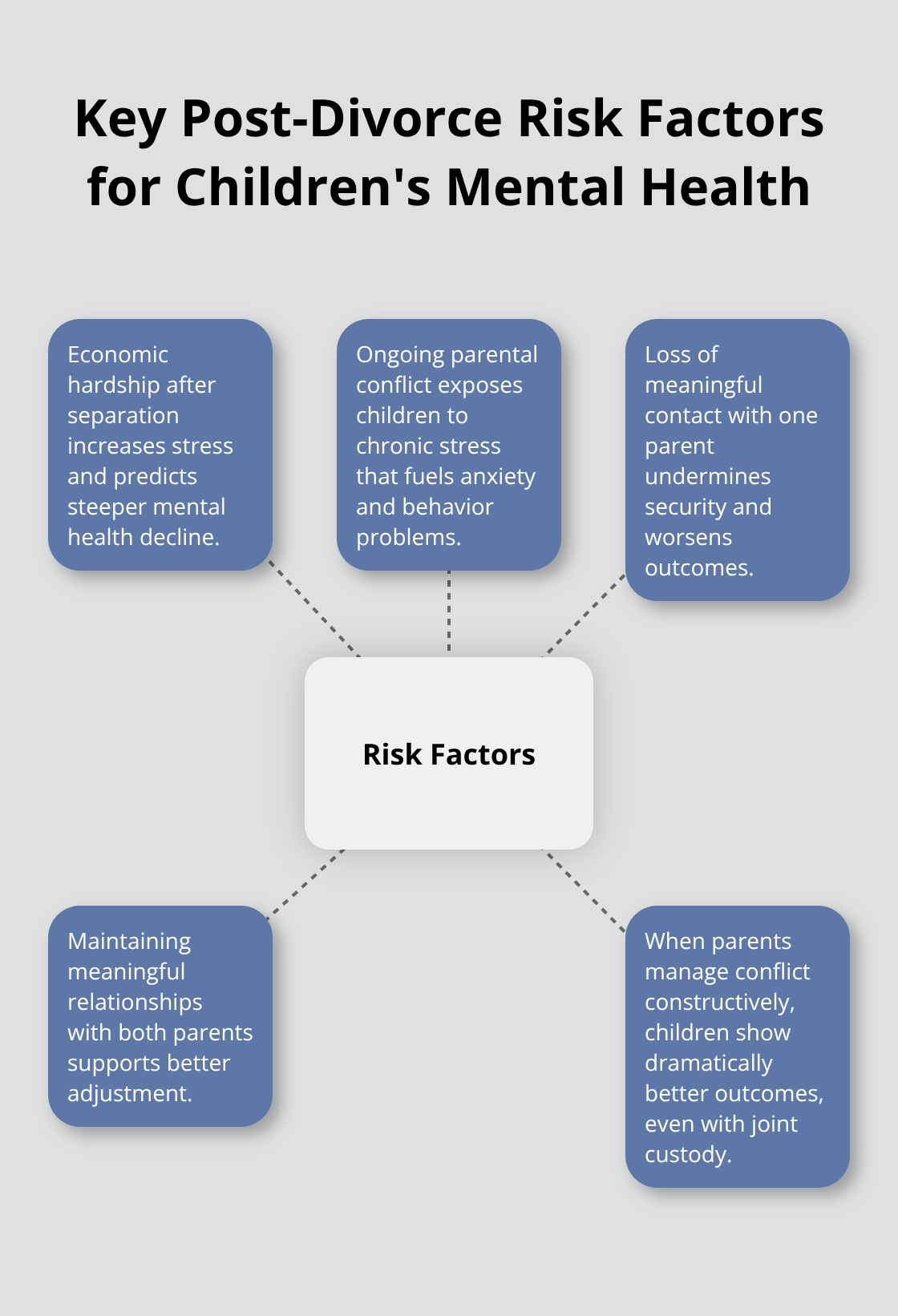
Divorce triggers measurable changes in how children think, feel, and behave. Research from the American Psychological Association shows that children of divorced parents face a 1.5x to 2x higher risk of developing anxiety, depression, and behavioral problems compared to peers from intact families. The first one to two years after separation hit hardest, with effects often most pronounced during this window. Younger children aged two to five typically experience separation anxiety and struggle with understanding why routines have shifted. School-age children between six and twelve frequently internalize guilt, believing they caused the divorce, while teenagers channel stress into anger and withdrawal. What matters most is not the divorce itself but what happens after. Economic hardship, ongoing parental conflict, and loss of contact with one parent create the steepest mental health decline. A child who maintains meaningful relationships with both parents while parents manage their conflict constructively shows dramatically better outcomes than one caught between hostile adults, even in joint custody arrangements.
The Real Cost to Academic Performance and Behavior
Divorce disrupts focus at school. Children show measurable drops in grades, higher absenteeism, and increased dropout risk during and after separation. Behavioral problems emerge in different forms depending on age. Younger children act out with defiance or aggression at home and school. Older children may withdraw, struggle with peer relationships, or experiment with substance use earlier than peers. Sleep disruption and appetite changes signal underlying stress and warrant attention. The good news is this trajectory is not fixed. Children whose parents prioritize consistent discipline across both households, maintain predictable routines, and keep conflict away from them recover faster and show fewer lasting behavioral issues. Schools play a critical role here-teachers who acknowledge family changes and connect struggling students to counseling services provide protective support that measurably improves adjustment. When parents actively manage their own emotional well-being and avoid using children as messengers or confidants, behavioral problems decrease significantly.
Long-Term Pathways into Adulthood
The effects of childhood divorce do not disappear at eighteen. Research shows that children of divorce carry higher risks of anxiety and depression into adulthood, difficulty forming stable relationships, and patterns of conflict in their own partnerships. Parental absence (particularly prolonged lack of contact with one parent) compounds these risks, affecting attachment security and relationship trust years later. However, this is not destiny. The quality of parenting after divorce matters more than the divorce itself. Children who experienced warmth, consistent support, and engaged parenting from at least one caregiver show resilience and thrive emotionally and academically as adults. Those who received evidence-based interventions such as family therapy or parent management training during childhood showed significantly better long-term outcomes. The pathway to adulthood depends on whether parents shielded their children from conflict, maintained involvement from both sides of the family, and created stable living environments. Custody decisions and how parents approach separation directly influence these long-term mental health trajectories, which is why thoughtful legal planning focused on the child’s best interests matters profoundly.
What Actually Determines How Well Children Adjust to Divorce
Parental Conflict Matters More Than Custody Type
How a child handles divorce depends far less on the separation itself and far more on three concrete factors that parents directly control or influence. The quality of interaction between parents after separation matters more than any custody arrangement. Research from Nielsen (2017, 2018) shows that high parental conflict creates chronic stress in children, triggering anxiety and behavioral problems regardless of whether custody is joint or sole. Children in joint physical custody still thrive when parents communicate civilly and shield kids from disputes, but they suffer equally in sole custody when parents weaponize the separation.
Parents who speak respectfully about each other, avoid using children as messengers, and handle disagreements away from their kids see measurable improvements in their children’s mental health within months. Parallel parenting offers a concrete strategy when direct communication remains toxic-parents minimize contact, use written communication only, and coordinate through apps like OurFamilyWizard rather than face-to-face meetings. This reduces conflict exposure while maintaining stability.
Professional Support Accelerates Recovery
Access to structured mental health support during the first year after separation accelerates recovery significantly. The American Academy of Child and Adolescent Psychiatry emphasizes that children in therapy or family counseling show substantially better coping than those without intervention, particularly when therapy addresses specific stressors like guilt, loyalty conflicts, or adjustment to new routines. Schools also function as protective institutions when they maintain consistent structure, acknowledge the family change, and connect struggling students to counseling resources.
Matching Custody to Developmental Stage
Age and individual temperament shape how intensely children feel divorce’s impact, but they do not determine outcomes. Preschoolers aged two to five need frequent, predictable contact with both parents to maintain security-short visits work better than extended stretches of separation. School-age children aged six to twelve often internalize guilt and require explicit reassurance from both parents that the divorce is not their fault and that both parents remain fully invested in their relationship with them. Teenagers aged thirteen to eighteen typically resist parental input on custody matters, and forcing arrangements against their stated preferences triggers rebellion or emotional withdrawal.
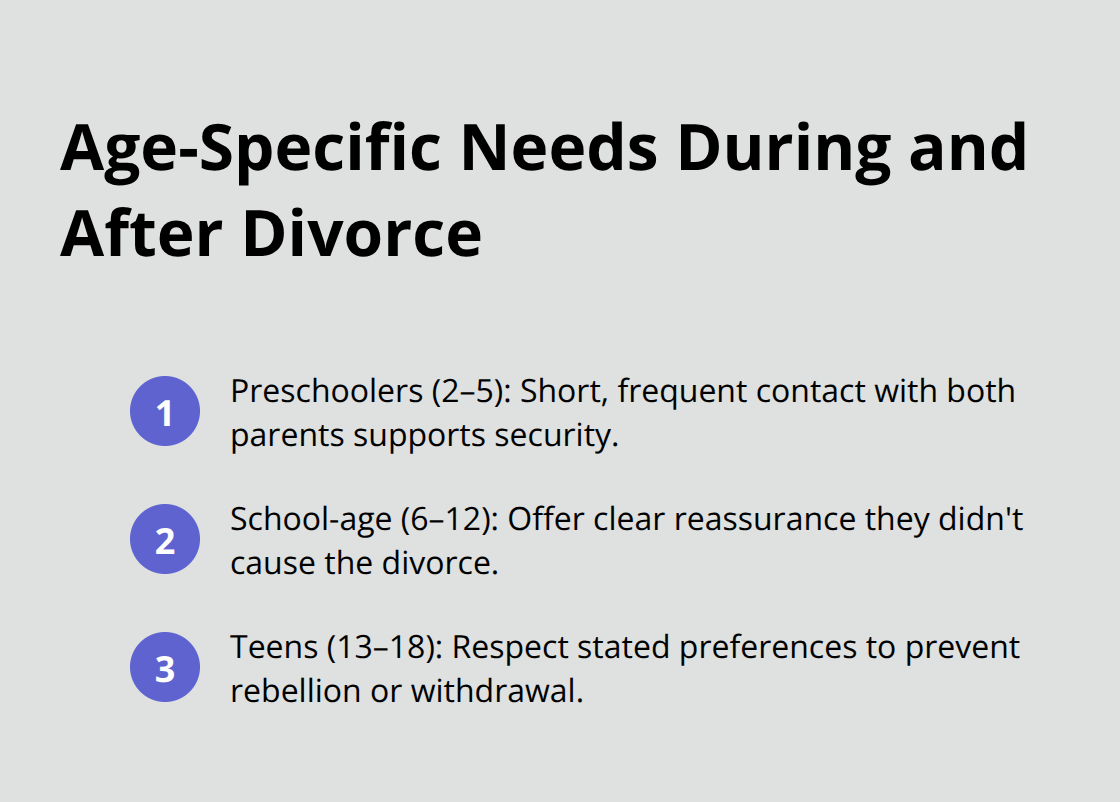
The critical action here is matching custody schedules to developmental needs rather than applying one-size-fits-all solutions. Children with disabilities, autism spectrum conditions, or significant anxiety may struggle more with transitions between homes and benefit from longer stretches in one primary residence.
Building Resilience Through Parental Stability
Individual resilience-a child’s ability to adapt, problem-solve, and maintain emotional regulation-varies widely and is partially inherited but heavily shaped by parental warmth and consistency. A child with naturally high resilience still deteriorates in chaotic, conflict-filled environments, while a naturally anxious child thrives when parents provide emotional stability, predictable routines, and genuine reassurance.
Parents who invest in their own emotional well-being, attend therapy themselves when needed, and prioritize their children’s developmental stage over custody convenience produce measurably better outcomes regardless of a child’s natural temperament. This foundation of parental stability directly influences whether children develop the coping skills they need to move forward. Understanding these adjustment factors positions parents to take concrete action-and it also clarifies why the strategies parents implement during and immediately after separation shape everything that follows.
What Parents Should Do Right Now
Start with Honest, Age-Appropriate Conversations
The most effective action parents can take is having a structured conversation with their child about the divorce before it happens, using language matched to their age that avoids blame and reassures the child that both parents remain fully committed to them. Children aged six and older need explicit, honest statements: the divorce is between the parents, not caused by the child, and both parents will continue to be present in their lives. Younger children aged two to five need shorter, simpler explanations focused on practical changes (where they’ll sleep, who picks them up from school) rather than abstract concepts.
Parents should avoid discussing finances, settlement details, or negative comments about the other parent, which measurably increases a child’s anxiety and stress levels. This restraint protects children from adult conflicts they cannot resolve.
Establish Consistency Across Both Households
After the initial conversation, consistency matters more than perfection. Children need to know their schedule in advance, understand which parent is responsible for which decisions, and experience the same rules and consequences across both households. Apps like OurFamilyWizard allow parents to coordinate schedules, share photos, and track expenses without direct conflict, reducing the friction that children witness and absorb.
Research from the American Academy of Child and Adolescent Psychiatry shows that children in structured routines with predictable bedtimes, homework expectations, and weekend activities adjust measurably faster than those in chaotic environments, regardless of custody type. Predictability itself becomes a stabilizing force.
Access Professional Support During the Critical First Year
Professional support during the first year after separation accelerates recovery significantly and should not be viewed as optional or a sign of failure. Family therapy or individual child therapy specifically addresses the guilt, loyalty conflicts, and behavioral changes that emerge during divorce, providing children with concrete coping tools rather than leaving them to process trauma alone.
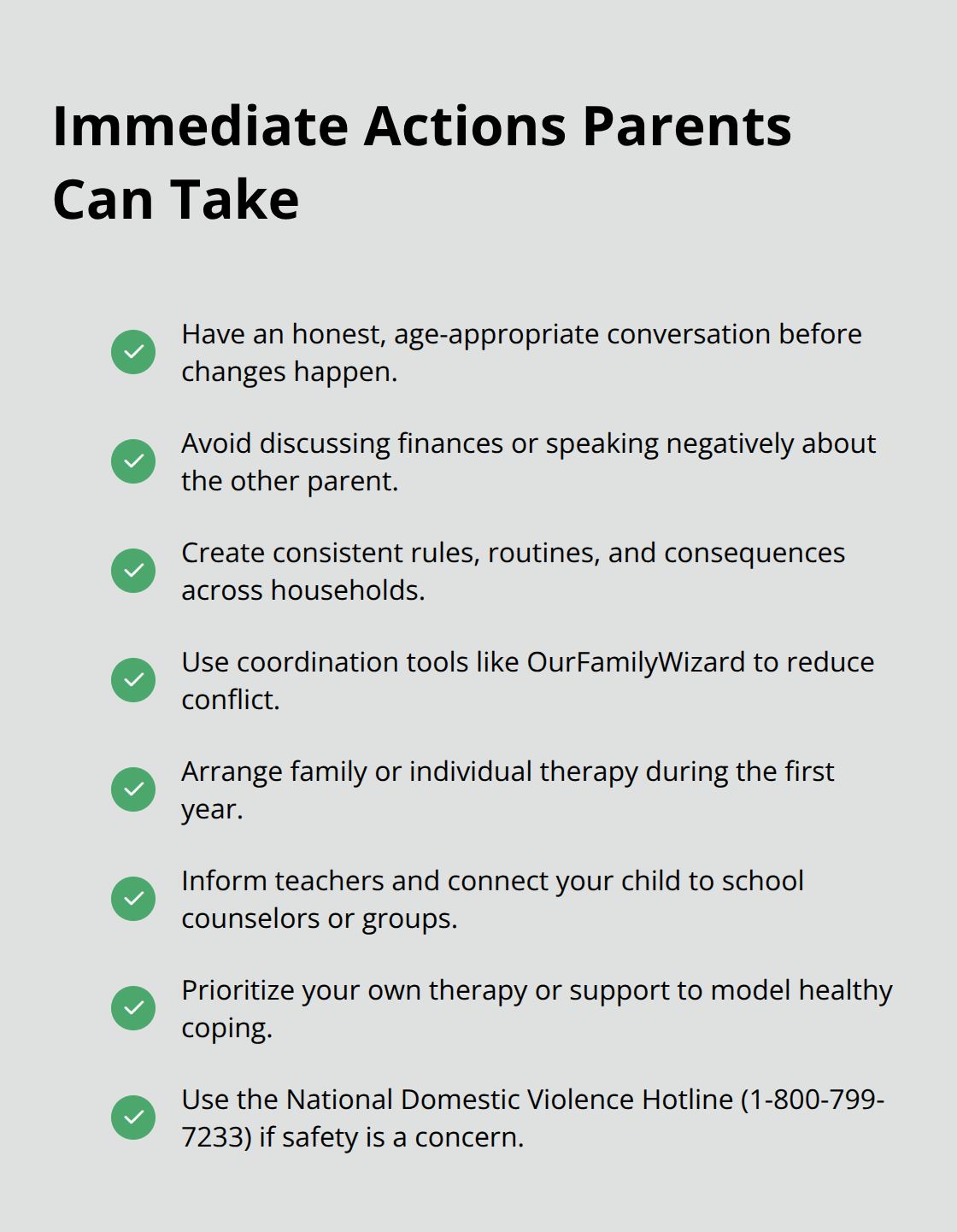
Schools also function as critical support systems when parents inform teachers about the family change and connect their child to school counselors or support groups for children of divorce. Teachers who understand what a child is experiencing can adjust expectations and provide targeted encouragement.
Prioritize Your Own Emotional Health
Parents who struggle emotionally should attend their own therapy or support groups, which directly improves their parenting quality and models healthy emotional management for their children. Your stability becomes your child’s foundation.
The National Domestic Violence Hotline at 1-800-799-7233 provides immediate support if safety concerns exist, while local family justice centers offer resources tailored to your region. These services exist specifically to help families navigate separation with minimal harm to children.
Final Thoughts
The effects of childhood divorce on mental health are real and measurable, yet parents can prevent the worst outcomes through deliberate action. Children face elevated risks of anxiety, depression, and behavioral problems during and after separation, but research shows that what parents do after the divorce matters far more than the divorce itself. When parents manage conflict, maintain consistent routines, and prioritize their children’s emotional needs, children recover faster and experience fewer lasting psychological effects.
Professional support during the critical first year after separation accelerates recovery significantly. Family therapy, school counseling, and evidence-based interventions provide children with concrete tools to process guilt, manage loyalty conflicts, and adapt to new living arrangements. Parents who invest in their own emotional well-being model healthy coping and create the stability their children need to thrive.
If you are navigating divorce and want to protect your children’s mental health while securing arrangements that serve their best interests, Harnage Law PLLC provides legal guidance focused on family-centered solutions. The National Domestic Violence Hotline at 1-800-799-7233 offers immediate support if safety concerns exist. Your children’s recovery depends on the choices you make now-and those choices remain within your control.