
Florida Divorce Filings: What to File and When
Our Blog
Florida Divorce Filings: What to File and When
Filing for divorce in Florida requires submitting the right documents at the right time. Missing a deadline or submitting incomplete paperwork can delay your case and create unnecessary complications.
We at Harnage Law PLLC help families navigate Florida divorce filings by breaking down exactly what you need to file and when. This guide walks you through the essential documents, critical timelines, and common pitfalls to avoid.
What Documents Must You File First
The Petition for Dissolution of Marriage
The petition for dissolution of marriage is your starting point-this formal document initiates your divorce case in Florida circuit court. Florida Statutes requires you to state that the marriage is irretrievably broken, which is one of two legally acceptable grounds for divorce in Florida. Your petition must include basic information about you, your spouse, any minor children, and a request for relief such as property division, alimony, or custody arrangements. Filing this document with the clerk of court officially begins your case, and you cannot proceed without it. The Florida State Courts website provides official forms to help you comply with statutory requirements.
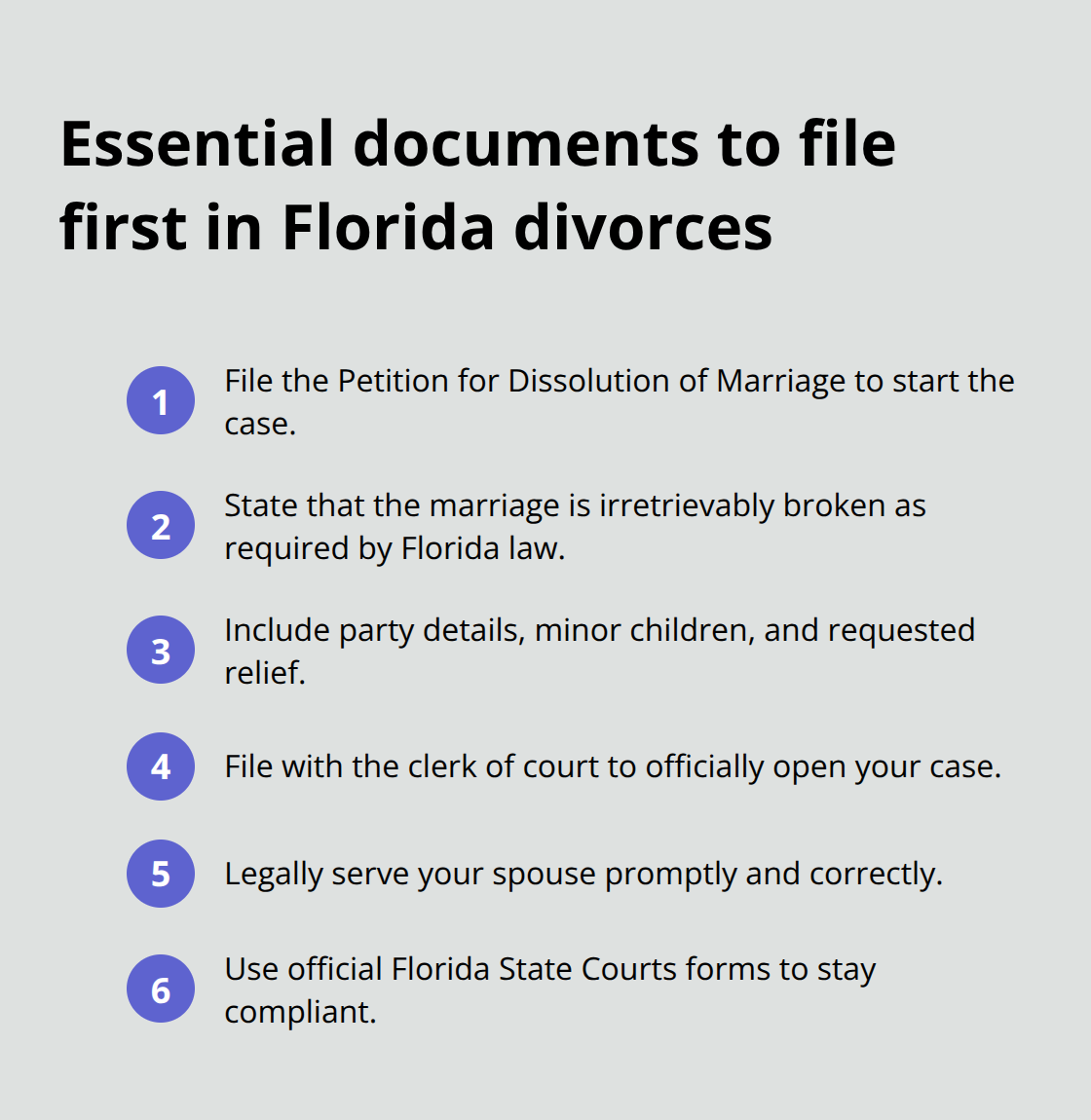
After you file the petition, you must legally serve your spouse with a copy-this is not optional, and improper service can invalidate your entire case.
Financial Disclosure Requirements
You must file a Family Law Financial Affidavit within a defined number of days after your case begins, according to the Florida Family Law Rules of Procedure. This document discloses your income, expenses, assets, and liabilities with specificity-vague statements about what you earn or owe will not satisfy the court. Courts use this affidavit to calculate child support, alimony, and property division, so accuracy matters significantly. Mandatory disclosure documents must also be filed, which typically include bank statements, tax returns from the past two years, pay stubs, and documentation of any retirement accounts or real property you own.
Why Complete Documentation Matters
These disclosures prevent surprises later and allow both parties to negotiate from a position of transparency. Incomplete or incorrect documentation at this stage creates delays that extend your case by months, increasing legal costs and prolonging conflict. Courts in Florida take these filing requirements seriously-failure to provide complete financial information can result in court-ordered fees, mandatory parenting courses, or adverse rulings against the non-compliant party. The next section covers the timelines and deadlines you must meet to keep your case moving forward.
When Must You Respond and File Next
The 20-Day Response Window
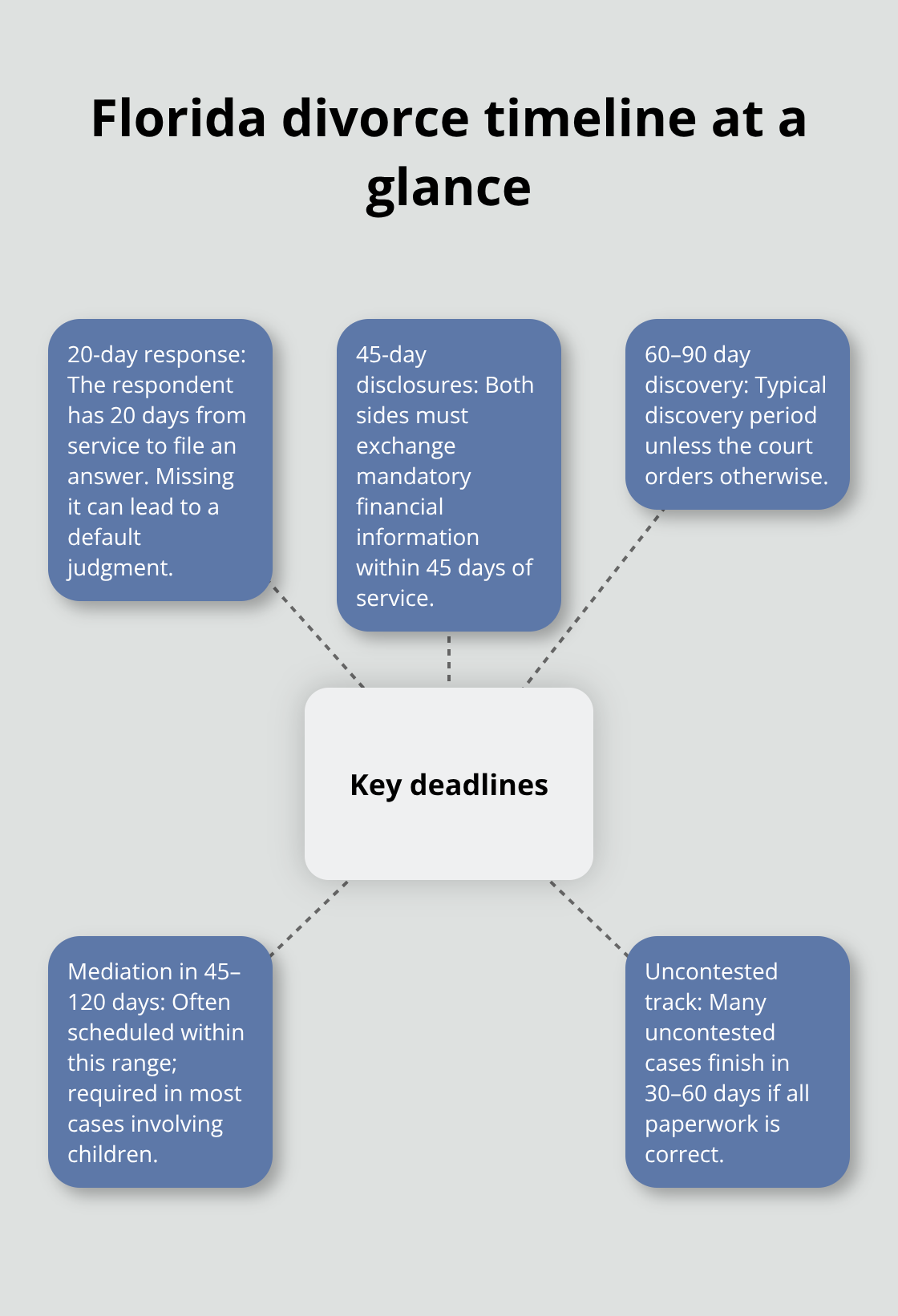
Florida’s divorce timeline moves quickly once you file your petition. The respondent-your spouse-has 20 days from the date they are served to file a written answer with the court, according to the Florida Family Law Rules of Procedure. Missing this deadline doesn’t stop the case; the court can enter a default judgment against the non-responding party, meaning you win by default without a trial. However, the respondent can request an extension, and courts often grant additional time if requested reasonably.
Financial Exchange and Discovery Deadlines
After the answer is filed, both parties must exchange financial information within 45 days of service, per the Florida Family Law Rules. This mandatory disclosure requirement prevents surprises and forces transparency from the start. Cases derail when clients miss these early deadlines-what seems like a minor delay compounds into months of additional litigation. The discovery process typically runs for 60 to 90 days unless the court orders otherwise, and during this period, each party can request documents, written answers to questions, and depositions from the other side.
Mandatory Classes and Mediation Requirements
If your case involves minor children, you must complete a parenting class before the final hearing; courts require this in nearly all child custody cases in Florida. Mediation is also mandatory unless domestic violence exists, and the court will schedule this within 45 to 120 days of filing, depending on your county’s backlog.
Timeline to Final Judgment
Most contested divorces in Florida take between six months and two years to resolve, depending on complexity and whether the parties cooperate. Courts issue interim orders throughout the process to address immediate needs like temporary child support, custody arrangements, and attorney fees while the case proceeds. If you fail to meet a court-ordered deadline, the judge can impose sanctions, award attorney fees to the other party, or issue contempt charges. The Clerk of Court can provide a detailed information packet outlining all deadlines specific to your county, and the Florida State Courts website lists exact timelines for each stage. Courts in Brevard County, where Melbourne is located, typically move faster than larger urban counties because the docket is less congested. Uncontested divorces move significantly faster-many resolve in 30 to 60 days if both parties agree on all issues and submit proper paperwork without errors.
Understanding these timelines helps you prepare for what comes next. The documents you file and the deadlines you meet set the stage for how your case progresses, but mistakes in the filing process itself can derail even the most straightforward divorce.
Errors That Derail Your Divorce Filing
Documentation Problems That Courts Reject
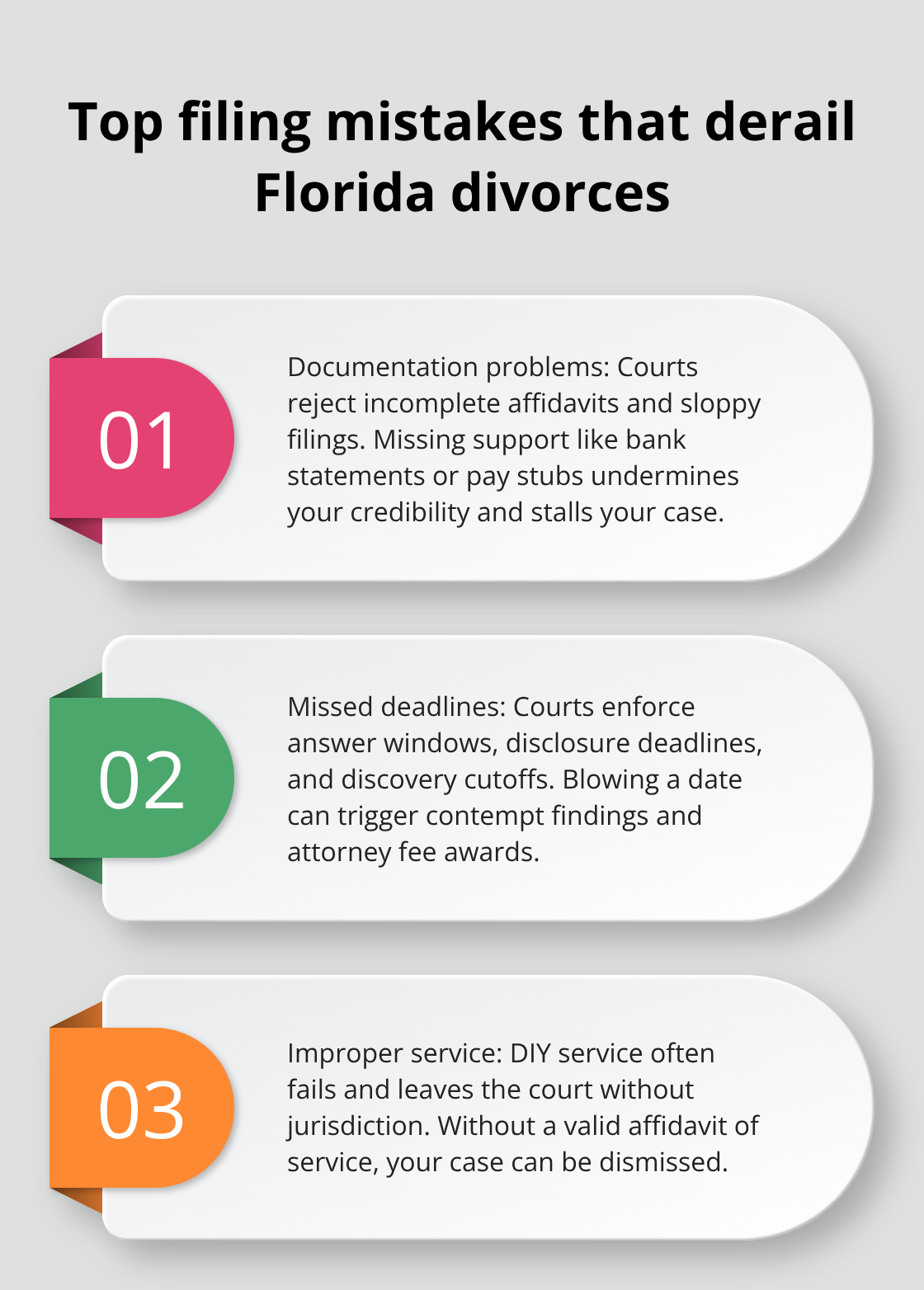
Filing mistakes in Florida divorce cases fall into three categories: documentation problems, missed deadlines, and improper service of the other party. The Florida Family Law Rules of Procedure contain no grace period for sloppy paperwork or late submissions-courts reject incomplete financial affidavits, deny motions filed past the deadline, and dismiss cases when service fails. One common error is submitting a Family Law Financial Affidavit without supporting evidence.
The court needs bank statements, tax returns from the past two years, and recent pay stubs to verify the numbers you claim-if you list monthly income as $5,000 but your pay stub shows $4,200, the judge will question your credibility on everything else.
Another frequent mistake is failing to list all assets and liabilities. Florida courts divide marital property equally unless you disclose it, which means hidden accounts, retirement funds, or debts can surface during discovery and trigger sanctions against you. Errors in these forms trigger dismissals, and once dismissed, you restart the filing process from scratch. The Clerk of Court in Brevard County enforces strict filing requirements, and incomplete submissions get returned to you, which delays your case by weeks while you gather missing documents and refile.
Missed Deadlines and Their Consequences
Missed deadlines create cascading problems throughout your case. The respondent’s 20-day answer window, the 45-day financial exchange deadline, and court-ordered discovery cutoffs are not suggestions-missing even one triggers contempt findings, attorney fee awards to the other party, and adverse rulings from the judge. If you fail to serve your spouse properly, the entire case stalls because the court lacks jurisdiction to proceed.
Courts in Melbourne operate on tight schedules, and judges will not delay trials or hearings because you filed paperwork incorrectly or late. Each missed deadline compounds into months of additional litigation and higher legal costs.
Service Requirements and Common Mistakes
Service must follow Florida Statutes requirements: personal delivery to your spouse, certified mail with return receipt, or hiring a professional process server. Many people attempt to serve divorce papers themselves, which often fails because they do not follow proper procedures or fail to document the service correctly. The court needs an affidavit of service signed under oath proving that the respondent received the documents-a casual text message confirming receipt does not satisfy this requirement.
If service fails and you do not catch it early, you may spend months litigating a case that gets dismissed because the court never had proper jurisdiction. The Florida State Courts website provides official forms and instructions for service, but improper service of process happens regularly. Proper documentation of service protects your case and prevents costly delays down the road.
Final Thoughts
Florida divorce filings demand precision from the moment you file your petition through the final judgment. Missing a single deadline costs you months of additional litigation and thousands in legal fees, while incomplete financial disclosures invite court sanctions and damage your credibility with the judge. Improper service of your spouse invalidates your case entirely, forcing you to start over from scratch.
You have three realistic options moving forward. First, you can proceed without legal representation if your case is truly uncontested and both parties agree on all issues, though this approach carries significant risk if complications arise. Second, you can hire an attorney to handle the entire process, which costs more upfront but protects you from costly mistakes. Third, you can work with an attorney on specific tasks-filing documents, handling service, or reviewing your financial affidavit-while managing other aspects yourself.
We at Harnage Law PLLC handle family law cases throughout Florida, including divorce and child custody matters in Melbourne. If you want to discuss your situation and understand what proper filing looks like for your specific circumstances, contact us for a consultation.