
How to Choose Between Contested or Uncontested Divorce
Our Blog
How to Choose Between Contested or Uncontested Divorce

Divorce decisions shape your financial future and family relationships for years to come. The choice between a contested or uncontested divorce affects everything from legal costs to emotional strain on your children.
At Harnage Law PLLC, we help clients understand which path fits their situation. This guide walks you through the key differences and factors that matter most.
What’s the Real Difference Between Contested and Uncontested Divorce
The Core Distinction
An uncontested divorce means both spouses agree on all major issues: property division, debt responsibility, child custody, child support, and alimony. A contested divorce happens when spouses cannot reach agreement on one or more of these issues, forcing a judge to decide. The distinction matters enormously because it determines your costs, timeline, and how much control you retain over the outcome.
How Each Path Works
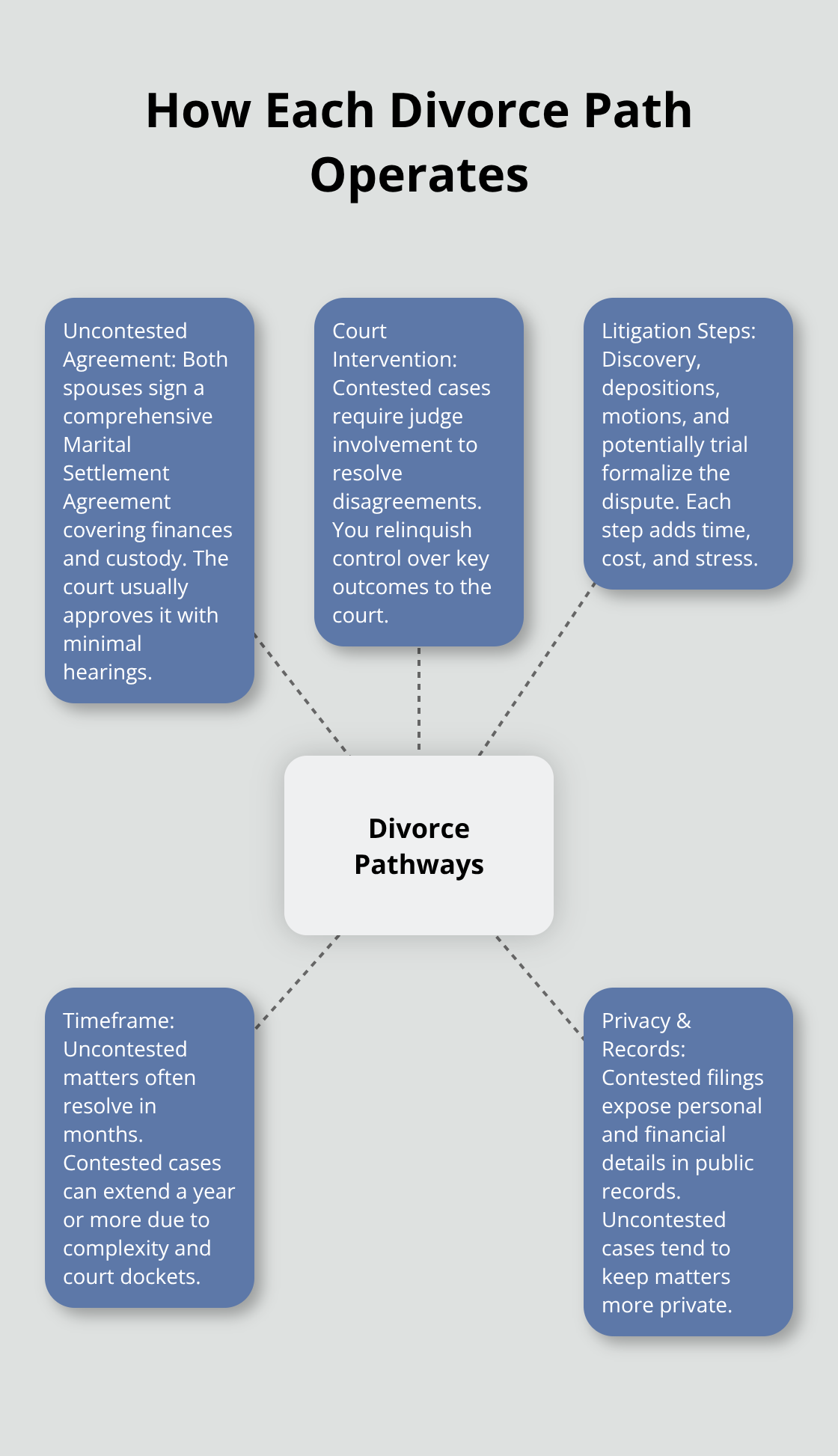
In an uncontested divorce, you and your spouse negotiate a Marital Settlement Agreement that covers every financial and custody detail. Once both parties sign this agreement, the court typically approves it without extensive hearings. In a contested divorce, the court must intervene to resolve disagreements. This means discovery (exchanging documents and information), depositions, motions, and potentially a trial where a judge makes final decisions about your assets and children.
The Financial Reality
The costs differ dramatically. A Reddit discussion from someone navigating a contested divorce without children reported legal fees around $45,000-and this figure only covers attorney costs, not the expenses of dividing major assets like a home or retirement accounts. Uncontested divorces cost substantially less because they require fewer attorney hours and minimal court involvement.
Timeline and Privacy Differences
Uncontested divorces often finalize within a few months, while contested cases frequently extend over a year or multiple years depending on complexity and court backlogs. Beyond money and time, contested divorces expose your personal financial information and family matters to public court records, whereas uncontested divorces remain largely private.
The Impact on Children and Your Well-Being
The emotional toll on children is significantly higher in contested cases. Research consistently shows that prolonged litigation increases stress for kids, whereas quicker uncontested resolutions minimize disruption to their routines and relationships with both parents. If you have children under 21, a contested divorce may require custody mediation, parenting time disputes, and court-ordered parent education workshops-all adding time and expense. Your emotional capacity matters too. If you’re already exhausted or anxious about the process, a contested battle can worsen your mental health throughout months of legal proceedings. Understanding these differences helps you recognize which factors matter most to your family’s future, which brings us to the specific considerations that should guide your decision.
Which Path Matches Your Situation
Assess Your Level of Agreement on Major Issues
The decision between contested and uncontested divorce hinges on three concrete factors that determine whether you can settle outside court or need a judge to intervene. Start by evaluating your actual level of agreement on property division, custody arrangements, and financial support. If you and your spouse hold fundamentally different views on who keeps the house, how retirement accounts split, or what custody schedule protects your children’s interests, an uncontested divorce becomes impossible. This isn’t about minor disagreements on details-it’s about core issues where one person’s gain is the other’s loss.
Many people overestimate their agreement level. You might think you’ve settled asset division until your spouse’s attorney values the marital home differently or claims a larger share of retirement savings. Before committing to an uncontested path, write down each major issue and compare your positions directly. If you find yourself uncertain about your spouse’s actual stance, that uncertainty signals you need professional guidance before filing.
Evaluate Asset Complexity and Financial Scope
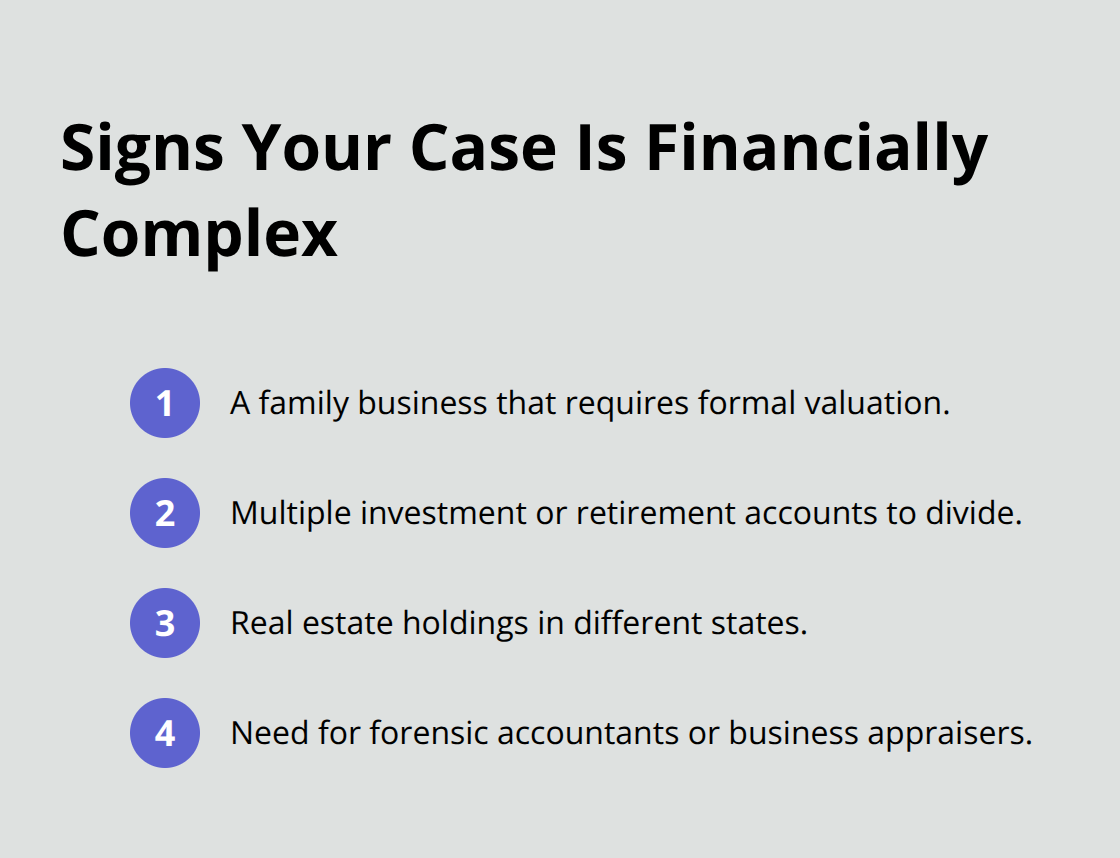
Asset complexity dramatically shifts which path makes financial sense. A contested divorce involving a family business, multiple investment accounts, real estate holdings in different states, or significant retirement assets requires extensive discovery and valuations-costs that easily exceed $50,000 when attorneys must hire forensic accountants or business appraisers. If your marital assets consist primarily of a home, modest savings, and standard retirement accounts, an uncontested settlement becomes far more reasonable.
The financial stakes matter because complex cases demand more attorney time and expert involvement. Simple asset divisions move quickly through uncontested processes, while intricate financial situations almost always require contested litigation to protect your interests adequately. Understanding financial divorce tips can help you navigate settlement negotiations and protect your assets throughout the process.
Consider Your Emotional Capacity and Future Relationships
Your emotional capacity matters equally. Contested divorces demand you withstand months or years of depositions, motions, and potentially courtroom testimony about your most painful personal details. If you’re already managing depression, anxiety, or significant stress, the adversarial process can destabilize your mental health and impair your decision-making. Some people have the emotional resilience for extended litigation; others find it debilitating. Be honest about your threshold.
Consider also whether you need to maintain a working relationship with your ex-especially if you share children or run a business together. Contested litigation typically destroys any possibility of cooperation, whereas uncontested divorces preserve enough civility for future parenting or professional interactions. These three factors (agreement level, asset complexity, and emotional readiness) work together to point you toward the right path. Once you understand where you stand on each dimension, the next step involves working with an attorney who can translate these assessments into concrete legal strategy.
Finding the Right Attorney for Your Divorce Path
How an Attorney Evaluates Your Situation
An attorney’s first job is assessing whether your divorce can realistically settle outside court or requires litigation from the start. This evaluation examines three concrete factors: your spouse’s demonstrated willingness to negotiate, the actual complexity of your assets, and whether custody or support disputes exist. Many people assume their spouse will cooperate based on a single conversation, but initial friendliness often vanishes once attorneys enter the picture. A qualified attorney requests documentation of your spouse’s past behavior in financial matters, communication patterns, and any prior disputes. If your spouse has hidden assets before, refused to disclose income, or made threats about custody, litigation becomes the safer path regardless of what they promise now.
An attorney also identifies hidden asset complexity that clients miss. A seemingly simple retirement account might involve stock options with vesting schedules, deferred compensation, or military service credits that require forensic accounting to value correctly. Your attorney identifies these complications early so you understand the true financial scope before committing to an uncontested settlement that might later prove inadequate.
Developing Your Legal Strategy
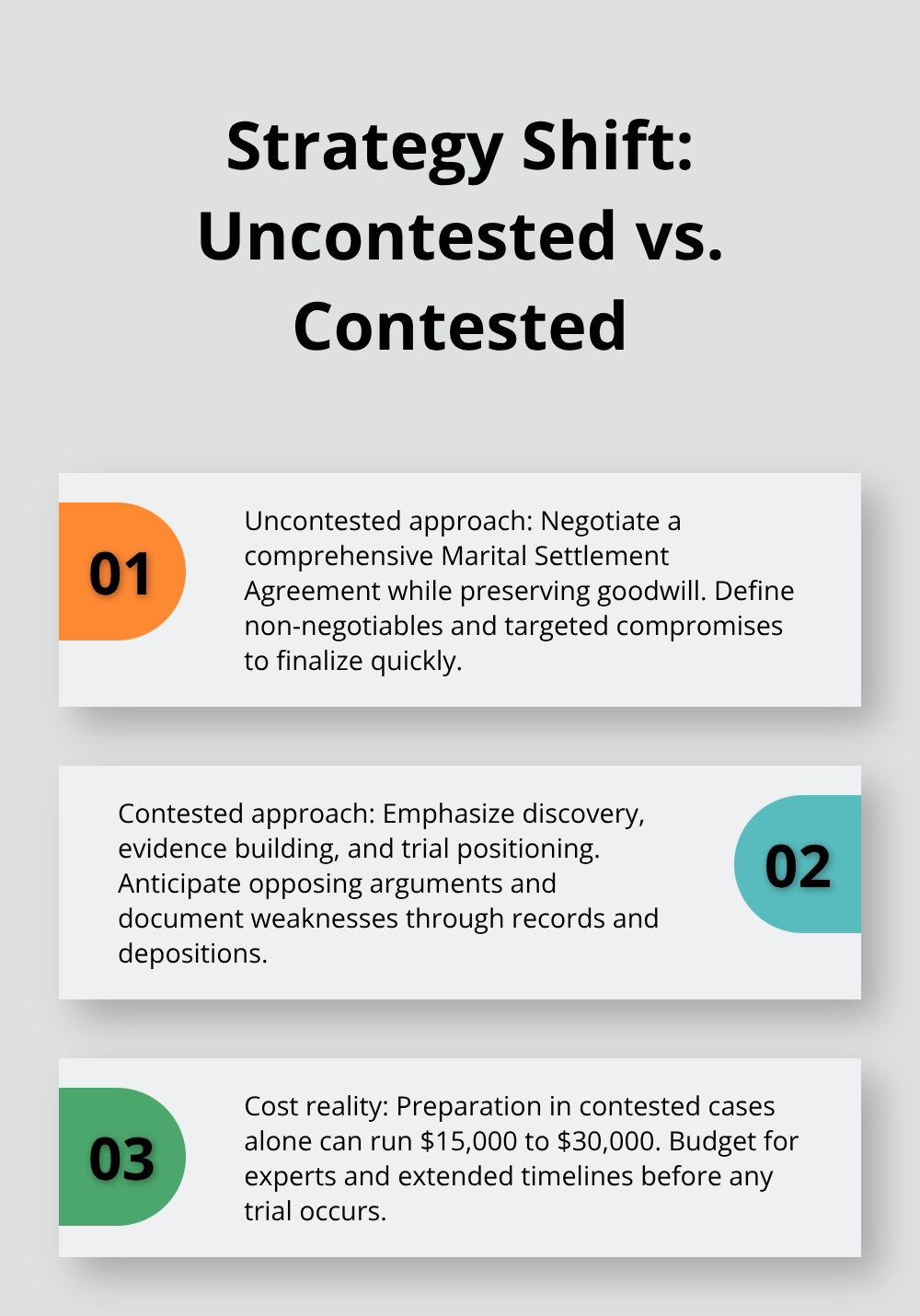
Your attorney then develops a strategy matched to your specific situation rather than applying a generic approach. For uncontested divorces, the strategy focuses on negotiating a Marital Settlement Agreement that protects your interests while maintaining enough goodwill to finalize quickly. This means identifying your non-negotiable positions upfront and determining where you can compromise to reach settlement faster.
For contested divorces, the strategy shifts dramatically toward discovery, evidence gathering, and positioning your case for the strongest possible outcome at trial or settlement. An attorney handling contested cases must anticipate your spouse’s likely arguments, identify weaknesses in their position, and build a factual record through documents and depositions. The cost difference matters significantly: contested discovery and expert involvement can cost $15,000 to $30,000 just in the preparation phase before any trial occurs.
Protecting Your Rights Throughout the Process
Your attorney protects your rights by ensuring you understand these costs upfront and by identifying opportunities to settle contested cases mid-litigation. Many contested divorces that seemed impossible to resolve shift toward settlement once discovery reveals information that changes each party’s negotiating position. An experienced attorney recognizes when settlement becomes advantageous and pushes you toward resolution rather than continuing expensive litigation unnecessarily.
This protection extends to ensuring you don’t inadvertently waive rights or agree to terms that harm your financial future or parenting relationship with your children. Your attorney also monitors whether your spouse’s conduct (hidden assets, false statements, or threats) warrants aggressive litigation tactics or whether settlement remains possible despite initial hostility.
Final Thoughts
The choice between a contested or uncontested divorce fundamentally shapes your financial outcome, timeline, and family relationships. An uncontested divorce offers speed, privacy, and lower costs when both spouses can agree on property division, custody, and support. A contested divorce protects your rights through court intervention when agreement is impossible, but demands significantly higher legal fees, extended timelines, and emotional strain on your entire family.
Your decision should rest on three concrete realities: whether genuine agreement exists on major issues, whether your assets are simple enough to settle fairly outside court, and whether you have the emotional capacity for months or years of litigation. Overestimating your spouse’s willingness to cooperate or underestimating asset complexity leads to costly mistakes. Be honest about these factors before committing to either path.
We at Harnage Law PLLC understand that divorce decisions carry long-term consequences for your finances and family relationships. Our team in Melbourne, Florida provides personalized attention to family law cases including divorce and child custody matters. Contact us today to discuss your specific situation and determine whether a contested or uncontested approach serves your family’s future best.