
Melbourne FL family law: Key Concepts and Common Questions
Our Blog
Melbourne FL family law: Key Concepts and Common Questions

Family law matters in Melbourne FL affect some of the most important decisions you’ll make. Property division, custody arrangements, and child support can feel overwhelming without clear guidance.
At Harnage Law PLLC, we’ve helped countless families navigate these complex issues. This guide breaks down the core concepts you need to understand.
How Property Division Works in Melbourne FL Divorces
Marital vs. Non-Marital Property
When a marriage ends in Melbourne FL, the court divides marital property using equitable distribution, which means fair but not necessarily equal. Florida courts treat property acquired during the marriage as marital assets subject to division, regardless of whose name appears on the title. This includes homes, retirement accounts, vehicles, and even passive appreciation on assets purchased before marriage. Non-marital property-assets you owned before marriage, inheritances, or gifts-typically stays with the original owner, though the income generated from non-marital assets during the marriage often remains non-marital as well.
Factors Courts Use to Divide Assets
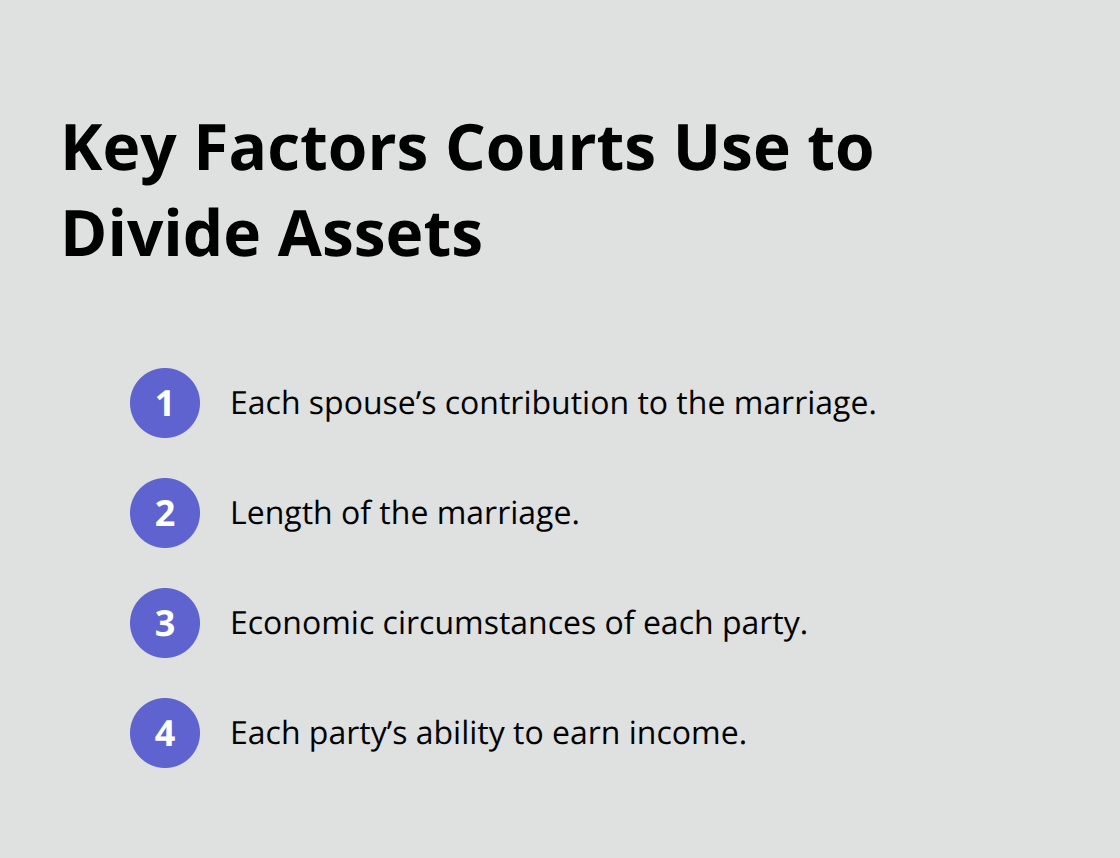
Courts examine factors like each spouse’s contribution to the marriage, the length of the marriage, the economic circumstances of each party, and each party’s ability to earn income when determining a fair split. If you own a home purchased during the marriage, the court will divide it even if one spouse made the down payment.
The same applies to retirement accounts like 401(k)s and pensions, which require a Qualified Domestic Relations Order (QDRO) to divide properly. This process typically takes several months, and some employers pre-approve orders, which can speed things up.
The Importance of Full Asset Disclosure
Full disclosure of assets and liabilities is legally required in Florida divorces. If either spouse hides assets or provides incomplete information, the court can set aside the entire agreement later. Courts in Melbourne FL take this seriously and may impose sanctions on the dishonest party. Clear documentation of what you own, what you owe, and when you acquired each asset strengthens your position significantly.
Handling Complex Assets and Settlement Options
If you have complex assets-business interests, investment portfolios, or multiple properties-a professional valuation before negotiations begin prevents disagreements later. Many couples settle property division through collaborative negotiation rather than litigation, which reduces costs and speeds resolution. This approach often produces faster outcomes than court battles over asset division.
Understanding how courts approach property division in Melbourne FL helps you prepare for what lies ahead. The next section covers custody arrangements and how courts determine what serves your child’s best interests.
Child Custody Decisions in Melbourne FL
Florida courts make custody decisions based entirely on what serves your child’s best interests, not on what works best for you as a parent. The court examines your parenting history, your stability, your relationship with your child, and whether you can meet the child’s physical and emotional needs. If your child is old enough, the court will consider their preferences, though this varies by age and maturity. Courts also look at each parent’s employment schedule, involvement in school and healthcare decisions, and any history of substance abuse or domestic violence. Gender plays no role in Florida custody law. Fathers have equal standing to mothers, and courts evaluate both parents on identical criteria.
Legal Custody vs. Physical Custody
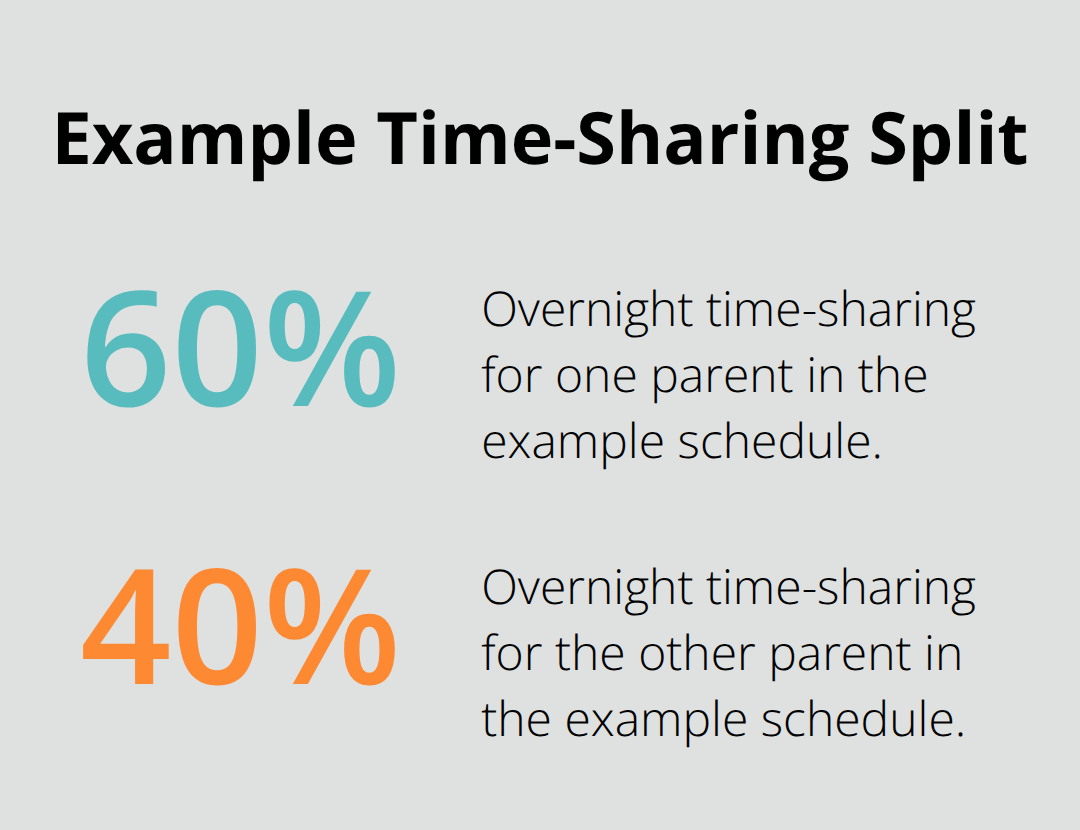
Legal custody and physical custody are two separate concepts that courts handle independently. Legal custody grants the right to make major decisions about your child’s education, healthcare, and welfare. Physical custody refers to where your child lives and spends time. You might hold joint legal custody with one parent, meaning both parents decide on school choice and medical care, while physical custody could be split or primarily with one parent. Florida uses a time-sharing framework rather than traditional sole or joint custody labels. One parent might have 60 percent of overnight time-sharing while the other has 40 percent. The specific percentages directly affect child support calculations, so the exact schedule matters financially as well as practically.
Formalizing Custody Arrangements in Writing
If you’re already separated and have informal custody arrangements, document them in writing immediately. Courts look unfavorably on parents who fail to formalize agreements because disputes become inevitable as children grow and circumstances shift. A written parenting plan protects both you and your child by establishing clear expectations and reducing conflict. Courts won’t enforce verbal agreements, so putting your arrangement on paper gives it legal weight and prevents misunderstandings down the road.
Modifying Custody When Circumstances Change
When circumstances genuinely change-a parent loses a job, relocates, or the child’s needs evolve-you can request a modification if you can demonstrate the change substantially affects your child’s best interests. Courts won’t modify orders simply because a parent wants more time; you need concrete evidence that the current arrangement no longer serves the child. If your former spouse wants to move your child out of state, Florida law requires court authorization. Parental relocation cases are fact-intensive and require careful legal guidance to protect your rights and your child’s stability.
The next section addresses how Florida calculates child support obligations and what factors influence the amount each parent pays.
How Child Support Gets Calculated in Melbourne FL
Florida calculates child support using a formula based on each parent’s gross income, the percentage of overnight time-sharing with each parent, and specific allowable deductions. The state’s child support guidelines establish base support amounts that courts apply consistently across cases. Each parent’s income includes wages, salary, bonuses, commissions, and self-employment earnings. The formula multiplies the combined parental income by a percentage tied to the number of children, then adjusts based on each parent’s proportionate share of income and overnight custody time. If one parent earns $60,000 annually and the other earns $40,000, with the first parent having 60 percent of overnight time-sharing, the calculation shifts support obligations accordingly. Courts can deviate from guideline amounts only when they find the guidelines unjust or inappropriate in specific circumstances, which happens rarely. The actual amount matters enormously because it directly affects your family’s financial stability for years.
Understanding Income and Deductions That Courts Consider
What counts as income for child support purposes extends beyond your paycheck. Overtime, bonuses, rental income, investment returns, and business profits all factor into the calculation. Allowable deductions include federal and state income taxes, Social Security taxes, health insurance premiums for the child, and mandatory retirement contributions. Courts scrutinize claims of reduced income carefully, particularly when a parent voluntarily reduces work hours or takes a lower-paying job specifically to lower support obligations. If you’re self-employed, provide detailed tax returns and profit-and-loss statements because courts will examine whether your reported income accurately reflects your earning capacity. Hiding income or manipulating deductions triggers serious consequences, including back payments with interest and potential contempt charges. Transparency about your financial situation produces better outcomes than attempting to conceal earnings.
Enforcement Actions When Payments Fall Behind
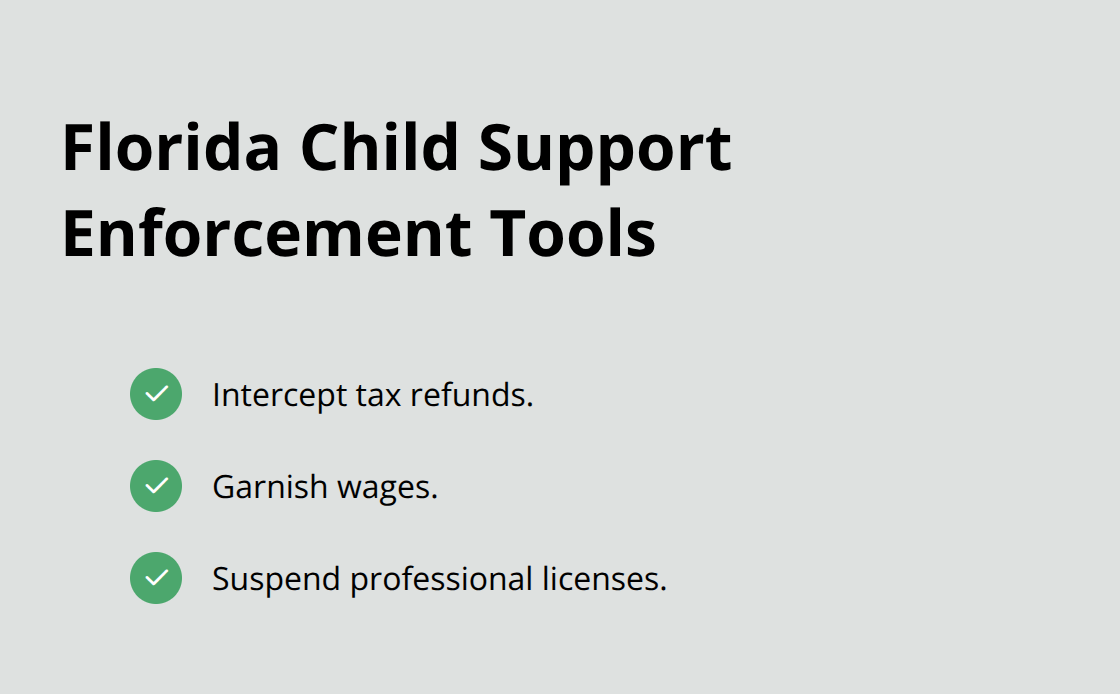
Child support obligations continue until your child reaches age 18, or through high school graduation if the graduation occurs before turning 19, unless the child has special needs requiring ongoing support. If your former spouse fails to pay, Florida’s Department of Revenue can intercept tax refunds, garnish wages, and suspend professional licenses. The enforcement process moves quickly once initiated, so missing payments accumulates debt rapidly. These enforcement mechanisms apply consistently across Melbourne FL and surrounding counties, making avoidance of payment obligations difficult.
Modification When Circumstances Shift
When your circumstances change significantly-you lose employment, receive a substantial raise, or your custody arrangement shifts-you can petition the court to modify support amounts. A modification requires demonstrating a substantial and unanticipated change in circumstances that justifies adjusting the existing order. Courts won’t modify orders based on minor income fluctuations or temporary job loss, but permanent employment changes or shifts in custody percentages typically qualify. Filing a modification request promptly prevents you from overpaying support or building arrears if your income has genuinely decreased.
Final Thoughts
Property division, custody arrangements, and child support form the foundation of Melbourne FL family law matters. Understanding these concepts helps you navigate decisions that shape your family’s future, with equitable distribution ensuring courts divide marital assets fairly based on factors like marriage length and each spouse’s contributions rather than splitting everything equally. Custody decisions center entirely on your child’s best interests, with courts examining parenting history, stability, and the child’s needs rather than parental preferences, while child support calculations follow Florida’s guidelines using income and time-sharing percentages to determine what each parent owes.
Your specific situation requires personalized legal guidance that goes beyond general information. Family law cases involve unique facts, competing interests, and deadlines that demand attention from someone familiar with Melbourne FL courts and local procedures. We at Harnage Law PLLC handle complex family law cases with the strategic counsel and personalized attention your matter deserves.
Contact Harnage Law PLLC through our website to arrange an initial consultation by phone or video, and we apply consultation fees toward your retainer if you decide to move forward. The sooner you understand your rights and options, the sooner you can make informed decisions about your family’s path forward.