
Protective Order Melbourne FL: A Step-by-Step Guide to Safety and Legal Protections
Our Blog
Protective Order Melbourne FL: A Step-by-Step Guide to Safety and Legal Protections
When you’re facing threats or abuse, a protective order in Melbourne FL can be your legal shield. We at Harnage Law PLLC understand how overwhelming this situation feels, and we’re here to guide you through every step.
This guide walks you through filing for protection, understanding your rights, and enforcing your order once granted.
Understanding Protective Orders in Melbourne Florida
Florida law provides five distinct types of protective orders, and identifying which one applies to your situation matters greatly. Domestic Violence injunctions protect you if a spouse, relative, current or former housemate, or someone with whom you share a child harms you. Repeat Violence injunctions require two separate incidents of violence or stalking within six months directed at you or your family members. Dating Violence injunctions cover relationships that existed within the past six months and involved an expectation of affection or sexual involvement. Sexual Violence injunctions protect victims of sexual assault and certain related offenses. Stalking injunctions address patterns of threats, harassment, cyberstalking, or conduct causing fear, including actions like threatening pets or property or displaying weapons. Each type carries specific eligibility requirements, and the judge determines which category fits your circumstances based on the facts you present.
Who qualifies to file
You can file for a protective order in Brevard County if you meet the requirements for your specific situation. For Domestic Violence injunctions, you qualify if you’re a current or former spouse, a blood or in-law relative, someone who currently lives or formerly lived with the abuser, or a parent of a child you share with that person. For Repeat Violence injunctions, you need proof of two violent incidents or stalking acts within six months. Dating Violence applicants must show a romantic or intimate relationship existed within the past six months with ongoing contact and expectations of affection or sexual involvement. Sexual Violence victims can file if they experienced sexual battery, sexual assault, or related offenses. Stalking injunction filers must demonstrate a pattern of two or more threatening, harassing, or cyberstalking incidents. The judge makes the final determination on your eligibility, not the clerk. This means the clerk will not reject your filing based on eligibility-you present your case to the judge and the law decides.
Cost and timeline basics
Filing for any protective order in Melbourne costs nothing. Florida law eliminates filing fees for Domestic Violence, Repeat Violence, Dating Violence, Sexual Violence, and Stalking injunctions. The timeline moves quickly when immediate danger exists. A judge can issue a temporary injunction within hours of your filing, which lasts up to 15 days unless extended. That temporary order takes effect immediately upon service by the Brevard County Sheriff. Your full hearing typically occurs within two weeks, where both you and the respondent present evidence and testimony.
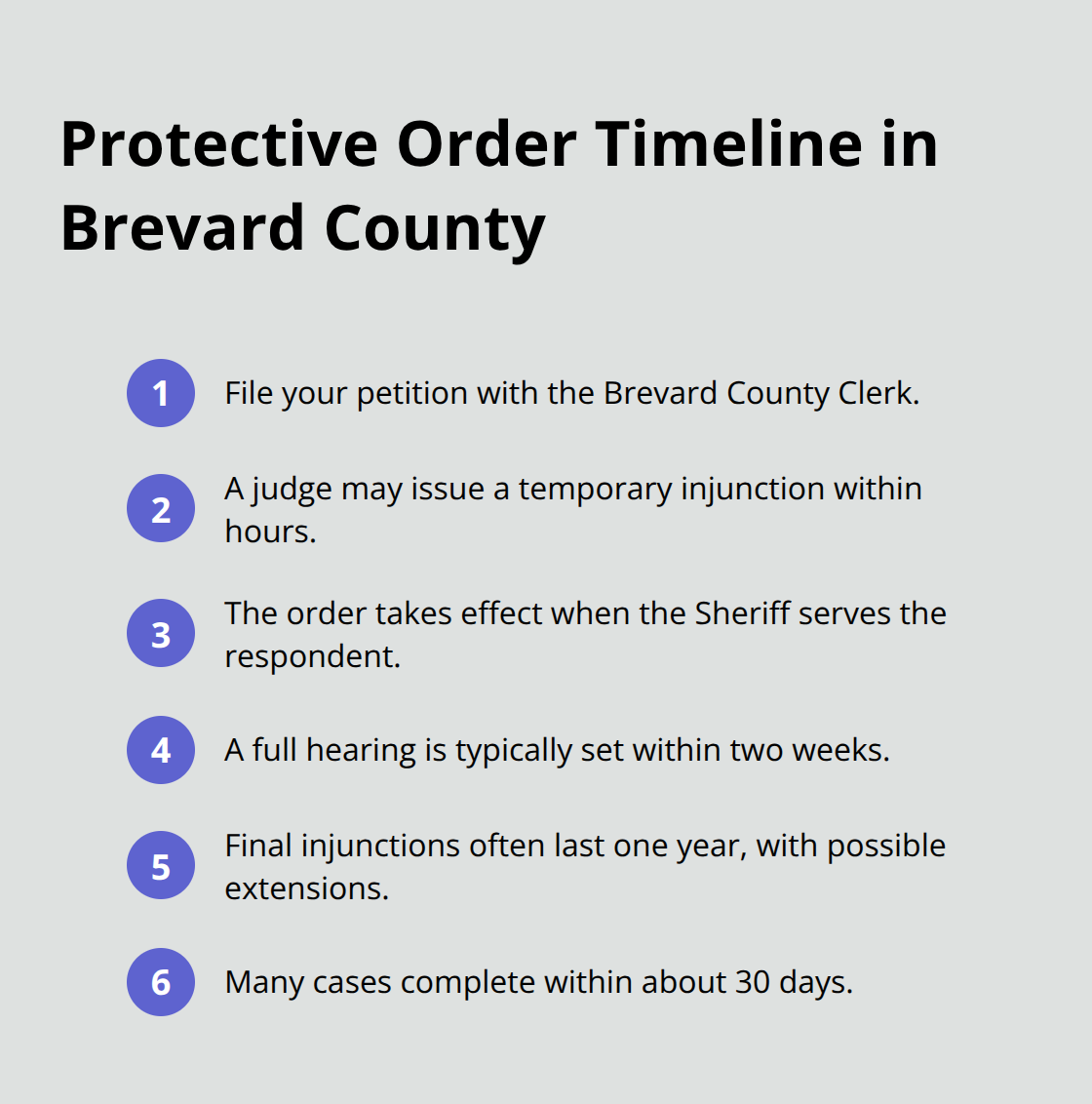
If the judge issues a final injunction after that hearing, the order remains in effect for one year unless you request modification or dissolution, or unless the judge determines indefinite protection is warranted. The entire process from filing to final decision usually completes within 30 days.
Once you understand which protective order type fits your situation and confirm your eligibility, the next step involves gathering the specific documentation and evidence that will support your petition to the court. Understanding local regulations and how Melbourne Florida courts operate ensures you present your case effectively.
How to Build Your Case and File for Protection
Gather Documentation That Strengthens Your Petition
The documentation you collect determines whether a judge grants your protective order. Write down every incident of abuse or threats with specific dates, times, locations, and what happened. If the abuser sent threatening texts, emails, or social media messages, screenshot and print them immediately-these carry significant weight in court because they show a pattern and come directly from the respondent. Medical records from any injuries sustained matter greatly; visit an emergency room or urgent care clinic and request documentation if you haven’t already. Police reports strengthen your petition substantially, so file a report with the Brevard County Sheriff if you haven’t done so.
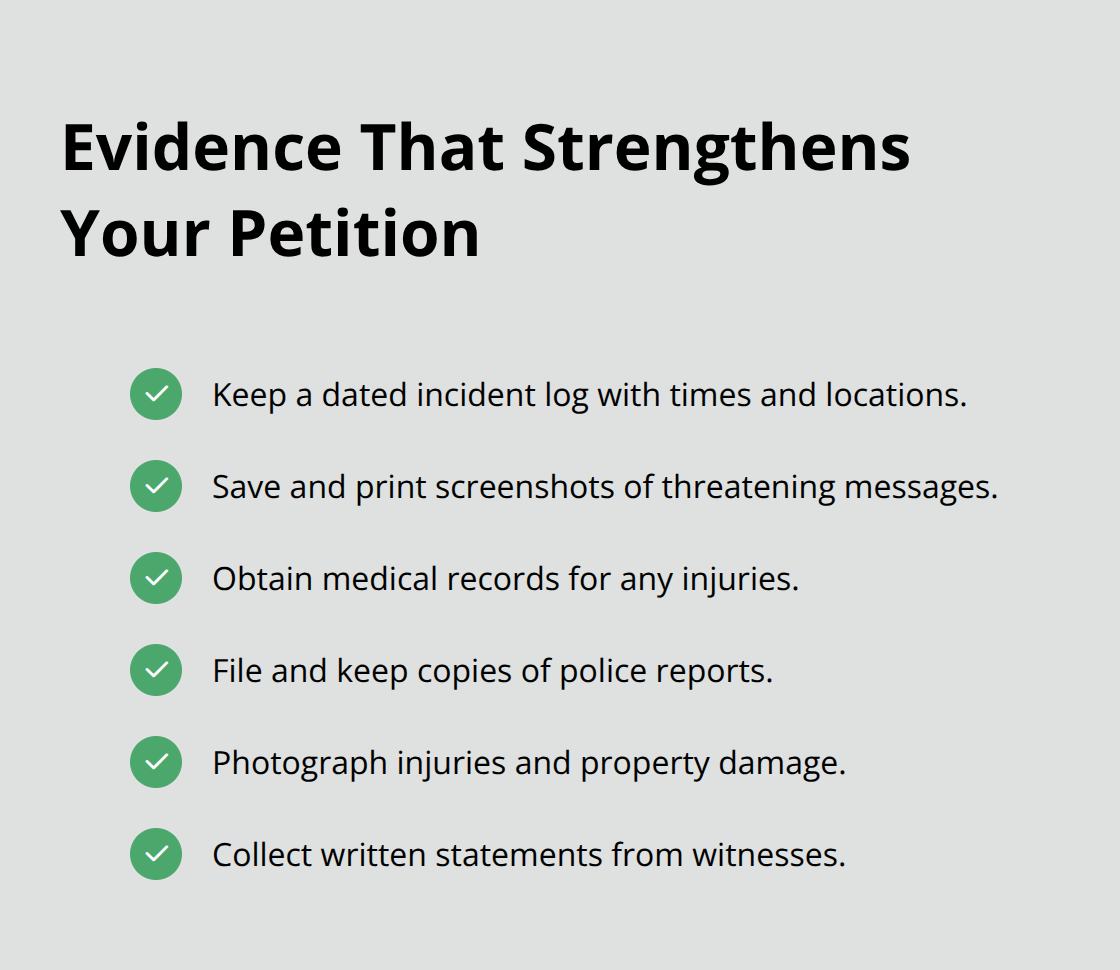
Photographs of injuries, property damage, or anything showing the threat level help judges understand the immediate danger you face. Witness statements from neighbors, family members, or coworkers who saw or heard incidents add credibility to your account.
Obtain and Complete the Required Forms
The Brevard County Clerk provides blank forms for each protective order type as downloadable PDFs ranging from 9 to 13 MB, so allow time for download. Complete the forms carefully and truthfully-the judge reviews your petition to determine eligibility and whether to issue a temporary injunction within hours of filing. The clerk assists with preparation but cannot give legal advice. Your accuracy on these forms directly influences how quickly the judge can act on your case.
Submit Your Petition to the Court
When you submit your petition to the Moore Justice Center in Viera at 2825 Judge Fran Jamieson Way during office hours of 8 a.m. to 5 p.m. Monday through Friday, file in the county where you live, where the abuser lives, or where the abuse occurred; confidentiality concerns may influence your choice. The judge decides your case based on statutory guidelines, not the clerk’s assessment of eligibility. After filing, three outcomes occur: the judge denies the petition, issues a temporary injunction without a hearing, or schedules a full hearing.
Understand What Happens After You File
If a temporary injunction is issued, the Brevard County Sheriff serves it on the respondent, and the order takes effect immediately. Your full hearing typically happens within two weeks. At the hearing, both you and the respondent present testimony and evidence; you may bring witnesses and documents supporting your case. The judge listens to both sides and determines whether to issue a final injunction lasting one year or longer. Bring all your documentation to the hearing, speak clearly about what happened, and stay focused on factual details rather than emotional descriptions of how events affected you.
Once the judge issues your protective order, understanding what protections it actually provides and how to enforce those protections becomes your next priority.
Your Rights and Protections Under a Protective Order
What the Protective Order Prohibits
A protective order issued by a Melbourne Florida court creates legally binding restrictions that the respondent must follow immediately. The order prohibits the respondent from abusing, threatening, stalking, or harassing you in any form, and it includes a mandatory stay-away provision requiring them to maintain a specific distance from your home, workplace, and school if you have children. The order also restricts all contact, meaning no phone calls, texts, emails, social media messages, or indirect communication through third parties. Violating these contact restrictions carries serious consequences, including arrest and criminal charges.
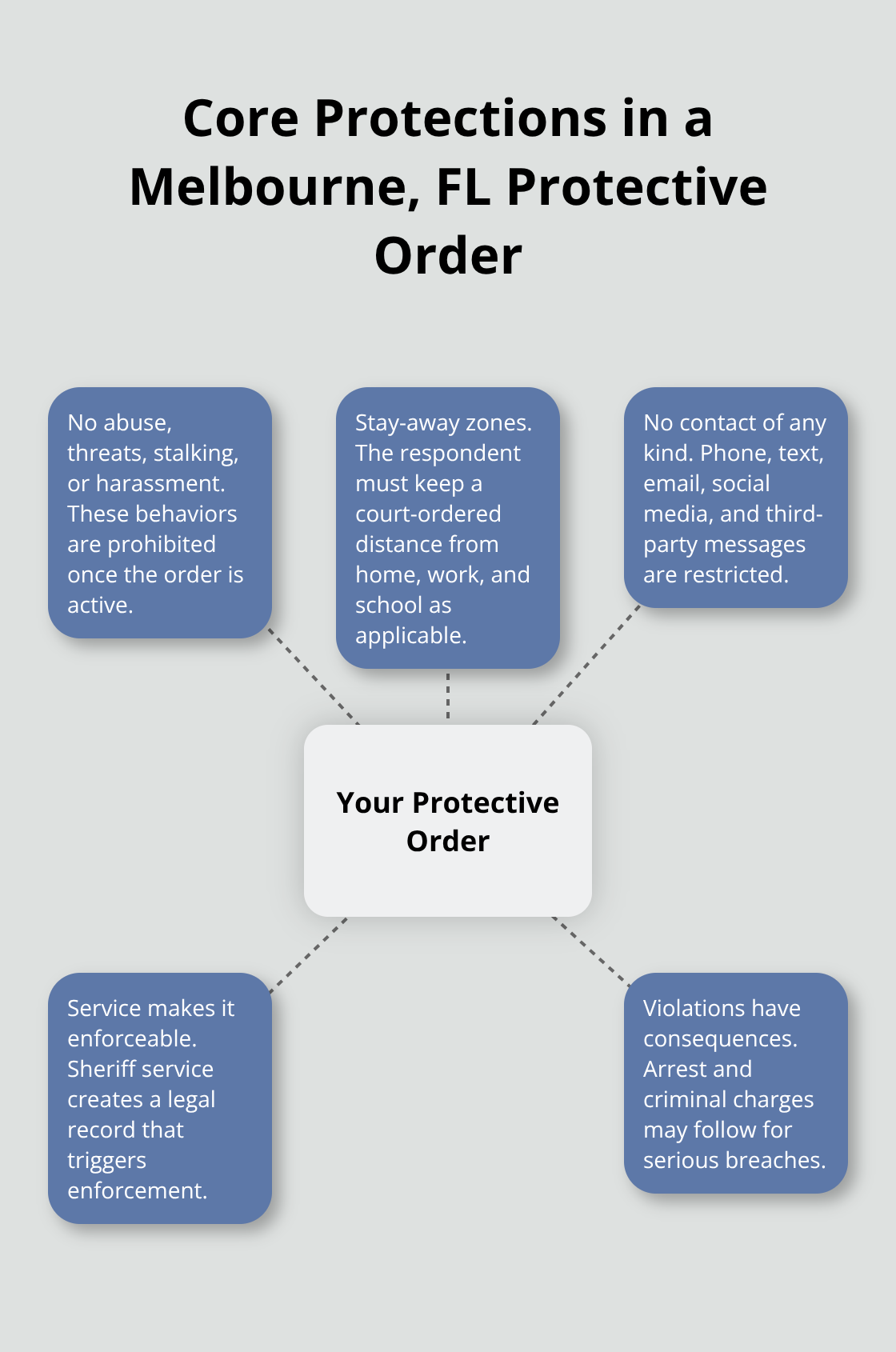
Many people misunderstand what happens after the order is issued, assuming the respondent automatically knows the terms. The Brevard County Sheriff serves the order on the respondent, and that service makes the order enforceable. If the respondent claims they never received it, that argument fails in court because service through the Sheriff creates a legal record.
Firearm Restrictions and Safety
One critical provision applies across all protective orders in Florida: the respondent may not possess firearms or ammunition while the order remains in effect. This restriction applies whether the respondent previously owned guns legally or not. If you suspect the respondent has weapons, report this to law enforcement immediately rather than confronting them yourself.
Custody and Property Arrangements
Custody arrangements and property protection depend heavily on the type of protective order you obtained and what the judge included in your specific order. If your protective order involves children, the judge may establish temporary parenting arrangements giving you full custody or requiring supervised visitation, depending on what protects the children from harm. Some judges award temporary child support as part of the protective order, though this varies by case circumstances.
Property considerations matter significantly in domestic violence situations where the abuser may have damaged your belongings or prevented you from accessing shared property. Your protective order can exclude the respondent from your home entirely, meaning they must leave and cannot return while the order is active. If you share property or vehicles, the order can address temporary possession and use to protect your safety and stability.
Enforcing Your Order and Reporting Violations
Florida law distinguishes between serious breaches and technical violations. If the respondent commits violence or returns to your property while restrained, call 911 immediately because this constitutes a criminal offense beyond the civil injunction violation. For other violations like a single text message or appearance near your workplace, file a Motion for Contempt with the Brevard County Clerk, and the judge determines appropriate penalties ranging from warnings to jail time.
Document every violation with dates, times, and specific details because judges need concrete evidence that the respondent knowingly violated the order, not assumptions or vague claims. The Brevard County Sheriff can assist you in reporting violations and obtaining documentation for your contempt motion.
Final Thoughts
A protective order in Melbourne FL provides concrete legal protections when you face abuse, threats, or stalking. The process moves faster than many people expect, costs nothing to file, and gives you immediate relief through temporary injunctions while your case proceeds to a final hearing. After your protective order is issued, your responsibility shifts to enforcement and safety planning-document any violations carefully and report serious breaches to law enforcement immediately.
Keep certified copies of your order with you at all times and provide copies to your employer and school if relevant. The National Domestic Violence Hotline at 1-800-799-7233 offers confidential guidance and safety planning assistance, while local resources through Brevard County include domestic violence centers and advocates who help with ongoing support and housing assistance if needed. Your order remains active for one year unless you request modification or the judge determines indefinite protection is necessary.
If your protective order involves children or property disputes that require ongoing legal attention, we at Harnage Law PLLC handle sensitive family law cases and can provide personalized counsel for your specific circumstances. Contact us to discuss how we can support your safety and legal interests moving forward.