
Divorce settlement options Melbourne: Choosing the Right Path
Our Blog
Divorce settlement options Melbourne: Choosing the Right Path

Divorce settlement options in Melbourne, Florida vary significantly depending on your circumstances, finances, and family situation. The path you choose will shape your timeline, costs, and emotional toll.
We at Harnage Law PLLC help families understand which approach fits their needs. This guide walks you through negotiation, mediation, collaborative divorce, and litigation so you can make an informed decision.
Settlement Negotiation vs. Litigation in Melbourne Divorces
When Negotiation Makes Financial Sense
Settlement negotiation and litigation represent fundamentally different approaches to divorce in Melbourne, and your choice depends on whether you can reach agreement with your spouse. Negotiation works best when both parties communicate openly and compromise on major issues. According to the American Bar Association, mediated or uncontested divorces cost 40 to 60 percent less than litigated ones, making settlement your strongest cost-cutting tool if agreement is possible. The 2022 Florida Bar Association study found that couples who organize financial documents upfront reduce delays by an average of about 40 days, which directly impacts how quickly you can move forward. Uncontested divorces in Florida typically finish in about 3 to 4 months, while contested divorces frequently extend beyond a year. If you and your spouse reach written agreement on your top three disputed issues, you cut litigation costs by 50 to 60 percent compared with fighting every issue in court. This means you should prioritize what matters most-parenting time and major assets-and release fights over items with little financial impact.
How Litigation Differs in Florida Courts
Litigation becomes necessary when negotiation fails, one spouse refuses to engage honestly, assets are hidden, or safety concerns exist. Florida courts will make final decisions on property division, child custody, support obligations, and enforce existing orders through contempt proceedings if needed.
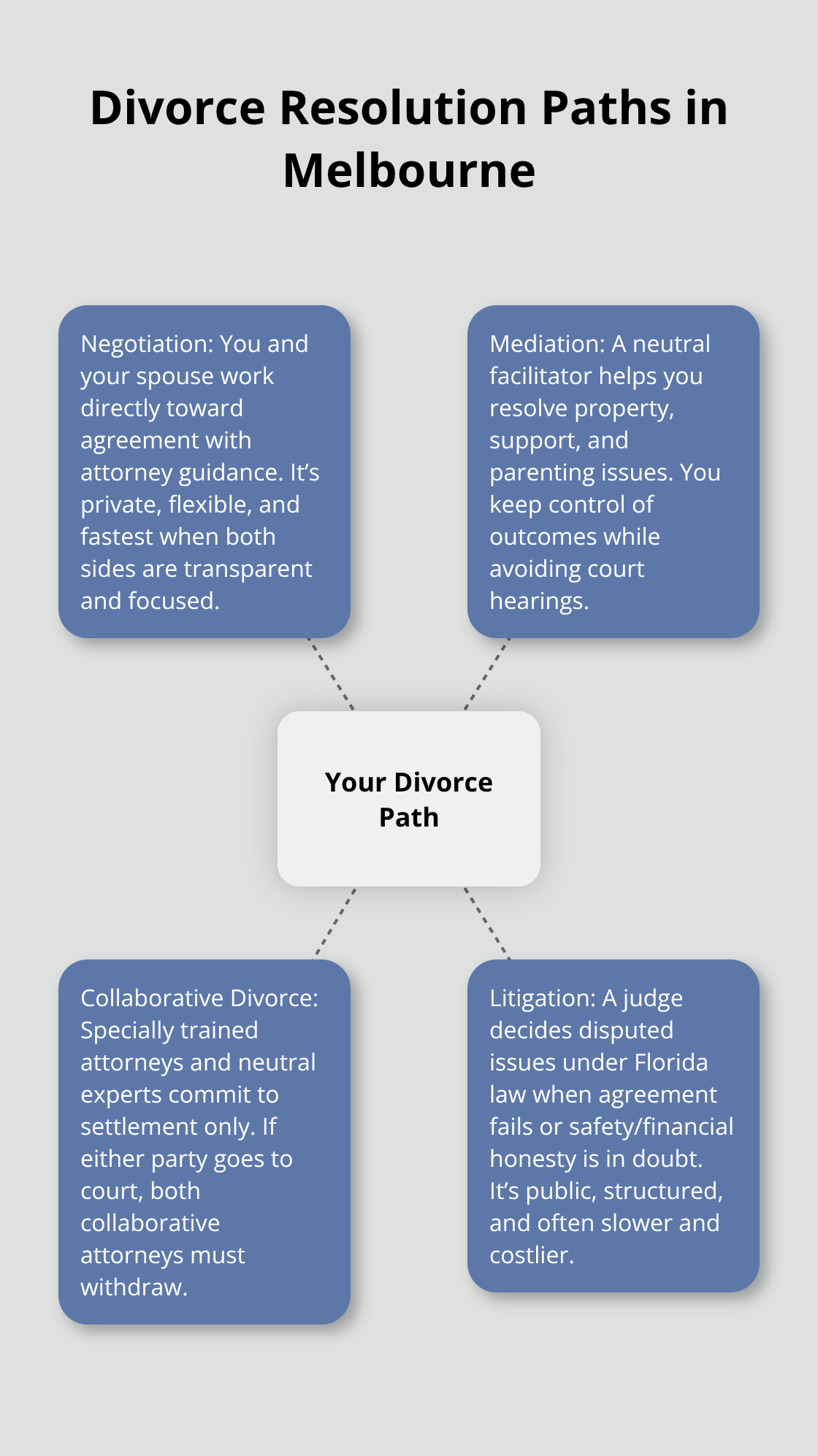
Negotiation compresses legal work into focused sessions where you control the outcome and preserve privacy since mediation is confidential. Litigation forces every disputed issue into the court system, where judges make decisions based on Florida law rather than what you and your spouse prefer.
The Real Cost Difference Between Settlement and Court
The visible filing fee is around 400 dollars, but litigation costs multiply through discovery, depositions, multiple court hearings, and attorney time. A contested divorce that extends beyond a year can easily cost 15,000 to 50,000 dollars or more depending on complexity, while a negotiated settlement often stays under 10,000 dollars.
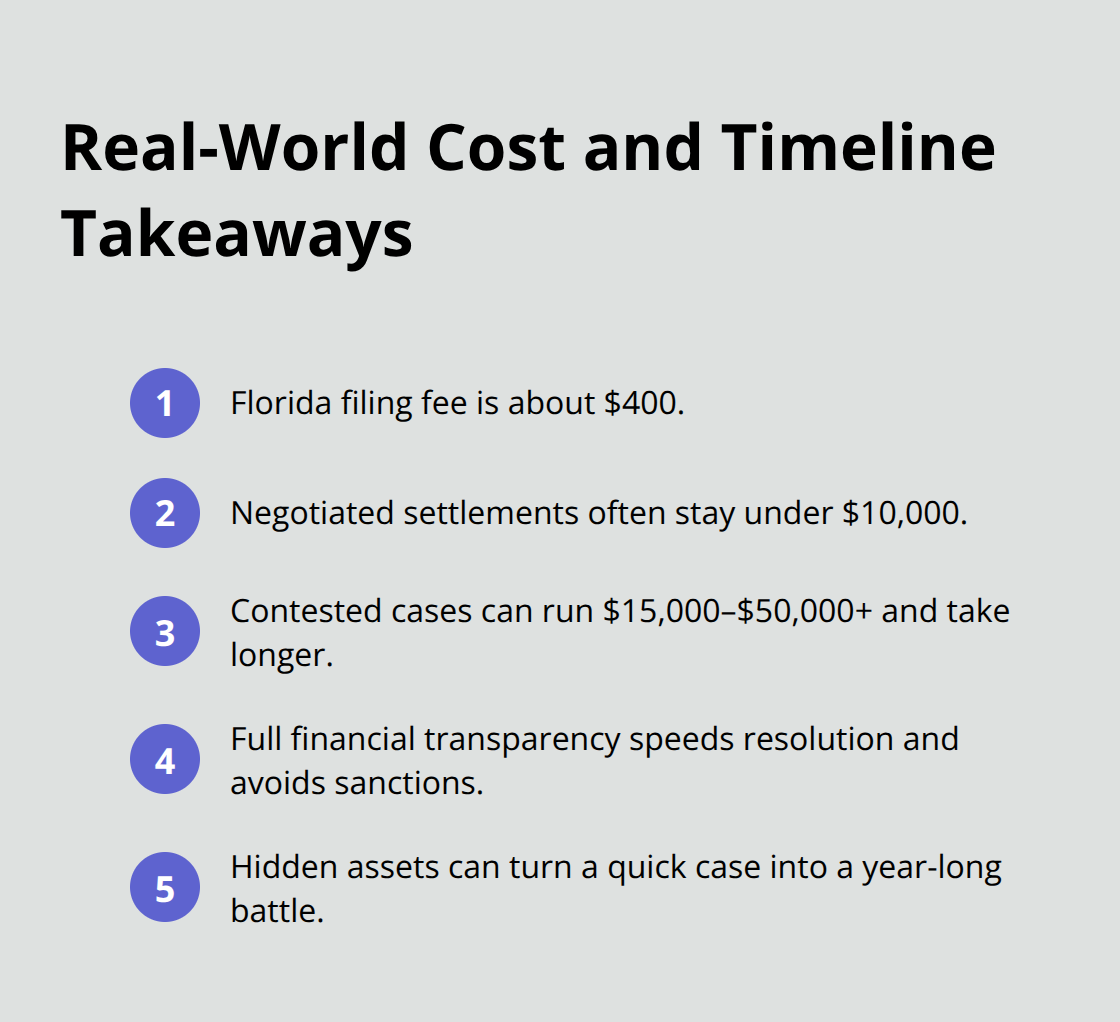
The Florida Department of Revenue child support calculator anchors discussions in actual income data rather than estimates, which helps settlement negotiations move faster. Hidden assets and incomplete disclosure can turn a quick divorce into a year-long battle, and courts sanction concealment by awarding attorney fees against the hiding spouse. This means full transparency during negotiation actually protects you because courts reward honest parties and punish those who hide financial information.
Understanding these cost and timeline differences shapes which path makes sense for your family. The next section examines mediation and collaborative divorce-two structured approaches that sit between pure negotiation and full litigation.
Mediation and Collaborative Divorce in Melbourne Florida
How Mediation Works for Property Division
Mediation offers a structured path where a neutral third party helps you and your spouse negotiate property division, support, and parenting arrangements without stepping into court. The mediator does not decide outcomes; instead, they facilitate conversation and help both parties understand each other’s priorities. This approach works particularly well when you and your spouse can communicate respectfully but need help organizing complex financial details or finding middle ground on contentious issues.
Property division in mediation starts with full disclosure of all assets and debts-bank statements, retirement accounts, real estate, business interests, and liabilities. You present your proposed split with justification rather than automatically assuming 50-50, and the mediator guides discussion toward fair allocation under Florida law. Mediation costs between $1,500 and $3,500 depending on the mediator’s hourly rate and how many sessions you need, with most cases settling in two to three sessions. Mediation sessions typically last a few hours each, compressed into focused negotiation rather than extended litigation, and you maintain privacy since mediation is confidential.
The Collaborative Divorce Process and Its Advantages
Collaborative divorce operates differently-both spouses hire trained collaborative attorneys who commit upfront to resolving disputes without court intervention. Each party also engages neutral professionals such as financial specialists or child development experts to address specific concerns, and all parties sign an agreement stating that if settlement fails, both attorneys must withdraw. This structure creates powerful incentive to reach agreement because switching lawyers mid-process costs time and money.
The Florida Chapter of the Association of Family and Conciliation Courts found that children adapt better to new family dynamics after mediated divorces compared to lengthy court battles, which means this path offers benefits beyond financial savings. Most couples who attempt mediation settle core disputes and save thousands in attorney fees, though if mediation fails, you can proceed to arbitration or litigation without losing progress on agreed items.
Finding Qualified Mediators in the Melbourne Area
Finding qualified mediators in the Melbourne area requires checking credentials through the Florida Supreme Court’s mediator directory or asking your family law attorney for referrals. Mediators should hold certification from recognized organizations and possess experience in family law specifically. The collaborative process works best when both spouses want resolution and neither party is hiding assets or engaging in abusive behavior.
If your situation involves significant conflict, safety concerns, or financial concealment, litigation or attorney-led negotiation becomes more appropriate than collaborative approaches. Understanding which professionals can support your case helps you move forward with confidence. The next section examines key factors that determine which settlement option aligns with your specific circumstances.
Key Factors That Affect Your Settlement Options
Asset Complexity and Income Levels
Asset complexity and income levels directly determine which settlement approach you can realistically pursue in Melbourne. If you and your spouse have straightforward finances-one home, standard employment income, modest retirement accounts-negotiation or mediation works efficiently because less exists to dispute and fewer moving parts require untangling. The Priority Property Pool framework in Florida handles cases where net property excluding superannuation sits below approximately $550,000, which streamlines the process considerably. However, if you own multiple properties, operate a business, hold significant retirement accounts, or maintain investment portfolios, litigation becomes more likely because courts need discovery tools to value complex assets accurately. You cannot hide or downplay business interests in mediation; full transparency is mandatory, and courts punish concealment by awarding attorney fees against the hiding spouse. This means couples with substantial assets often spend more upfront on litigation discovery but ultimately save money by forcing complete financial disclosure rather than uncovering hidden assets years later.
Organizing Your Financial Records
The 2022 Florida Bar Association study found that couples who organize financial documents upfront reduce delays by an average of about 40 days, so gathering 12 months of bank statements, two years of tax returns, mortgage documents, retirement account statements, and investment records before selecting your path accelerates whatever approach you choose. This preparation applies regardless of whether you pursue negotiation, mediation, or litigation-organized information moves cases forward faster and costs less to process.
Children and Custody Arrangements
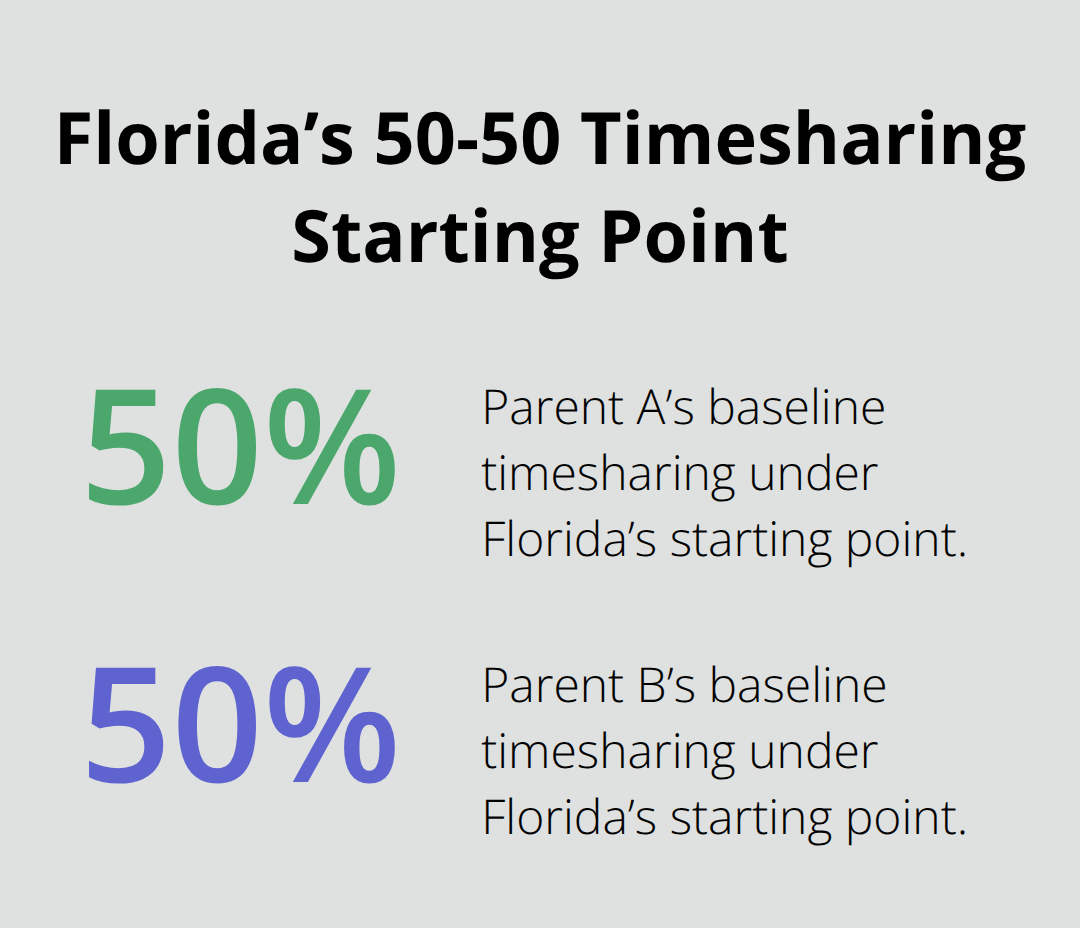
Children and custody arrangements shift the entire calculus toward mediation or collaborative divorce in Melbourne. The Florida Chapter of the Association of Family and Conciliation Courts documented that children adapt better to new family dynamics after mediated divorces compared to protracted litigation, which means your settlement choice directly impacts your children’s wellbeing beyond just legal outcomes. If custody is contested and one parent questions the other’s fitness or safety, litigation becomes necessary because courts hold authority to issue legally binding parenting plans, timesharing schedules, and decision-making responsibilities with the child’s best interests as priority. However, most couples can reach time-sharing agreements using the 50-50 starting point Florida courts typically apply unless detriment is shown, which gives you a clear negotiation baseline.
Conflict Level Between Spouses
The level of conflict between spouses determines whether mediation remains viable or litigation becomes unavoidable. When one spouse refuses to disclose financial information, engages in controlling or abusive behavior, or shows no willingness to compromise, mediation fails and you need court intervention. Conversely, if both parents can communicate respectfully and prioritize children’s stability, structured mediation prevents the adversarial courtroom environment that damages parenting relationships long-term. The choice ultimately depends on whether your spouse will negotiate honestly and whether you can identify common ground on the issues that matter most (parenting time, major assets, and support obligations).
Final Thoughts
Your divorce settlement options in Melbourne depend on your specific circumstances, financial complexity, and willingness to work toward agreement. If you and your spouse communicate openly and share similar goals around property division and parenting, negotiation or mediation can resolve your case in three to four months while saving 40 to 60 percent compared to litigation. When assets are straightforward and conflict is manageable, these approaches preserve privacy, reduce emotional strain, and allow you to control outcomes rather than leaving decisions to a judge.
However, if your spouse refuses disclosure, safety concerns exist, or custody disputes run deep, litigation becomes necessary because courts hold the authority to enforce orders and protect your rights through contempt proceedings. The key is matching your approach to reality, not wishful thinking. If hidden assets are likely, full litigation discovery uncovers them, and if your ex-spouse ignores agreements, court enforcement mechanisms exist to hold them accountable.
After choosing your path, you should gather financial documents, organize your asset and debt list, and schedule a consultation with a family law attorney who understands Melbourne’s local court system. An attorney reviews your situation, identifies which settlement approach fits your case, and guides you through negotiation, mediation, or court proceedings. Contact Harnage Law PLLC to discuss your divorce settlement options in Melbourne and move forward with clarity.