
Melbourne Divorce Considerations: Local Insights for Your Florida Case
Our Blog
Melbourne Divorce Considerations: Local Insights for Your Florida Case

Divorce in Melbourne, Florida brings unique legal complexities that demand local knowledge. Brevard County courts follow specific rules about property division, support payments, and custody arrangements that differ from other Florida jurisdictions.
We at Harnage Law PLLC understand how Melbourne divorce considerations affect your family’s future. This guide walks you through the laws, strategies, and decisions that matter most to your case.
How Florida’s Divorce Laws Shape Your Brevard County Case
Equitable Distribution: Fair Doesn’t Mean Equal
Florida’s equitable distribution law doesn’t mean equal-it means fair, and that distinction matters enormously for your wallet. Florida Statutes Section 61.075 requires courts to divide marital property in a manner considered just and equitable, taking into account factors like the length of the marriage, each spouse’s contribution to the property, and the economic circumstances of each party. A 15-year marriage splits assets differently than a 3-year marriage, and courts in Brevard County recognize this reality.
The law protects non-marital property-assets you owned before marriage, inherited, or received as a gift-which generally stays yours. However, tracing non-marital property becomes complicated when it mixes with marital funds in joint accounts, so documentation matters from day one. If you own a business or retirement accounts, courts examine whether they grew during the marriage and by how much, since growth during marriage typically counts as marital property subject to division.
Alimony Guidelines in Brevard County
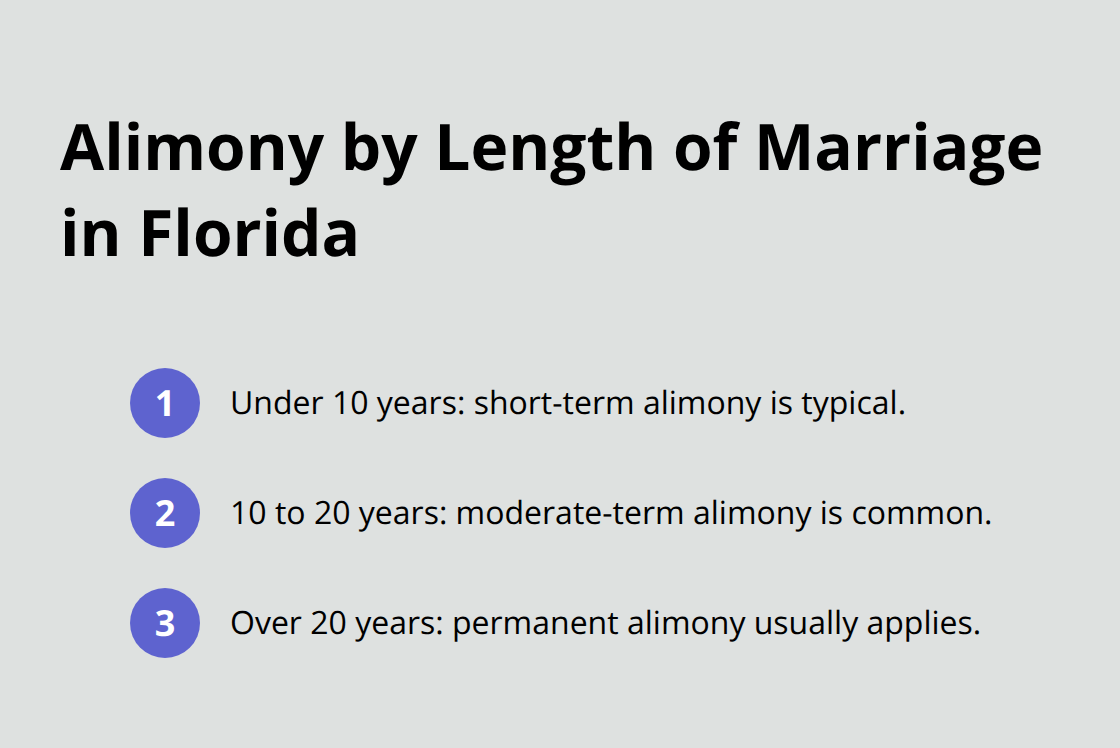
Alimony in Florida follows specific guidelines based on the length of marriage. Marriages lasting less than 10 years typically result in short-term alimony; those between 10 and 20 years fall into the moderate-term category; marriages exceeding 20 years usually qualify for permanent alimony.
However, courts in Brevard County look beyond duration-they consider your earning capacity, age, health, and whether you sacrificed career advancement for the marriage.
A spouse who left the workforce to raise children stands on different legal ground than one who continuously worked. The formula isn’t automatic; judges weigh multiple factors under Florida Statutes Section 61.08. Your financial situation, not just years married, shapes what the court awards.
Child Support: The Income Shares Model
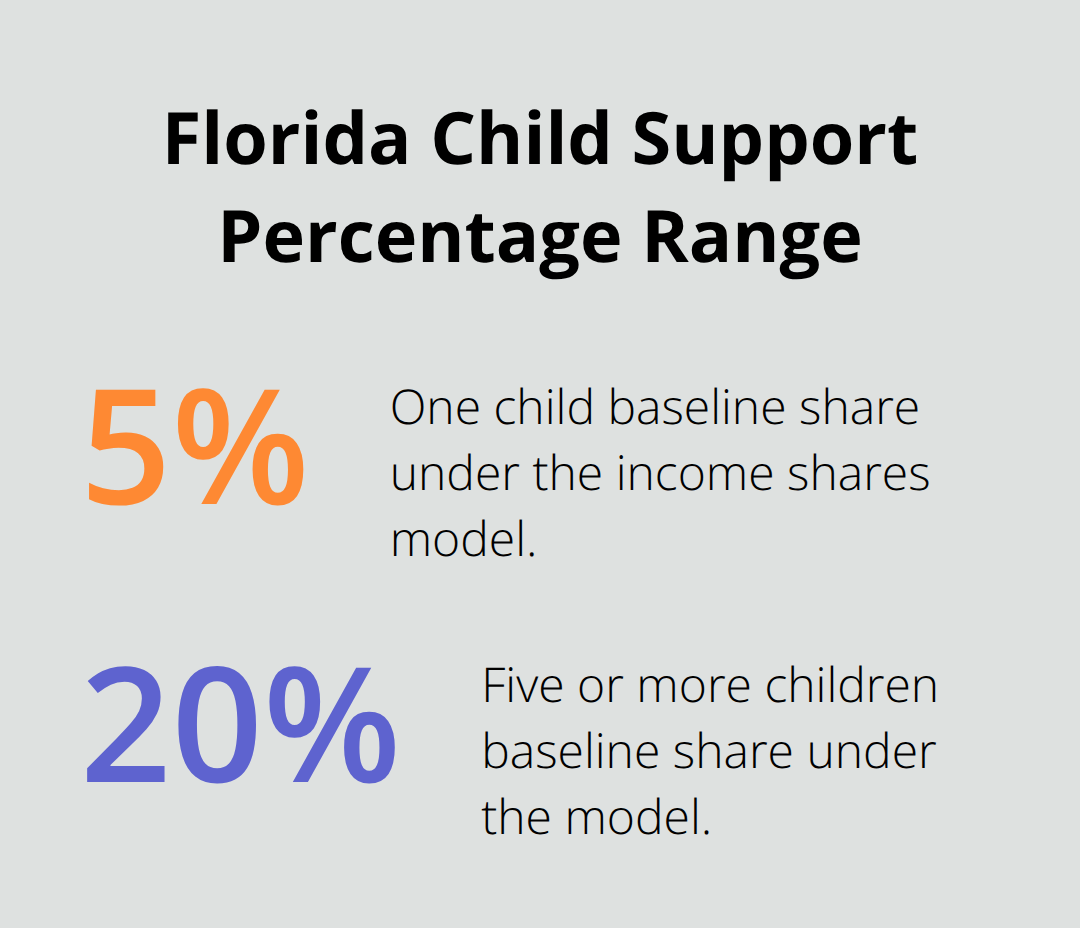
Child support operates under a clearer mathematical model than alimony. Florida uses the income shares model, where both parents’ incomes determine the baseline support obligation, currently capped at $160,000 in combined monthly income according to Florida’s Child Support Guidelines. The percentage ranges from 5% of combined income for one child to 20% for five or more children, though courts adjust for timesharing arrangements, special needs, and health insurance costs.
The Brevard County courts apply these guidelines consistently, and deviations require documented justification that judges find compelling. Understanding how your income and timesharing schedule affect the calculation helps you prepare for what comes next in your case.
Property Division and Asset Protection in Melbourne Divorces
Marital vs. Non-Marital Property: The Foundation of Division
Marital property division in Brevard County divorces hinges on one critical distinction: what you owned before the marriage and what you accumulated during it. Florida courts treat these categories differently, and the difference determines what you keep and what gets divided. Non-marital property-assets you owned before marriage, inherited, or received as a gift-generally remains yours, but only if you can prove it stayed separate. The moment non-marital funds mix with marital accounts, tracing becomes your burden, not the court’s.
A business account that received deposits from your joint checking account, retirement contributions made during marriage from marital income, or inheritance money that sat in a joint savings account all face division challenges. Documentation from day one matters far more than most people realize.
Protecting Your Business and Retirement Accounts
If you own a business, the growth that occurred during your marriage counts as marital property subject to division, even if you started it before. Courts in Brevard County examine whether your spouse contributed to business success through direct work, financial support, or by managing the household while you built the company. A spouse who handled finances or managed operations has a legitimate claim to a portion of the business’s increased value.
Retirement accounts require particular attention because they hold both marital and non-marital components. A 401k balance from before marriage stays non-marital, but contributions made during the marriage and their earnings divide as marital property. The same applies to pensions and IRAs. You need a Qualified Domestic Relations Order (QDRO) to divide these accounts without triggering immediate tax consequences-failure to use a QDRO means your spouse faces penalties and taxes on distributions meant for retirement security.
Identifying Hidden Assets in Your Case
Hidden assets represent a serious concern in Brevard County divorces. Some spouses underreport income, delay business payments until after the divorce finalizes, or transfer funds to friends or relatives with promises to retrieve them later. Courts have observed patterns: sudden increases in business expenses, reduced reported income, unusual cash withdrawals, or large transfers to third parties shortly before or during divorce proceedings.
If you suspect hidden assets, your attorney can request detailed financial discovery, including bank statements, tax returns, business records, and depositions. The cost of thorough discovery often pays for itself when it uncovers substantial hidden marital property. Understanding these asset protection strategies positions you to move forward with custody and parenting arrangements, which carry their own set of Brevard County considerations and legal standards.
Custody and Parenting Plans in Brevard County
The Best Interests of the Child Standard
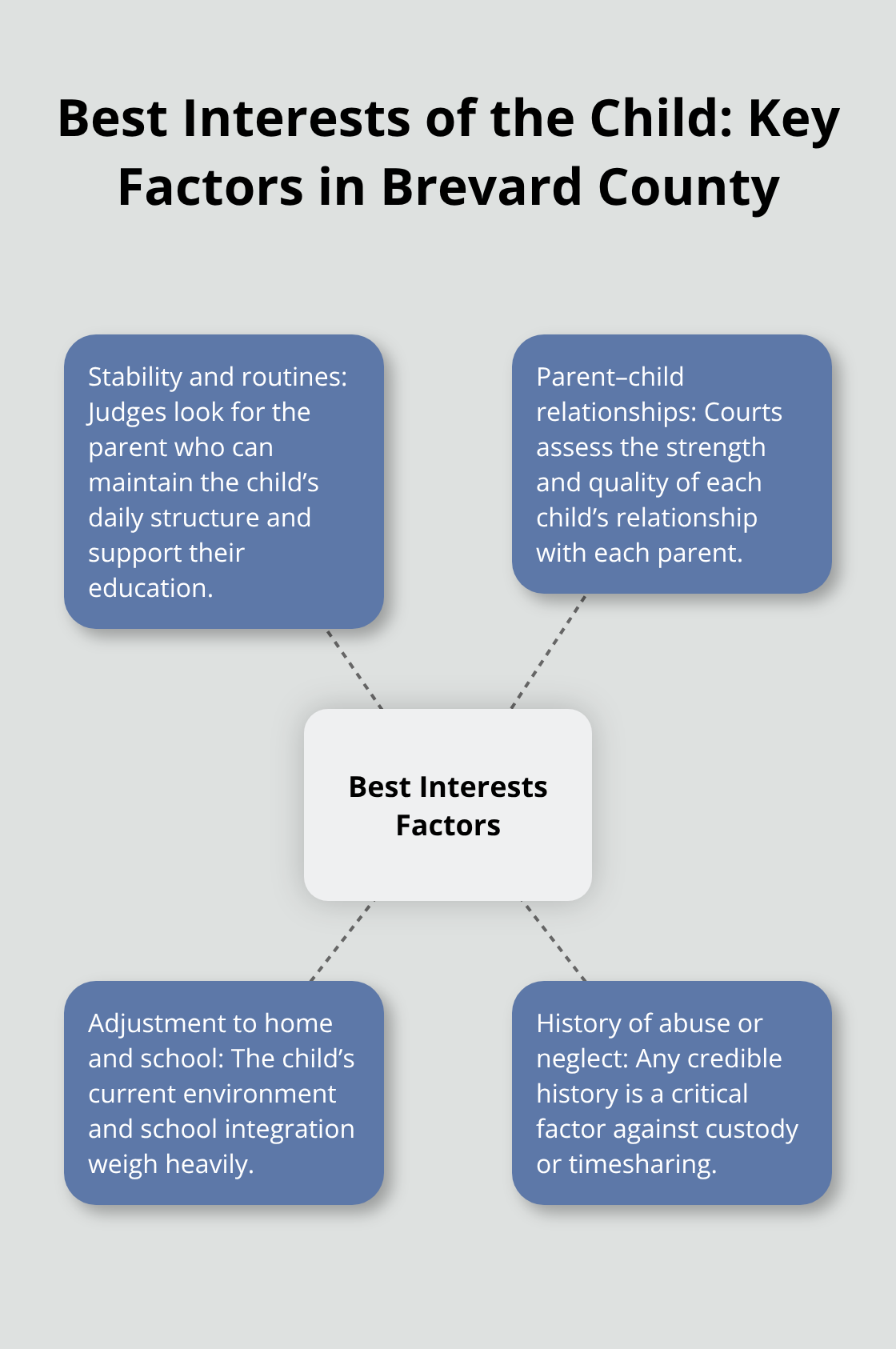
Florida courts do not award custody based on preference or convenience-they apply the best interests of the child standard, a legal framework that examines concrete factors affecting your child’s welfare. Under Florida Statutes Section 39.013, judges evaluate each parent’s ability to provide stability, the child’s relationship with each parent, the child’s adjustment to home and school, and any history of abuse or neglect. Brevard County judges consistently prioritize which parent can maintain the child’s routines, support their education, and foster relationships with both parents.
A parent who has been the primary caregiver holds significant legal standing, but courts also recognize that engaged fathers and mothers share equal rights to custody absent documented reasons otherwise. The court will not hand custody to one parent simply because they earn more money or because one parent requests it-the analysis demands evidence about what arrangement actually serves the child’s stability and development. If you have been the parent managing school attendance, medical appointments, and daily care, document this involvement thoroughly because courts weight demonstrated parenting time heavily when making custody determinations.
Shared Parenting Arrangements in Brevard County
Shared parenting arrangements have become standard in Brevard County rather than exceptional. The 18th Judicial Circuit uses Short Distance and Long Distance Shared Parental Responsibility Timesharing Guidelines to establish expectations for local parenting cooperation and distant arrangements when parents live far apart. Most cases result in some form of shared responsibility rather than one parent holding primary custody, meaning both parents participate in major decisions about education, healthcare, and religious upbringing.
Timesharing schedules vary dramatically based on your specific situation-a parent working swing shifts faces different arrangements than one with a traditional schedule. Courts recognize these practical realities and tailor parenting plans accordingly. The flexibility built into shared arrangements allows parents to adapt to work schedules, school calendars, and each child’s individual needs.
Modifying Custody Orders After Divorce
When circumstances change materially after your divorce finalizes, modification becomes possible but requires proving the change was substantial and unanticipated at the time of the original order. Courts will not modify custody simply because one parent wants more time or because a child prefers one household; you need documented evidence that the child’s circumstances have genuinely shifted or that the existing arrangement no longer serves their best interests.
A substantial change might include a parent’s job relocation, a significant shift in the child’s educational or medical needs, or documented evidence that the current arrangement harms the child’s welfare. You must present this evidence clearly and convincingly to persuade Brevard County judges that modification serves the child’s actual interests rather than one parent’s preferences. The burden falls on the parent seeking the modification to demonstrate why the court should alter an existing order.
Final Thoughts
Melbourne divorce considerations span property protection, custody arrangements, and financial obligations that shape your family’s future. Brevard County courts apply Florida’s legal framework through local practices and judge preferences that directly affect your case outcome. Understanding equitable distribution, alimony calculations, child support guidelines, and custody standards positions you to make informed decisions rather than reactive ones.
Your business, retirement accounts, and non-marital assets require protection strategies tailored to how Brevard County courts classify and divide property. Hidden assets demand thorough discovery, and parenting plans need flexibility built in from the start to accommodate your family’s actual circumstances. Local legal representation matters because attorneys familiar with Brevard County judges understand their priorities, their interpretation of Florida statutes, and how they rule on contested issues.
We at Harnage Law PLLC provide experienced legal representation for family law cases throughout Melbourne and Brevard County. Schedule a consultation to discuss your situation with someone who understands your circumstances and can evaluate your options. The decisions you make now shape your financial future and your relationship with your children for years ahead.