
Legal divorce advice Melbourne: Smart Steps for Separation
Our Blog
Legal divorce advice Melbourne: Smart Steps for Separation

Divorce in Melbourne, Florida involves specific legal requirements that many people don’t understand until they’re already in the process. Getting legal divorce advice in Melbourne early can save you thousands of dollars and months of stress.
At Harnage Law PLLC, we’ve helped countless families navigate separation with clarity and confidence. This guide walks you through the essential steps before you file.
How Florida Divorce Laws Actually Work in Melbourne
Florida’s No-Fault System Removes the Blame Game
Florida’s no-fault divorce system means you don’t need to prove your spouse did something wrong-you simply file based on irretrievable breakdown of the marriage. This straightforward approach sounds simple, but Melbourne residents often miss critical procedural steps that can delay their case or weaken their position. The court cares less about who caused the problems and far more about how assets, support, and children get divided fairly.
Meeting Residency Requirements and Filing Correctly
To file in Melbourne, at least one spouse must have lived in Brevard County for six months before filing-this residency requirement is non-negotiable. Once you meet this requirement, you’ll file a Petition for Dissolution of Marriage with the Circuit Civil Division and pay the $408 filing fee as of 2025, or request a fee waiver if you qualify financially. Your spouse then has 20 days to respond after being properly served, and if they don’t respond, the court can enter a default judgment in your favor (though this rarely happens in contested divorces with children involved).
Understanding Equitable Distribution, Not Equal Split
Property division in Florida follows equitable distribution, not a 50/50 split. The court divides marital assets and debts fairly based on factors like how long you were married, each person’s financial situation, and what each person contributed to acquiring property. A 15-year marriage gets treated differently than a 3-year marriage, and a spouse who stayed home raising children has different claims than one who worked full-time.
Mandatory Financial Disclosure Prevents Hidden Assets
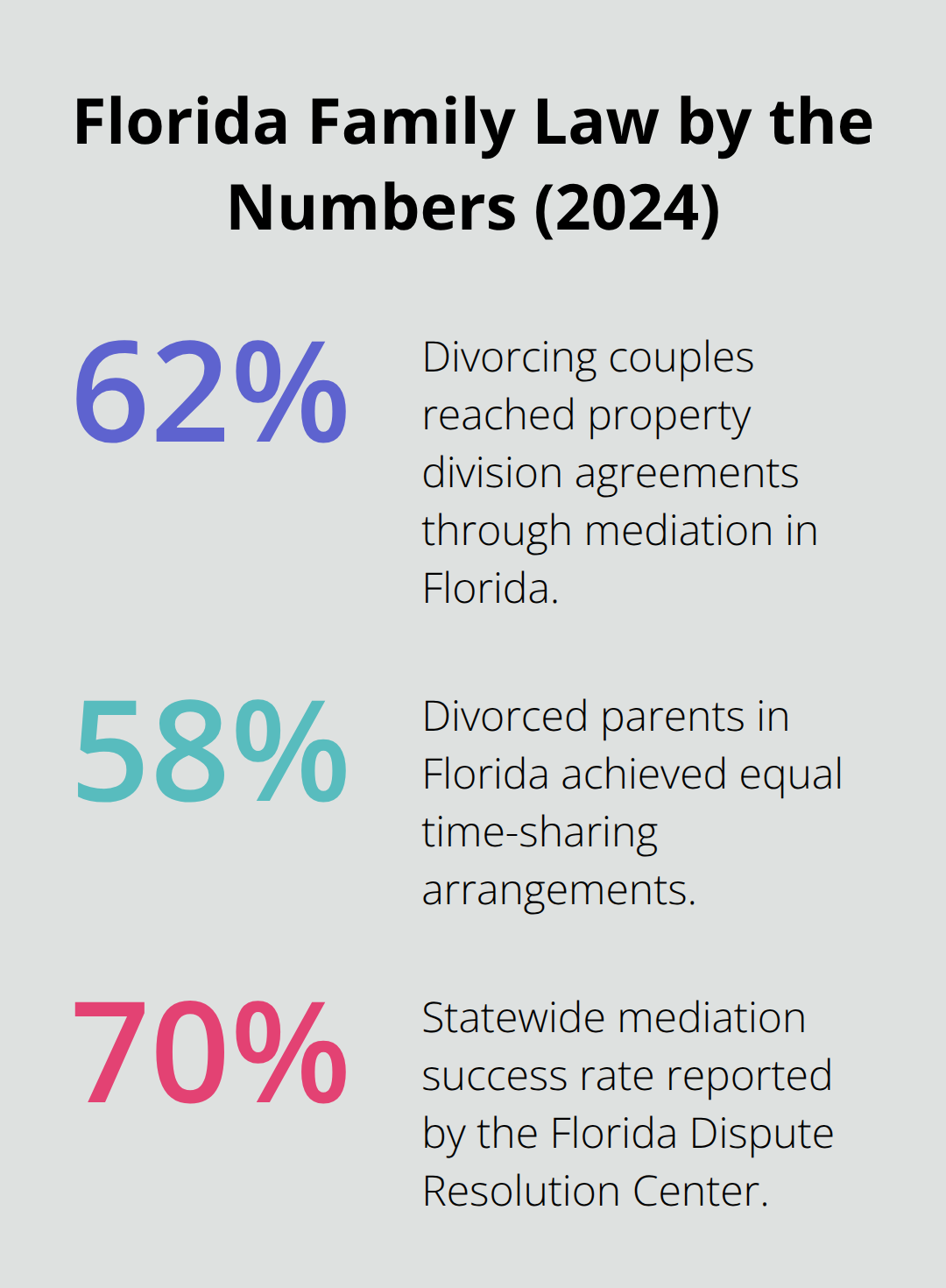
Within 45 days of being served, both parties must exchange tax returns from the last three years, recent pay stubs, bank statements, credit card statements, mortgage documents, vehicle titles, and retirement account statements. This mandatory financial disclosure prevents hidden assets and keeps negotiations honest. The Florida Bar reported that 62% of divorcing couples reached property division agreements through mediation in 2024, which means most Melbourne divorces never reach trial.
Why Mediation Matters More Than You Think
Mediation costs far less than litigation and moves faster, typically resolving cases in months rather than years. Courts often require mediation before allowing a trial, so understanding how to prepare for mediation sessions with accurate financial documentation directly impacts whether you keep control of the outcome or hand that power to a judge. With proper preparation and realistic expectations about asset division, you position yourself to negotiate from strength rather than react to court orders.
Financial Preparation Before Filing for Divorce
Gather Your Financial Documents Now, Not Later
The moment you file for divorce in Melbourne, the mandatory financial disclosure clock starts ticking. Within 45 days of being served, you and your spouse must exchange tax returns from the last three years, recent pay stubs, bank and credit card statements, mortgage documents, vehicle titles, and retirement account statements. Most people scramble to gather this paperwork after filing, which puts them at a disadvantage during negotiations. Start collecting these documents now, before you file anything.
Create a spreadsheet listing every asset you own, every debt you owe, and the current value of each item. Include your home, vehicles, retirement accounts like 401(k)s and IRAs, investment accounts, cryptocurrency, and digital assets. This inventory becomes your roadmap for what gets divided and how fairly the split actually is. Don’t underestimate digital assets-cryptocurrency holdings, online business accounts, and domain names regularly get overlooked in divorces, only to resurface later as sources of conflict.
Know the Four Types of Alimony Florida Courts Award
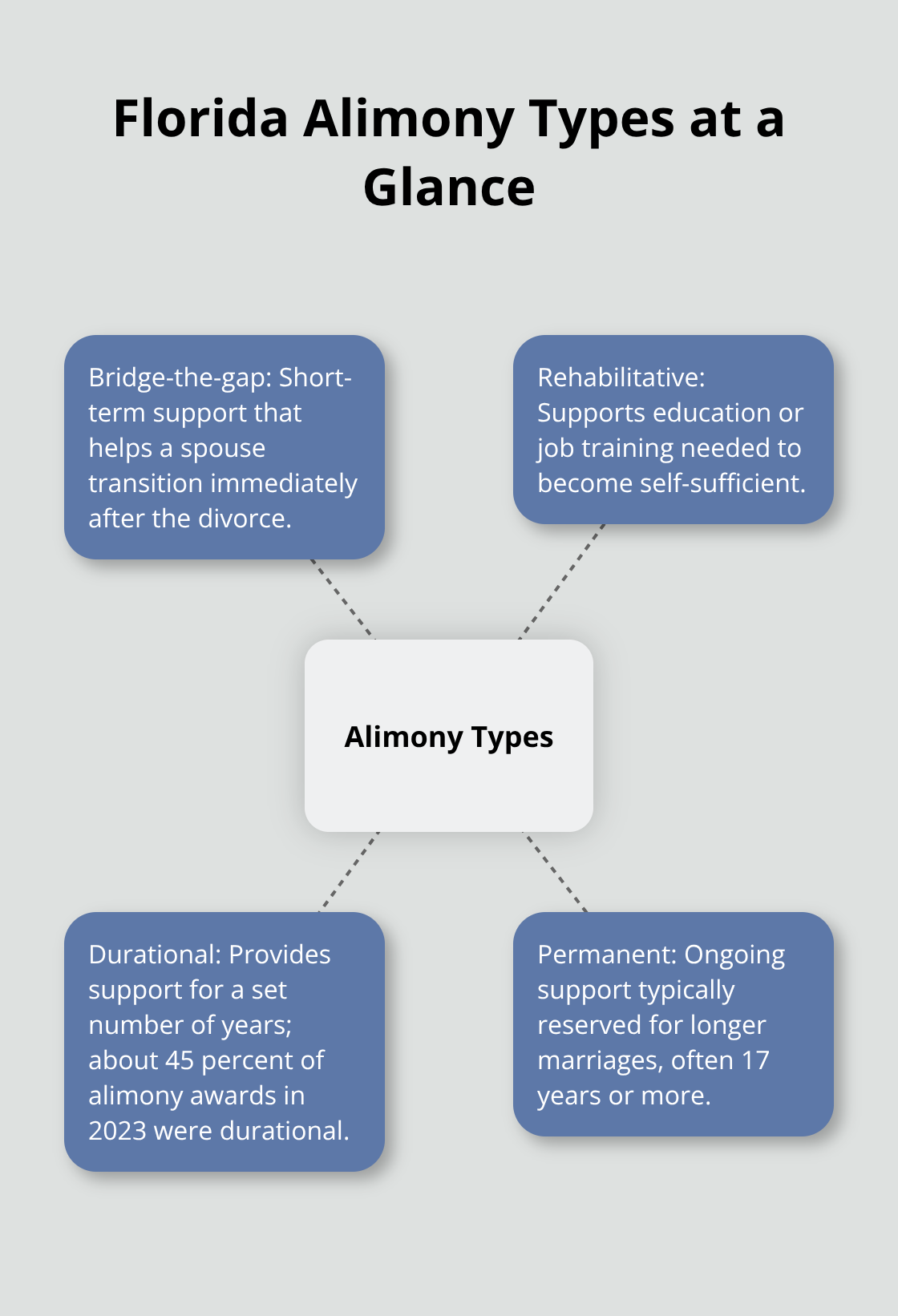
Alimony in Florida comes in four forms: bridge-the-gap (short-term support while you transition), rehabilitative (support while you gain job skills or education), durational (support lasting a specific number of years), and permanent (ongoing support in longer marriages). The Florida Bar reported that among cases with alimony granted in 2023, about 45 percent were durational alimony, while longer marriages over 17 years more often resulted in permanent alimony. Understanding which type applies to your situation changes how you negotiate.
If you earned significantly more than your spouse during the marriage, expect alimony obligations. If you earned less, you may have a claim. The court bases alimony on factors including the length of your marriage, your earning capacity, and your spouse’s ability to support themselves.
Calculate Child Support Based on Florida Guidelines
Child support calculations follow state guidelines based on both parents’ incomes, the number of children, and your time-sharing arrangement. In Brevard County, the average monthly child support payment for one child was about $880 as of 2025, though your specific situation will differ. These numbers shift based on how much time each parent spends with the child and what each parent earns.
Protect Assets by Understanding Marital Versus Separate Property
Protecting assets during separation means understanding what counts as marital property versus separate property. Money or property you owned before marriage stays yours, but anything acquired during marriage-even if titled in one name-typically gets divided. Stop adding to joint accounts, and don’t transfer assets to hide them; courts catch these moves and penalize the person who tried them.
Prepare for the Financial Disclosure Process Ahead
Accurate financial documentation directly impacts whether you keep control of the outcome or hand that power to a judge. With proper preparation and realistic expectations about asset division, you position yourself to negotiate from strength rather than react to court orders. The next step involves understanding how custody arrangements and child support calculations work together to shape your family’s future.
Child Custody and Support Considerations
Time-Sharing Arrangements Determine Parental Involvement
Florida courts use the term time-sharing instead of custody, and this distinction matters because it reflects how judges actually think about parental involvement. In 2024, 58 percent of divorced parents in Florida achieved equal time-sharing arrangements, meaning they split parenting time roughly 50/50. This doesn’t mean you automatically receive equal time just because you want it-courts base time-sharing decisions on what serves the child’s best interests, which includes factors like each parent’s involvement in school activities, medical appointments, and daily care routines.
Start documenting your involvement now. Keep records of school events you attend, medical appointments you schedule, and extracurricular activities you support. When the court evaluates your parenting capacity, this documentation becomes powerful evidence that you’re an active parent deserving meaningful time with your child. Courts in Melbourne respond to concrete evidence, not promises about what you’ll do after the divorce finalizes.
Child Support Calculations Follow State Guidelines
Child support calculations in Florida follow state guidelines based on both parents’ gross income, the number of children, and your time-sharing percentage. In Brevard County, the average monthly child support payment for one child was approximately $880 as of 2025, though your actual obligation depends entirely on your specific income and time-sharing arrangement. If you earn $60,000 annually and your spouse earns $100,000 with one child, your support obligation differs dramatically from a situation where both parents earn $80,000.
Many Melbourne parents underestimate their child support obligations or overestimate what they’ll receive, which creates financial shock when the final judgment arrives. Request a child support calculation before you file so you understand your actual financial position. The Florida Department of Children and Families provides worksheets to calculate preliminary amounts, and we at Harnage Law PLLC can run accurate projections based on your exact income and time-sharing proposal.
Parenting Plans Must Match Your Real Capacity
A realistic parenting plan requires honesty about your availability. If you work long hours or travel frequently, proposing equal time-sharing sets you up for failure and court modification battles later. Instead, propose a schedule that matches your actual capacity: perhaps you take weekends and two weeknights while your ex-spouse has weekdays, or you alternate full weeks.
The specific arrangement matters less than whether you can sustain it consistently for years. Courts modify parenting plans when circumstances change, but constant modifications cost money and frustrate judges who see parents unable to follow their own agreements.
Final Thoughts
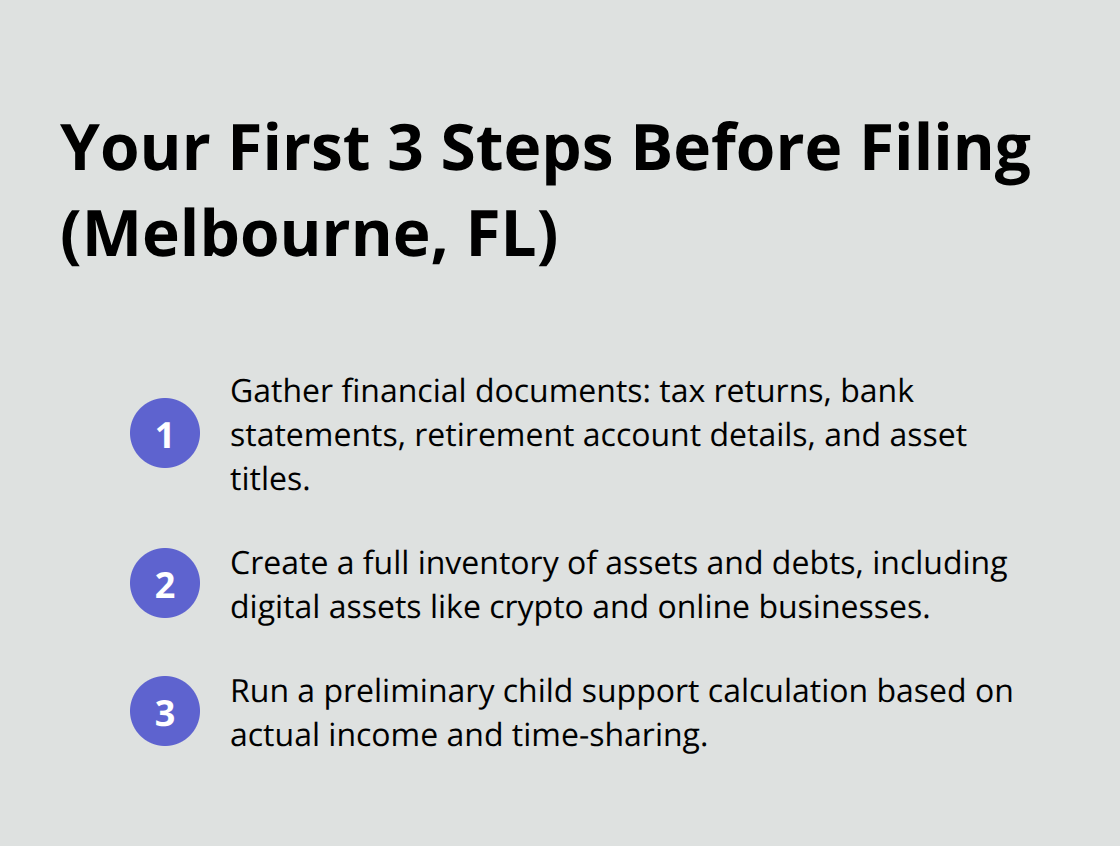
Before you file for divorce in Melbourne, take three concrete steps that protect your position: gather every financial document you can find (tax returns, bank statements, retirement account details, and asset titles), create a realistic inventory of what you own and owe including digital assets, and understand your likely child support obligation by running preliminary calculations based on your actual income. These steps take weeks to complete properly, but they prevent the scrambling that catches most Melbourne residents off guard after filing. Legal divorce advice Melbourne residents receive often comes too late, after mistakes have already weakened their negotiating position.
The court requires mandatory financial disclosure within 45 days of service, which means you fall behind if you start gathering documents after filing. Mediation success rates in Florida reached 70 percent in 2024 according to the Florida Dispute Resolution Center, which means most divorces settle through negotiation rather than trial. Your preparation directly determines whether you negotiate from strength or react to your spouse’s proposals.
We at Harnage Law PLLC understand that divorce in Melbourne involves specific procedural requirements, financial complexity, and parenting decisions that shape your family’s future. Contact us to discuss your situation and understand exactly what your divorce will cost, how long it will take, and what outcomes are realistic for your circumstances.