
Contested Divorce Melbourne: Strategies To Protect Your Interests
Our Blog
Contested Divorce Melbourne: Strategies To Protect Your Interests

A contested divorce in Melbourne means you and your spouse disagree on key issues like property division, support, or custody. These disputes can become lengthy and costly without proper planning.
At Harnage Law PLLC, we help clients navigate contested divorce cases by protecting their financial and parental rights. This guide walks you through proven strategies to safeguard your interests from start to finish.
Understanding Contested Divorce in Melbourne
What Turns a Divorce Contested
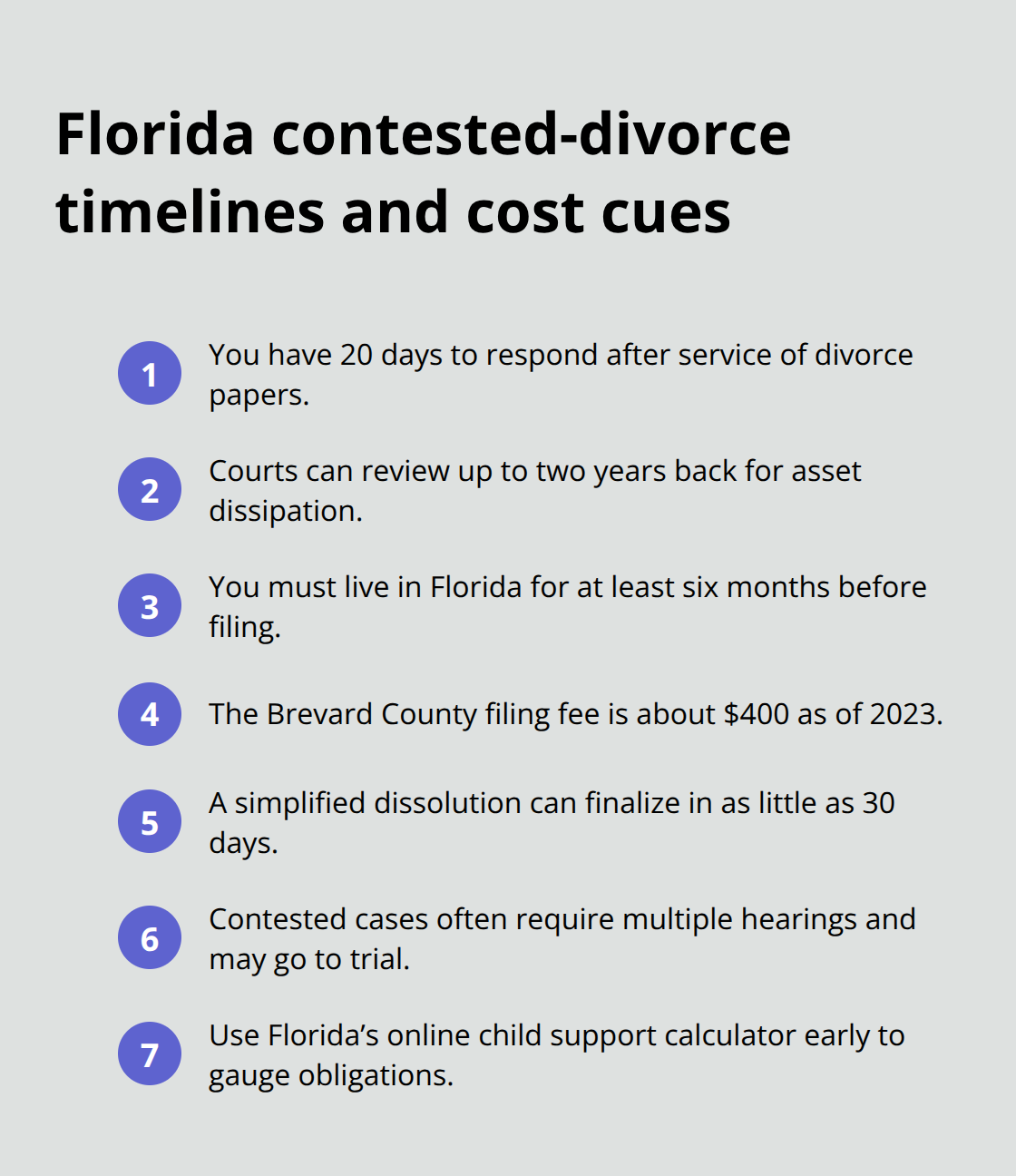
A contested divorce happens when you and your spouse cannot agree on one or more critical issues. Property division, spousal support, child custody, and time-sharing arrangements are the most common sticking points. In Florida, the state requires an equal 50/50 division of marital property, but disagreements over what counts as marital versus non-marital assets, business valuations, or retirement account splits frequently trigger litigation. According to Florida court statistics and the American Bar Association, contested divorces in Melbourne often exceed one year to resolve, while uncontested cases typically finish in three to four months. This timeline difference matters because prolonged disputes drain your financial resources and emotional energy. The moment you and your spouse stop agreeing on even one major issue, your case becomes contested, and the legal process shifts dramatically. Service of divorce papers requires your spouse to respond within 20 days, and if they contest the petition, you enter a formal discovery phase where both sides must disclose financial documents, asset valuations, and other evidence. Courts retain the power to look back up to two years to identify asset dissipation, so maintaining transparent records from day one protects you from unfounded accusations and strengthens your negotiating position.
Florida’s Framework and Timeline Reality
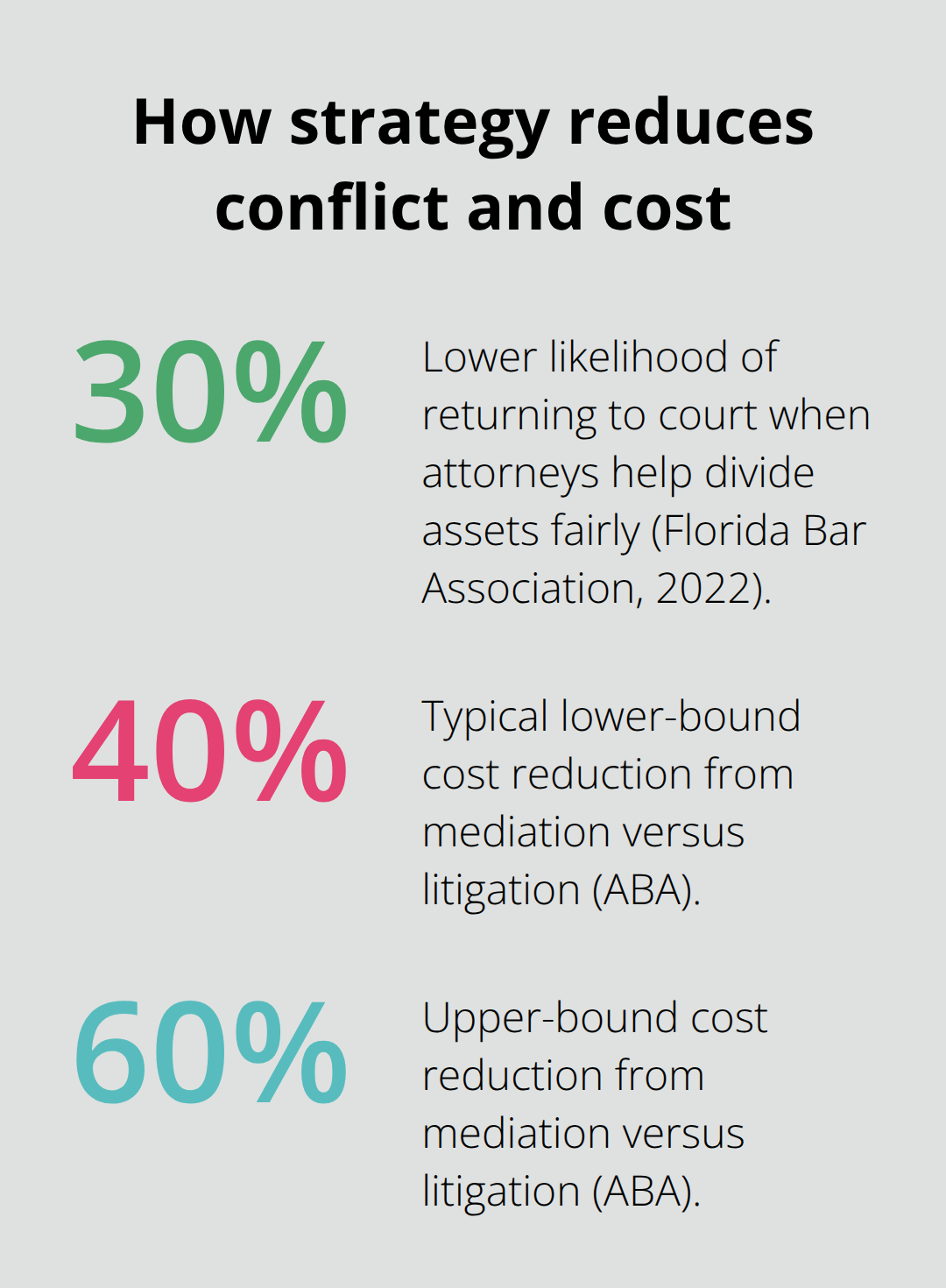
Florida law operates on specific timelines that directly impact your strategy. You must reside in Florida for at least six months before filing, which affects jurisdiction and where your case is heard. In Brevard County, the filing fee for a divorce petition is approximately 400 dollars as of 2023, with fee waivers available if you face financial hardship. Once filed, the simplified dissolution process can finalize in as little as 30 days if both spouses qualify and agree on everything, but contested cases demand multiple court hearings, motion practice, and potentially trial. The Florida Department of Revenue operates an online calculator for child support estimates, which you should use early to understand your potential financial obligations or entitlements. Mediation can reduce divorce costs by 40 to 60 percent compared with traditional litigation according to the American Bar Association, making it a strategic tool worth considering even in contested disputes. A 2022 Florida Bar Association study found that couples who worked with attorneys to divide assets fairly were approximately 30 percent less likely to return to court for post-divorce disputes, underscoring the value of correct initial settlements. Clear, structured communication between spouses-ideally with a mediator-reduces hostility and improves the durability of agreements. The longer your case stretches, the more you pay in attorney fees, court costs, and the greater the emotional toll on your family.
Why Representation Changes Your Outcome
Attempting a contested divorce without representation is a false economy. Your spouse likely has an attorney, and the imbalance creates serious risk. Courts expect both sides to follow strict procedural rules, file documents on time, and present evidence properly. Missing a deadline or filing an incomplete financial affidavit can result in sanctions, default judgments, or unfavorable rulings that cost you far more than attorney fees ever would. An attorney gathers the documentation you need, identifies hidden assets, challenges inflated valuations, and negotiates from a position of strength. In contested cases, disputes organize around hearings where strong legal representation directly protects your rights during the process. You need someone who understands Florida’s equitable distribution framework, knows how to value complex assets like businesses or retirement accounts, and can negotiate settlements that actually hold up post-divorce rather than dragging you back to court. At Harnage Law PLLC, we provide experienced and aggressive legal representation specifically designed to protect your financial and parental rights throughout contested proceedings. The financial and parental stakes in your case demand strategic counsel from the start-which is exactly what the next section addresses.
Financial Protection Strategies During Contested Divorce
Documenting Assets and Liabilities
Building an accurate financial picture forms your foundation in a contested divorce. Start immediately by gathering every document that shows what you own and owe: bank statements from the past two years, tax returns, mortgage papers, retirement account statements, investment portfolios, credit card statements, and loan documents. Florida law requires both spouses to disclose all relevant financial documents under Florida Family Law Rule of Procedure Rule 12.285, and courts can look back up to two years to identify asset dissipation. This means maintaining transparent records protects you from accusations of hiding money while strengthening your negotiating position.
Create a comprehensive inventory listing each asset with its current value and the date you acquired it. Distinguish between marital assets (acquired during the marriage) and non-marital assets (owned before marriage or received as gifts or inheritances), since Florida requires an equal division of marital property. Many people commingle non-marital funds with marital accounts during marriage, which causes you to lose protection of those assets. If you own real estate, a business, or valuable collections, obtain professional valuations immediately-independent appraisals reduce disputes and improve negotiation outcomes.
Understanding Spousal Support and Alimony Calculations
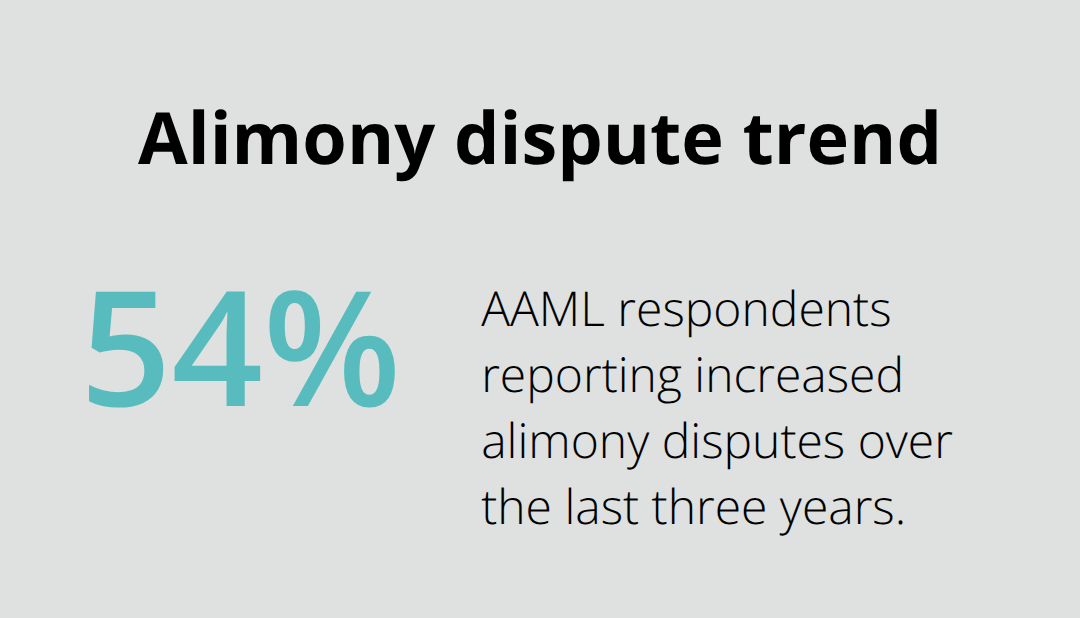
The American Academy of Matrimonial Lawyers reported that 54 percent of survey respondents saw increased alimony disputes over the last three years, signaling that spousal support calculations have become more contentious. Florida’s approach considers both spouses’ incomes, the length of marriage, the standard of living during marriage, and each spouse’s contributions to the household.
If alimony becomes contested, courts examine earning capacity and earning potential, not just current income. Hiding income or underreporting business profits will surface during discovery, so transparency actually serves your interests better than concealment.
Protecting Business Interests and Retirement Accounts
Protecting a business or retirement accounts demands strategic planning before litigation accelerates. If you own a business, obtain a professional valuation and explore settlement options such as buyouts, co-ownership arrangements, or trading other assets to keep the business viable and operating smoothly. Forcing a business sale to divide its value often destroys the enterprise and harms both spouses financially.
For retirement accounts, understand that a Qualified Domestic Relations Order (QDRO) is required to split them without triggering immediate taxes or penalties. Distributions after a QDRO still incur taxes, and understanding the tax implications prevents costly surprises. Open a separate bank account and avoid commingling funds going forward, then consult with your attorney before making major financial moves that could appear like asset dissipation. Consider engaging a financial advisor alongside your legal team to model different settlement scenarios and understand long-term implications of proposed divisions.
Post-divorce, you must update beneficiary designations on life insurance, retirement accounts, and payable-on-death accounts to reflect your new wishes, since outdated designations can override your will and create unintended consequences for your estate. These financial protections establish the stability you need, but your parental rights demand equal attention and strategic focus.
Protecting Parental Rights in Contested Custody Disputes
Understanding Florida’s Time-Sharing Framework
Florida’s family law system uses the term time-sharing rather than custody, but the stakes remain identical: your relationship with your children and their upbringing. In contested cases, courts apply the best interests of the child standard, which examines factors including the child’s safety, well-being, and the ability of each parent to meet their physical and emotional needs. Florida’s public policy explicitly favors frequent and continuing contact with both parents, meaning courts start without any automatic preference for mothers or fathers. This matters strategically because it levels the playing field compared to other states where gender-based presumptions still exist. However, if you have evidence of domestic violence or safety risks, Florida law creates a rebuttable presumption against shared parental responsibility, which can shift the entire proceeding in your favor.
Documenting Parental Involvement and Responsibilities
Courts assess parenting capabilities across multiple dimensions: each parent’s involvement in the child’s education, healthcare decisions, daily routines, and emotional support. If your spouse neglects school involvement or health care responsibilities, you should document this behavior throughout your marriage to strengthen your position during contested negotiations. The Florida Chapter of the Association of Family and Conciliation Courts emphasizes that clear, structured communication between parents and detailed parenting plans reduce hostility and improve long-term co-parenting outcomes. Your parenting plan must specify daily responsibilities, time-sharing schedules, health care decision-making authority, school-related duties, and communication protocols between parents. Rather than accepting a generic template, insist on specificity: define pickup and drop-off times, holiday schedules down to exact hours, and procedures for handling emergencies or school events. This precision prevents future disputes and eliminates ambiguity that leads to post-divorce litigation.
Enforcing Time-Sharing Agreements and Modifications
If your spouse later refuses to honor the time-sharing schedule, Florida courts can impose makeup time, require payment of your costs and attorney fees, mandate parenting courses, order community service, or modify the plan entirely. You should document every violation of the existing arrangement because courts use this evidence to determine whether modifications are necessary for the child’s best interests. Courts retain continuing jurisdiction to modify parenting plans after divorce when substantial, material, and unanticipated changes occur, such as job relocation, health changes, or shifts in the child’s needs.
Negotiating Custody Arrangements Strategically
Negotiating custody arrangements in contested divorces demands that you separate emotional attachment from strategic positioning. Many parents make concessions on financial issues to maximize time with their children, but this trade-off often backfires when reduced support obligations leave you unable to provide stable housing or resources your child needs. Instead, approach negotiations with the understanding that both financial stability and parenting time are interconnected: a parent who struggles financially cannot offer the child security. If mediation is available, use it to explore creative arrangements that might not emerge from courtroom arguments. Some parents successfully negotiate seasonal schedules where one parent has more involvement during the school year while the other leads summer activities, or arrangements where teenagers have greater input into their schedule preferences. Courts may allocate specific parental responsibilities to the parent best positioned to handle them, meaning one parent might make all educational decisions while the other controls healthcare choices. This division of authority can reduce conflict because neither parent holds complete power. You should request that any parenting plan include a dispute resolution mechanism requiring parents to attempt mediation before returning to court for modifications, since the cost and disruption of litigation harms children more than it protects them.
Addressing Relocation and Custody Changes
If your spouse seeks relocation away from Melbourne, Florida courts apply the Uniform Child Custody Jurisdiction and Enforcement Act to determine whether the move serves the child’s best interests or primarily benefits the relocating parent at your child’s expense. Relocation disputes frequently become the most contentious custody battles because they fundamentally alter your parenting relationship, so you should understand the legal standards and build evidence early. Courts examine whether the relocating parent has legitimate reasons for the move and whether the non-relocating parent can maintain meaningful contact with the child through modified schedules or technology.
Final Thoughts
A contested divorce Melbourne case demands strategic planning that protects both your financial assets and parental rights simultaneously. You must document every asset, obtain professional valuations for complex holdings, and maintain transparent financial records throughout the process. Your parenting plan needs specific, enforceable terms that reflect your actual involvement with your children and prevent future disputes that drain your resources and harm your family.
The 2022 Florida Bar Association study showed that couples who worked with attorneys to divide assets fairly were 30 percent less likely to return to court for post-divorce disputes, proving that correct initial settlements cost far less than fixing bad ones later. Mediation reduces costs by 40 to 60 percent compared with litigation, making it a practical tool even when emotions run high.
After your divorce settles, update beneficiary designations on life insurance and retirement accounts, revise your estate plan, and maintain organized financial records to protect your children’s inheritance.
We at Harnage Law PLLC provide experienced and aggressive legal representation for contested divorce cases in Melbourne, protecting your financial security and parental rights from the first conversation through final settlement. Contact us today to discuss how we can protect your interests throughout this process.