
Divorce decree Melbourne: What It Means and Next Steps
Our Blog
Divorce decree Melbourne: What It Means and Next Steps

A divorce decree in Melbourne, Florida is the final court document that officially ends your marriage. It contains critical decisions about property, custody, support, and other obligations you must follow.
We at Harnage Law PLLC know that receiving this document can feel overwhelming. This guide walks you through what your decree means and the concrete steps you need to take right away.
What Your Divorce Decree Actually Contains
Your divorce decree is the signed court order that legally ends your marriage in Melbourne, Florida. This document is not a suggestion or a guideline-it is a binding legal judgment that the judge has issued, and both you and your ex-spouse must follow it. The decree differs fundamentally from the petition you filed at the start. Your petition was a request asking the court to dissolve the marriage; your decree is the court’s final decision. Once signed, the decree becomes enforceable, meaning the court can hold either party in contempt if they refuse to comply. A Florida divorce decree is legally binding and can be enforced through the courts, so understanding exactly what it says matters far more than most people realize.
The Three Sections That Shape Your Life
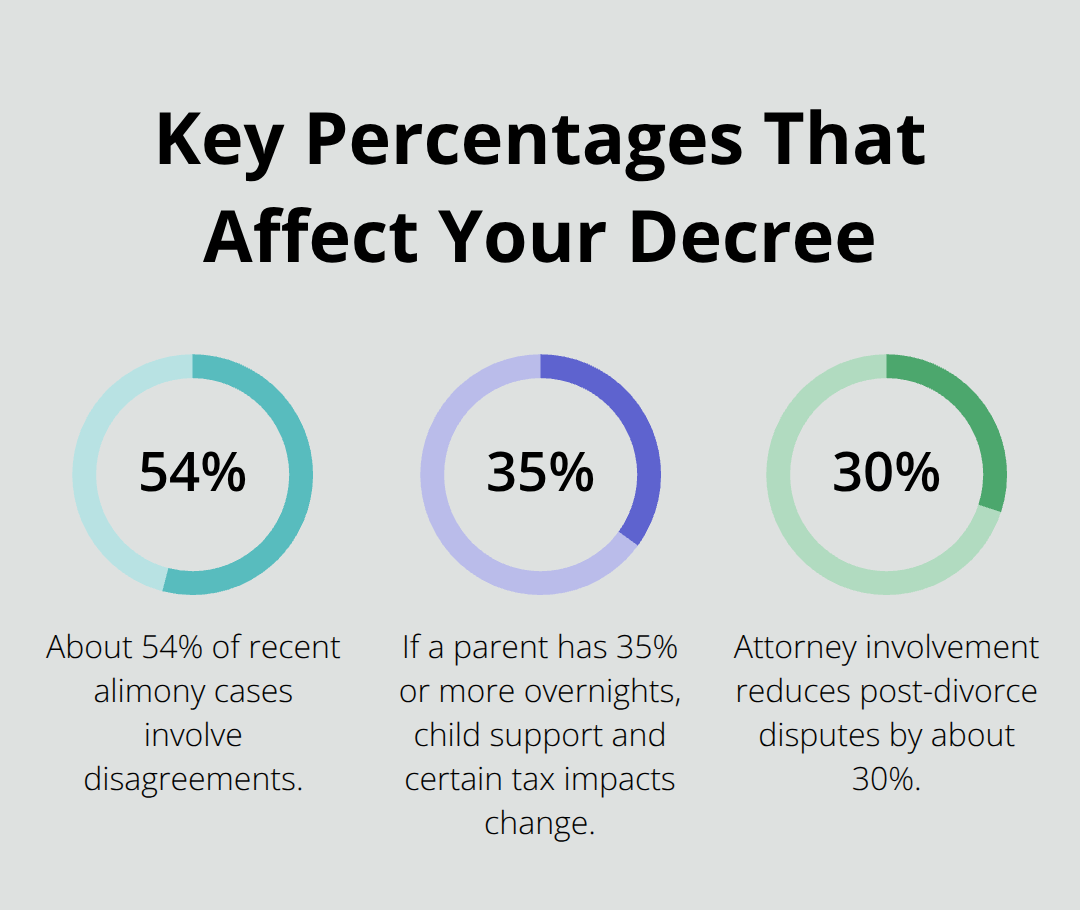
Your decree contains three main decision areas that will directly affect your daily life. First, property division outlines how marital assets and debts are split between you and your ex. Florida uses equitable distribution, which means the court tries for a fair split-not automatically 50/50. The judge considers factors including how long you were married, your earning capacity, contributions to the marriage, and the standard of living you maintained together. A 10-year marriage produces a different property split than a 25-year marriage. Second, if you have children under 18, the decree specifies time-sharing arrangements (custody) and decision-making responsibilities. The court prioritizes the child’s best interests, and the parenting plan outlines exactly how many overnight stays each parent receives. If one parent has 35% or more overnight time, this directly affects both child support obligations and tax exemptions, so the percentages carry real financial weight. Third, the decree addresses spousal support (alimony) and child support. Alimony in Florida comes in three forms: bridging, rehabilitative, and durational, with duration tied to how long you were married. Child support is calculated based on each parent’s gross income and overnight time-sharing percentages. The American Academy of Matrimonial Lawyers reports that about 54% of recent alimony cases involve disagreements, which underscores how important it is to understand these numbers clearly when you receive your decree.
Why Accuracy Matters Before You Sign Off
Before the decree becomes final, review every single number and name carefully. A misspelled name, wrong bank account number, or incorrect property address can create headaches for years. The decree typically takes effect from the date the judge signs it, and there is no separate waiting period in Florida like some other states. However, you cannot remarry until the decree becomes final, which is usually one month and one day after the divorce hearing. If the decree contains errors, you have limited time to request corrections. Many people overlook this step and later discover they cannot access accounts or that property titles still reflect the wrong owner. Treating the decree review as a critical business task (not something to skim quickly) protects you from costly mistakes down the road.
What Happens Next With Your Accounts and Records
Once you confirm the decree is accurate, the real work of implementation begins. You must update your personal records, financial accounts, and legal documents to reflect your new status. Banks, investment firms, and government agencies all need notification of your divorce, and delays in these updates can prevent you from accessing funds or updating beneficiary designations. Your will, executor details, and superannuation nominations all require attention after divorce, as your ex-spouse may still be listed as a beneficiary or decision-maker. The sooner you initiate these changes, the sooner you can move forward with confidence in your new financial and legal position.
What Your Decree Actually Requires You to Do
How Property Division Works in Your Decree
Florida courts use equitable distribution to divide marital assets and debts, which means fair-not necessarily equal. The judge weighs factors including marriage length, earning capacity, contributions, and the standard of living you maintained together. Your decree lists every asset and debt subject to division: real estate, vehicles, bank accounts, retirement accounts, mortgages, and loans. A 15-year marriage produces a different property split than a two-year marriage. The decree specifies which spouse retains or sells each asset and who pays each debt.
This matters because creditors can still pursue you for debts listed in your name, even if the decree assigns them to your ex-spouse. If your ex fails to pay a debt the court assigned to them, you may need to file a contempt motion to force compliance. One critical action: obtain a certified copy of your divorce decree and send it to mortgage lenders, credit card companies, and any creditor holding joint debt. This creates a paper trail showing the court ordered your ex to handle specific obligations. Without this documentation, creditors may hold you liable for non-payment, and you’ll face an uphill battle proving the decree shifted responsibility.
Understanding Time-Sharing and Its Financial Impact
Child custody in Melbourne, Florida operates under the term time-sharing, and the percentages directly affect both custody rights and financial obligations. If one parent has 35% or more overnight time with the child, this triggers changes to child support calculations and tax exemptions. The Florida Department of Revenue provides an online calculator to estimate child support based on gross income and overnight percentages-run those numbers immediately after receiving your decree to confirm the amount matches what the court ordered.
Alimony, Child Support, and Tax Consequences
Alimony disputes are common. The American Academy of Matrimonial Lawyers reports that about 54% of recent alimony cases involve disagreements, so understanding whether your decree awards bridging, rehabilitative, or durational alimony matters for tax planning.
Alimony is taxable income to the recipient and tax-deductible for the payer, which means coordinating with a tax professional prevents unwelcome surprises at tax time.
Child support ends when the child turns 18 or graduates high school (whichever is later), but alimony duration depends on marriage length and the type awarded. If circumstances change significantly (job loss, relocation over 50 miles, or substantial income shifts), either party can file for modification. Courts retain continuing jurisdiction over custody and support matters, so these obligations are not permanently locked in if genuine hardship or changed circumstances arise. The decree specifies payment amounts and due dates for both spousal and child support, so set up automatic payments or calendar reminders to avoid missed deadlines that could trigger contempt motions against you.
What to Do the Moment You Receive Your Decree
The first 48 hours after receiving your divorce decree demand careful attention. Open the document and read it line by line, comparing every number, name, and date against your petition and any settlement agreements you signed. A misplaced decimal in a support payment, a misspelled child’s name, or a property address that does not match the deed creates problems that compound over months. If you spot errors, contact the judge’s office immediately and ask about filing a motion to correct. Courts typically allow corrections for clerical mistakes within a reasonable timeframe, but delays work against you. Once the decree is final and time has passed, reversing errors becomes exponentially harder. Do not assume the court’s clerk caught everything or that your ex-spouse will flag mistakes that benefit you. The decree is binding regardless of whether it reflects your actual agreement, so verification is non-negotiable.
Notify Financial Institutions and Update Account Records
After confirming accuracy, notify every institution that holds your financial accounts, property titles, or beneficiary designations. Banks, investment firms, mortgage lenders, and insurance companies all require notification of your divorce status. Bring a certified copy of your decree to each institution and request updated account registration. This step takes days or weeks to complete across multiple accounts, so start immediately. Update your will and name a new executor if your ex-spouse currently holds that role. If your ex is listed as a beneficiary on life insurance, retirement accounts, or superannuation, change those designations now.
Set Up Payment Systems and Meet Deadlines
Set up automatic payments for any child support or alimony obligations the decree imposes. Missing even one payment can trigger a contempt motion against you, and enforcement tools available to the other party include wage garnishment and bank account levies. If the decree requires you to maintain health insurance for your children, enroll them immediately and provide proof of coverage to your ex-spouse in writing. If the parenting schedule requires you to vacate the family home by a specific date or transfer property ownership, mark those deadlines on your calendar and complete them before the deadline passes. Violations of these concrete obligations give your ex-spouse grounds to return to court and request enforcement, which costs both parties money and time.
Treat Your Obligations as Binding Business Deadlines
The decree specifies payment due dates and custody schedules with precision, so treat these as binding business deadlines that protect you from legal exposure. Demonstrating good faith compliance shows the court that you take your obligations seriously if disputes arise later. A 2022 Florida Bar Association study found that attorney involvement in asset division reduces post-divorce disputes by about 30%, making professional guidance valuable for navigating these updates correctly.
Moving Forward After Your Divorce Decree Melbourne
Your divorce decree marks the end of one chapter and the start of another. Rebuilding your financial stability requires you to understand exactly what the decree demands and act on those obligations immediately. Set up automatic payments for child support or alimony, review your budget against your new income, and adjust spending to reflect your changed circumstances-many people discover they need to downsize housing or pursue additional income to maintain their standard of living after divorce.
Adjusting to new custody arrangements demands consistency and clear communication with your ex-spouse. Follow the schedule outlined in your decree precisely, as courts track compliance and consistent adherence demonstrates your commitment to your children’s wellbeing. The Florida Chapter of the Association of Family and Conciliation Courts finds that children adapt better when parents maintain respectful communication and predictable routines post-divorce, so establish clear channels about school events, health appointments, and schedule changes.
If enforcement disputes arise or your ex-spouse violates the decree, contact Harnage Law PLLC to discuss your situation and explore your options. We provide aggressive legal representation to protect your rights and hold the other party accountable when violations occur.