
Local Family Law Melbourne: Finding the Right Attorney
Our Blog
Local Family Law Melbourne: Finding the Right Attorney

Family law matters in Melbourne, Florida demand more than generic legal advice. Your situation is unique, and the courts here operate with specific rules and expectations that differ from other states.
We at Harnage Law PLLC understand local family law Melbourne inside and out. This guide walks you through what to look for in an attorney and how to handle the most common family law issues you might face.
What Family Law Cases Look Like in Melbourne
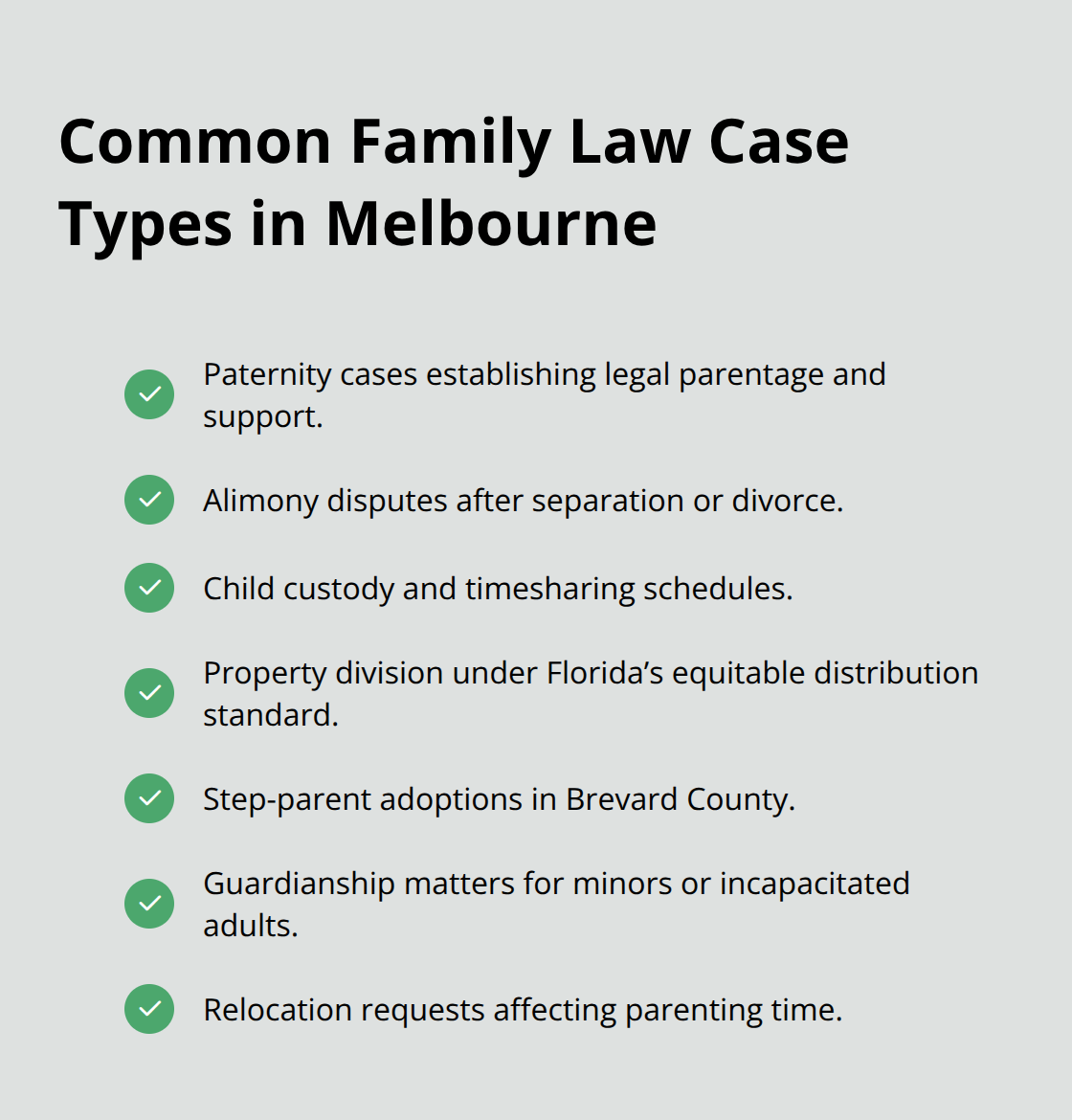
Family law in Melbourne spans far more than divorce. The local courts handle paternity cases where unmarried parents establish legal parentage and child support obligations. Alimony disputes arise when one spouse lacks the income to support themselves after separation. Child custody arrangements, called timesharing in Florida, require detailed parenting schedules that courts scrutinize carefully. Property division under Florida’s equitable distribution standard means marital assets split fairly but not necessarily 50/50, which catches many people off guard. Step-parent adoptions, guardianship matters, and relocation requests all flow through Brevard County’s family court system regularly. Each case type carries different rules, timelines, and financial implications that directly affect your outcome.
Florida’s Equitable Distribution Standard Changes Everything
Florida law fundamentally differs from community property states where assets split 50/50 automatically. Here, equitable distribution means fair but individualized. A judge considers each spouse’s contributions to the marriage, earning capacity, length of the marriage, and other factors when dividing retirement accounts, real estate, and investments. This flexibility helps in some situations but creates uncertainty in others. Retirement accounts like 401(k)s and pensions require specific legal language to divide properly, or you lose portions entirely. Hidden assets and incomplete financial disclosures happen frequently, which is why thorough document review before court matters enormously.
Why Local Court Experience Shapes Your Case
Melbourne’s family court judges follow established patterns in how they handle timesharing arrangements, alimony awards, and property disputes. One judge might favor 50/50 parenting time splits while another prefers primary-custody models. Some judges aggressively question financial disclosures while others move quickly through settlements. Knowing these local patterns helps attorneys anticipate rulings and structure arguments effectively. Court procedures in Brevard County also differ from other Florida counties in scheduling, motion deadlines, and how judges respond to mediation. An attorney with years of Melbourne courtroom experience navigates these nuances far better than someone relocating from another state.
How Procedural Details Impact Your Timeline
Brevard County’s specific filing requirements, motion deadlines, and discovery rules affect how quickly your case moves forward. Judges in Melbourne handle emergency motions differently than judges in other counties, which matters when you need temporary custody or support orders fast. Local court staff and clerk procedures also vary-knowing which documents the court accepts and in what format prevents costly delays. These procedural details seem minor until they cost you weeks or months in a contested case. An attorney familiar with Melbourne’s courtroom operations avoids these pitfalls and keeps your case on track.
What Comes Next in Your Search
Understanding what family law cases look like locally prepares you to evaluate whether an attorney truly knows Melbourne’s courts or simply claims to. The next step involves identifying what qualities separate a capable family law attorney from one who will protect your interests effectively.
Choosing an Attorney Who Knows Melbourne’s Courts
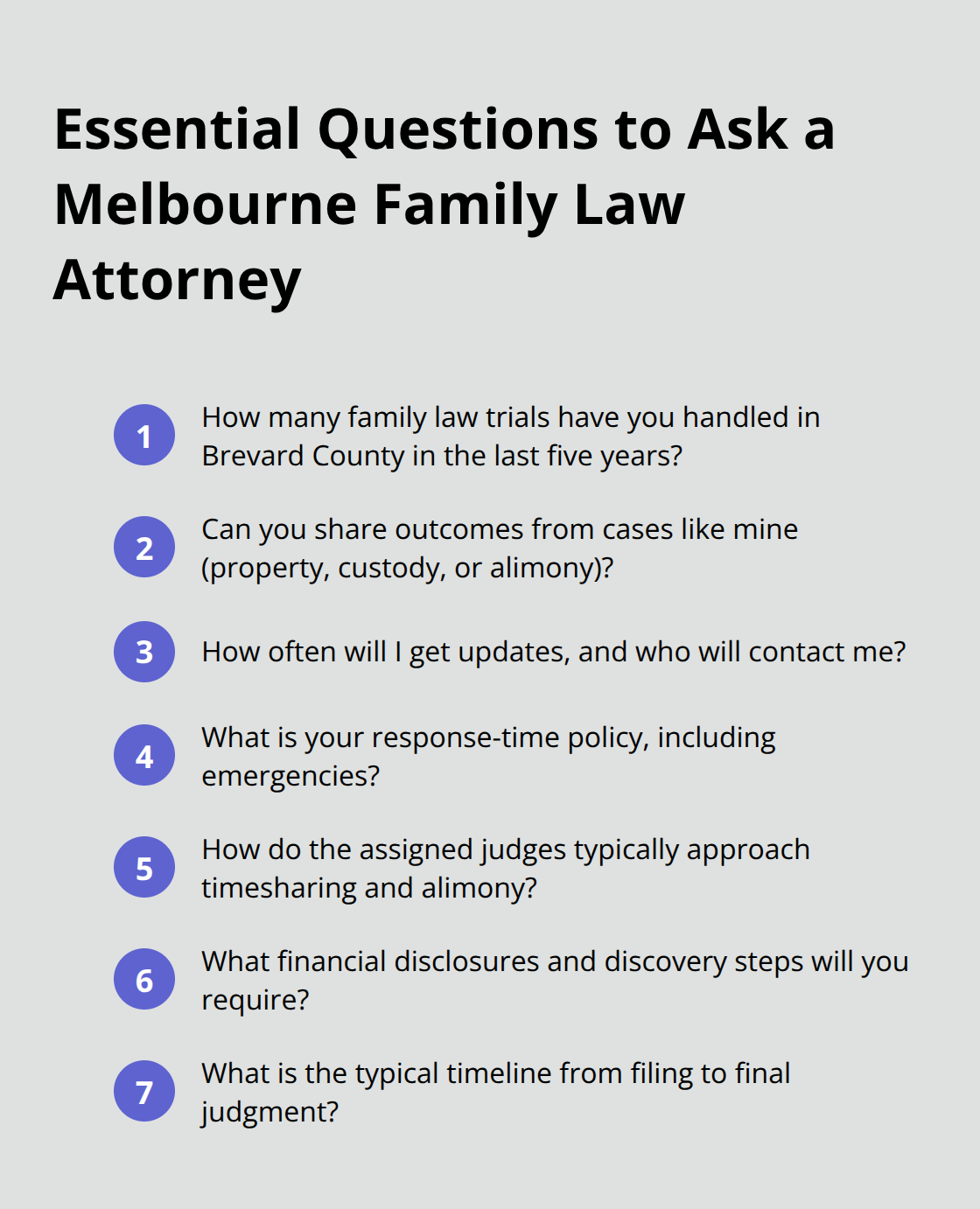
Finding a family law attorney in Melbourne requires looking beyond credentials and into their actual courtroom track record. Ask any potential attorney how many cases they tried in Brevard County’s family court over the last five years, not just how many they handled overall. An attorney who settles 95 percent of cases might sound efficient, but if your situation requires trial, you need someone with proven trial experience in front of the judges you’ll face. Request specific examples of cases similar to yours and ask what the outcomes were. Many attorneys discuss general statistics about settlement rates, but you need concrete details about how they performed on property division disputes, contested custody cases, or alimony modifications in your local courts.
Trial Experience Matters More Than Settlement Statistics
Courtroom performance separates attorneys who truly know Melbourne’s family court from those who claim local familiarity. When you interview potential attorneys, ask them to describe specific trials they conducted in Brevard County and what results they achieved. An attorney with substantial trial experience understands how judges in Melbourne respond to different arguments, which evidence carries weight, and how to present financial documents effectively.
They also know which judges scrutinize parenting plans intensely and which ones defer to parental agreements. This knowledge prevents costly missteps and helps structure your case strategy to match local expectations. Without trial experience, an attorney cannot anticipate how a judge will rule or prepare you for courtroom procedures.
How Responsiveness Directly Affects Your Case
An attorney’s communication style determines whether you stay informed or remain in the dark during critical phases of your case. Ask how often you’ll receive updates and whether you communicate directly with the lead attorney or through staff. Some firms promise same-day responses to client calls and emails, while others operate on longer timelines. When property division or custody decisions hang in the balance, slow communication creates unnecessary stress and prevents you from making informed decisions quickly. Request a sample timeline of how they handle a typical contested divorce from initial filing through final judgment so you understand the pacing and what to expect. Find out whether they’re available for emergency calls if temporary custody or support orders become necessary. Attorneys who maintain clear communication channels and respond within 24 hours typically keep clients calmer and more engaged throughout the process, which actually improves case outcomes because clients provide better information and make more strategic decisions.
Local Court Procedures and Judge Preferences Shape Strategy
The judges in Melbourne’s family court have individual preferences that shape how they rule on common issues. One judge might consistently award alimony for longer marriages while another focuses primarily on need and ability to pay. Some judges in Brevard County require extensive financial documentation before ruling on property division, while others move quickly through cases with basic disclosures. An attorney who works regularly in these courtrooms knows which filing formats the clerk accepts and how long typical discovery takes in Melbourne versus other Florida counties. They understand how the local court staff processes emergency motions and what documentation judges expect before ruling. This knowledge prevents costly delays and helps structure your case strategy to match local expectations. When you interview potential attorneys, ask them to describe the specific judges assigned to family law in Brevard County and explain how each one typically approaches timesharing disputes or alimony awards. An attorney who can answer these questions with specific details has genuinely practiced in Melbourne’s courts.
Understanding Financial Disclosure Requirements in Brevard County
Property division disputes in Melbourne hinge on complete and accurate financial disclosures. Judges in Brevard County scrutinize retirement accounts, investment portfolios, and business valuations differently depending on the judge assigned to your case. Some judges in Melbourne require detailed appraisals and expert testimony for significant assets, while others accept stipulated values when both parties agree. Hidden assets and incomplete financial disclosures happen frequently, which is why thorough document review before court matters enormously. An attorney familiar with local court expectations knows which financial documents judges demand and in what format. They also understand how to challenge incomplete disclosures and what evidence courts accept to prove hidden assets. This local knowledge directly impacts how much property you retain and how fairly the court divides marital assets.
With an understanding of what separates capable attorneys from those truly equipped to handle Melbourne’s courts, you can now evaluate the specific family law issues that commonly arise in Brevard County and how different attorneys approach them.
What Makes Property Division, Custody, and Support So Complicated in Melbourne
Divorce in Melbourne forces you to confront three interconnected financial and parenting issues simultaneously, and getting even one wrong cascades into problems for years. Property division, child custody arrangements, and support calculations all demand careful attention to local rules and individual circumstances.
Property Division Under Florida’s Equitable Distribution Standard
Florida’s equitable distribution standard requires you to identify every marital asset acquired during your marriage, from retirement accounts to business interests to real estate. The court does not split everything 50/50 like community property states do. Instead, judges weigh factors including each spouse’s contributions to the marriage, their earning capacity, the length of the marriage, and their roles as homemakers or breadwinners. A spouse who left a career to raise children might receive a larger share of marital property even though they earned less income.
Retirement accounts like 401(k)s and pensions demand specific Qualified Domestic Relations Orders (QDROs) to divide properly. Without precise legal language, you forfeit portions of retirement savings entirely because the plan administrator refuses the transfer. Hidden assets plague divorce cases in Brevard County regularly. One spouse conceals investment accounts, underreports business income, or transfers property to relatives before disclosure. Your attorney needs to request detailed financial discovery, review tax returns for the past three to five years, and scrutinize bank statements for unexplained transfers. Forensic accounting firms who regularly handle Melbourne cases report that roughly 20 percent of high-net-worth divorces involve hidden assets.

Child Custody Arrangements and Timesharing Frameworks
Child custody arrangements in Melbourne operate under Florida’s timesharing framework, which focuses on the child’s best interests rather than parental preferences. Courts expect detailed parenting schedules that specify overnight visitation, weekday access, holiday allocation, and decision-making authority over education and medical care. Judges in Brevard County increasingly favor equal timesharing around 50/50 splits when both parents demonstrate stability and involvement, but they deviate significantly when one parent has substance abuse issues, criminal history, or documented neglect.
School location, work schedules, and each child’s age and preferences influence how judges structure timesharing orders. A teenager’s preference carries more weight than a six-year-old’s opinion. The court examines each family’s unique circumstances rather than applying a one-size-fits-all approach to parenting time.
Child Support and Spousal Support Calculations
Child support calculations follow Florida’s statutory guidelines based on both parents’ gross income, overnight timesharing percentages, and health insurance costs. The state uses a specific formula that produces a base support obligation, then adjusts for deviations when circumstances warrant. If one parent earns substantially more or if there are multiple children from different relationships, the calculation becomes complex quickly.
Spousal support or alimony awards depend on the length of your marriage, both parties’ earning capacity, and their standard of living during the marriage. Marriages under ten years typically trigger temporary alimony ending at divorce, while longer marriages often produce permanent alimony obligations. Florida courts now consider both spouses’ financial situations comprehensively rather than assuming the higher earner always pays. A spouse earning sixty thousand dollars annually cannot support an ex-spouse at a pre-divorce lifestyle costing one hundred fifty thousand dollars yearly.
How These Three Issues Interconnect
Courts require documentation proving actual expenses and income through tax returns, pay stubs, and bank statements. Attempting to hide income or inflate expenses backfires when judges review the evidence. Property division, child support, and spousal support interconnect directly. A larger property division award reduces alimony need, while substantial child support obligations limit spousal support capacity. The order in which you resolve these issues affects your overall financial outcome significantly.
Final Thoughts
Family law cases in Melbourne demand an attorney who understands both the legal framework and the specific judges, court procedures, and local expectations that shape outcomes. Generic legal advice fails when your property division, custody arrangement, or support obligation depends on how a particular Brevard County judge interprets Florida law. The difference between retaining an attorney with genuine Melbourne courtroom experience and hiring someone who claims local familiarity often determines whether you walk away from your case satisfied or burdened by regret.
Moving forward with confidence requires selecting an attorney who can articulate specific trial outcomes from Brevard County cases, explain how local judges approach timesharing disputes and property division, and communicate clearly about your case timeline and strategy. Ask potential attorneys to describe the judges assigned to family law in Melbourne and explain their individual preferences. Verify their responsiveness by confirming they return calls within 24 hours and provide regular updates throughout your case.
Choosing a local attorney matters because they navigate Brevard County’s specific filing requirements, understand which financial documents judges demand, and anticipate how courts will rule based on established patterns. They know which procedural mistakes cost you weeks or months and which strategic decisions protect your interests most effectively. Contact Harnage Law PLLC at 321-248-1011 to discuss your specific situation and evaluate whether their approach aligns with your goals.